The Table· 8 min read·14 March 2025
Peruvian Ceviche: History, Varieties and Where to Try the Best
Fish, lime, onion and chili. Peru's oldest recipe and the cevicherías that honour it.
By Kada Travel Editorial
Ceviche is the oldest gastronomic Peruvian recipe. Its origin traces to the Mochica culture (200-700 AD), which prepared fresh fish with tumbo (Andean citrus fruit). The Incas evolved it with chicha de jora. The Spanish brought lime and white onion. Nineteenth-century Chinese immigrants added ginger, rarely. Modern ceviche has six centuries of continuous history and has been Peru's Intangible Cultural Heritage since 2004.
The five ingredients and why they matter
Serious Peruvian ceviche has five ingredients: fish, lime, onion, ají limo or rocoto, salt and coriander. Each has specific geographical origin.
The fish must be fresh —not frozen. Top cevicherías receive fish from Callao at 5 AM and prepare it at order time. Classic fish are sole, mero, corvina, mullet. Variants include octopus, prawns and conchas (fresh clams).
The lime is acid, not lemon. Peruvian lime (Citrus aurantifolia) is smaller, more acidic and more fragrant than international common lime. Acidity "cooks" the fish in 7-15 minutes by cut.
The onion is white or red, cut in fine juliana. Its function is mineral —adds flavour and texture without dominating.
The ají gives the spicy component. Ají limo (from Tacna) is most used for ceviche; rocoto (from Ayacucho) is hotter and used in smaller amounts.
The salt is from Maras (Cusco) or Pisco. Difference from industrial salt is minerality and grain size.
Regional varieties
Peru has four recognised regional cevicherías. Each with distinct technique and produce.
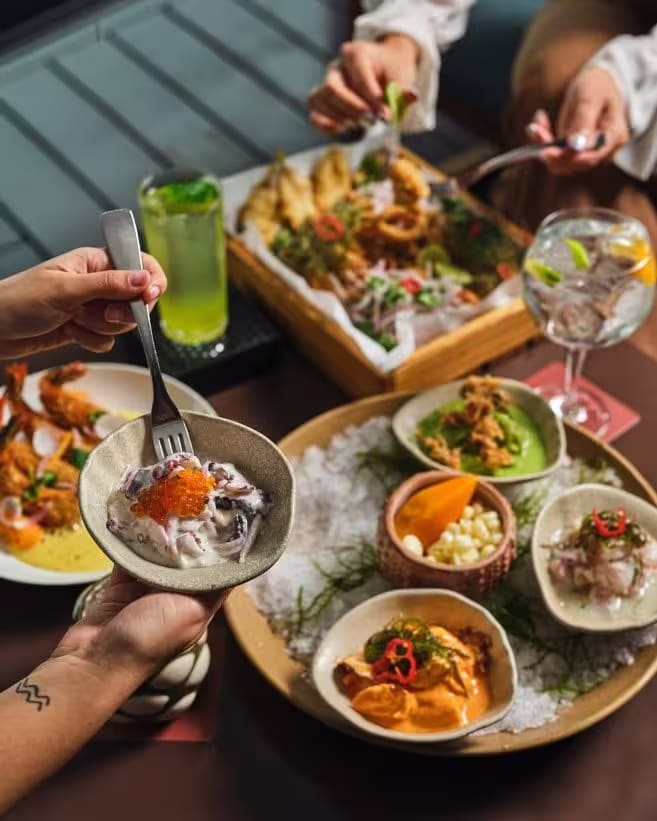
The Lima ceviche (Lima) is the classic. Fish in cubes, "tiger's milk" (maceration juice) served with corn and sweet potato. The version appearing in international cookbooks.
The Northern ceviche (Trujillo, Chiclayo) is more complex. Fish in strips (not cubes), toasted corn, cooked yuca, corn, hotter onion. Served with tiger's milk as second part of the meal.
The Southern ceviche (Arequipa) has rocoto instead of ají limo. Hotter, with less onion, generally with goat cheese on the side.
The Amazonian ceviche (Iquitos, Tarapoto) uses river fish (paiche, doncella) instead of marine fish. No corn, with yuca and fried plantain.

The five Lima cevicherías where to try
For the Peru traveller, we recommend five Lima cevicherías in order of culinary seriousness.
Punto Azul (Miraflores). The most respected traditional cevichería. Callao fish received at 5 AM, classic technique without variations. Personal attention from Claudia Cuevas, founder's daughter. USD 60-90 per person. Lunch only.
Sonia (Chorrillos). At the Chorrillos dock, facing the sea. Fish from the dock in front. More informal atmosphere but as rigorous technique as Punto Azul. USD 50-80 per person.
La Mar (Miraflores). By Gastón Acurio, the luxury ceviche version. Certified-origin fish, tiger's milk presented as cocktail, contemporary gastronomic atmosphere. USD 80-120 per person.
Embarcadero 41 (Miraflores, Magdalena, Surco). Three-location chain with consistent recipe. Daily fresh fish, family atmosphere. USD 40-65 per person.
Pescados Capitales (Miraflores). Contemporary ceviche concept with non-conventional products (anchovy, mackerel, mahi-mahi). USD 60-90 per person.
When and how it is eaten
Ceviche is traditionally eaten at lunch, not dinner. Reasons: the fish is prepared with day's produce (received in the morning), and the lime acidity activates midday appetite. Top cevicherías open at 12:00 PM and close at 4:00 PM.
The classic pairing is Cusqueña beer (Peruvian) or chicha morada (non-alcoholic purple-corn drink). The contemporary pairing is pisco sour as aperitif and Peruvian white wine (Tabernero or Tacama sauvignon blanc) during the meal.
Serious Peruvian ceviche is eaten at a lunch cevichería, with day's fish and fresh tiger's milk. Any ceviche served at 8 PM in a tourist restaurant is probably recycled from the morning.
Kada Travel
What is NOT serious ceviche
Three elements disqualify a Lima ceviche: frozen fish (derails the texture), lime substituted by international lemon (different taste), and preparation more than 30 minutes ahead (acidity continues cooking the fish and it becomes tough).
Ceviche served at night in general tourist restaurants usually has at least one of these three problems. For serious ceviche, lunch at established cevichería, not dinner at general restaurant.
A note for foreigners
For travellers with digestive systems sensitive to raw fish, we recommend the first cevichería with traditional recipe (Punto Azul or Sonia). Peruvian Callao fish has low bacteriological risk —the Humboldt current is cold and fish stays fresh. But ordering ceviche "passed through 10 seconds of boiling water" (technique used for sensitive clients) reduces risk to zero. Texture changes minimally.
Written by Kada Travel Editorial
Frequently Asked
Yes, at established cevichería with day's fish. Risk is low thanks to cold Humboldt current. For sensitive systems, "passed through boiling water" option.
Sole or corvina for the classic. Octopus and conchas (clams) for variants. Firm-flesh fish works better than soft-flesh.
Yes, in some cevicherías. Mushroom ceviche, avocado ceviche or chocho (lupin) ceviche. Texture is similar but taste is completely different.
For gastronomy lovers yes. Difference from Lima ceviche is notable. Combinable with the northern archaeological route (Trujillo, Chiclayo, Cajamarca).
Top cevicherías use day's fish (received in morning, served at midday). More than 12 hours is not considered serious ceviche.
Yes, octopus ceviche, prawn ceviche, mushroom ceviche. Cevichería adapts with prior notice.
Design Your Journey
Design your bespoke Peru journey
We talk. We listen. Then we design an itinerary that belongs only to you.
Start Planning