Destinations· 8 min read·8 April 2025
What Wildlife You Can Actually See in the Peruvian Amazon
What the brochure promises and what the forest delivers — an honest inventory by region and season.
By Kada Travel Editorial
The Amazon lodge brochure promises jaguars, anacondas, flocks of macaws, pink dolphins beside the boat, monkeys in every tree. Forest reality is subtler. Fauna exists —in numbers few other ecosystems can match— but it appears when the traveller adjusts expectations to the forest's, not the other way round. This guide proposes those expectations with honest data: sighting probability by species, by Amazon region, by season.
Virtually guaranteed
Three fauna categories appear on any three-or-more-night Amazon trip, in any Peruvian region, any season. Birds: the Peruvian Amazon has 1,800 registered species (more than all of Europe combined). In three nights with professional guide, 80-150 species are identified. Toucans, macaws, oropendolas, herons, cock-of-the-rock, hoatzins.
Monkeys: thirteen species inhabit the region. The most common are the black spider monkey, squirrel monkey, brown capuchin and red howler. Probability of seeing at least four species in three nights: 95%.
Caimans and reptiles: on night boat outings (included in all premium lodges) white caimans are observed and, less frequently, black caimans. Anacondas are less predictable —probability of seeing one in three nights is 30-40%.
Likely with conditions
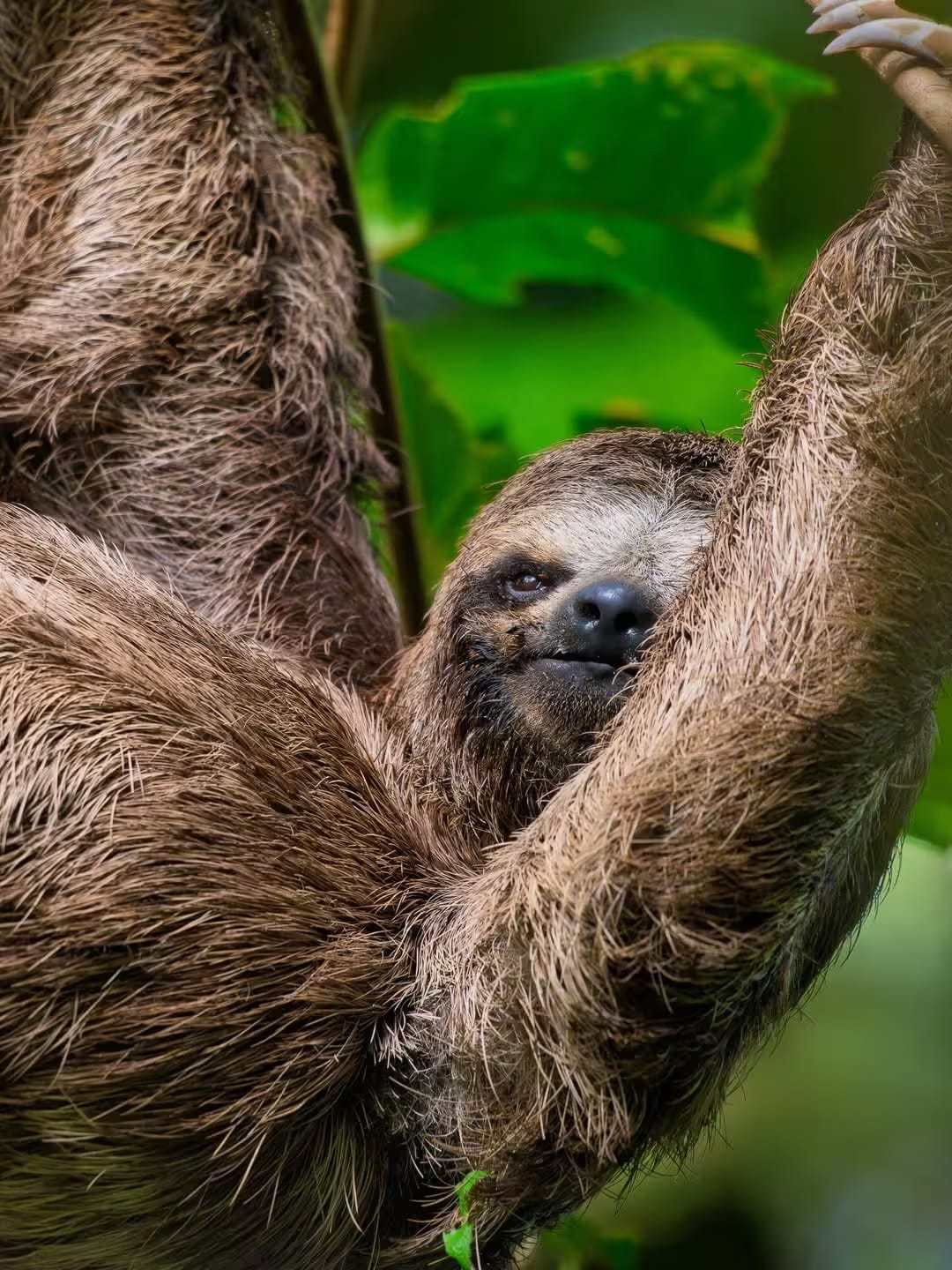
The sloths —both three-toed and two-toed— are common but require experienced guide to spot. Probability: 60-70% in any region. Best in Iquitos during high water, when the small boat approaches low canopies.
The giant otters (Pteronura brasiliensis) are among the most coveted species. Whole families live in specific oxbow lakes —Sandoval Lake in Tambopata is the most accessible. Sighting probability: 60% in Tambopata, 70% in Manu (dry season, July-October), 30% in Iquitos.
Pink dolphins (Inia geoffrensis) and grey dolphins are specific to Iquitos. Sighting probability on any Amazon cruise is 95% for grey, 85% for pink. In Tambopata or Manu, dolphins do not appear —rivers are too small.
Macaws at clay licks (salt-clay walls fauna eat to neutralise toxins) are the Peruvian Amazon's most photographed spectacle. The Chuncho clay lick in Tambopata receives 200-400 red and green macaws each dawn in dry season. Sighting probability May-September: 80-90%.

Difficult but possible
The jaguar is the most coveted and most elusive fauna. Up to 100 kg, nocturnal, lives in territories up to 60 km². Real sighting probability in dry season:
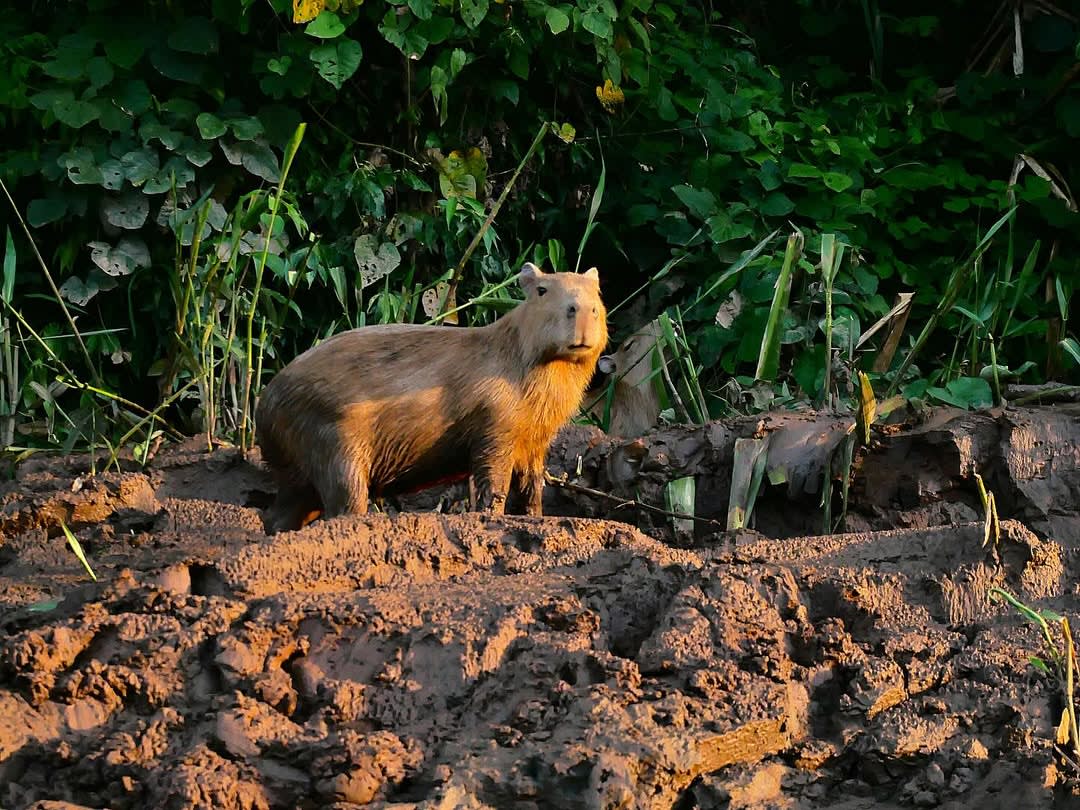
- Manu, July-October, 6+ nights at riverside lodge: 40-60%. Jaguars descend to Manu river beaches to hunt capybaras.
- Tambopata: 5-10%. Sporadic sightings at clay licks or secondary rivers.
- Iquitos: practically zero. Flooded-forest geography does not favour observation.
The tapir (Tapirus terrestris), South America's largest terrestrial mammal (250 kg), appears at nocturnal salt licks. Probability: 50-70% in lodges with watch-towers facing clay licks (Tambopata Research Center, Manu Wildlife Center). In lodges without nearby clay lick, practically zero.
The spectacled bear (Tremarctos ornatus) is not strictly Amazonian —it lives in transitional cloud forest. Only seen in specific zones like Manu (upper section) or Sira mountain range. Probability: 5-10% even in ideal places.
What changes with season
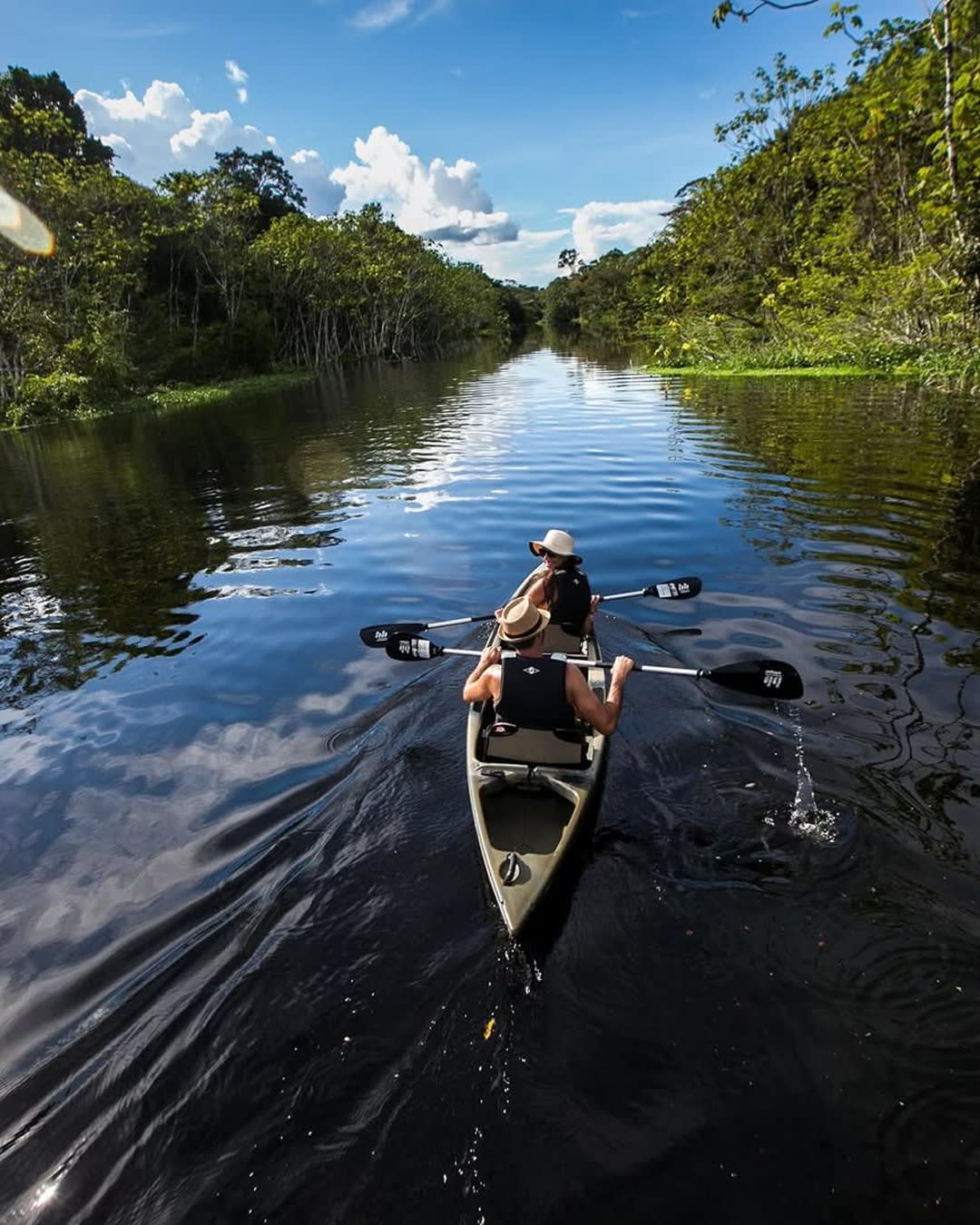
Season determines much sighting. Dry season (May-October): better for terrestrial mammals. Exposed beaches concentrate fauna around water. Jaguars, capybaras, tapirs more visible. Wet season (November-April): better for aquatic fauna and migratory birds. Flooded forest allows the small boat into canopies.
For first Amazon trip, we always recommend dry season. For returning travellers or those wanting aquatic fauna (dolphins, manatees), high water in Iquitos is the option.
The Amazon forest is not seen. It is heard. Most mammals are identified by sound before image. Travellers wearing earphones on the boat miss half the fauna the guide is pointing out.
Kada Travel
What the brochure doesn't say
Three sighting warnings. First: fauna does not appear on schedule. Morning (5:30-9:00 AM) and evening (4:00-7:00 PM) outings are best, but do not guarantee. Three nights give correct probability; a single night is roulette.
Second: lodges with premium service have better sighting probability than budget ones, not because of cabin but because of guides. Senior guides with official licence know active clay licks, macaw nests, jaguar paths. The difference between a 5-year and 25-year experienced guide is radical.
Third: professional cameras with telephoto lens (300mm+) are necessary. Phones do not capture distant fauna. 8x40 binoculars are essential gear, not optional.
Written by Kada Travel Editorial
Frequently Asked
40-60% in Manu with 6+ nights in dry season. 5-10% in Tambopata. Zero in Iquitos.
Yellow fever mandatory. Antimalarial prophylaxis recommended for Manu and remote zones. Tetanus up to date. Consult travel medic 4-6 weeks before.
Only with guide. Night outings are accompanied, with headlamp and always in group. Real risks are venomous insects and snakes; large animals avoid humans.
Yes. Lodges like Tambopata Research Center and Manu Wildlife Center have rates for photography groups with specialised guides. We also recommend hide blinds at clay licks.
8x40 or 10x42 binoculars, camera with 300mm+ zoom, earth-colour clothing, repellent, notebook for bird count. Premium lodges loan binoculars.
Documented cases are rare. Green anacondas prefer capybaras and small caimans. Humans are not habitual prey.
Design Your Journey
Design your bespoke Peru journey
We talk. We listen. Then we design an itinerary that belongs only to you.
Start Planning