Destinations· 9 min read·23 October 2024
Cultural Lima: Private Experiences at Larco, MALI and Pachacámac
Three institutions, three ways to read Peru's cultural depth before heading to the highlands.
By Kada Travel Editorial
The Larco Museum opens to the public at nine in the morning, but those with a private guide are allowed in at eight thirty. That thirty-minute difference —empty rooms, indirect light through the courtyard windows, conservators working with white gloves at the end of the corridor— sums up the entire logic of cultural Lima in private mode. It is not that you see it differently. It is that you look differently.
This guide gathers three Lima institutions worth a private visit before heading to Cusco: the Larco Museum, MALI, and the pre-Inca sanctuary of Pachacámac. All three permit the other way of visiting —with curator, with archaeologist, on hours outside the general public— and all three prepare the traveller for what comes in the highlands. Lima without Larco, without MALI, without Pachacámac, leaves Cusco without context.
Larco: the open-storage museum
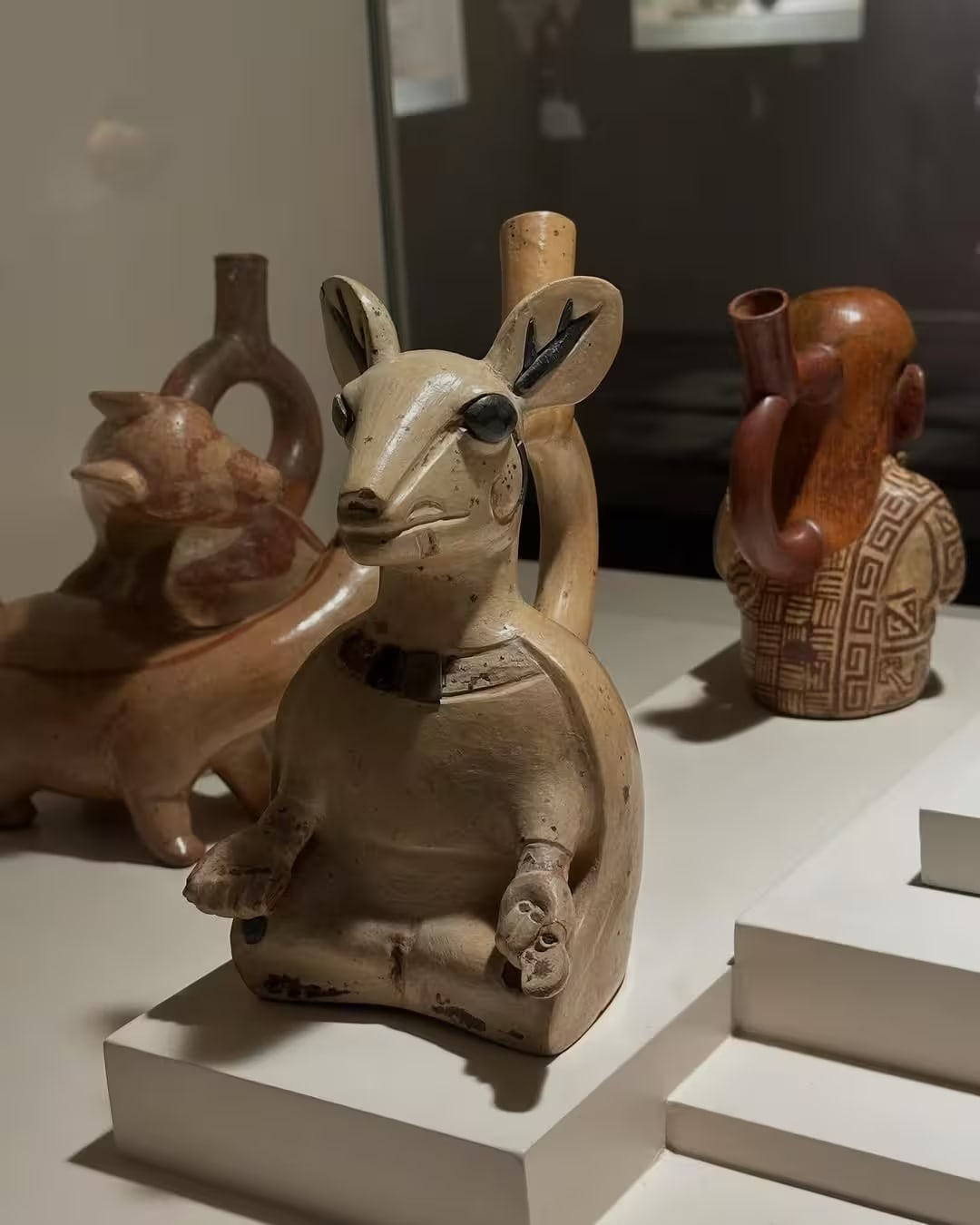
The Larco Museum, in an eighteenth-century viceregal hacienda in Pueblo Libre, holds 45,000 pre-Columbian pieces. The collection, founded by Rafael Larco Hoyle between 1925 and 1939 with family money from sugar, is one of the five most complete in the world in its category —ceramics, gold, textile, erotic art— and the only one permitting an open visit to the museum's storage, not only the exhibition rooms.
The difference is substantive. The exhibition rooms display 1,500 pieces on rotation. Open storage holds the remaining 43,500, organised on glass shelving in a climate-controlled gallery. Moche ceramics, Chimú vessels, third-century clay portraits, all on view. The standard guided visit lasts an hour; with a museum curator, two and a half hours —and the curator opens cabinets, takes pieces down, comments on restorations not part of the public talk.
Three pieces of advice. First, go before ten —after, the cruise groups arrive. Second, book lunch afterwards at Café del Museo, in the museum courtyard: the food is decent, the setting (colonial garden with bougainvillea) is the best in the neighbourhood. Third, do not leave without the gold room: a subterranean vault holding fifty Moche gold pieces, individually lit.

MALI: the nineteenth century and the twenty-first, in one room
The Museum of Art of Lima occupies the former Palace of the Exhibition —an 1872 building inspired by London's Crystal Palace, on the edge of the historic centre. The collection holds 17,000 pieces and ranges from pre-Columbian to contemporary, but its true value lies in two sections: viceregal art (Cuzco, Quito, Cuzco mestizo school) and Republican (the nineteenth-century portraitists, the Peruvian modernists).
For the through-visitor, we recommend the ninety-minute curated visit centred on Republican art. Carlos Baca-Flor, Daniel Hernández, Francisco Lazo: three painters who travelled to Europe, fell in line with the French academy, and returned to paint Peru with European technique and local subjects. Their portraits —Lima ladies in mantilla, bishops with crozier, Indigenous children in formal dress— are the best introduction to nineteenth-century Peru and to the social atmosphere from which later indigenismo emerges.
MALI also runs temporary exhibitions that matter. Curatorship is serious —directed from 2003 by Natalia Majluf, now by Sharon Lerner— and exhibitions of contemporary Peruvian photography are a regional reference point. Before visiting, check the programming: if a temporary show is interesting, adjust the itinerary.
Pachacámac: the sanctuary that organises the coast
Pachacámac is the site Lima hides on its outskirts and which most visitors miss. Thirty-five kilometres south of Miraflores, in a coastal valley between desert and the Lurín river, stands a ceremonial complex inhabited from 200 AD to the Spanish conquest of 1533. Thirteen hundred years of continuous use. Temples of the Sun, the Moon, the Virgins; a stepped Inca pyramid above pre-Inca temples; walls still bearing red and white mural paint.
What makes Pachacámac special is scale. The site is vast —six hundred hectares, several hours to walk— and almost empty. While Machu Picchu receives five thousand visitors a day, Pachacámac receives five hundred. The feeling, walking along the perimeter wall of the Sun Temple at dawn, is of absolute privacy.
We recommend the private visit at six in the morning, before official opening. An archaeologist from the site museum —which opened in 2016 and is worth the visit on its own— guides the route for two hours: the ceremonial centre, the oracle, the Inca pyramid, the artisanal workshops, the votive vessels offered to the god Pachacámac. Then breakfast at the museum café, and back to Lima by nine to make the hotel checkout.
Lima without Larco, without MALI, without Pachacámac, leaves Cusco without context.
Kada Travel
A fourth option: dinner inside a huaca
For the returning traveller, we recommend an experience few discover on the first trip: dinner at Huaca Pucllana. The huaca —a fourth-century Lima Culture pre-Inca pyramid, in the heart of Miraflores, ringed by contemporary apartment buildings— has a restaurant in its lower gardens, with a direct view of the illuminated pyramid. The food is correct without standing out; the experience is the pyramid. Dining metres from a sixteen-hundred-year-old temple, in one of South America's densest cities, is not had in many other capitals.
How to arrange it in two nights
With two nights in Lima, we recommend this formula: day one, midday arrival, lunch, hotel rest, dinner at Maido or Central. Day two, dawn departure to Pachacámac (private visit six to eight), back to Lima, lunch at Café del Museo Larco followed by visit, afternoon in the historic centre (Plaza Mayor, Casa de Aliaga, San Francisco), dinner at Astrid y Gastón. Day three, morning at MALI, lunch at Cala (Barranco), departure to the airport.
With three nights, add a morning on the Miraflores malecón with breakfast facing the sea, an afternoon in Barranco with galleries and MATE, and dinner at Huaca Pucllana as the closing before the Cusco flight. The question is not what to include —Lima offers material for two weeks— but how much can be absorbed without saturation. Three days, in this order, leave the traveller arriving in Cusco with the right context.
Written by Kada Travel Editorial
Frequently Asked
The curated visit is booked two weeks in advance. The museum has a team of curators coordinating private visits in Spanish, English and French. Our trips include this arrangement.
It is not a comparison. Pachacámac is pre-Inca and multicultural; Machu Picchu is Inca and ceremonial. Pachacámac provides the context of a thousand years of Andean culture before Tawantinsuyo. Without that depth, Machu Picchu reads as an isolated ruin rather than the culmination of a tradition.
Three hours, including the museum. Departure from Lima at five thirty in the morning, arrival at six thirty, two-hour site tour with private guide, forty minutes at the museum, return to Lima by noon. Combinable with lunch in Lima.
Yes. The Amano Museum of pre-Columbian textiles in Miraflores —small, specialised, brilliant. The Museum of Pre-Columbian Art, a Larco branch in Cusco. The Pedro de Osma Museum in Barranco for viceregal art in a Republican mansion. All three are ninety-minute visits.
For travellers who value atmosphere over food, yes. The illuminated pyramid beside the dining room is the only experience of its kind in a South American capital. For strict gourmets, better options exist (Maido, Central, Mayta).
Recommended but not required. The rooms have correct labels in Spanish and English. However, the museum covers so many centuries that without a guide the visit stays visual and misses the historical reading of viceregal and Republican art.
Design Your Journey
Design your bespoke Peru journey
We talk. We listen. Then we design an itinerary that belongs only to you.
Start Planning