Destinations· 9 min read·6 November 2024
Paracas and the Ballestas Islands: The Peruvian Galápagos
Three hours south of Lima, where the desert meets the sea and sea lions are counted by the thousand.
By Kada Travel Editorial
The first geographical fact about Paracas is that the desert drops directly into the sea. There is no transition —no coastal strip of vegetation, no scrub— only Pacific sand against desert sand, a straight line of over a hundred kilometres between Pisco and Nazca. The second fact is that this line, instead of being barren, is full of life: the cold Humboldt current pulls nutrients up from Antarctica and feeds one of the densest marine ecosystems on the planet.
Hence the nickname —Peruvian Galápagos— that has circulated since the 1970s. The comparison is generous but not unfounded. The Ballestas Islands lack the endemic fauna of Galápagos, but they have the density: South American sea lions by the thousand, Humboldt penguins, Peruvian boobies, pelicans, guanay cormorants, common dolphins and, in season, humpback whales. All three and a half hours from Lima down the southern Pan-American highway.
El Chaco: the village, the entrance
El Chaco is the coastal village from which all activity departs: a three-block boardwalk, seafood restaurants, tour offices, the Hotel Paracas Libertador to the south, Aranwa Paracas to the north. To arrive in Paracas means, in practice, to arrive in El Chaco. The National Reserve —the desert area with Paracas cemeteries and Pacific cliffs— is fifteen minutes by car. The Ballestas, beside El Chaco, depart by speedboat at eight in the morning.
The village is modest. It is not the attraction. What matters are the hotels —specifically the Libertador and the Aranwa— and the dock. For luxury travellers, we recommend staying outside the village: both hotels offer private boats that bypass the public dock's mass departure.
The Ballestas Islands: by boat, at eight
The Ballestas tour is two hours. Speedboat, thirty-passenger capacity (group version) or six (the private version we recommend). Departure from El Chaco at eight in the morning, not because the fauna is more active —they are equally active at eleven— but because the Pacific wind picks up after ten and the boat begins to bounce.
The first stop, before the islands, is the Paracas Candelabrum: a 180-metre geoglyph etched into a sand hillside dropping to the sea, visible only from the water. Its origin remains debated —some link it to the Paracas culture, others to nineteenth-century sailors— but its scale is undeniable. Seen from the boat, two hundred metres off the cliff, it is one of the images that stays.
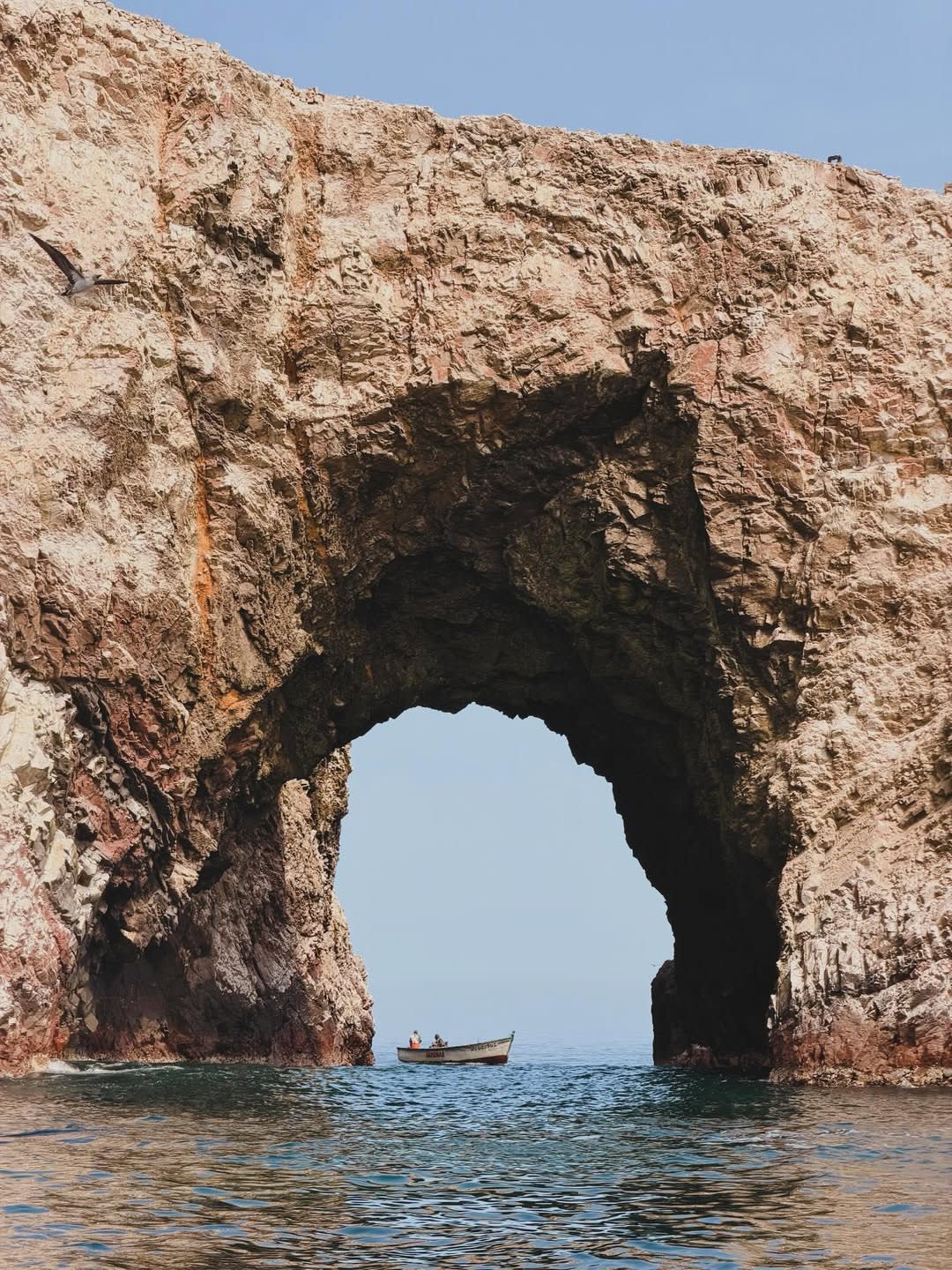
The Ballestas themselves are three small islands, with caves, arches and natural platforms. Fauna is observed from the boat without landing —entry to the islands is forbidden under reserve status. What you see, in order of probability: South American sea lion colonies on the platforms (three to five thousand individuals depending on season), Humboldt penguins on the cliffs (one hundred to three hundred), Peruvian boobies in fishing formations, pelicans hunting in groups, dolphins following the boat. In season (June to October), migrating humpback whales.

The National Reserve: desert to sea
After lunch, the afternoon belongs to the Paracas National Reserve. 335,000 hectares, half terrestrial and half marine, declared in 1975. What matters for the visitor is the terrestrial section: the Paracas desert, formed by sand carried by wind from the African continent over millennia, drops directly into the Pacific from cliffs up to forty metres tall.
The private-car tour lasts four hours. Three unmissable points: the Cathedral —a natural rock formation in the shape of a Gothic vault, partially collapsed in the 2007 earthquake but still impressive in structure—; Red Beach, a cove with iron-oxide sand that turns the ground orange against the blue sea; and the Lagunillas viewpoint, where you eat fresh fish at local fishermen's huts overlooking the Pacific from a clifftop.
The reserve's Interpretation Centre, opened in 2018, is worth half an hour. It explains the Humboldt current, El Niño cycles, the Paracas culture that occupied this coast 2,500 years ago, and current fauna. Five rooms, twelve-minute audiovisual, decent café at the end.
The Nazca overflight, optional
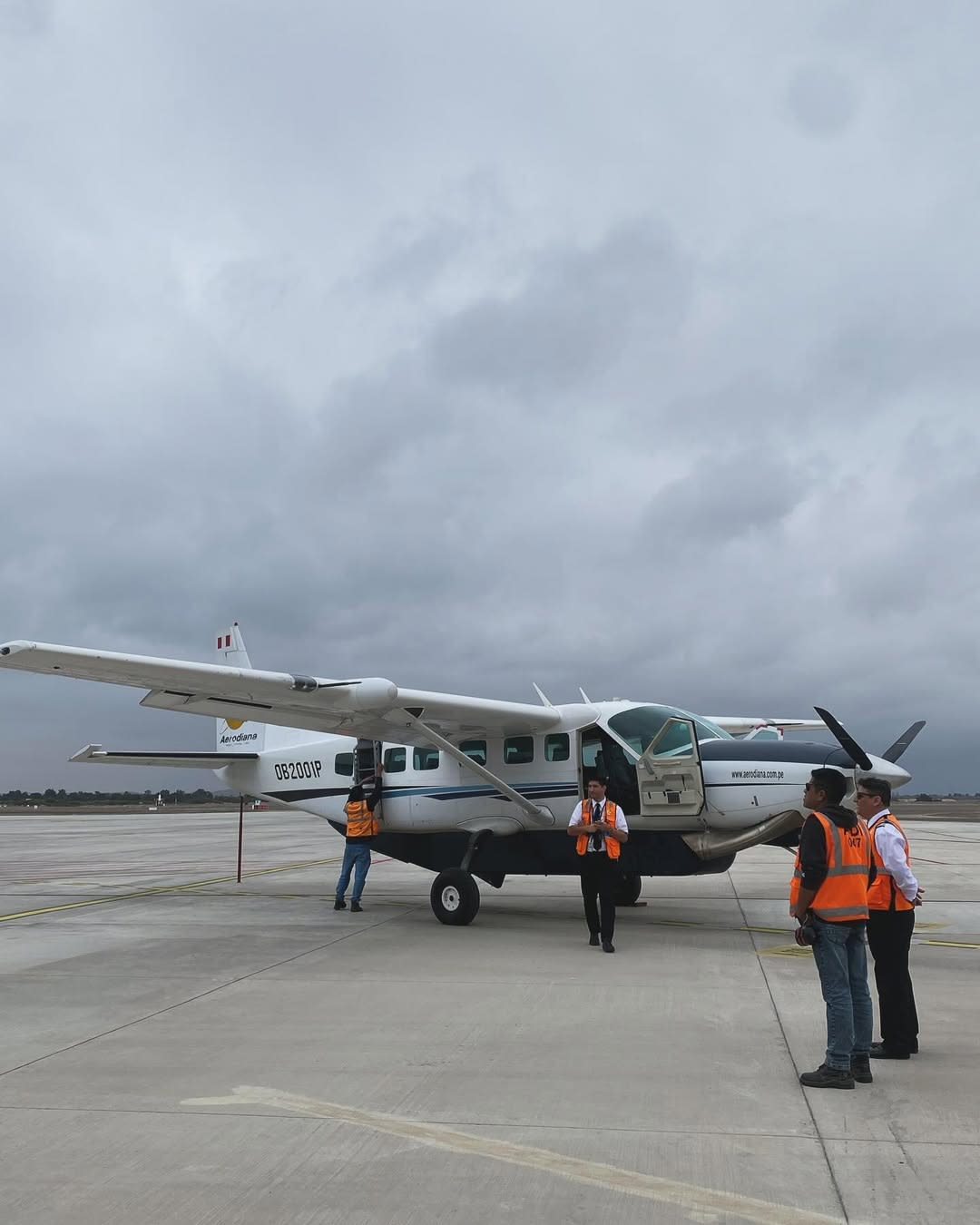
For the traveller with three days, the second day can be devoted to a Nazca Lines overflight. Pisco has an aerodrome from which a private six-passenger Cessna departs. Ninety-minute flight, thirty over the lines (monkey, hummingbird, hands, dog, astronaut), forty-five round trip. The experience is demanding —turbulence, sharp turns— but the view of the lines is unique. We do not recommend the overflight from Lima, which lasts five hours; we do recommend it from Pisco, ninety minutes.
Where to stay: two options
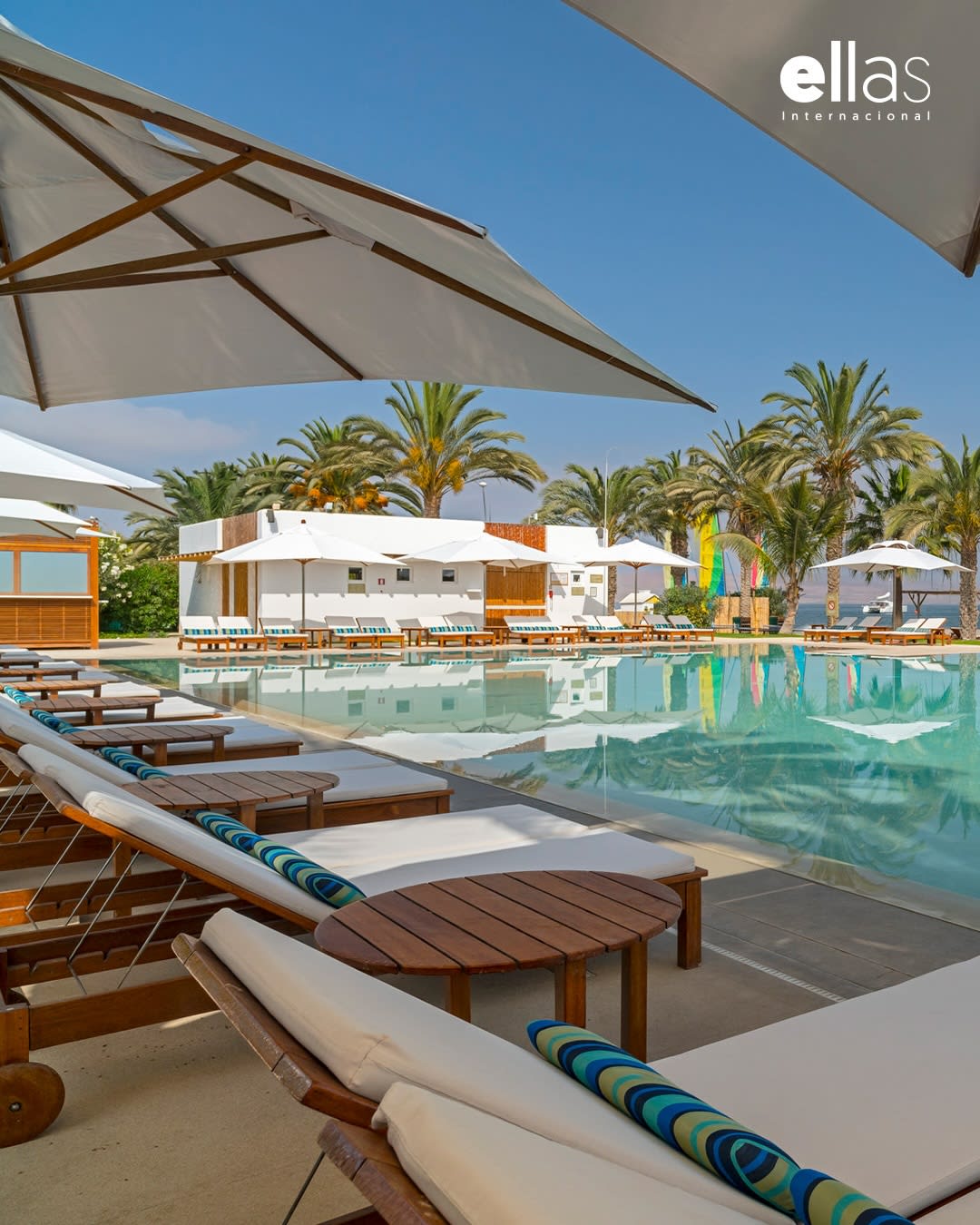
The Hotel Paracas, a Luxury Collection Resort is the flagship. Set on Paracas Bay, one hundred and twenty rooms, two pools (one heated for winter), spa, two restaurants (Ballestas for international, Chalana for seafood), private dock for boats, and a private transfer service to the reserve. It is the usual choice.
The Aranwa Paracas Resort & Spa, fifteen minutes south, is the boutique alternative. One hundred rooms, also seafront, with a more personalised service and a more Andean architecture (wood, stone). Suitable for couples or honeymooners.
For a tighter budget, La Hacienda Bahía Paracas: four-star, seafront, no luxury but solid service. For three nights based in Paracas with the impulse to explore Ica, we recommend pairing two nights in Paracas with one at a pisco bodega in the valley.
How to combine it with the trip
Paracas combines naturally with Lima: two nights in Lima, two in Paracas (with Ballestas day and reserve), back to Lima by afternoon, Cusco flight the following day. It is the fourteen-day formula. For ten-day trips, Paracas is optional —if chosen, it adds two nights to the total.
An alternative for the most efficient: a single night in Paracas, with Ballestas the next morning and return to Lima by afternoon. It works, but the reserve is left out. If only one night is available, two private dawn Ballestas trips (the version we most recommend) trump half a reserve visit.
One last visual note: Paracas does not photograph well at midday. The light flattens the red cliffs and the bone-white desert. The two hours that work are between six and eight in the morning, and five to seven in the afternoon. Travellers who want the postcard —red desert, blue sea, mineral sky— plan the itinerary around those two windows.
Written by Kada Travel Editorial
Frequently Asked
Yes. The National Reserve —the desert dropping into the sea— is worth it on its own, without needing the Ballestas. Red Beach and the Cathedral are unique landscapes on the Peruvian coast.
Three and a half hours by private car from Lima down the southern Pan-American highway. There are no commercial flights; Pisco's aerodrome only handles private flights or the Nazca overflight. The road is good but monotonous; we recommend an audiobook or conversation with a guide.
December to April: clear skies, blue sea, 25-28°C. June to October: garúa season, grey but with whale migration and peak penguin presence. May and November are acceptable shoulder seasons.
Galápagos has endemisms —giant tortoises, marine iguanas— that Ballestas does not. But the Ballestas offer similar marine-fauna density, three hours from Lima rather than an international flight, and at a tenth of the cost. They do not replace Galápagos; they complement.
For travellers passionate about archaeology, yes. For those who don't get airsick easily, yes. For those on tight time, no —dedicating half a day to a ninety-minute flight requires high priority. Always recommended from Pisco, not Lima.
The Ballestas are excellent for children over five: boat ride, sea lions visible metres away, penguins. For under-fives the boat ride may be long. The reserve, by private car with stops, works for all ages.
Design Your Journey
Design your bespoke Peru journey
We talk. We listen. Then we design an itinerary that belongs only to you.
Start Planning