Destinations· 7 min read·20 December 2024
The Condor's Flight at Colca, Without the Crowds
How to arrive before the eight hundred daily visitors — and where to look when the buses leave.
By Kada Travel Editorial
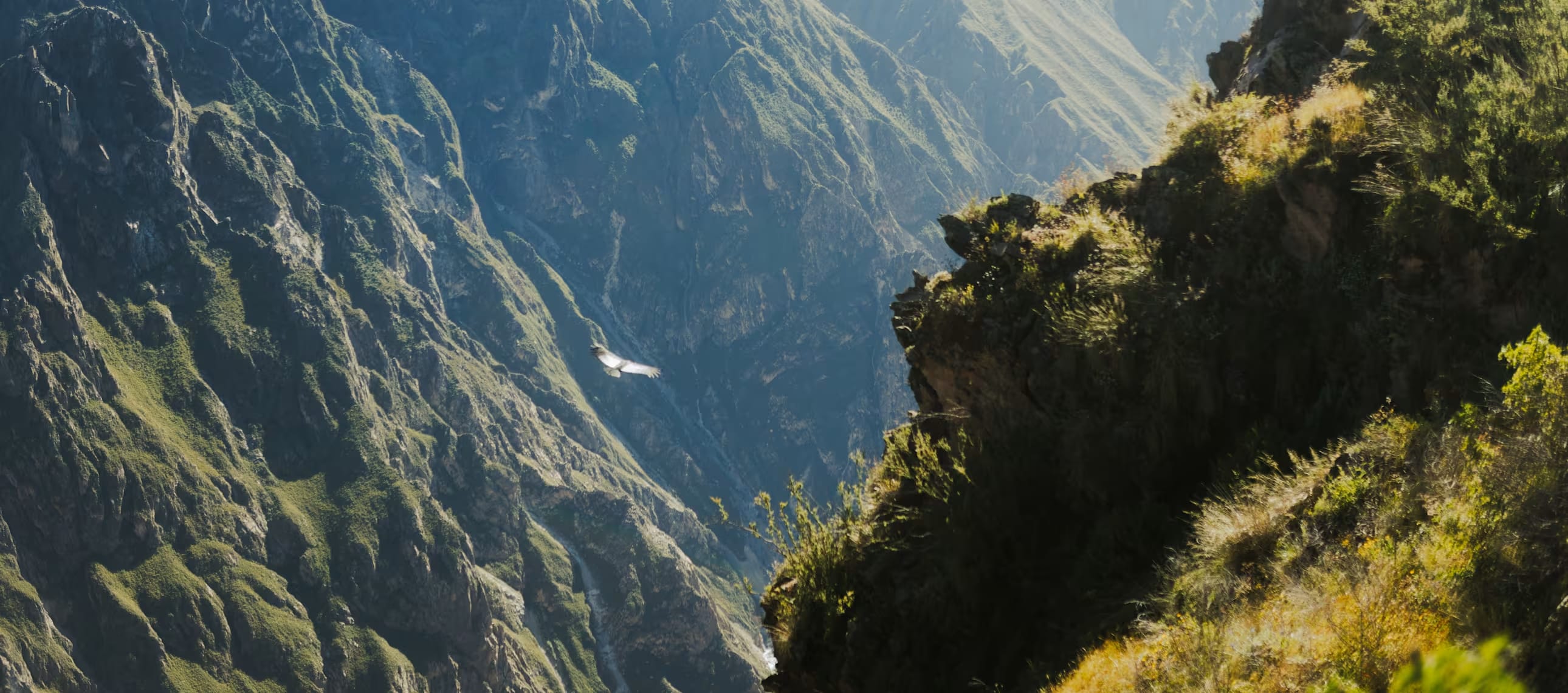
At six forty-five in the morning, at the Cruz del Cóndor viewpoint, there are three people and a park ranger. The light has not yet entered the canyon —the sun rises behind Mismi and takes half an hour to reach the floor— and the condors sleep in the niches of the north wall, invisible to anyone who does not know where to look. The temperature is four degrees, the altitude wind is already felt, and the silence is so dense that the Colca river can be heard three kilometres below. This is the version of Colca most visitors never see: the version before the buses.
The Cruz del Cóndor viewpoint receives eight hundred daily visitors in high season, concentrated between nine and eleven. Group-tour buses leave Arequipa at five —three and a half hours of road, though many stop in Chivay for breakfast— and arrive at the viewpoint just as the condors begin to take flight. The feeling, for the traveller who paid for a luxury trip, resembles Machu Picchu on circuit 2: the fauna is there, but the experience dissolves in the mass.
The real dawn window
Andean condors —Vultur gryphus, adult wingspan up to three metres, weight twelve to fifteen kilos— cannot fly without thermal lift. Their wings are designed to glide, not to flap. This means they depend on rising currents that form on the canyon walls when the sun warms the rock and begins generating temperature differences between floor and rim. The difference is real only after seven thirty; before that, condors are still.
The optimal viewing window is between eight and nine thirty. Before, the condors barely move. After, the thermals lift them out of sight. Tour buses arrive at nine thirty, right at the edge: they catch one or two flights before the group time ends. Travellers who rise early —arriving at the viewpoint between six and seven— catch the pre-light, the condors waking in their niches, and the first flights with no one around.
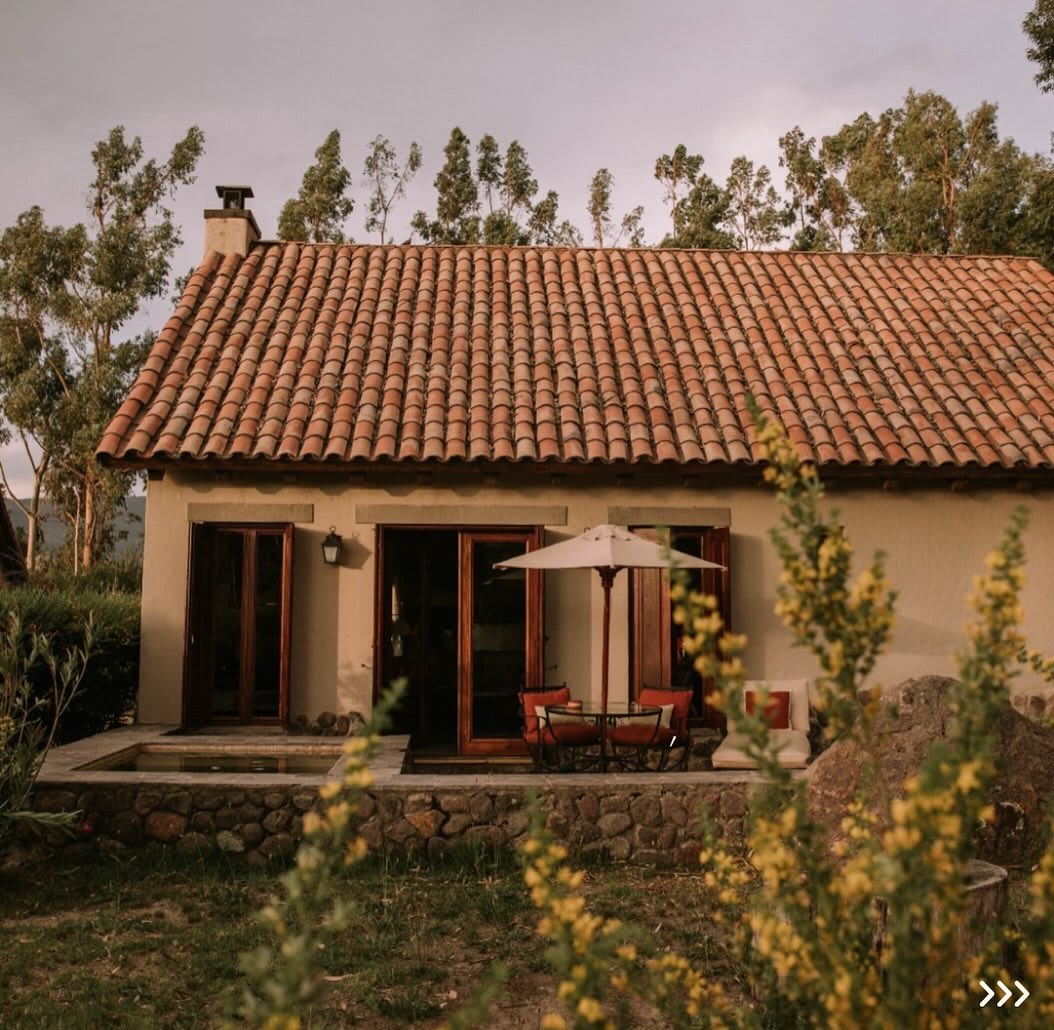
For travellers staying at Belmond Las Casitas or Colca Lodge, hotel departure is at five thirty. The private driver reaches the viewpoint in fifteen minutes. Arrival at six forty-five. Condors begin waking at seven forty. The first buses arrive at nine twenty-five.

Tapay: the alternative viewpoint
Thirty minutes by car from the main viewpoint, on the opposite side of the canyon, lies the Tapay viewpoint. Few visitors know it, and even fewer reach it: the road is unpaved, requires a 4x4, and the guide must coordinate with the local community. The view is complementary —the condors flying over Cruz del Cóndor in the morning pass by Tapay during the day— and the lower altitude (3,500 metres) brings them closer to the observer.
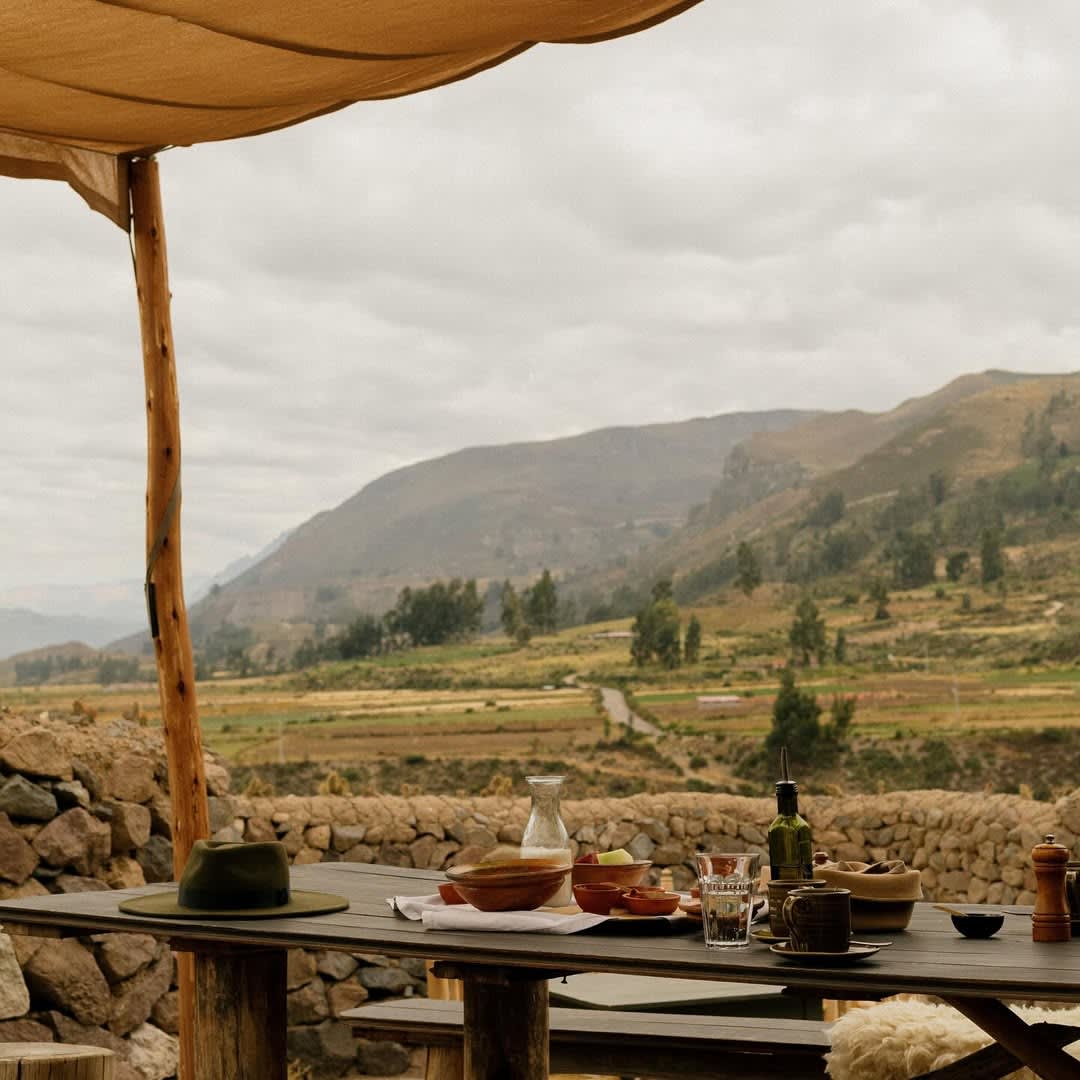
We recommend Tapay for travellers who have already done Cruz del Cóndor and want a second view. Combinable with lunch at the Tapay community restaurant (traditional Collagua cooking, direct payment to the community). It is the least crowded version of Colca, and the one that generates most direct income for the valley villages.
What the actual sighting is like
The current canyon population is approximately one hundred and twenty condors, according to the latest census by the Peruvian National Service for Protected Areas (SERNANP). On a good day, twelve to twenty birds cross the viewpoint. On an average day, five to eight. On a bad day (rain, low cloud, southern wind), zero to two.
The condor does not appear in formation: it flies alone or in pairs, in wide circles over the canyon, working the thermal. Minimum distance to the viewpoint is forty metres (when a bird passes near the edge), maximum a kilometre (when flying over the canyon centre). For photography, the recommended lens is 200-400mm. Shorter lenses fail to capture detail; longer ones need a tripod given the low dawn light.
What you see, in order of probability: adult condors (bald head, white collar, glossy black plumage), juveniles (dark brown plumage, no collar, full adult plumage at age seven), mountain caracaras (smaller, feathered head), black vultures (most common, easily confused with juvenile condors at distance).
The condor is not exhibition. It is a remnant population that survives in this canyon because the Collagua peoples decided, fifty years ago, not to poison the carrion any longer.
Kada Travel
Why the condor is here
Colca is one of the few places in Peru where the Andean condor survives in studyable numbers. The reason is historical more than biological: in the 1970s, an agrarian campaign promoted lead-poisoning of carrion to protect livestock, and Andean condor populations fell seventy-five per cent in thirty years. In Colca, the Collagua communities resisted the campaign and continued offering natural carcasses of dead animals as tribute —a pre-Incaic tradition that sees the condor as messenger of the apus, the mountain spirits.
Today, the canyon is a recognised sanctuary. The population remains stable —not growing, but not falling— and the constant tourist presence helps fund the reserve. The paradox is that mass tourism, which dilutes the experience, is also what pays for conservation. The considered traveller's dawn departure is not only a matter of avoiding crowds: it is the version that minimises disturbance without subtracting from sanctuary financing.
What matters, what doesn't
What matters: rising early, not expecting perfect photography without professional gear, not approaching the viewpoint edge (the rock is unstable), and not applauding when a condor passes close (it disturbs them and may permanently push them away from the viewpoint).
What matters less: counting twenty condors. Five flights at good height, with no one around, in golden dawn light, are worth more than twenty diluted by the noise of two hundred visitors. What the traveller will remember on returning home is not the count, but the canyon's silence at seven in the morning, before the first condor opens its wings.
Written by Kada Travel Editorial
Frequently Asked
Between 6:45 and 7:30 AM. Earlier, the condors sleep and the light does not allow viewing. After 9:30 the group buses arrive. The window of solitude and golden light is that forty-five-minute period.
Yes. The Colca valley tourist ticket costs 70 soles (USD 19) and grants access to the viewpoint and other valley sites for two days. Purchased in Chivay on entering the valley. No additional dawn fee.
Not really. The viewing window demands patience: ninety minutes at the viewpoint is the minimum. Fifteen minutes likely means zero condors. If time does not allow patience, better skip it and dedicate the time to terraces or thermal baths.
Antahuilque viewpoint (15 minutes from Cruz del Cóndor), Tapay viewpoint (other side of the canyon), or second dawn visit the following day. Valley hotels offer a second attempt at no extra cost if the first day yields no sightings.
Yes, in smaller numbers. The afternoon window is between 4 and 5:30 PM, when condors return to their nests. Less spectacular than dawn but more intimate if weather cooperates.
Condors do not fly in continuous rain. If rain stops after dawn, the sighting can be salvaged. We recommend visiting in dry season (May to October) to ensure the experience.
Design Your Journey
Design your bespoke Peru journey
We talk. We listen. Then we design an itinerary that belongs only to you.
Start Planning