Unfolded· 7 min read·13 July 2026
Origin: Cacao and Coffee in Lima
A private session in a Barranco atelier and a single-origin coffee tasting — Peru as a producer country, encountered from the bean.
By Kada Travel Editorial
Most of the world's chocolate is made from three varieties of cacao grown in monoculture plantations optimised for yield. Peru is where the exceptions live. The country holds an estimated thirty-six percent of the world's fine-flavor cacao — the rare, genetically diverse varieties whose aromatic complexity the major commodity market has no commercial use for, because the volumes are too small, the harvests too variable, and the flavour too specific to blend away. What this means, practically, is that the most interesting raw chocolate on earth is growing in Peru's cloud forests and high Amazon basin, largely ignored by the global confectionery industry, and that it can be encountered — directly, specifically, from the bean — in a Barranco atelier whose owner has been doing exactly that for the better part of a decade.
The morning we arrange is two sessions: cacao first, coffee after. Both are encounters with Peru as a producer country rather than as a consumer of imported technique.
The Cacao
The chocolatier we work with in Barranco does not source from commodity brokers. He works directly with growers in the regions that produce the fine-flavor varieties Peru is known for: the chuncho cacao of the Cusco cloud forests, the native Amazon varieties that grow wild in the catchment area of the Urubamba and Madre de Dios rivers, and the highland varieties from the Piura and San Martín regions whose specific terroir — altitude, rainfall, soil composition, the particular fungi of the forest floor — produces aromatic profiles that no cultivated cacao can replicate.
The bean-to-bar process, at a hand-production scale, is a sequence of decisions at every stage. Fermentation — the six-day process that converts the raw cacao bean's sugars into the precursors of chocolate flavour — is where most of the aromatic development happens, and where most large-scale producers cut corners. The beans in the atelier have been fermented by the growers according to protocols the chocolatier has developed with them over years of collaboration. The drying time, the roasting curve, the conching duration — each is an adjustment made for a specific bean from a specific harvest, not a standardised industrial parameter.
The private session moves through the process backward from finished chocolate to raw bean: tasting first (a sequence of five to seven bars, each from a different Peruvian cacao variety and region, all made in the atelier), then the roasted nibs, then the raw fermented beans, then — if the season permits — the fresh cacao pod, split open to show the white fruit and the seeds. The fresh pod is the part that surprises: the raw cacao taste is fruity, acidic, nothing like chocolate. The gap between what the pod contains and what the finished bar is constitutes, almost exactly, the story of what skill and fermentation accomplish.
The most consistent observation from guests who have done this session: they cannot eat commercial chocolate afterward. Not because of snobbery — because the flavour comparison is too extreme to ignore.
The Coffee
Peruvian specialty coffee is produced in three highland regions whose names appear on the cups of third-wave cafés in London, New York, and Tokyo more frequently now than they did five years ago, and whose position in the international fine-coffee conversation is still being established. Chanchamayo, in the Junín highlands, is the most established: high-altitude arabica grown at 1,200 to 2,000 metres, typically processed as washed (yielding clean, bright acidity) or natural (yielding fruit-forward sweetness), with the particular characteristic that high-altitude Andean coffee shares regardless of origin — a flavour density that lower-altitude production cannot match. Cajamarca, in the northern highlands, produces coffee at similar altitudes with the specific terroir of the northern cloud forest: a slightly different rainfall pattern, a different fungal ecology in the soil, and the influence of the Marañón river valley, which channels cool air from the Amazon basin through the growing zones. Villa Rica, in the Pasco region, is where Peruvian specialty coffee production began in the nineteenth century — the original arabica introduction to the central Andes, grown in one of the narrowest and most specific microclimates in the country.
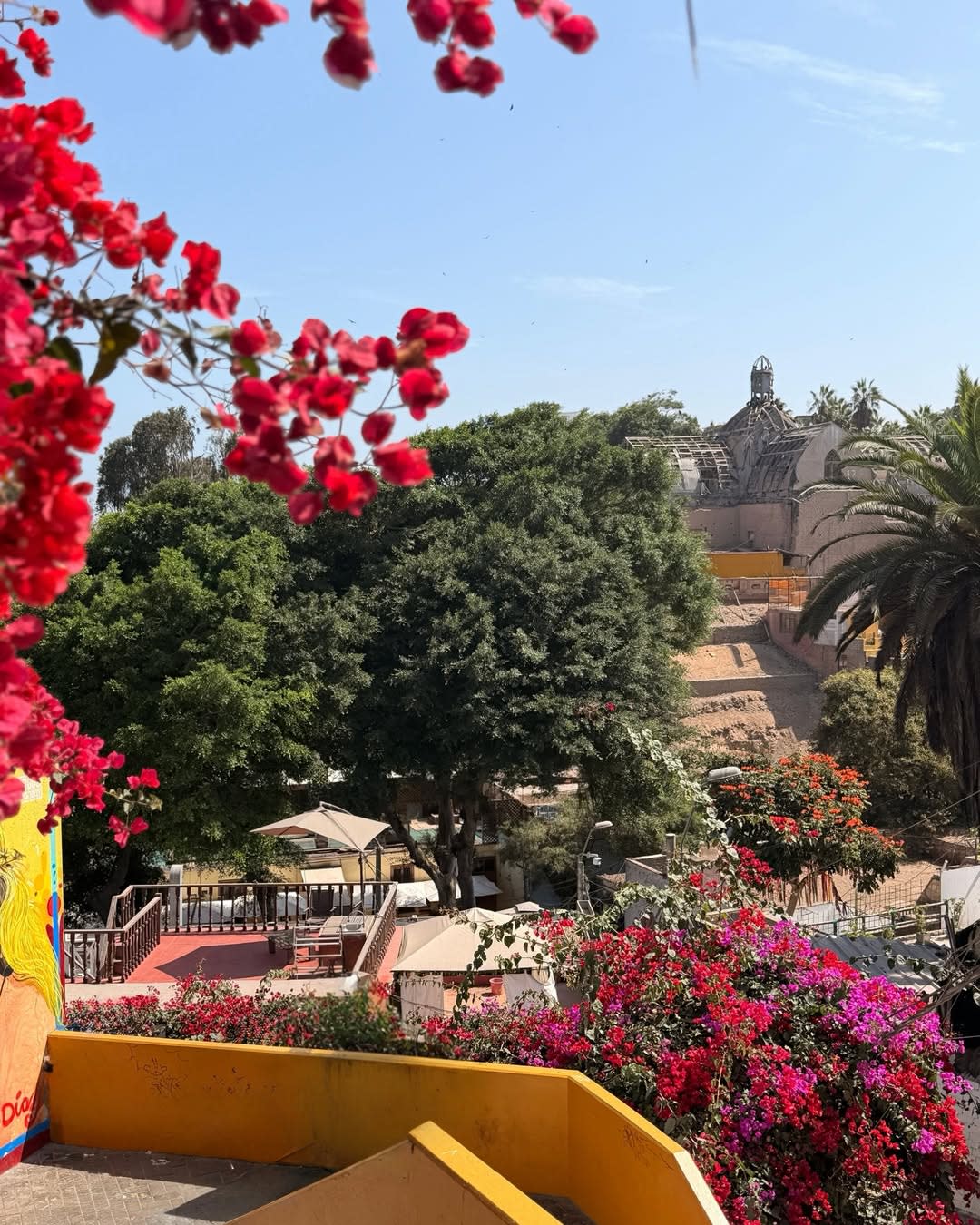
The coffee tasting is held at a small roaster's table in Barranco — a different space from the atelier, reached on foot through the neighbourhood in the midday hour after the chocolate session. The roaster we work with sources single-origin from all three regions and, depending on the harvest season, from additional highland valleys whose microclimates produce runs of thirty to fifty kilograms — quantities too small for commercial distribution but sufficient for a dedicated roaster's direct-trade relationships.
The tasting uses the cupping format: the same protocol used by specialty coffee buyers worldwide — ground coffee, hot water, four minutes, break the crust, evaluate aroma, slurp from spoon — stripped of its competitive framing and conducted at the pace of a conversation rather than a certification. Five or six coffees, each from a specific farm and region, in an order that moves from the most familiar profile (washed Chanchamayo, clean and direct) to the most unusual (a natural-processed Cajamarca with the dried-fruit character that surprises guests who associate Andean coffee with the thin bitterness of bad espresso). The point is not that our guests leave as professional cuppers. The point is that the word origin acquires a specific meaning — a slope, an altitude, a rainfall pattern — that it did not have before.
What Kada Arranges
The morning runs approximately three and a half hours: ninety minutes in the chocolate atelier in the early morning, a thirty-minute walk through Barranco, ninety minutes at the coffee cupping. We begin with cacao rather than coffee for the same reason a progressive tasting moves from delicate to bold: the chocolate's fat content temporarily coats the palate, and the coffee session works best after a palate-cleansing walk and the acidic fruit notes of the first cupping cup.
Both the chocolatier and the roaster work with us as permanent collaborators. Their direct-source relationships — with the growers in Chuncho, with the farms in Chanchamayo and Cajamarca, with the wild-cacao collectors in the Amazon basin — are theirs, built over years, and they are what makes the session a provenance encounter rather than a product demonstration. The specific batches available on any given morning shift with the harvest season; we brief our guests on what is currently in the atelier and the roaster's stock before the visit, so the conversation is calibrated to the specific coffees and chocolates they will encounter.
For guests whose Lima stay includes the private jarana in Barranco, we schedule the cacao-coffee morning as a different day — both experiences take place in the neighbourhood, but they occupy different registers of the city, and the same-day combination produces a fatigue that neither experience deserves.
Expert Insight
"The moment I most want guests to have in the atelier is when they hold a raw cacao bean — after they've already tasted the bar — and try to understand how the same object produced both things. That gap, between the acidic, fruit-forward raw bean and the complex finished chocolate, is what the process of fermentation and roasting actually accomplishes. Understanding that gap makes you understand why most commercial chocolate tastes the way it does. And why Peru's fine-flavor cacao is worth the attention it's finally starting to receive."
— Elizabeth Garcia, Senior Travel Designer, KADA Travel
A Practical Note
The morning requires no prior knowledge of chocolate or coffee — a palate and curiosity are sufficient. The session is not a production class: our guests observe and taste rather than work the equipment. For guests with professional backgrounds in food, wine, or agriculture who want a more technical engagement — the fermentation biochemistry, the roasting chemistry, the agronomy of high-altitude coffee cultivation — we brief the chocolatier and roaster in advance and they adjust the session accordingly.
The Barranco walk between the two sessions takes thirty minutes on foot through the neighbourhood's back streets, past the repair workshops and the market stalls that occupy the areas between the colonial houses. This transition — leaving the controlled environment of the atelier for fifteen minutes of ordinary Lima neighbourhod before arriving at the roaster's table — is part of the morning's logic. The city does not disappear between the sessions.
For guests travelling onward to Cusco, the cacao connection extends directly: the chuncho cacao of the Cusco cloud forests, encountered in bar form in the Barranco atelier, is grown in the forest at the base of the same mountains our guests will stand on a week later. The morning in Lima becomes a reference point that the landscape of Cusco confirms.


Written by Kada Travel Editorial
Frequently Asked
No. The tasting is structured as an education, not as a professional assessment. The sequence — finished bar, then nibs, then raw bean, then pod (when in season) — is designed to make the process legible to anyone who eats chocolate, which is almost everyone. The coffee cupping uses a professional protocol but runs at a conversational pace; the objective is understanding origin, not calibrating palate precision.
Yes. The chocolatier produces in limited quantities; the available bars vary with each harvest season. The roaster typically has small-run bags of the single-origin coffees used in the tasting. We note what is available at the briefing, so guests who want to bring specific items back from Peru know in advance what the morning holds.
Yes. The single-origin bars produced at the atelier are typically dark (70–85% cacao content) without dairy addition. The cacao pod, the nibs, and the fermented beans are all inherently plant-based. The coffee session is entirely plant-based. We note any exception at the briefing.
Directly. Several of the fine-flavor cacao varieties used in the atelier are native Amazon varieties — collected from wild trees in the Madre de Dios and Urubamba catchments, not grown on plantations. For guests whose Peru itinerary extends to the Manu National Park or the Madre de Dios, the cacao session in Lima places the Amazon's ecological diversity in a specific sensory frame before they arrive there.
Design Your Journey
Design your bespoke Peru journey
We talk. We listen. Then we design an itinerary that belongs only to you.
Start Planning