Unfolded· 8 min read·24 July 2026
The Lake Before the Schedule
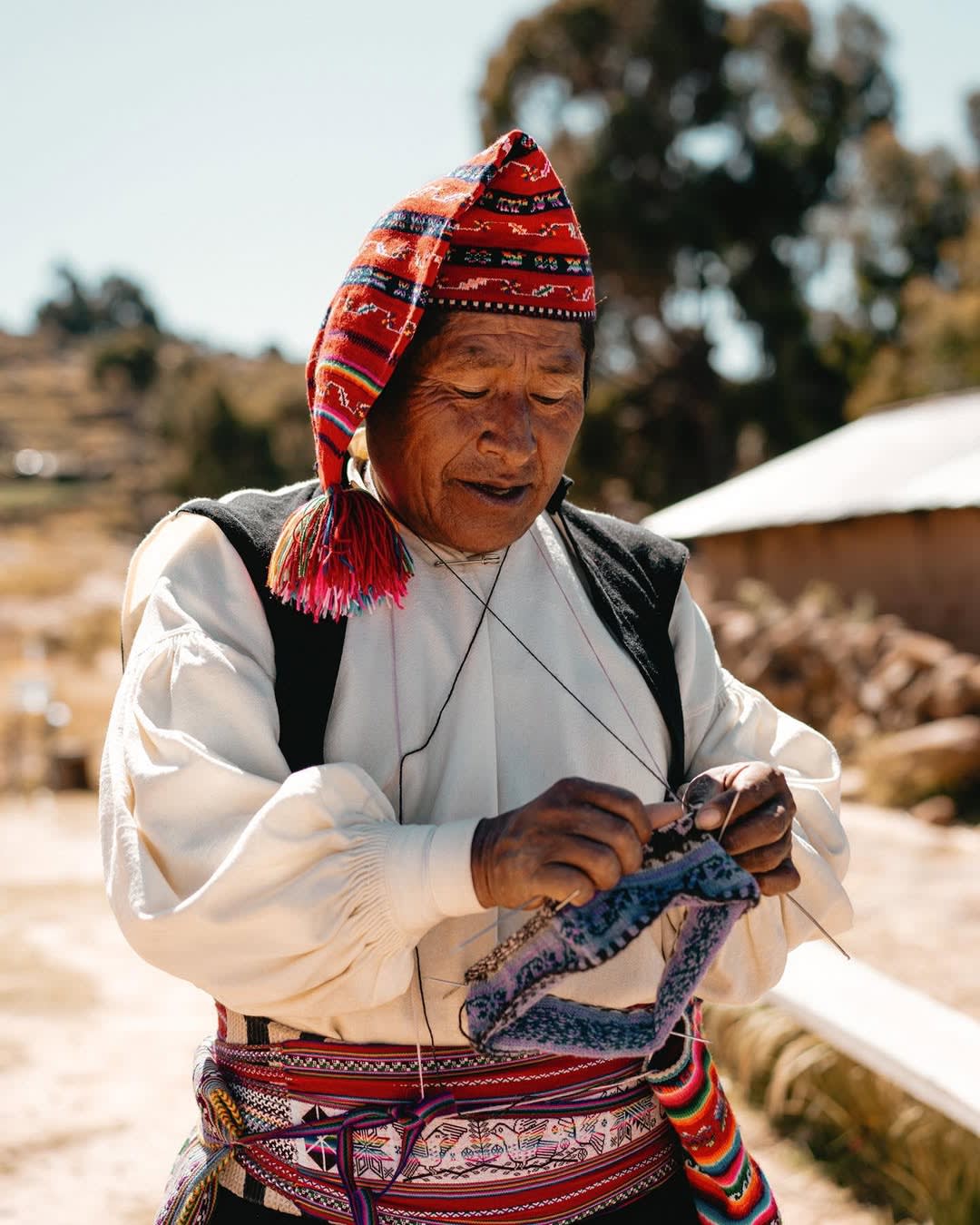
A community visit to Capachica and Llachón — the peninsula north of Puno where Quechua and Aymara communities have been receiving visitors on their own terms, at their own pace, since long before the floating islands of the Uros became the most visited attraction in highland Peru. What Capachica offers is not an alternative to the Uros visit. It is the encounter the Uros visit is trying to produce.
By Kada Travel Editorial
The Uros floating islands are real. The totora reed platforms that support them are a pre-Inca technology; the families that live on them have maintained that technology for centuries; the community that operates the tourist visits controls the terms of access and receives the economic benefit. None of this is invention or performance in the sense of being false.
What the standard Uros visit produces — the thirty-minute stop, the demonstration of reed-cutting, the invitation to buy textiles, the photo on a totora boat — is not false either. It is a highly compressed, highly produced version of an encounter, calibrated for the volume of visitors the floating islands receive daily. Uros is one of the most visited sites in Peru, and the encounter it offers is optimised for that volume.
What most visitors who make the Uros visit are actually seeking is not the totora technology or the souvenir transaction. They are seeking contact with a community that has lived on the lake — genuinely, over time, in a form that predates the tourism economy. That contact is available. It is just not at Uros in the standard thirty-minute format.
The Peninsula
Capachica is a peninsula that extends north from Puno into the lake. The road that reaches its communities is paved for part of the distance and unpaved for the last section; the peninsula is accessible by boat from Puno (one to two hours depending on destination) or by road. The communities on Capachica — Llachón is the best-known, a village on the northeastern tip of the peninsula — receive visitors through a community-managed programme that has been operating since the late 1990s. Unlike the Uros, where the visit format is standardised and rapid, the Capachica communities have developed a model in which the pace and content of the visit is negotiated with the family receiving the guest.
Llachón specifically is a community of approximately eighty families, most of them farmers and fishermen. The lake agriculture — growing potatoes, quinua, and oca on the terraced hillsides above the water — is supplemented by fishing (silverside, rainbow trout) and, increasingly, by visitor stays. The community organised its tourism participation through a cooperative structure that distributes visits among participating families in rotation, so that no single family becomes the sole recipient of the economic benefit.
The Encounter
The Capachica-Llachón visit is not structured as a cultural demonstration. There is no prepared performance, no guided sequence of activities. The format, when Kada visits, is arranged in advance with the specific family: Kada communicates what guests are interested in — the agriculture, the fishing, the textiles, the cooking, the lake itself — and the family organises the day around that.
What this looks like in practice depends on the family and the season. During the planting season (October to November), the visit may include participation in field preparation — not as a tourist activity but as contribution to the work that is happening. During the harvest season (April to May), the harvest itself is underway; guests may help with or observe the collection of potatoes or quinua from the terraced fields above the lake. Outside the agricultural peaks, the visit typically includes a boat excursion on the lake in a traditional wooden vessel, the preparation and eating of lunch together using ingredients from the family's own production, and extended conversation — with the guide translating — about life on the lake, the community's relationship to the Puno mainland, and the differences the family observes between the lake communities and the urban life visible across the water.
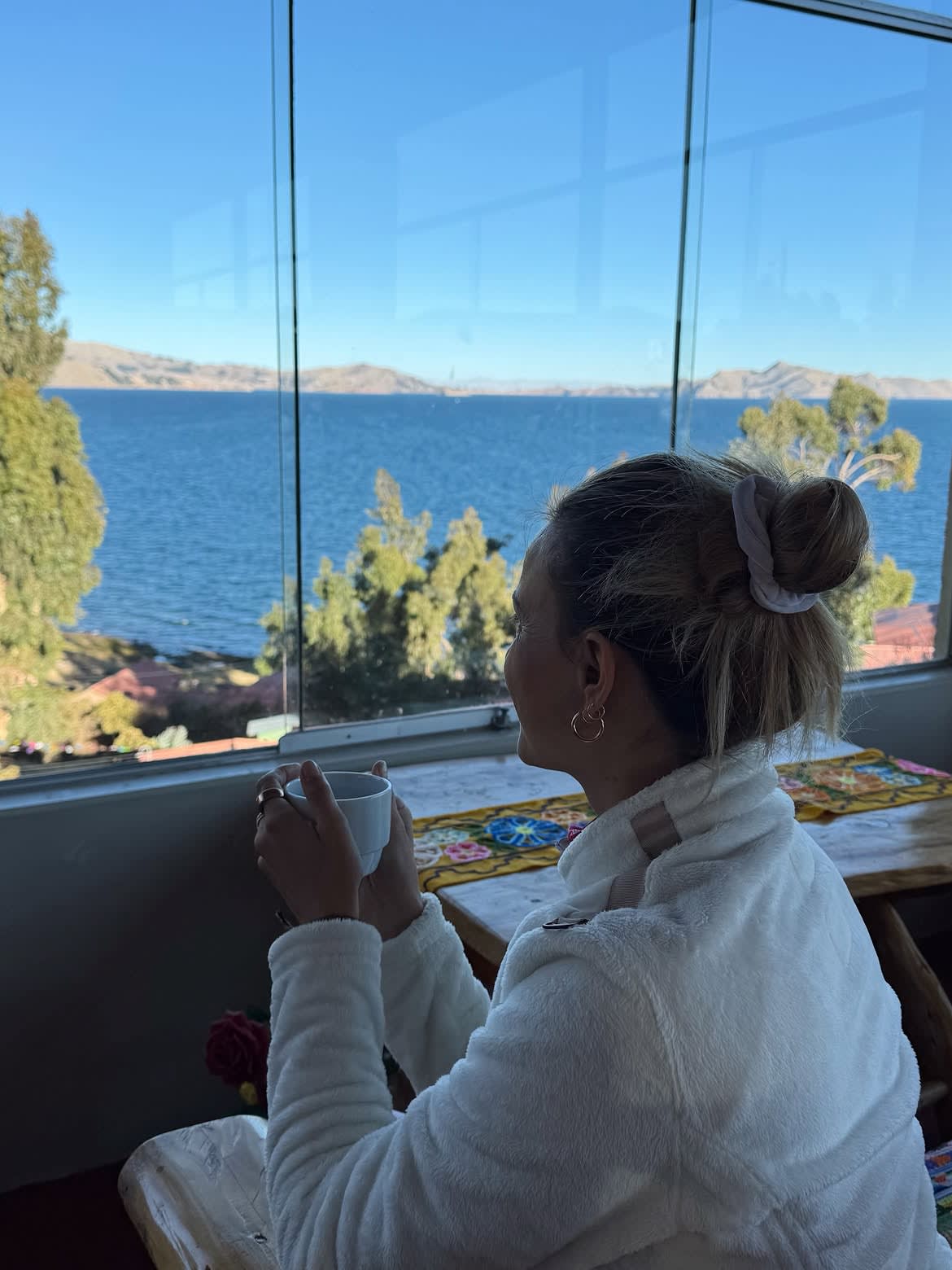
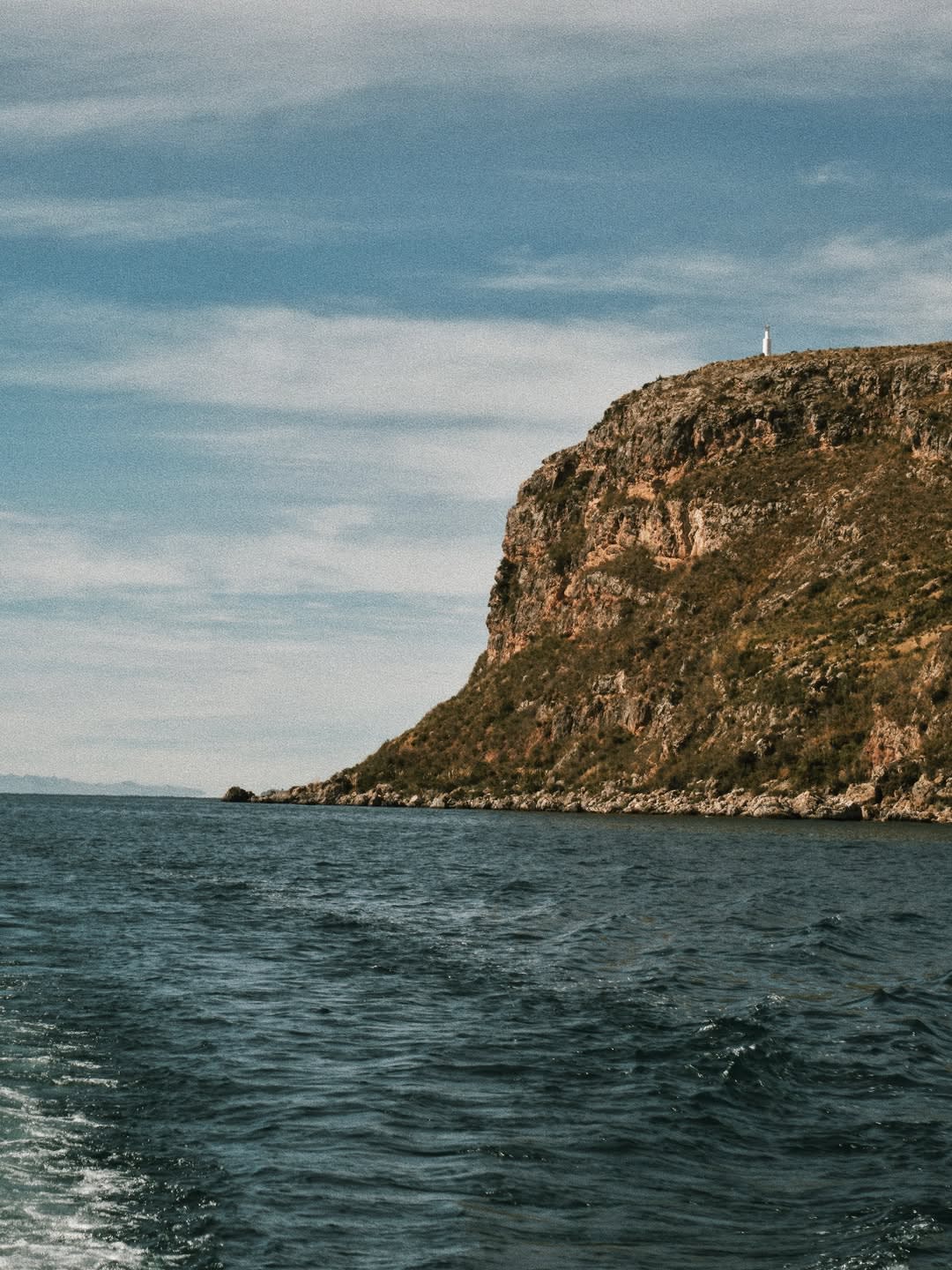
The lake from Capachica looks different than the lake from Puno or from the Uros. The peninsula extends far enough into the water that the Puno shore is not visible from the northeastern tip; in clear weather, the horizon is water on three sides, and the Bolivian cordillera is visible to the east. The altitude is the same — 3,812 metres — but the experience of the altitude changes when the orientation changes.
The Cultural Frame
Capachica and Llachón are communities where Quechua and Aymara cultural elements coexist and sometimes overlap. The distinction is worth understanding before the visit, because the peninsula communities do not fit neatly into either category.
The historical account: the Titicaca basin before Inca expansion was predominantly Aymara-speaking. Inca incorporation brought Quechua administration, Quechua-speaking mitimae — colonists relocated from other parts of the empire — and eventually the gradual spread of Quechua as a lingua franca. By the colonial period, the communities around the lake spoke variants of both languages, and their cultural practices combined elements of both cosmological traditions. Today, the communities of Capachica speak a Quechua dialect that retains Aymara loanwords; their festivals combine elements of the Catholic liturgical calendar with agricultural ceremonies whose structure is Aymara in origin.
This mixing is not confusion — it is the actual history of the lake communities, a history that is more accurate and more interesting than the binary Quechua-vs-Aymara framework that outsiders tend to apply. The visit to Llachón is a visit to a community that lives this mixed heritage as ordinary daily life.
Jaime's Frame
Jaime Ttito, who accompanies Kada's Titicaca visits, is Quechua-speaking, from the Cusco region. He is not Aymara. This distinction — which might seem like a technicality — turns out to be one of the more useful facts to foreground on the Capachica visit.
The guide who brings outside visitors to an indigenous community has a relationship to that community. In most tourism operations, this relationship is collapsed into a professional credential — the guide has studied the community and can explain it. Jaime's approach is different: he comes to Capachica as a Quechua-speaker visiting a Quechua-Aymara mixed community, which means his relationship to what he observes and translates is not that of a detached expert but of someone from a neighbouring cultural world encountering a related but distinct one. The conversation in Llachón is not Jaime explaining this world to a foreign guest; it is Jaime, the guest, and the family all encountering each other with their different positions and different knowledges.
This turns out to matter. What guests observe in Llachón is not a performance for an outside audience. It is a community doing what it does, with a guide who is honest about what he knows and what he does not, and guests who are present without the distance of a scripted explanation between them and the family.
What Kada Arranges
The Capachica-Llachón visit is a full day — departure from Puno by private vehicle or boat in the morning, arrival at the community, the visit itself, lunch, and return to Puno in the afternoon. The format is negotiated in advance with the specific family in the community rotation; Kada provides the family with information about the guests' interests and any specific aspects of community life they want to understand.
Lunch is produced by the family using their own ingredients. The meal is a working meal — prepared in the kitchen, eaten in the family's dining space, conversation throughout. This is not a restaurant experience with a community theme; it is eating with a family on the terms the family sets.
For guests who want to stay on the peninsula overnight — which changes the visit significantly, producing an evening and morning on the lake without the return journey imposing a time constraint — Kada can arrange homestay accommodation with a participating family. The accommodation is simple: a room in a family house, shared facilities. The experience of a night at 3,812 metres on the lake, without urban noise, is difficult to replicate anywhere else in the Kada catalogue.
Expert Perspective
"I want to be honest about what I am when I come to Capachica: I am Quechua, from Cusco. The Aymara world on the lake is not my world — I know it from the outside, the same way a guest from Europe knows it. What I can offer is the difference between knowing it from outside as a Quechua man — which means I recognise the shared grammar of Andean life, the agricultural logic, the cosmological framework — and knowing it from outside as someone from a different culture altogether. When I sit with the families in Llachón and we talk about how they read the lake, about the agricultural calendar, about the difference between the Puno mainland and the peninsula, I am learning too. I think this is visible to the guests, and I think it makes the conversation more honest."
— Jaime Ttito, Head of Guides & Cultural Interpreter, KADA Travel
A Practical Note
Getting there: Capachica and Llachón are reachable by road from Puno (approximately ninety minutes by private vehicle, the last section on unpaved road) or by private boat (one to two hours depending on conditions). Kada uses the route that best fits the guest's programme — road for guests who want the altiplano landscape on the approach; boat for guests who want the lake from the beginning.
Community protocol: The visit operates on the community's terms. Kada communicates in advance what the family is comfortable with — which parts of the house, which activities, which conversations. If the guide indicates that something is not available on a particular day, this is accepted without negotiation. The community rotation system means the specific family changes; the protocol is consistent.
Uros and Capachica: Guests who ask about the Uros in the context of this visit will find Kada straightforward about the comparison: the Uros standard visit is a genuine encounter with a genuine community. Capachica is a different calibration — slower, less produced, more dependent on the specific family and the specific day. Kada's curation goes to Capachica because what Capachica offers is closer to what our guests typically describe as the encounter they are actually looking for.
Physical conditions: Capachica and Llachón are at 3,812 metres. The lakeside is flat; the terraced fields above the village involve gentle climbing. No special equipment is required beyond the standard altiplano layering.
Written by Kada Travel Editorial
Frequently Asked
The Uros islands are floating reed platforms moored on the lake west of Puno; the communities that live on them have done so for generations, and the visit format is managed by the Uros community. Capachica is a fixed land peninsula north of Puno, with communities of Quechua-Aymara farmers and fishermen on solid ground. The fundamental difference is in the encounter format: the Uros standard visit is thirty to sixty minutes with a large group, scripted and rapid; the Capachica-Llachón visit is a full day with a single family, unscripted and paced by the family. Both communities live adjacent to Titicaca. The substance of what the visit offers is different.
The communities of Capachica speak a Quechua dialect with Aymara influences — a product of the historical mixing of the two linguistic traditions around the lake. Spanish is also widely spoken. Jaime, who accompanies Kada visits, speaks Quechua as his first language; the family in Llachón will speak Quechua and Spanish with him, and the conversation is natural. Aymara-specific elements — vocabulary, ceremonial language — are translated and contextualised.
Yes, for guests who want it. The homestay accommodation is a room in a family house with shared bathroom facilities — rustic, no WiFi, limited hot water. The experience of a night on the lake at altitude — the silence, the stars at 3,812 metres, the morning lake light — is particular. Kada prepares guests for the conditions in advance; the homestay is not for everyone, and guests who want the Capachica experience without the overnight can return to Puno the same day.
The visit is physically accessible for children — the road and lakeside are flat, and the altitude, while significant, is manageable for children who have acclimatised to Puno altitude. The format — an unscripted day with a family — is often particularly engaging for children, who are typically welcomed with less ceremony and more directness by the host family than adults are. Kada recommends this visit as appropriate for families with children over approximately ten years old who can manage altitude and extended outdoor time.
Design Your Journey
Design your bespoke Peru journey
We talk. We listen. Then we design an itinerary that belongs only to you.
Start Planning