Destinations· 7 min read·28 November 2024
How to Combine Paracas, Ica and Nazca in a Few Days
Three destinations in a straight line down the southern Pan-American — the four-day itinerary that fits them best.
By Kada Travel Editorial
Three destinations south of Lima share geography but not temperament: Paracas, with its sea and desert; Ica, with its pisco valley and dunes; Nazca, with its geoglyphs and archaeological solitude. All three sit along the southern Pan-American highway, in a straight line, and all three can be combined into a single five-day journey from Lima without the trip feeling rushed. This guide proposes that architecture.
The distances, in driving hours
Lima to Paracas: 3 hours 30 minutes on the southern Pan-American, 250 km, dual carriageway to Chincha and single after. Paracas to Ica: 1 hour, 80 km, single carriageway. Ica to Nazca: 2 hours 30 minutes, 145 km, single carriageway with curved sections. Nazca to Lima return: 7 hours direct, 450 km. The alternative to the long return is to fly from the Pisco airfield —operated by private airlines— to Lima, an hour's flight.
These distances matter because they organise the itinerary. Doing Paracas and Nazca on the same day —which some tours attempt— means seven hours of driving plus two hours of boat in Paracas and ninety minutes of flight in Nazca. It is physically possible and emotionally disproportionate. The day's afternoon is spent only in transit.
Four-day itinerary: the balance
This is the formula we recommend for travellers with four days.
Day one. Departure from Lima at dawn (6:30 AM). Arrival in Paracas by ten. Check-in at Hotel Paracas Libertador or Aranwa. Lunch at the hotel —or at Bahía Tacama, next to the dock. Free afternoon or walk in the National Reserve. Dinner at the hotel restaurant.
Day two. Nazca overflight at eight in the morning from the Pisco airfield (90 minutes total). Return to Paracas by ten. Ballestas Islands tour by private speedboat eleven to one. Seafood lunch. Afternoon in the National Reserve with private guide: Cathedral, Red Beach, Lagunillas. Dinner at the hotel.
Day three. Early departure to Ica (1 hour). Visit to Tacama —the oldest vineyard in the Americas— with tasting and lunch. Afternoon, second bodega: La Caravedo. Check-in at Hacienda La Caravedo (in the vineyard) or Hotel Las Dunas (in Huacachina). Sunset on the dunes or dinner at the bodega.
Day four. Morning at Vista Alegre or Tres Generaciones (second pisco visit, more artisanal). Final lunch at La Olla de Juanita. Departure to Lima at two. Arrival at Lima hotel by six.

Five-day itinerary: the complete version
With five days, the change is to add a Nazca night after Paracas. This permits the overflight from Nazca (shorter and cheaper) and ground visits to the archaeological sites: Cahuachi (the Nazca-culture pyramids, larger in surface than the Egyptian ones though shorter in height), the Chauchilla cemetery (pre-Hispanic mummies in their original tombs) and the Cantalloc aqueducts (a 500 AD subterranean canal system, still in use).
Days one and two. Same as the four-day itinerary, without overflight from Pisco.
Day three. Paracas to Nazca (4.5 hours). Arrival at midday. Lunch at Hotel Majoro. Afternoon ground visits: Cahuachi, Chauchilla, Cantalloc. Dinner at the hotel.
Day four. Lines overflight at eight from the Nazca airfield (45 minutes). Return to hotel for lunch and check-out. Departure to Ica at midday (2.5 hours). Arrival at Hacienda La Caravedo. Visit and tasting at La Caravedo. Dinner at the bodega.
Day five. Morning at Tacama with lunch. Departure to Lima at two. Arrival by six.
Three-day itinerary: the tight version
For travellers with only three days, we recommend dropping Nazca and concentrating on Paracas and Ica. The Nazca overflight is out (logistics do not fit in three days), but the Ballestas, the National Reserve and two bodegas are reachable.
Day one. Lima to Paracas. Afternoon in the National Reserve or hotel rest.
Day two. Ballestas in the morning, lunch, National Reserve in the afternoon, hotel dinner.
Day three. Early departure to Ica (1 hour). Visit La Caravedo with tasting. Lunch at Tacama. Departure to Lima at four. Arrival at the hotel by eight.
This version leaves the traveller without Nazca but with a condensed experience of the other two destinations. For Peru travellers who already have Cusco and the Amazon in the itinerary, this is the combination we usually suggest.
Three destinations on a straight line. The difference between rushing them in two days and breathing them in four decides more of the Peru trip than it seems.
Kada Travel
What changes the order
One variation worth mentioning: the reverse order. For travellers arriving from Cusco southward (in Arequipa or via Puno) who want the coast before Lima, the Nazca-Ica-Paracas-Lima direction works as well as the southbound. Cusco to Lima flight, immediate departure south by road, two days in Paracas-Ica on return, international flight from Lima.
The detail that matters is geographical, not editorial: Peru's entry is Lima, exit is also Lima. Any itinerary with the southern coast at the start or the end works; what does not work is putting it in the middle, between Lima and Cusco. That fragments the trip and multiplies transfers without gain.
Combination with Cusco
The natural combination is: five days southern coast (Lima-Paracas-Ica-Nazca-Lima), Lima-Cusco flight, five days Cusco-Sacred Valley-Machu Picchu. Total eleven days. For travellers with fourteen, add two Lima nights at the start and two Cusco nights at the end.
For those combining with the Amazon, the most efficient is: Lima-Paracas-Ica (four days), Lima-Cusco-Tambopata flight, four days Amazon, Tambopata-Cusco-Machu Picchu (four days), Lima return. A fourteen-day trip with three regions; the southern coast integrates perfectly at the start without subtracting from highlands or jungle.
Written by Kada Travel Editorial
Frequently Asked
No. Distances are long, the highway has dangerous overtaking sections, and car theft is not unheard of on some desert stretches. We always recommend private transfer with driver —between USD 350 and 500 per day, including driver with basic Spanish/English.
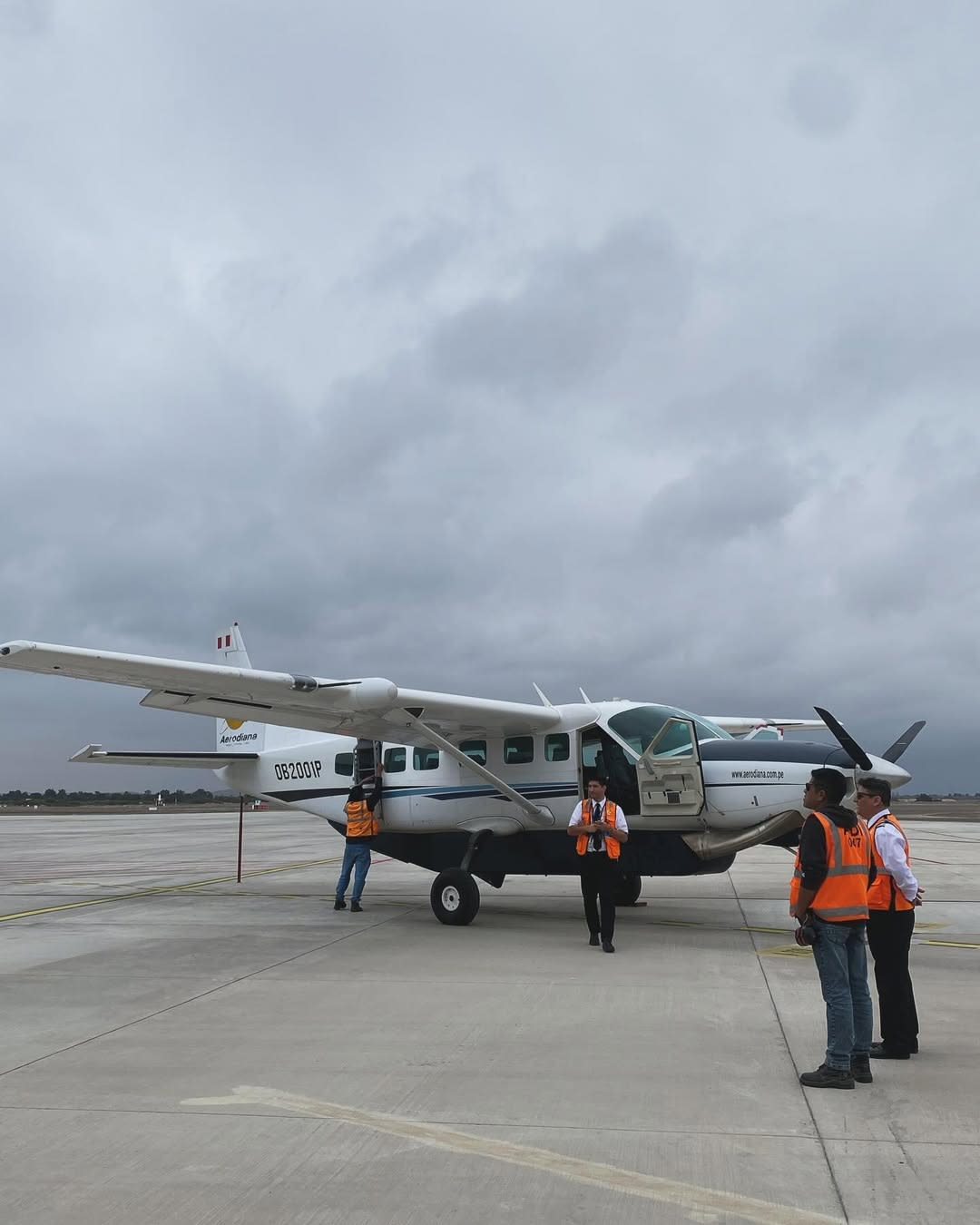
The Pisco airfield receives only private flights (Aerodiana, AeroNasca) or the Nazca overflight. There are no regular commercial flights to Peru's southern coast. For Arequipa or Cusco, commercial flights from Lima do exist.
Paracas and Ica, yes. Nazca, not with the quality we recommend. Three days for all three destinations means seven hours of road per day and half the time in transit. For luxury travellers, it does not work.
December to April: clear skies, sun, blue sea, dunes at their visual best. June to October has coastal fog —no rain but grey skies—; the Nazca overflight is more stable and prices drop. Shoulder months (May, November) are acceptable.
Indispensable. UV radiation on the Peruvian coast is high year-round because of the Humboldt current's effect on cloud cover (little of it). SPF 50, wide-brim hat, side-protection sunglasses. Reapply every two hours outdoors.
Yes. The Ballestas are excellent for children over five. Huacachina's dunes, by buggy, work from age six. The Nazca overflight, not advisable for under-tens because of turbulence. Bodegas welcome families but the tasting is for adults —hotels offer alternative activities for children while adults taste.
Design Your Journey
Design your bespoke Peru journey
We talk. We listen. Then we design an itinerary that belongs only to you.
Start Planning