Culture & Stories· 8 min read·29 January 2025
Andean Cosmovision: Pachamama, Apus and Rituals Still Lived
Andean philosophy is not folklore: it is thought framework structuring ethics, agriculture and community in current Peru.
By Kada Travel Editorial
The Andean cosmovision is not museum. It is not folklore exhibited at tourist festivals. It is a philosophical-religious framework that today still structures how eight million Peruvian Quechuas and Aymaras live, work, relate, and understand the universe. This guide describes its three central dimensions so that the Peru trip is not only archaeological tourism, but encounter with a living thought system.
Ayni — the reciprocity principle
The fundamental concept of Andean philosophy is ayni: mandatory reciprocity between beings of the world. Everything received must be reciprocated. It is not gift: it is reciprocal debt.
Applied in current Peruvian daily life:
If a farmer helps another harvest, the other must return the favour equally when the time comes. It is NOT free help; it is ayni. Quechua communities maintain formal mental record systems on who owes whom.
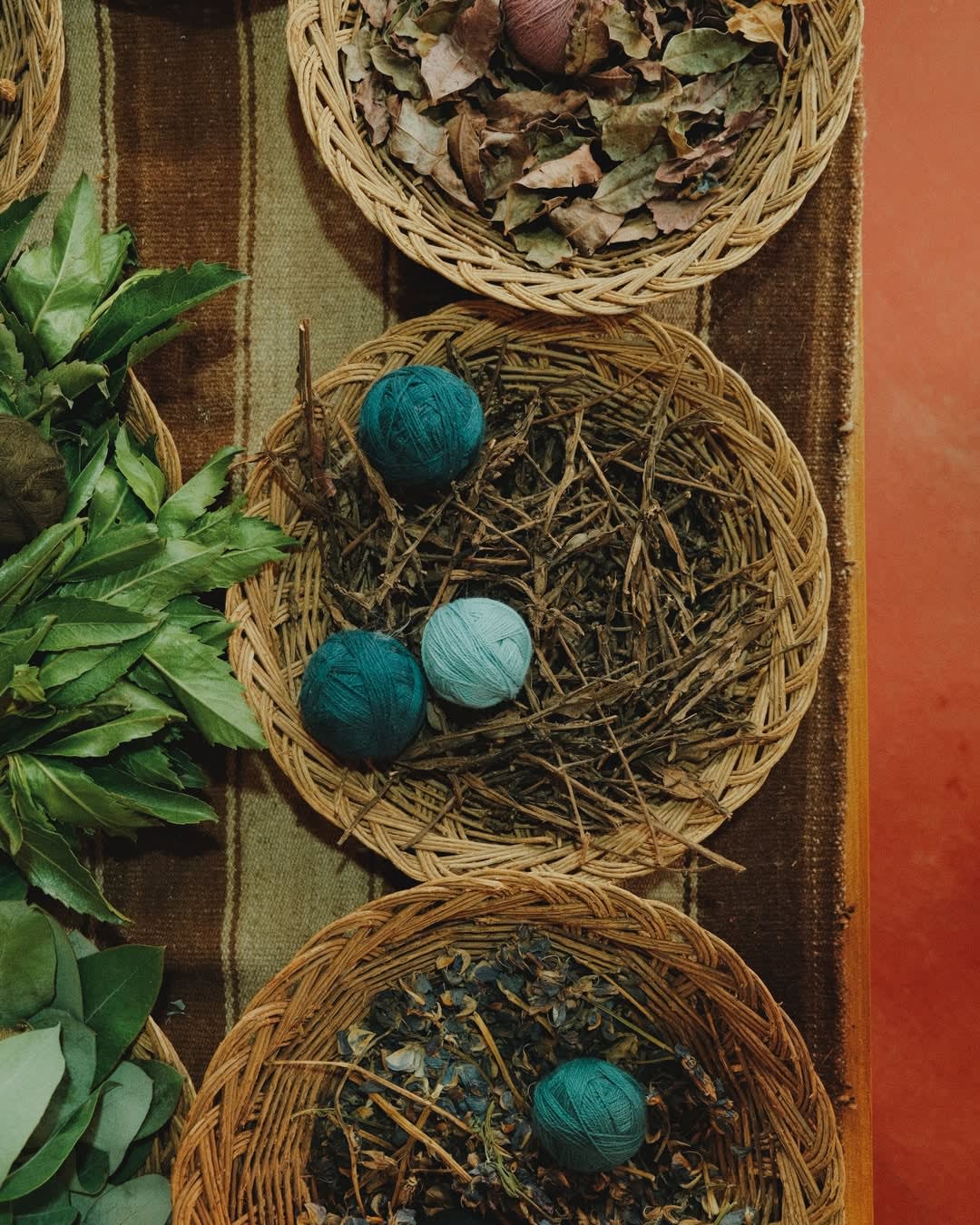
If Pachamama (mother earth) gives water, plants, animals for human sustenance, humans must return offerings: despachos, chicha libations, coca leaves, symbolic foods. It is NOT optional; it is cosmic ayni.
If a mountain Apu allows a community to live on its slope and drink its water, the community must ritually ascend to "thank" and "feed" the mountain with offerings. It is NOT superstition; it is ayni with nature.
This logic permeates each social, economic and spiritual interaction of the contemporary Andean world. It is not metaphor: it is real operational framework governing daily decisions.
Pachamama — mother earth as person
Pachamama is "Mother Earth" in Quechua, but the translation is insufficient. It is not poetic metaphor: it is person with will, feelings, needs. Pachamama can be happy, angry, generous, vengeful.
Practical consequences:
Before digging the earth to build, plant, or harvest, the farmer "asks permission" of Pachamama with offering. Permission is essential; without it, the harvest fails.
When drinking in group, before the first sip a little is poured to the ground "for Pachamama". This gesture, called libation, occurs thousands of times daily in Andean Peru.
August 1 is Pachamama's celebration: the "Day of the Earth" in Andean cosmovision. Entire communities make ceremonial despachos on sacred mountain with: coca leaves, sacred grains (kiwicha, cañihua, quinoa), llama fat, sweets, wine, mate. It is the most widespread festival of contemporary Andean Peru.
Rituals are not "for tourists". On August 1, in any Quechua or Aymara community, there are community despachos continuing millennial tradition.
Apus — mountain spirits
Each sacred mountain has an Apu: personal spirit inhabiting it and representing it. Apus have hierarchy: the Apu of the highest peak has greater power than the Apu of small hill. But all Apus have real agency.
The main Apus of the Peruvian Andean world:
Apu Salkantay (6,270 m): sacred guardian of Sacred Valley. Its name means "savage, indomitable". Cusco patron.
Apu Ausangate (6,384 m): emblematic peak of eastern Cusco. Pilgrimage centre of Qoyllur Riti.
Apu Pachatusan (4,842 m): "the support of the world". Seen from Cusco itself.
Apu Misti (5,825 m): Arequipa volcano, personal Apu of Arequipa city.
Apu Huascarán (6,768 m): the highest in Peru, in White Cordillera.
Apus "feed" with offerings. The Qoyllur Riti pilgrimage (May-June, Sinakara glacier) gathers 60,000 Andean pilgrims each year in one of the most important celebrations of living Peruvian cosmovision. It is NOT tourist ceremony: it is real religious pilgrimage.

The three worlds — Hanan Pacha, Kay Pacha, Uku Pacha
Andean cosmovision divides the universe into three worlds:
Hanan Pacha (upper world): celestial world where gods (Inti/sun, Mama Killa/moon), high Apus, and elevated ancestors dwell. Represented by the condor.
Kay Pacha (the here world): the world of the living. Where humans, animals, plants, mountains dwell. Represented by the puma.
Uku Pacha (lower world): underground world, of the dead, of roots, of earth spirits. Represented by the serpent.
The three worlds connect through chacanas (Andean crosses) and specific passages: caves, springs, mountain summits, sacred sites like Machu Picchu (which the Incas chose precisely for its topographical position as connection point between worlds).
Syncretism: how it mixes with Catholicism
Andean cosmovision survived 500 years of Spanish colonisation through syncretism: integrating Catholic elements without abandoning the underlying Andean system.
Examples of living syncretism:
The Virgin Mary is identified with Pachamama. Virgin of Carmen, Candelaria, Copacabana are simultaneously Catholic saints and Pachamama representations.
The Catholic saints link with Apus. San Cristóbal with Apu Pachatusan, Santiago with Apu Salkantay, Santa Bárbara with specific peaks.
The Peruvian patron festivals (the 3,000+ annual celebrations) are simultaneously Catholic and Andean. The Virgin of Carmen in Paucartambo is both: fulfils Catholic liturgy and respects pre-colonial Andean protocols.
For the visitor this may be confusing, but for the Andean Peruvian it is coherent: both systems function in parallel, one superimposed on the other without internal contradiction.
How it is lived today: concrete examples
Five situations the attentive traveller can observe:
First, in any Andean hotel, before serving the first drink of the day (coca tea, coffee, pisco), the waiter or cook makes silent libation. It is NOT show; it is daily practice.
Second, in construction of any rural civil work, the crew does initial ceremony with despacho to Pachamama. Without it, workers may refuse to begin. Peruvian mining and construction companies have formal budget for "Andean ceremonies" in their contracts.
Third, before ascending a mountain, Andean guides always make offering (3 coca leaves to the wind). The visitor can join or not; the guide never omits the rite.
Fourth, the first days of the month (especially Tuesdays and Fridays) are of spiritual strengthening. Andean shaman masters attend more consultations these days.
Fifth, potato or quinoa harvest always includes thanks to Pachamama with first fruit symbolically given.
How to experience respectfully
The visitor can approach Andean cosmovision in three ways:
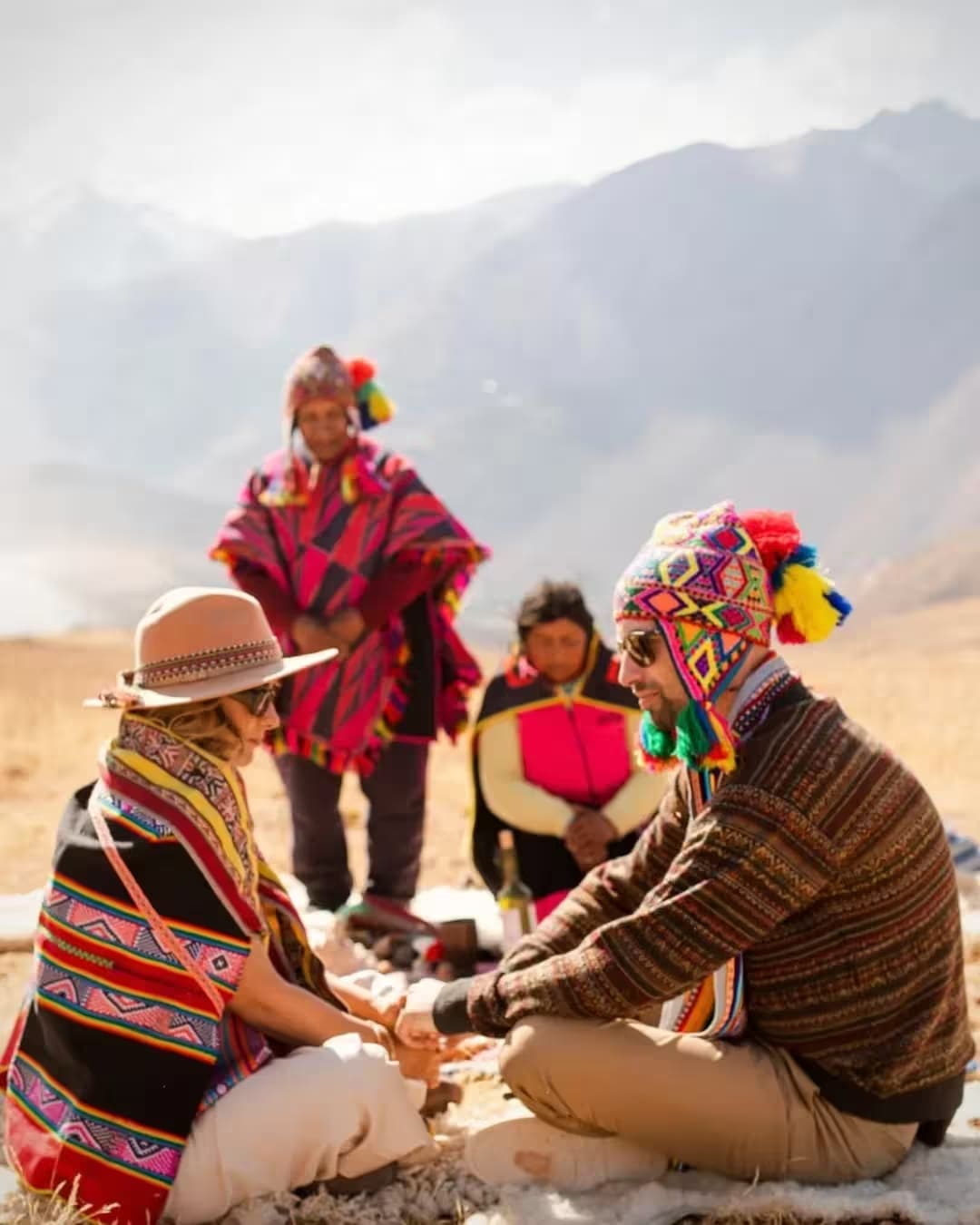
First, private shamanic ceremony with accredited master. Like Doña Bernardina in Patabamba (3-7 day programmes). It is the deepest experience. Cost: USD 800-2,500 per person.
Second, walk with guide specialised in cosmovision, not archaeology. Some Peruvian Andean guides can explain Machu Picchu from the Apu lens, not only from dates and architecture. Additional cost: USD 80-150 per day.
Third, attend August 1 celebration (Pachamama Day) with prior coordination. At Andean properties like Belmond Río Sagrado and Inkaterra Hacienda Urubamba, August 1st despachos take place. Kada arranges respectful participation for our travellers.
Andean cosmovision survives because it solves questions Western modernity does not solve: how to live in reciprocity with nature, how to give meaning to death, how to fit the human into the cosmic. It is not alternative to Christianity or atheism: it is a different, complementary framework, still relevant in how eight million Peruvians live each day.
Kada Travel
Recommended readings
To deepen:
"Open Veins of Latin America" by Eduardo Galeano (1971): not specific to Andean cosmovision but contextualises Latin American cultural persistence.
"The Fox from Up Above and the Fox from Down Below" by José María Arguedas: classic Peruvian novel on clash between Andean cosmovision and coastal modernity.
"The Hold Life Has: Coca and Cultural Identity in an Andean Community" by Catherine Allen (1988): rigorous ethnography of Quechua community and coca's role.
"Apu Ollantay": 16th-century Quechua drama showing pre-conquest Inca cosmovision.
What Andean cosmovision is NOT
Three necessary clarifications against common myths:
First, Andean cosmovision is NOT magic or witchcraft. It is religious-philosophical system coherent with its own internal logic, comparable to Buddhism, Hinduism or Christianity in structure.
Second, Andean shamans are NOT commercial fortune-tellers. The accredited (Doña Bernardina, Don Pascual) are masters with generations of family lineage. The "shamanic ceremonies" in Cusco for tourists in 1 hour are simulation, not authentic practice.
Third, Andean cosmovision is NOT contrary to Christianity. Andeans syncretise both systems. A Catholic priest in an Andean village knows his parishioners baptise their children at church AND make despacho to Pachamama. There is no declared conflict.
Written by Kada Travel Editorial
Frequently Asked
Yes, with accredited master and with respect. Quechua masters receive visitors with genuine interest. The '1-hour with tourist' version is the problematic one.
In Peru, yes. Traditional ceremonial and daily use authorised. For foreigners, taking coca leaves to country of origin is ILLEGAL in most (except Bolivia, other Andean countries). Consuming in Peru is legal.
Through serious hotels or bespoke agencies. Doña Bernardina in Patabamba is reference. Don Pascual in Pisac. Premium operators have years-long relationship with each.
Coca leaves (masters provide but additional can be received), a small symbolic offering from the visitor (can be sweet, fruit, flower), open mind. Do NOT bring strong alcohol, drugs, or intrusive camera.
Yes. Companies operating in Andean zones have formal budget for 'payment to the earth'. Some Peruvian politicians do rituals before campaigns. Cosmovision is real factor in rural decisions.
Yes, subtle. Share central structure (ayni, Pachamama, Apus) but with different emphases. Lake Titicaca Aymaras have greater emphasis on sacred Illimani mountain; Cusco Quechuas on Apu Ausangate. Both are legitimate Andean cosmovisions.
Design Your Journey
Design your bespoke Peru journey
We talk. We listen. Then we design an itinerary that belongs only to you.
Start Planning