Culture & Stories· 7 min read·18 December 2024
Andean Textiles: How to Distinguish Authentic from Imitation
Three physical tests to identify hand-woven vs. industrial, natural dye vs. synthetic.
By Kada Travel Editorial
Andean textile is one of Peru's most sought souvenirs: ponchos, alpaca, blankets, sashes. The problem: 80% of what is sold as "authentic" in Peruvian tourist markets is industrial Chinese (imported and re-branded) or low-quality Peruvian industrial. Difference between authentic and fake is USD 30 vs. USD 800. This guide describes the three physical tests experienced buyers use.
Peruvian textile quality spectrum
Three categories:
Industrial Chinese or synthetic (USD 5-30 per piece). Produced in factories, polyester or synthetic cotton threads, synthetic dye, industrial loom. Sold at mass tourist markets (general Pisac, San Francisco Cusco). 80% of Peru's "Andean textile" falls here.
Medium-quality Peruvian industrial (USD 30-150 per piece). Production in Peruvian workshops but with mechanical loom and synthetic dye. Better quality than Chinese but still industrial. Sold at more expensive souvenir shops and boutiques.
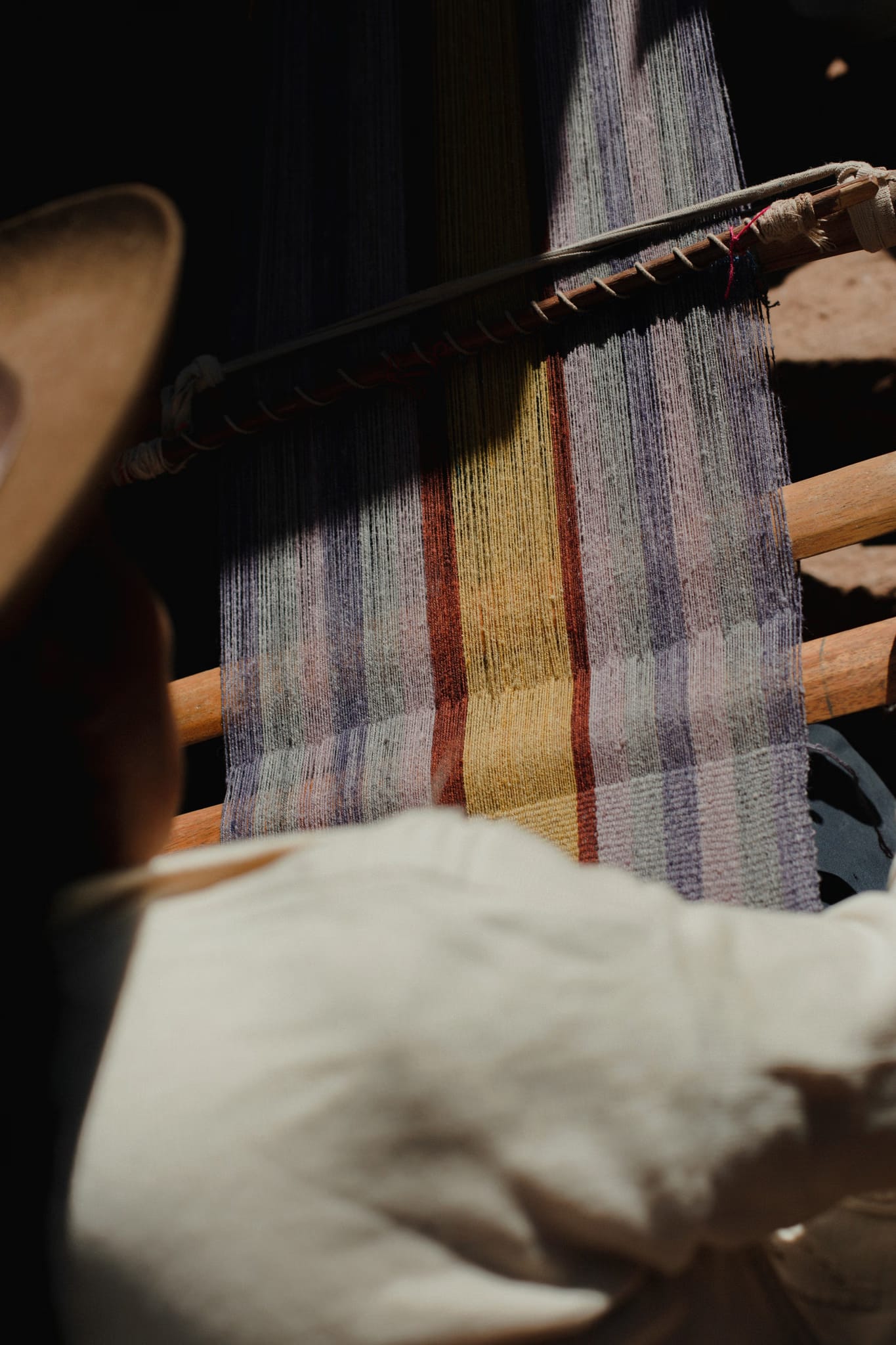
Hand-woven on traditional backstrap loom (USD 150-1,500 per piece, or more for exceptional pieces). Made entirely by hand by Andean weaver, natural fibres (alpaca, sheep wool), natural dye (cochineal, plants), traditional pattern with cultural meaning. The "authentic" Peru textile.
Test 1: the back of the piece
The back (hidden side) immediately reveals if hand or industrial. Three differences:
First, in hand-woven on backstrap loom, the back is almost identical to the front. Andean weavers use "double-face" technique where the pattern appears on both sides. If you turn the piece over, you see the pattern —inverted but present.
Second, in industrial production, the back shows loose threads, knots, and the "spine" of the pattern with many strands crossing. It is clearly different from the front.
Third, the fringes are revealing. In hand-woven, fringes are individually twisted and irregular. In industrial, fringes are cut with straight blade and perfectly uniform.
Test 2: fibre and colour
Running the piece through hands reveals material:
Real alpaca: fine fibre, silky, slightly shiny. When tensed, feels elastic. Folding does not produce marked crease. Texture uniformly soft throughout the textile.
Alpaca mixed with synthetic: intermediate behaviour. To touch, slightly "plastic" feel in some zones. When tensed, not as elastic as pure alpaca.
Total synthetic (polyester): uniform but "plastic" texture. Artificial shine. Folding produces marked crease. Smell: if a strand is burned (safely), smells like plastic (vs. pure alpaca smelling like burnt hair).
For colour, three tests on natural vs. synthetic dye:
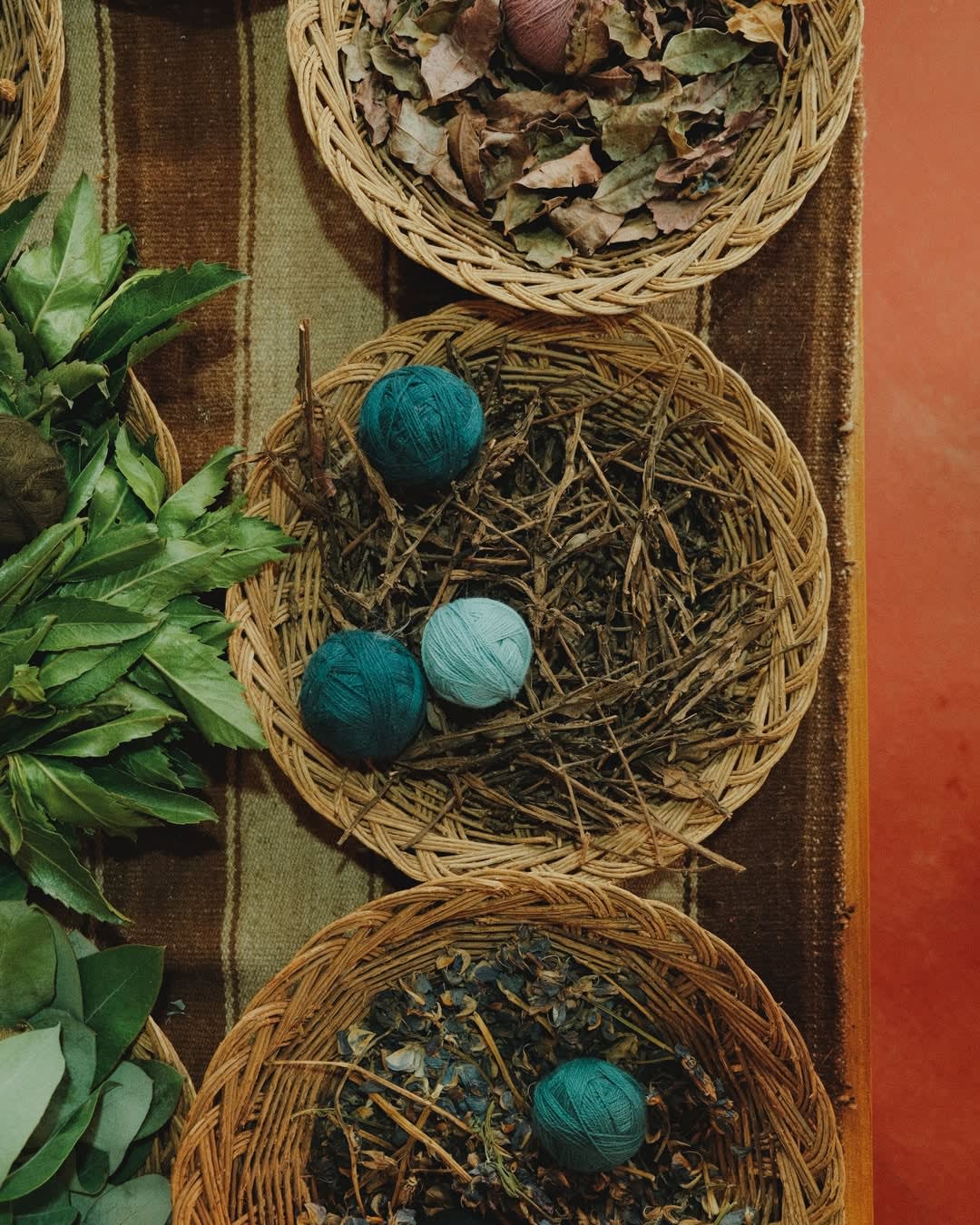
Natural dye (cochineal, plant): deep tones but slightly irregular within the piece. Cochineal varies between intense red and pink by mordants (aluminium or iron salts). Plants (chilca, qolle) give yellow-greens not perfectly uniform.
Synthetic dye: colours perfectly uniform throughout textile, high intensity and "chemical". Especially recognisable in cobalt blue and uniform intense red.
Water test: pass a damp swab (water) over colour. Natural dye keeps almost all its colour. Low-quality synthetic dye may bleed slightly. NOTE: this test is destructive if dye bleeds; ask permission from seller.

Test 3: pattern and its meaning
Each traditional Andean pattern has name and cultural meaning. Questions to seller quickly reveal if she knows the pattern:
"What is this pattern called?" If answer is something like "Andean style" or "Inca pattern", probably industrial. If specific name ("Iqu", "Chaska", "Saya", "Tica"), may be authentic.
"What does this pattern mean?" Each authentic pattern tells a story: cosmology (Inti, Mama Cocha), fertility, agricultural cycles, local myths. If seller can explain the meaning, probably knows what she is talking about.
"Who wove this?" Answer should include weaver name or specific community (Patabamba, Pitumarca, Taquile). "A lady from Cusco" is not specific enough.
Where to buy authentic textile
Five places with verifiable authentic textile:
Centro de Textiles Tradicionales de Cusco (CTTC) at Limacpampa plaza, Cusco. Founded by Nilda Callañaupa. Has permanent shop with certified pieces from specific communities, labelled with individual weaver and technique. Prices USD 80-1,500 per piece.
Awana Kancha in Sacred Valley, route to Pisac. Educational centre with live weavers, demonstrations, and shop with certified pieces. Prices USD 60-800.
Apu Yauri Cooperative in Patabamba (Sacred Valley). Specific weaver community, visits by appointment, direct purchase from artisan. Prices USD 100-1,200.
Taquile Textile Centre on Taquile island, Lake Titicaca. Cooperative of male weavers (unique case). Prices USD 60-500.
Pisac Market (Tuesday, Thursday, Sunday) at Associated Weavers section. Specific section with cooperatives; ask for the official section, not the whole plaza.
Where NOT to buy
Places where authentic textile is minority:
Lima or Cusco airport shops. 90%+ is industrial.
Souvenir shops near tourist plazas (San Pedro Cusco full of tourists, Pisac extramural, Aguas Calientes).
Shops with "70% off" discounts —certified cooperatives do not discount this way.
Operators offering "authentic textile" at hotel without prior appointment —legitimate cooperatives do not visit commercially without curatorial framework.
The fair price
Three price references:
Traditional blanket (shawl/poncho), 2 m x 1 m, hand-woven on backstrap, 150-300 work hours, alpaca fibre, natural dye: USD 280-650 per piece.
Ceremonial sash (chumpi), 60 cm x 5 cm, hand-woven, fine fibre, complex pattern, 80-150 hours: USD 180-400.
Small woven bag (chuspa), 25 cm x 25 cm, natural fibre, traditional pattern: USD 60-150.
If prices are significantly lower (USD 50-80 blanket), it is industrial. If significantly higher (USD 1,500+ blanket), generally exceptional pieces or from very recognised weaver.
Authentic textile is not souvenir: it is artwork. A hand-woven blanket with natural dye and traditional pattern reflects months of work, generationally transmitted knowledge, and millennial cultural heritage. Difference between USD 50 and USD 500 is not markup; it is difference between industrial object and artisanal work.
Kada Travel
How to care for Andean textile
Alpaca textile with natural dye requires specific care:
Hand wash with lukewarm water and neutral soap (not detergent, not softener). NEVER in washing machine.
Dry flat on towel, NOT hanging (alpaca stretches with wet weight).
Store with anti-moth bags (moths adore alpaca). Cedar or lavender bags work.
For professional cleaning, take to dry cleaner specialised in wool or alpaca. NOT general dry cleaner.
Written by Kada Travel Editorial
Frequently Asked
If authentic with backstrap loom, alpaca fibre, natural dye and traditional pattern, yes: represents 200+ work hours of specialised weaver. It is artwork, not decoration.
CTTC (Cusco) issues certification with weaver name and technique. Awana Kancha also. For markets, no official certification; depends on buyer's visual evaluation.
Yes. 'Baby alpaca' is fibre from first cut (1-2 years old), finer, softer. It is 50-100% more expensive than adult alpaca. Authentic or not, real tactile difference exists.
Kuna and Sol Alpaca are premium brands with certified Peruvian industrial production. High but industrial quality (not handmade). Useful for gifts but not for authentic-textile collector.
Yes. Standard bespoke service: 2-7 day visit to certified master weaver with complete textile experience, direct purchase with discount (no intermediaries), and certification with weaver name.
Frame and glass for wall hanging (yes, large pieces are exhibited). Or use as functional blanket with care. Do NOT wash more than 2-3 times per year. It is collection and occasional-use object.
Design Your Journey
Design your bespoke Peru journey
We talk. We listen. Then we design an itinerary that belongs only to you.
Start Planning