Unfolded· 7 min read·2 July 2026
Larco After Hours
A private evening inside Lima's greatest pre-Columbian archive — and dinner in its bougainvillea-draped courtyard.
By Kada Travel Editorial
Most of the 45,000 objects in the Museo Larco were placed in the ground as offerings to the dead. The Moche, the Chimú, the Wari, the Chancay — each culture buried its finest work: hammered gold, stirrup-spout ceramics, textiles woven so finely that the thread count exceeds anything a mechanical loom would attempt. These objects were not made to be looked at. They were made to accompany someone through death, and they are still doing their job in a direction their makers did not intend.
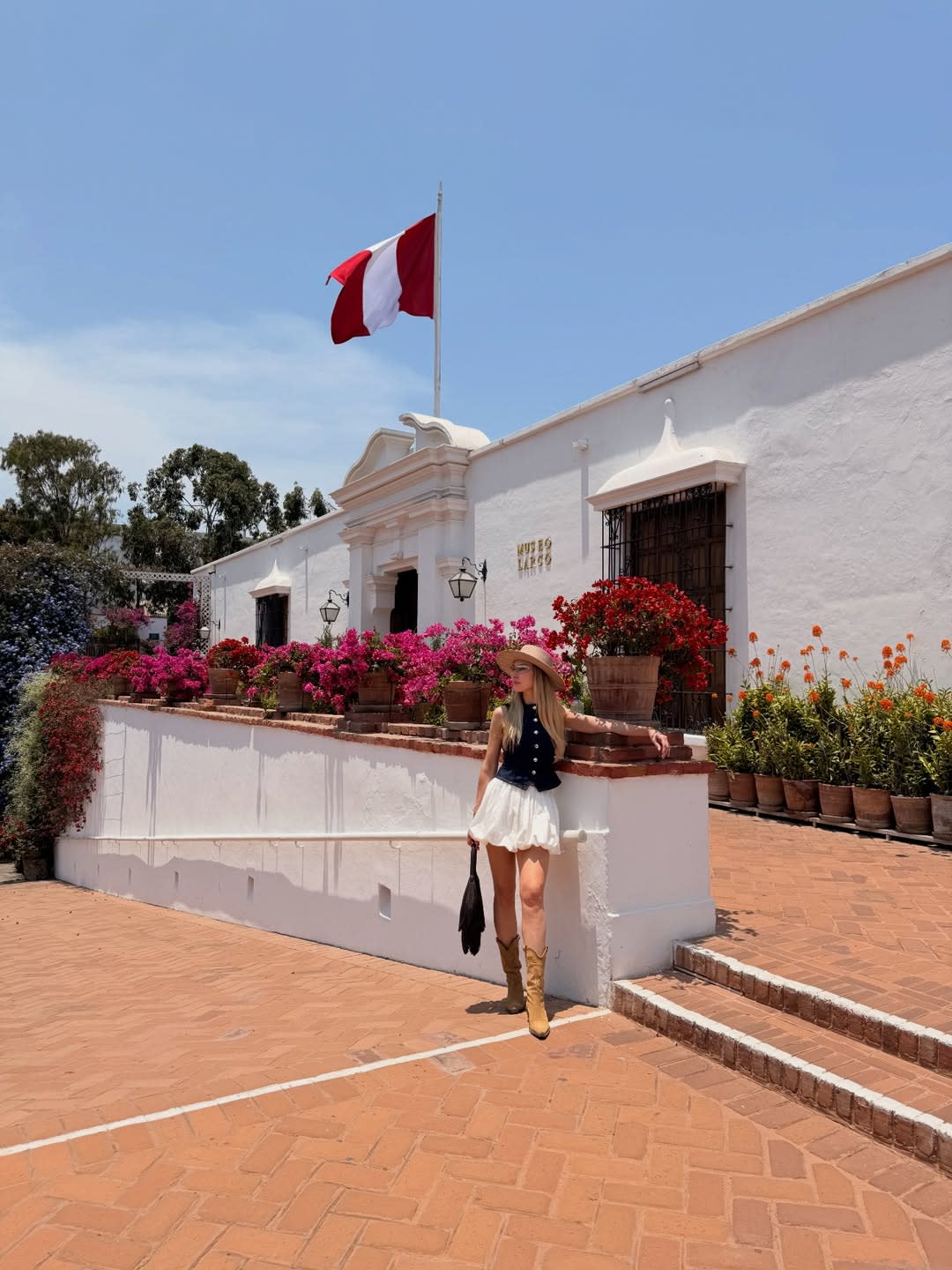
The museum that holds them is a converted eighteenth-century viceregal hacienda in Pueblo Libre, with a garden that bougainvillea has been dismantling, happily, for decades. During the day it receives several hundred visitors. At six o'clock, the last group leaves. At seven, the garden lanterns are relit. By eight, the galleries are empty except for our guests and the objects — and the experience of being alone with forty-five thousand pieces that no living person made shifts the visit into something the daytime schedule cannot produce: scale, silence, and the kind of attention that crowds crowd out.
The Collection
Rafael Larco Herrera began acquiring in 1925 from his family's hacienda in the Chicama Valley of northern Peru, where agricultural workers regularly uncovered ceramics while turning the soil. What began as a regional archive grew, over three generations, into one of the most significant pre-Columbian collections on earth. The Larco now holds material from more than forty Andean cultures, organised not by dynasty or conquest sequence but by the objects themselves — ceramics in one wing, metals in another, textiles in a third — which creates a reading of Andean civilisation as accumulated technical intelligence rather than a parade of empires.
The Moche ceramics (100–800 CE) are where most guests stop first, and rightly. The Moche were portrait sculptors of a seriousness that European traditions would not reach for centuries: stirrup-spout vessels fired in two-tone slip, depicting faces specific enough — the weighted jaw, the scar beneath the eye, the asymmetry of a broken nose that healed wrong — to suggest they were made from life. Several of these faces have been studied by forensic anthropologists working from the vessels alone. The subjects are not idealized.
The gold gallery holds ceremonial objects from the Chimú empire (900–1470 CE), the civilisation the Incas absorbed rather than replaced. Ear ornaments the diameter of plates. A tumi ceremonial knife with a half-moon blade inlaid with turquoise from the altiplano. Breastplates made to be worn over cotton garments, which survived in the same burial and are displayed adjacent. The metalwork is unambiguous about its destination: these were objects made for death, not prestige.
The Sala Erótica — the collection within the collection — holds approximately five hundred ceramic vessels depicting human sexuality with a specificity that, five centuries after the Spanish priests who catalogued them, scholars are still arguing about. Were they ritual instructional objects? Anatomical models? Fertility offerings? The museum presents them without resolution because the honest answer is that the culture that made them did not survive long enough to explain itself to its inheritors.
The Evening in the Empty Galleries
After hours, a senior guide walks with our guests through the collection at a pace the daytime does not permit. There is no ambient noise beyond the garden. The lighting — calibrated for afternoon visitors — reads differently at night: the gold pieces catch their own reflections; the ceramic faces, given space and silence, begin to look like they are considering the room.
The Moche portrait vessels reward this slower looking. Given thirty minutes in the ceramics hall instead of five, patterns emerge: the same face across multiple vessels suggests portraiture of a specific individual across time — perhaps across a campaign, perhaps across an illness. The seriousness of the Moche's attention to recording individual features suggests an intention our vocabulary doesn't quite reach — not portraiture exactly, since that implies art for art's sake, and these were buried; not documentation exactly, since documents are made for retrieval. Something between the two, made for a third purpose we are still reconstructing.
The textile gallery, which receives less attention than the ceramics in daytime, repays the evening visit particularly. The Chancay gauze pieces (900–1450 CE), displayed flat under glass, are woven so finely they appear machine-printed. They were made entirely by hand, on back-strap looms, by women working from memory rather than pattern. The patterns were not decorative. They encoded social information — clan, rank, ritual role, geographic origin — in a system as precise as script, and now as lost.
Dinner in the Courtyard
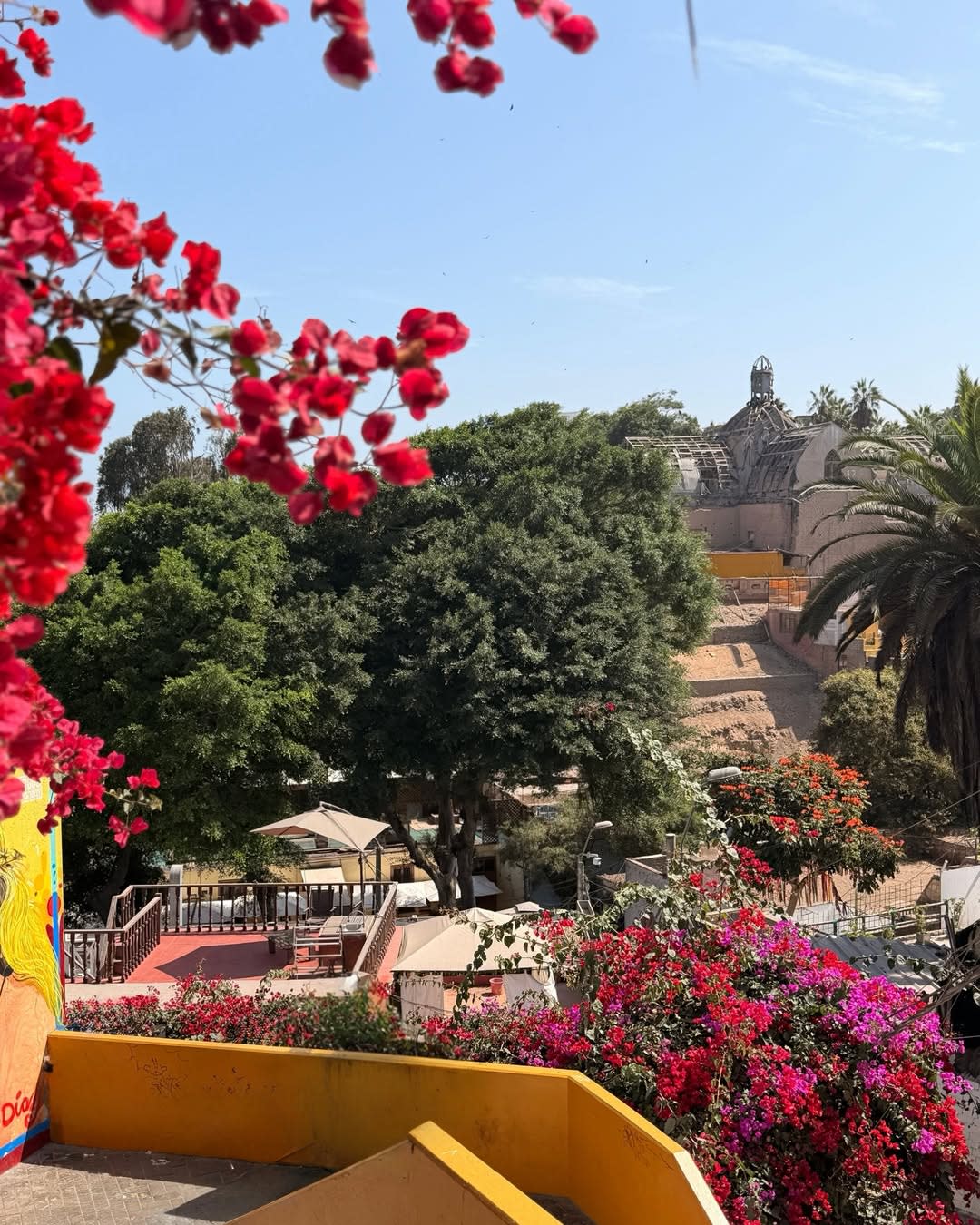
The courtyard at the Larco — the inner garden of the viceregal hacienda — is draped in bougainvillea that, by evening, closes above the dining tables in the manner of a canopy. The Lima night cools quickly from the Pacific: by nine o'clock the temperature has dropped to the mid-teens, and the garden holds a particular stillness that Miraflores, two kilometres east, rarely achieves.
Dinner is served in courses from the museum's restaurant kitchen, drawing on Peruvian ingredients that, for guests who have spent two hours with the collection, carry an additional register: the kiwicha that appears in a starter is the grain the Moche grew in the same coastal valleys where their burial sites were found. The huancaína sauce descends from the highland potatoes the Chimú received as tribute. The pisco flight includes a Quebranta from vines grown in the desert coast south of Lima — the same coast the ceramics came from.
The sequencing of the evening — objects first, table after — is deliberate. The meal closes the visit rather than punctuating it, and guests who arrive at the table having just stood alone in the gold gallery eat, by their own account, differently than they otherwise would.
What Kada Arranges
The Larco's after-hours programme is available through formal arrangement with the museum. We coordinate the visit as part of a Lima itinerary — timing the evening relative to our guests' arrival, briefing the guide on the specific areas most relevant to their interests, and arranging the dinner pairing with the kitchen team in advance.
Dietary requirements are communicated at the time of booking, and the dinner menu is adjusted accordingly. The wine and pisco pairing is selected in consultation with the sommelier; non-alcoholic alternatives are prepared with the same care.
For guests with particular areas of focus — Moche ceramics, Andean metalwork, the textile traditions of the coast — the after-hours walk is weighted accordingly. The guide's route is not fixed. The evening is structured around the collection, not around a standard script.
Expert Insight
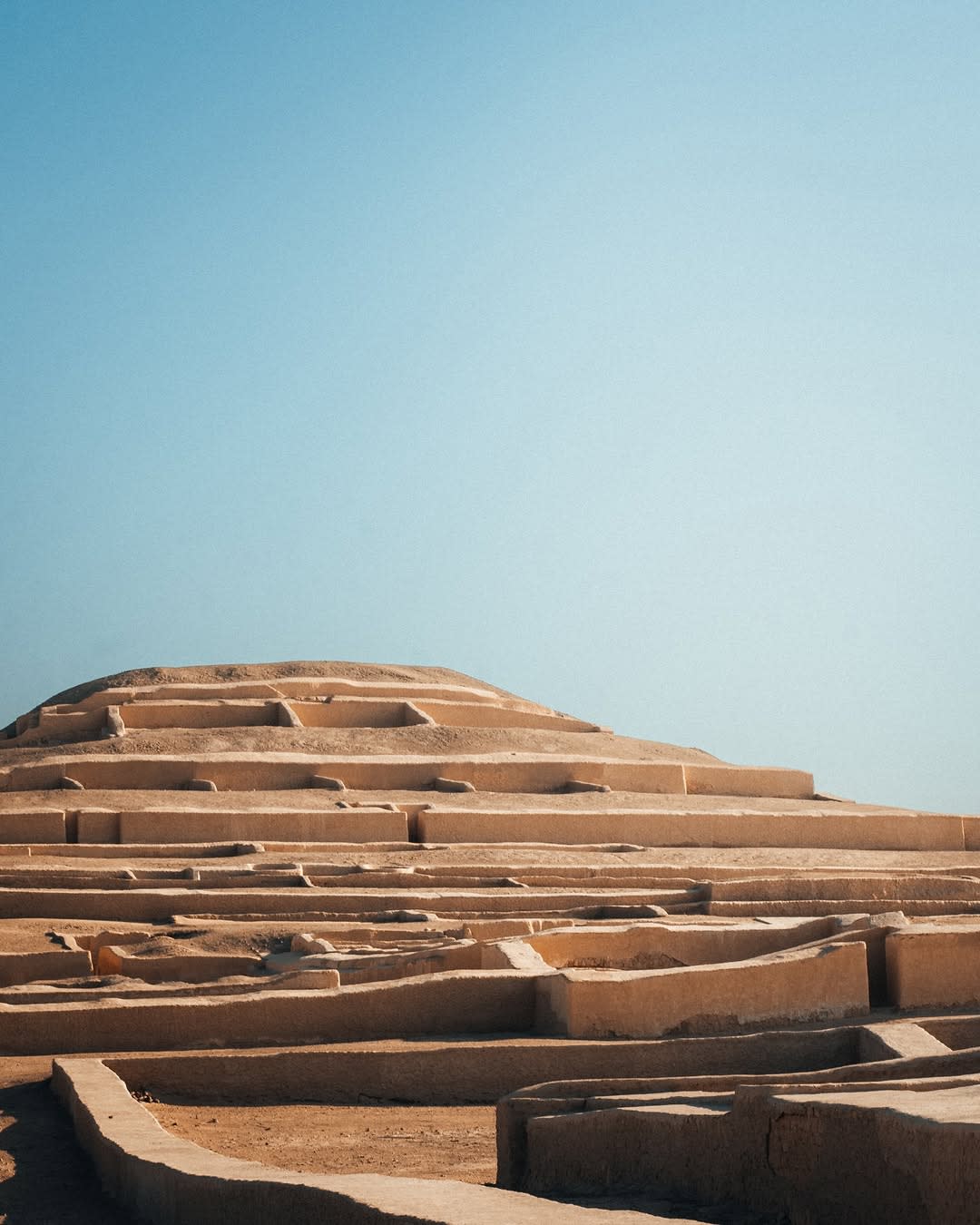
"I take guests to the Larco before Pachacamac, not after. The ceramic archive gives you the faces — the Moche portraits, the Chimú gold, the textile patterns that functioned as script. The archaeological site gives you the scale and the open sky. When you've spent an evening in front of a portrait vessel at close range and then you're standing at Pachacamac three days later looking at the walls that same civilisation built, the connection stops being abstract. The Larco is where Lima's archaeology becomes personal."
— Katherine Cjuiro, Founder & Travel Director, KADA Travel
A Practical Note
The after-hours programme runs on selected evenings by prior arrangement, and capacity is deliberately small — we do not combine our guests with other groups. Evenings run approximately three hours: ninety minutes in the galleries, ninety minutes at dinner. The courtyard is open-air; Lima's evenings are cool year-round (16–21°C at the garden, cooler in the winter months of June–August), and a light layer is recommended regardless of travel season.
We position the Larco evening at the start or end of a Lima stay rather than midway: either as an arrival orientation that frames the historical visits to follow, or as a departure note that ties the city's pre-Columbian thread together. Guests who return to specific pieces after other Lima experiences consistently report the second engagement as more rewarding than the first.
Written by Kada Travel Editorial
Frequently Asked
At least three weeks before the visit date, and ideally when we are building the itinerary. The programme runs on limited evenings and our confirmation secures the space alongside the dinner reservation. We do not offer same-week bookings for this experience.
A set menu of four to five courses drawing on Peruvian coastal and highland ingredients, with a pisco and wine pairing. All dietary requirements are communicated to the kitchen at the time of booking — the restaurant's Peruvian kitchen handles vegan, vegetarian, gluten-free, and most allergy-based restrictions with genuine care rather than substitution.
Yes, and in practice we find these guests often have the strongest evenings. The Larco after hours is primarily an atmospheric and visual experience. The objects are striking on their own terms; the historical context deepens the visit but is not the entry requirement. The courtyard dinner is simply a very good dinner in an unusual setting.
The two are integrated in the after-hours programme — the dinner is part of the access, not an addition. We do not arrange gallery-only visits in the after-hours format.
Design Your Journey
Design your bespoke Peru journey
We talk. We listen. Then we design an itinerary that belongs only to you.
Start Planning