Unfolded· 8 min read·4 July 2026
Pachacamac with an Archaeologist
A private visit to the pre-Columbian sanctuary south of Lima — with the scholar whose research is at the site.
By Kada Travel Editorial
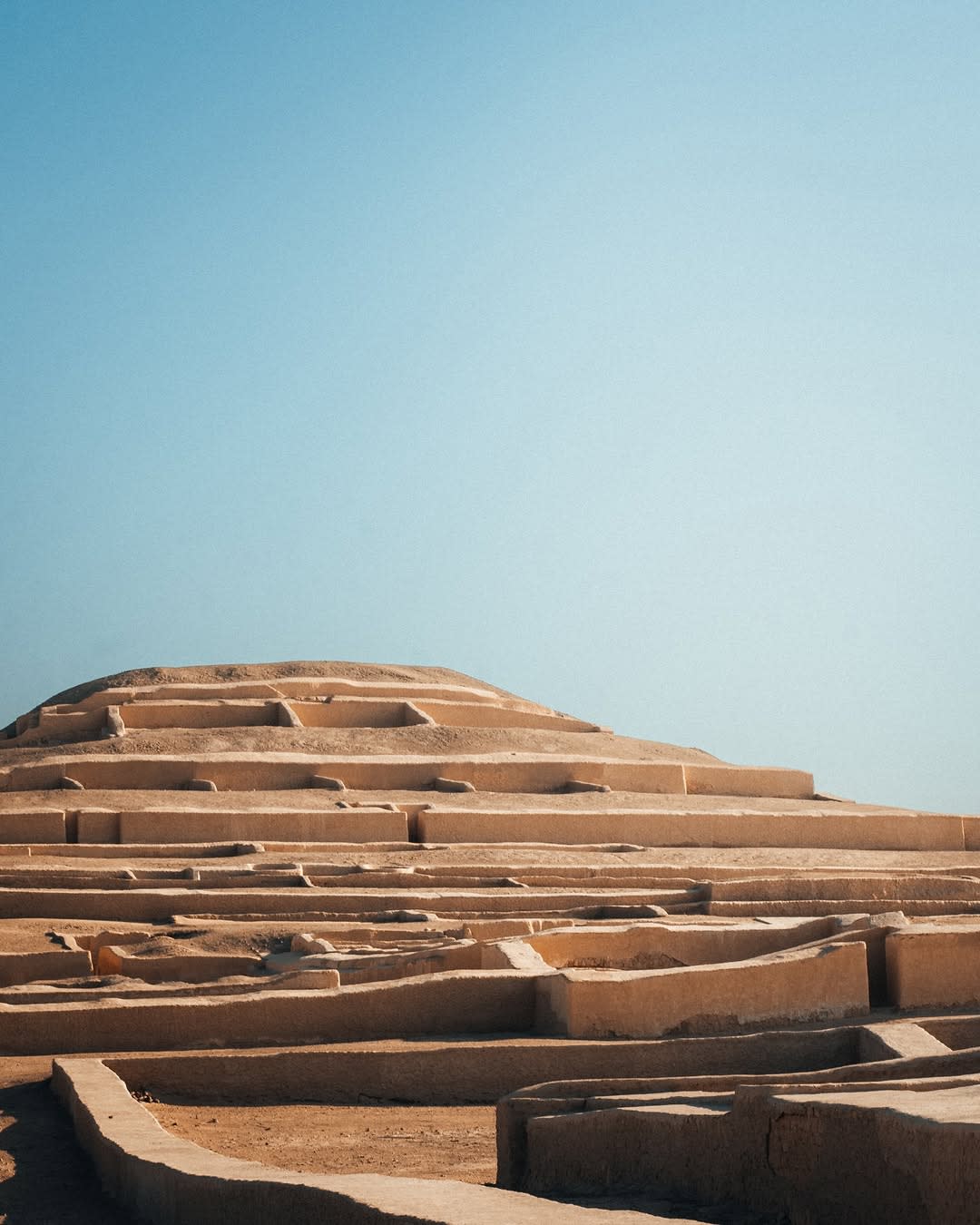
Thirty-one kilometres south of Lima, where the Panamericana crosses the Lurín Valley and the coastal fog gives the desert its final opportunity to be green, Pachacamac is still standing.
This is the central fact about the site, and it requires a moment to land. Pachacamac survived the Lima culture that built its first platform around 200 CE. It survived the Wari expansion of the seventh century, which added rather than demolished. It survived the Ichsma federation, which maintained and extended the oracle through its centuries of greatest influence. It survived the Inca incorporation of the fifteenth century, when the architects who typically replaced competing sacred sites chose instead to build their own Temple of the Sun at the highest point of the complex — not to replace Pachacamac but to crown it. It survived Hernando Pizarro, who arrived in 1533 looking for gold and found the priests had moved it. It has been surviving, in one form or another, for the better part of two thousand years.
The tour guide version of this history takes ninety minutes and ends at the museum gift shop. The version we arrange — private, four hours, led by an archaeologist conducting active research at the site — is a different experience in kind, not only in length.
Five Civilisations, One Oracle
Most major pre-Columbian sites in Peru are single-culture expressions: Caral is Lima culture, Chan Chán is Chimú, Kuélap is Chachapoyas. Pachacamac is all of them layered — a stratigraphic argument that a standard tour cannot translate but that an archaeologist can make visible in the ground itself.
The earliest structures at the site, attributed to the Lima culture (approximately 200–600 CE), are the lowest on the hill: the Pachacamac Temple, a compressed adobe-brick platform facing west toward the Pacific, dedicated to a deity whose Quechua name translates, most precisely, as kamaq — the animating force, the energy that sustains existence. The Wari arrived in the seventh century and built alongside the existing complex, adding their own administrative and ceremonial precinct in the centre of the site. With them came the idol. The Pachacamac idol — excavated in 1938 and now displayed in its own room in the site museum — is a carved wooden figure approximately 2.2 metres tall, dated by radiocarbon analysis to the Wari period (760–876 CE). The Incas, who arrived in the fifteenth century, found it already six hundred years old and did not touch it. What a later civilisation leaves untouched is a reliable indicator of what it considers non-negotiable.
The Ichsma, the coastal federation that maintained the oracle between the Wari collapse and the Inca expansion, are the culture whose fingerprints are most extensive at the site and whose name is least known outside archaeological literature. They inherited the Lima culture tradition, expanded Pachacamac's network of influence across the central Peruvian coast through the oracle's reputation, and produced the administrative and residential structures that fill the middle sections of the 465-hectare complex. They also, the archaeologist's research increasingly suggests, were responsible for the oracle's most significant political achievement: being incorporated rather than conquered. The Incas absorbed Pachacamac's priestly hierarchy into the Inca state system because the alternative — replacing an oracle that the entire coast's tribute economy ran through — would have cost more than it saved.
The Temple of the Sun at Noon
The Inca Temple of the Sun was built at the summit of the site, and it was built for reasons that are still visible. The structure is oriented to the solstice sunrise. At noon, the upper platform creates a shadow geometry the Inca engineers designed deliberately: a solar instrument disguised as, or expressed as, a ceremonial building. The view from the summit takes in the entire Lurín Valley to the east and the full Pacific to the west, which is to say it takes in everything.
This is where the question arrives — the one every group asks, without prompting, within the first fifteen minutes of the summit: how did they build this without iron?
The Andean civilisations did not develop iron metallurgy. Their tools were copper and bronze, supplemented by wood, rope, stone hammers, and human organisation at a scale the logistics of which archaeologists are still modelling. The cut-stone sections of the Inca structures at Pachacamac were shaped through stone-on-stone abrasion and bronze chisels — an extraordinarily labour-intensive process that produced, across the Inca empire, buildings whose fitted stonework has survived earthquakes that demolished everything built afterward. The earlier adobe sections were hand-formed from local clay, compressed in wooden moulds, and laid in courses without mortar, relying on the dry coastal climate to do the binding work.
The workforce was organised through mit'a — the Inca labour tribute system in which communities across the empire contributed periods of work rather than goods. Pachacamac's construction across twelve centuries predates the Inca mit'a for most of its history; the earlier cultures used their own organisational systems, which the archaeologist can quantify in the structures themselves. The current research involves calculating, from the adobe brick count and the known dimensions of hand-formed bricks, the person-hours embedded in specific walls. The Temple of Pachacamac — the oldest structure on the site, Lima culture construction — contains in its current standing sections enough adobe brick to represent what the calculations suggest is a significant proportion of a medium-sized community's labour output across a single season. That specificity — the site as a record of organised human effort — is what the archaeologist makes legible. The ruin stops being a ruin and becomes a project: something imagined, organised, and built by people with specific plans.
The Acllahuasi in Late Light
On the north side of the complex, below the Temple of the Sun, the Acllahuasi — the House of the Chosen Women — is best seen in the afternoon, when the light comes low from the Pacific and the adobe walls hold the warm tone of the coastal desert. The acllacunas (chosen women) were selected at approximately age ten from communities across the empire, brought to sacred sites like Pachacamac to weave textiles, prepare chicha for religious ceremony, and serve the oracle's administrative functions. They were not prisoners in any simple sense; they were specialists given status and training unavailable outside the system. The textiles they produced were among the Inca state's primary forms of wealth redistribution — finer than gold, given to allies and regional administrators across an empire of twenty million people.
The Acllahuasi at Pachacamac is not fully excavated. The sections visible to visitors represent roughly a third of the original structure. The archaeologist can point to the current excavation trenches — live research, active in season — and explain what the most recent finds have shifted in the understanding of the building's function. This is the detail that most guests do not expect: the site is not finished being studied. The questions it is posing are open. The archaeologist who walks it with our guests is, in part, still figuring it out.
What Kada Arranges
We arrange the Pachacamac visit with an archaeologist conducting research at the site — not a licensed guide working from a certification, but a scholar whose professional questions about Pachacamac are currently unanswered. The distinction is material: the visit is shaped by what the archaeologist is working on, and our guests encounter the site as a research problem rather than an illustrated history.
The visit is private, approximately four hours including the site museum — where the Pachacamac idol is displayed with its own room, and where the archaeologist's presence is particularly valuable because the museum labels are written for specialists and the objects communicate significantly more with contextual framing.
We time the visit to the morning or late afternoon depending on our guests' priorities: the morning gives the summit before the sun is fully overhead; the afternoon gives the Acllahuasi in the best light and the Pacific at the golden hour from the Temple of the Sun.
For guests who have visited Pachacamac on a previous Peru trip with a standard tour, the archaeologist-led visit is consistently described as a different site. It did not change. The framing of what they were looking at did.
Expert Insight
"Pachacamac has a word — kamaq — that doesn't translate into Spanish or English without losing what it means. It is the animating force, the energy that sustains things in existence. The oracle was not worshipped as a god in the European sense; it was consulted as a source of that force. When I explain this on the summit, with the Pacific in front and the valley behind, guests begin to understand why the Incas built alongside rather than over. You don't demolish what animates the world. You negotiate with it."
— Jaime Ttito, Head of Guides & Cultural Interpreter, KADA Travel
A Practical Note
Pachacamac is an active archaeological site. Certain sections are periodically inaccessible during excavation seasons (typically January–March and June–August), and we confirm the available route before each visit and adjust the emphasis accordingly — sometimes an ongoing excavation trench is the most interesting thing to see.
The site is fully exposed to the coastal sun. Sun protection, comfortable shoes, and water are mandatory; we provide these reminders with the pre-visit briefing, which also includes context reading for guests who want to arrive with background. The drive from central Lima is thirty minutes each way on the Panamericana.
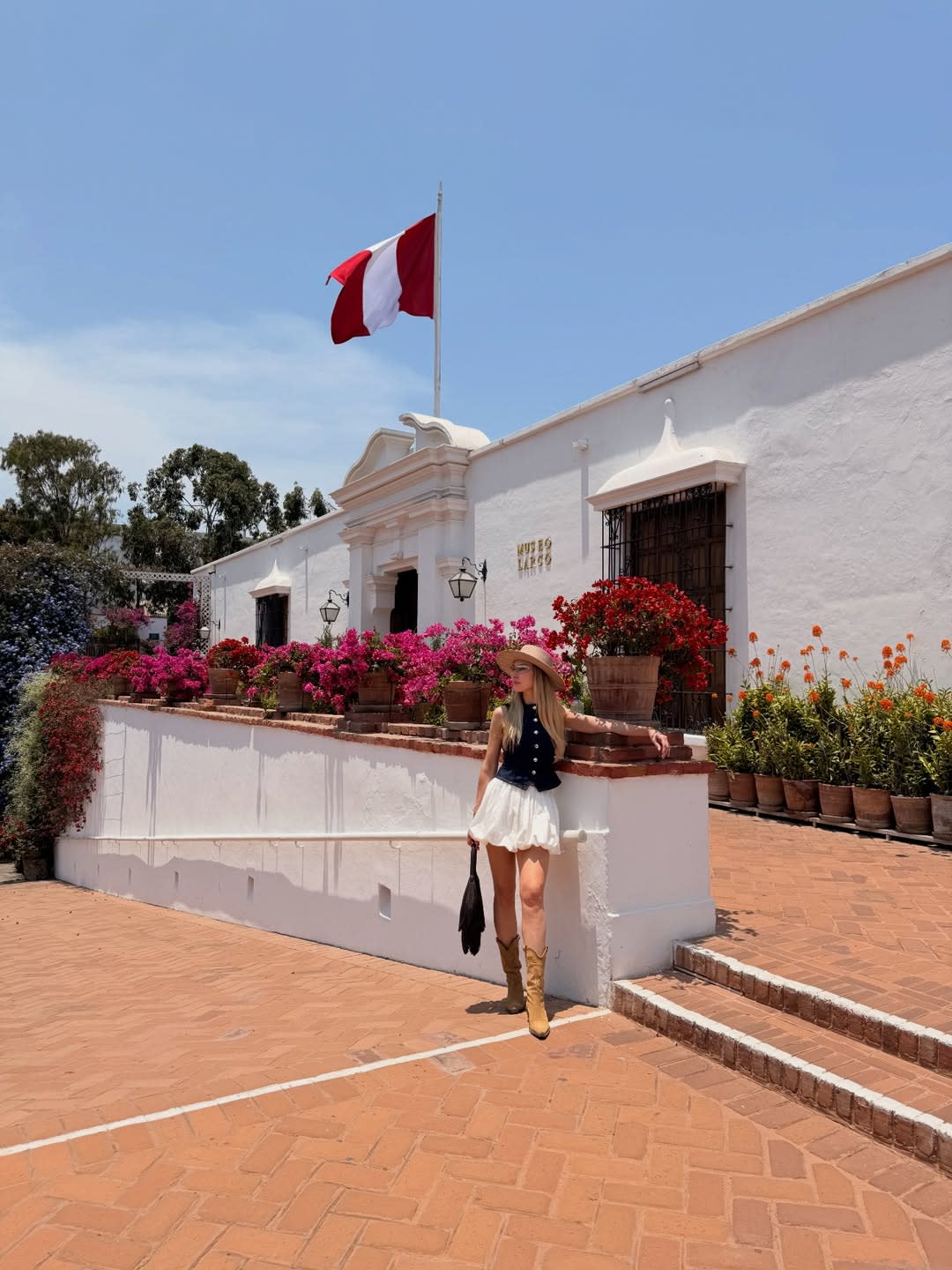
For guests whose Lima itinerary includes the Larco Museum, we strongly recommend visiting the Larco before Pachacamac. The ceramic and textile objects at the Larco include pieces from the coastal cultures represented at the site — Chimú gold, Moche ceramics, Chancay textiles — and the sequence creates a coherent narrative. The ruin explains the objects; the objects explain the ruin.
Written by Kada Travel Editorial
Frequently Asked
The standard private visit runs four to four and a half hours including the site museum. Guests with specific research interests — in Andean cosmology, construction technologies, or the Inca administrative system — can extend to a full day with a packed lunch at the site. We recommend discussing your specific interests before the visit so the archaeologist can prepare accordingly.
Yes, and the visit is structured for non-specialists without simplifying. The questions that make the site compelling — why did the Incas negotiate rather than replace? how did they build this without iron? who were the women in the Acllahuasi, and what did they actually do there? — require no prior knowledge to find interesting. Guests who arrive knowing nothing about pre-Columbian Peru consistently describe this among the most significant experiences of their trip.
The Pachacamac idol is a carved wooden figure approximately 2.2 metres tall, dated to the Wari period (760–876 CE). It was excavated in 1938 during systematic archaeological work and is now displayed in the on-site museum. Our visit includes the museum, and the archaeologist's explanation of the idol — its radiocarbon dating, its iconography, its relationship to the Hernando Pizarro account of 1533 — is one of the most precise moments of the morning.
Year-round. Lima's coastal desert climate keeps the site accessible in every month. The June–August dry season offers clear skies and the coolest temperatures at the summit. The December–March summer is warmer (20–26°C at midday on the site) and requires earlier morning scheduling. We arrange the visit in all months and adjust the start time accordingly.
Design Your Journey
Design your bespoke Peru journey
We talk. We listen. Then we design an itinerary that belongs only to you.
Start Planning