Destinations· 9 min read·27 December 2024
Lake Titicaca Beyond the Traditional Floating Islands
Capachica, Llachón, Suasi and the private version of the lake — where water is still measured in silence.
By Kada Travel Editorial
Titicaca appears in every southern Peru itinerary with the same phrase: "Uros floating islands, full day from Puno". The phrase is geographically correct and editorially misleading. The floating islands the average visitor receives are today a staged theatre for groups —payment in dollars, photos with rebuilt totora rafts, indigenous communities forced to adapt their lifeway to the rhythm of the tour bus. The real Titicaca, the highest navigable lake in the world (3,812 metres, 8,300 square kilometres, shared between Peru and Bolivia), sits at other coordinates. This guide proposes them.
The problem with the tourist version
The Uros lived floating on Titicaca for a thousand years. Uros culture —a pre-Incan people distinct from the Aymaras and Quechuas that occupy most of the altiplano— built totora rafts (the lake's endemic aquatic plant) on which they reconstructed their society every four to six months, when the totora rotted. It was a response to persecution by the Aymaras and, later, the Incas. The way of life survived into the 1970s.
What today's tourist receives at the floating islands accessible from Puno is the museum version of that culture. The rafts are rebuilt, yes, but most families now live on solid land and only work the islands for the groups. Prices of crafts have multiplied twentyfold for the visitor. Authenticity —the original draw— has shifted to other lake zones the buses do not reach.
The four alternatives that matter
Four Titicaca destinations offer the version the considered traveller should seek. We list them from remote to accessible.
Suasi Island
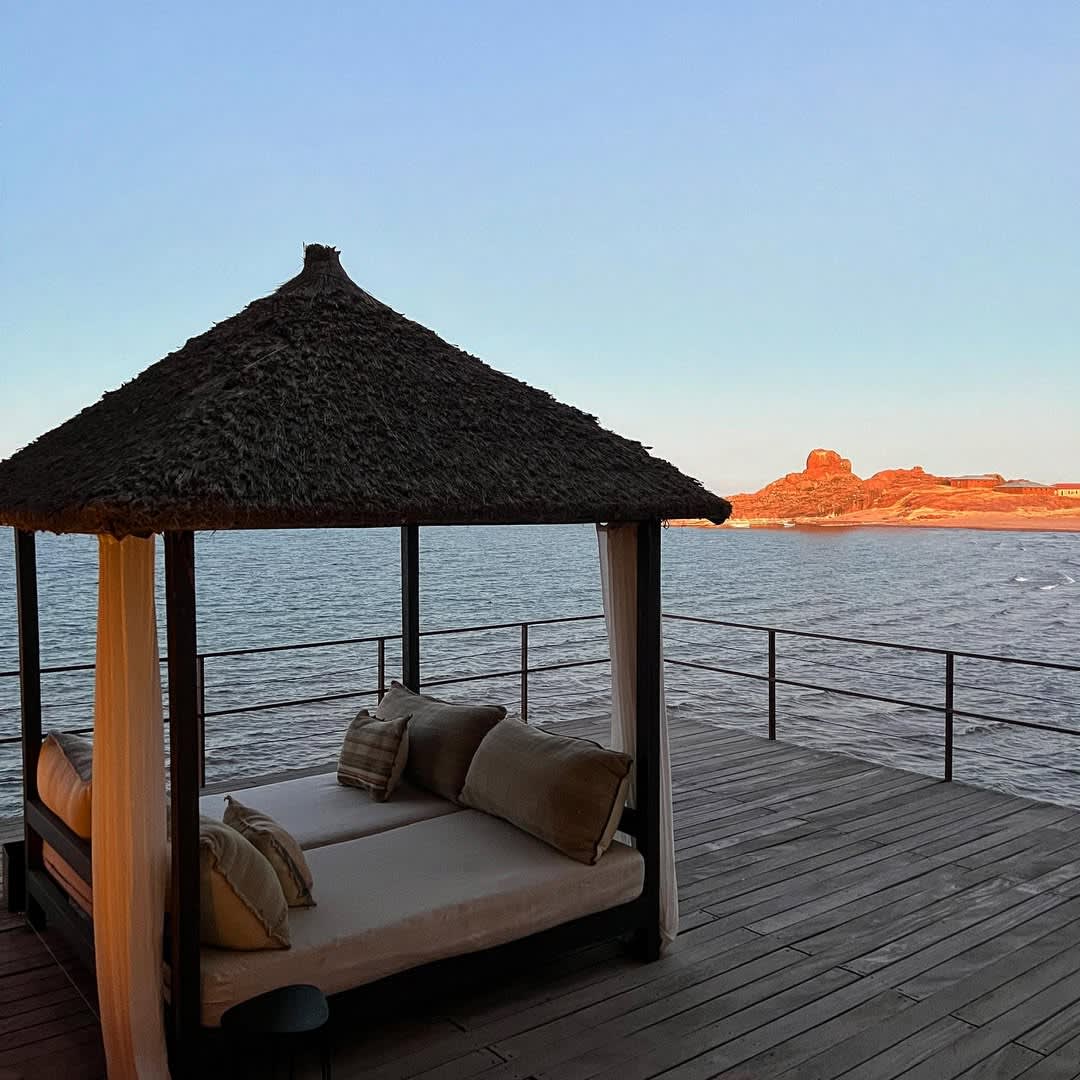
Suasi is a forty-three-hectare private island on the northern shore of Titicaca, owned by the Casa Andina family (unrelated to the hotel chain). The island's only lodging is the Casa Andina Premium Suasi: twenty-two adobe rooms built with totora and stone, solar panels as sole energy source (no public grid), restaurant with garden produce, and lancha access from Puno's dock (three hours navigation). The island has free-roaming deer, vicuñas, nocturnal birdwatching. The most considered Peruvian Titicaca option, and the only one with a pending Relais & Châteaux affiliation. Recommended for honeymoon and isolation seekers.
Llachón and the Capachica peninsula
Capachica is a long, thin peninsula projecting into the centre of the lake, three hours from Puno by car. At its tip lies Llachón, a Quechua community practising controlled community tourism: five families offer basic accommodation (not luxury) in their houses, with family cooking, small-boat outings, and music nights around the fogón. The experience is genuine —no scenography— and economics pass directly to families. For luxury travellers who value immersion over bed comfort, we recommend a Llachón night complementary to formal-hotel nights in Puno.
Amantaní and Taquile
Amantaní and Taquile are two inhabited islands three hours from Puno, with Quechua communities preserving their traditional lifeway. Taquile is famous for its weaving —men weave, women spin, a pre-Incaic gender division— recognised by UNESCO as Intangible Heritage. Amantaní has two ceremonial peaks (Pachatata and Pachamama) climbed for sunset over the lake. Neither island has luxury lodging; travellers stay with peasant families selected by our team. The authentic, demanding version, recommended for experienced travellers unfazed by rusticity.
Sillustani and the western shore
Sillustani is not an island but an archaeological site on the shore of Lake Umayo, thirty kilometres from Puno. The Sillustani chullpas —pre-Incaic funerary towers up to twelve metres tall, built by the Collagua culture and later by the Incas— are among the most striking archaeological visits on the altiplano. Combinable with lunch at a community hacienda in Hatuncolla, it serves as perfect complement to a lake day. We recommend a private visit with archaeological guide.

Where to sleep in Puno (because you must)
Puno, capital of the department, is functional and not photogenic: a commercial port on the lake, with a Plaza de Armas, an eighteenth-century cathedral, and an old quarter undergoing recovery. It is, however, the inevitable logistical base. Three hotels concentrate our guests.
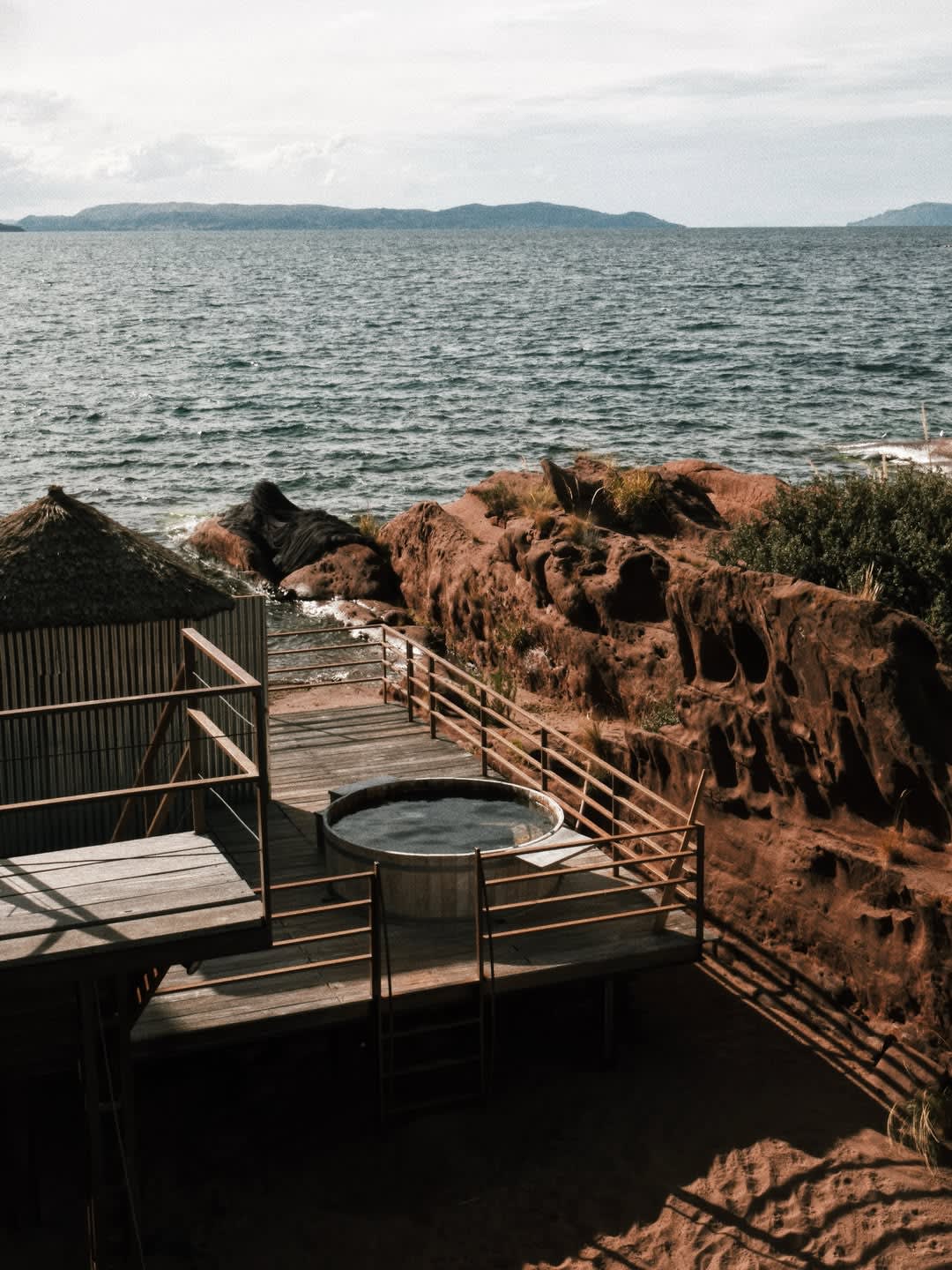
Titilaka, A Relais & Châteaux Lodge is the most considered option and the only Relais & Châteaux on the Peruvian Titicaca. Isolated on a private peninsula an hour south of Puno, eighteen rooms, garden-produce restaurant, contemporary Peruvian-design decoration. The luxury Titicaca version, no compromise. Experience includes private transfers from Juliaca airport, private lake navigation, and island excursions on the hotel's lancha.
Sonesta Posadas del Inca Lake Titicaca, on the Chucuito peninsula fifteen minutes from Puno, offers the comfortable accessible version. One hundred rooms, direct lake view, international service, generous gardens. The reference hotel for small groups and families.
Casa Andina Premium Puno, on a hillside with lake view, is the intermediate option. Fifty-one rooms, well-maintained chain service, restaurant with Puno cuisine. Recommended for a logistical night before heading to Cusco.
Titicaca does not deliver itself to the rushed visitor. A morning by boat from Puno to the mass islands is not Titicaca: it is the tourist simulacrum of Titicaca.
Kada Travel
The altiplano kitchen
Puno cuisine is among the least explored in Peruvian gastronomy. It rests on four ingredients: lake trout (introduced in the 1940s and now emblematic), native potatoes (over two hundred altiplano varieties), quinoa (cultivated here for four thousand years) and alpaca or cuy meat. Three restaurants treat them seriously.
Mauka Llajta, in central Puno, is the city's best contemporary Aymara table. Chef Florencia Quispe works with Aymara women from the communities to source ingredients no longer found in markets —chuño negro, k'ispiño, alpaca kankacho. Mojsa is the more accessible lunch option: home-style Puno cooking in a historic courtyard. The Hotel Titilaka restaurant is the gourmet version, with altiplano-product tasting menu and lake view.
How many days
We recommend three nights minimum: one for Sillustani with a full chullpa day, one on a private island (Suasi or Titilaka) and one with a community (Llachón or Amantaní). Two nights is the condensed version, sacrificing one experience. A single night is a stopover —and for Titicaca, a stopover means not having been there.
Acclimatisation matters: 3,812 metres is higher than Cusco. We recommend reaching Titicaca after Cusco or Colca, not before. Travellers coming directly from Lima to Puno run high altitude-sickness risk, especially flying into Juliaca (4,000m) and dropping by car to Puno.
Written by Kada Travel Editorial
Frequently Asked
For travellers with one day and historical curiosity, yes but with adjusted expectations: it is heritage theatre, not cultural immersion. We always recommend Llachón or Amantaní over them.
Flight from Lima to Juliaca (1h 50min) with private car transfer to Puno (45min). Alternative: Andean Explorer train from Cusco or Arequipa (two nights). The road crossing from Cusco is six hours and is discouraged due to altitude.
Yes, in communities certified by the community organisation of Llachón, Amantaní or Taquile. Rooms are basic (no continuous hot water), meals are home-style, and the experience is supervised by the community itself. For our travellers, we arrange the host family in advance.
Yes, especially for those coming from coast. 3,812 metres is higher than Cusco. We recommend coming after Cusco or Colca, not before. Coca tea, hydration, early sleep the first night.
Thermal layers (temperature drops to 0°C at night year-round), SPF 50+ sunscreen (radiation is highest in Peru), wide-brim hat, waterproof clothing for boat excursions, comfortable walking shoes.
May to October: dry season, sun, clear skies. November to March is rainy with cloudy afternoons. June and July are the coldest months but also the most visually spectacular.
Design Your Journey
Design your bespoke Peru journey
We talk. We listen. Then we design an itinerary that belongs only to you.
Start Planning