Unfolded· 7 min read·6 July 2026
A Studio in Barranco
A private afternoon in a working artist's studio — where the conversation the gallery has already closed is still open.
By Kada Travel Editorial
The gallery version of a painting is the argument the artist has decided to stop making. The canvas is stretched, the signature is in the lower right corner, and the institution that displays it has written a label explaining what it means. The gallery visit is, in this sense, a conversation with a text — complete, resolved, translated into whatever the curatorial vocabulary of the moment happens to be.
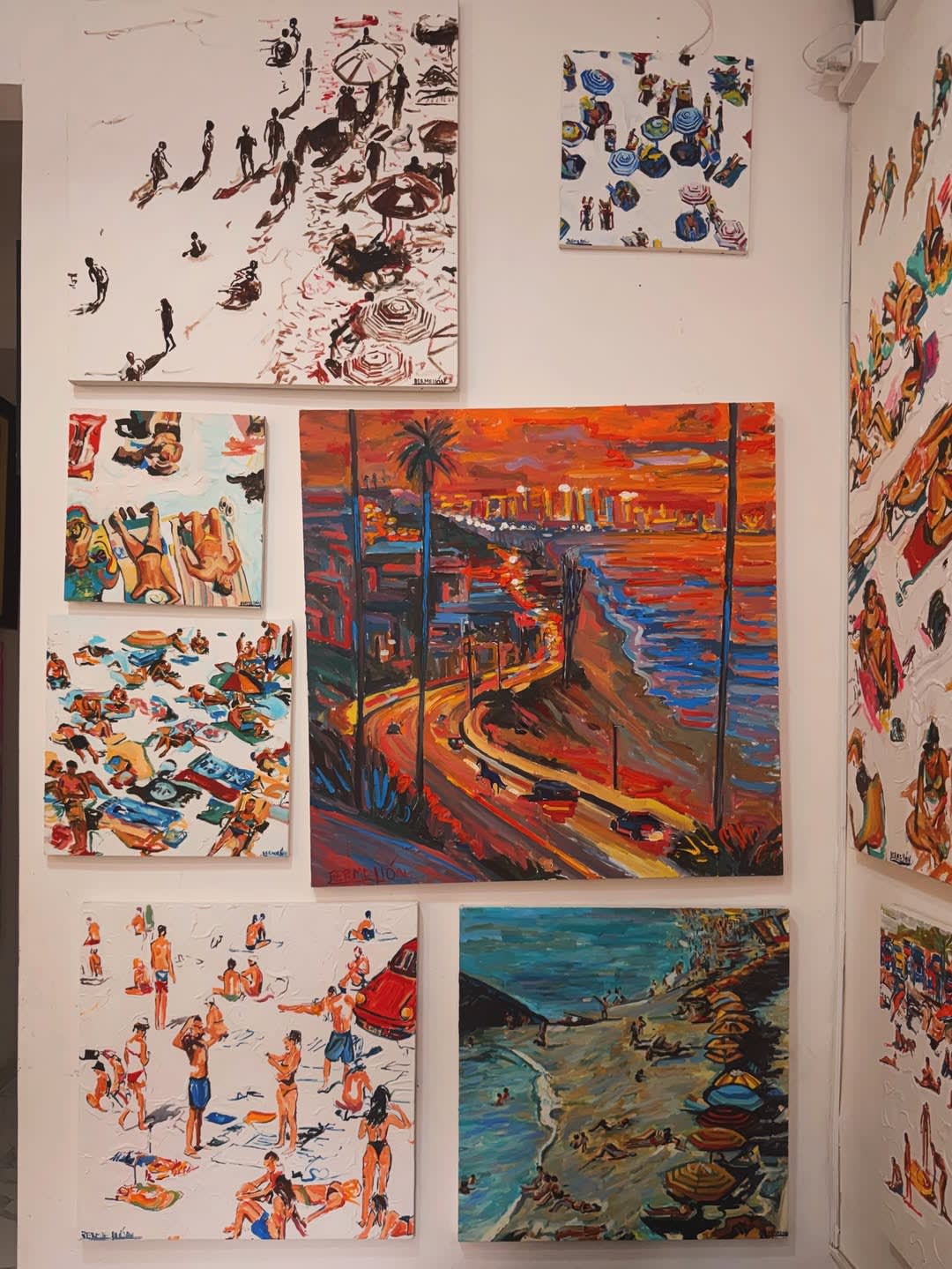
The studio visit is something categorically different. In the studio, nothing is complete. Reference images are pinned to the wall alongside canvases that failed and were not destroyed. Paint layers accumulate from works painted over rather than sold. The books generating the current argument sit open on a table. The conversation is with a person in the middle of a sentence — not with a sentence that has already been finished.
Lima's contemporary art scene is producing work of a specificity and ambition that the international market is still catching up to. The artists who have emerged from this city in the past fifteen years are engaging with Peru's pre-Columbian archive, its colonial history, its coastal ecology, and its relationship to the global South in ways that require a language the gallery brochure only partially supplies. We arrange the visit to the studio, not the gallery, because the language is more complete at the source.
Barranco and What It Produces
Barranco is Lima's southernmost creative district — the neighbourhood where the nineteenth-century elite built summer houses on the Pacific cliffs and then, as other districts expanded, left them to the artists, musicians, and writers who could work in the declining rents. The Bajada de los Baños — the staircase from the clifftop to the beach, constructed in 1876, with a wooden footbridge at the bottom — is still the neighbourhood's ceremonial centre: the structure that gives Barranco its image of itself.
What actually happens in Barranco, below the level of its self-image, is studio work. The colonial mansions subdivided into apartments in the 1950s were subdivided again into studios in the 1990s as the neighbourhood's working character — the market stalls, the back-street repair shops, the spaces that had never been finished to residential standard — made it practical for artists who needed volume and light. The studios that matter are not the ones converted into galleries or curated into neighbourhood attractions. They are the ones where the gallery visit has not yet happened. Where the work is still being made.
The Studio
The artist whose studio we visit works in a converted warehouse behind Barranco's main boulevard — a building where the light comes from high industrial windows on the north face and the temperature stays cool year-round from the Pacific air that the coastal escarpment channels through. The working space is not arranged for viewing. The floor carries the accumulated pigment of years. The canvases in progress are propped at angles that make sense for the artist's process, not for a visitor's comprehension.
This is the first register in which the visit differs from the gallery: the objects are not yet performing.
What the artist is working on shifts across the year as research develops and projects change, which means the specific conversation our guests enter is the live version of an enquiry — not "here is what I made" but "here is what I am trying to make, and here is why it matters." The artists we work with in Barranco have, without exception, a relationship to Peru's pre-Columbian archive that is neither nostalgic nor decorative. They are engaged with it as a formal problem, a political inheritance, a material question about what it means to make work in Lima in the twenty-first century. The studio is where that engagement is most plainly visible, before the gallery translation has occurred.
The visit runs two to two and a half hours — long enough for the conversation to move past biographical preamble and into the specific arguments the current work is making. Our guests are not guided through the studio. They are guests of an artist who is, for the afternoon, temporarily not working. The distinction is material. The artist is not presenting their practice. They are talking about what they are trying to do with it — a different, and considerably more interesting, form of access.
What Kada Arranges
We maintain ongoing working relationships with a small number of contemporary Peruvian artists whose studios are in Barranco — artists whose current practice engages with the questions that make Lima's art scene specifically and urgently relevant. We do not arrange studio visits with artists whose primary relationship with visitors is commercial. We arrange them with artists who regard the afternoon as, at minimum, an interesting interruption.
The specific artist we arrange depends on the current state of their work: which studio conversation is most alive on a given date shifts as projects develop. We brief our guests before the visit with the artist's recent trajectory — not a biography, but a description of the specific arguments the current work is making, so the conversation can begin at the level where it becomes interesting. The briefing takes fifteen minutes by phone or email; the preparation is worth the time.
For guests with professional backgrounds in the visual arts, we can arrange an extended visit that includes the artist's archive — earlier works, reference materials, the specific pre-Columbian objects or historical sources the current practice is in dialogue with. We can also arrange for our guests to accompany the artist to one of Lima's smaller commercial galleries in the late afternoon: not for a formal presentation, but for the artist's own assessment of what that gallery is currently doing well or poorly. This version of the visit is more demanding and more revealing in equal measure.
Expert Insight
"The moment that changes every studio visit — every single one — is when the artist points to a canvas and says 'this one isn't working yet.' They're not embarrassed. They're thinking aloud. You're watching an argument still in progress, and it is nothing like standing in front of the finished painting. That's what no gallery in Lima can give you, however good the collection."
— Isabela Santos, Senior Travel Designer, KADA Travel
A Practical Note
Studio visits require a baseline of mutual engagement that a standard cultural transaction does not. We arrange these afternoons as genuine conversations — our guests come as interlocutors, not as collectors or audiences. This does not require prior knowledge of visual art: it requires curiosity and the willingness to ask a direct question. Artists in their studios respond to both.
Barranco is twenty minutes from Miraflores by taxi, and the walk from the studio to the Bajada de los Baños takes less than ten minutes. We typically close the afternoon at the cliff edge above the Pacific — the view the neighbourhood's founders built their houses for — before dinner at one of the district's smaller restaurants. For guests whose Lima stay includes dinner in Barranco, we schedule the studio visit the same afternoon: the two conversations — visual and culinary, both about what this city is capable of producing — sit next to each other well.
Written by Kada Travel Editorial
Frequently Asked
We maintain relationships with a small group of contemporary Peruvian artists in Barranco whose current work is at a particularly interesting stage. The specific artist we arrange depends on who is working on what — and which conversation, on that date, is most alive. We brief our guests in advance on the specific arguments the artist is currently making, so the visit begins at the level where it becomes genuinely interesting rather than biographical.
No. The artists we work with are interested in curious guests, not educated ones. The conversation in the studio does not require art-historical vocabulary; it requires willingness to ask what something means and why it matters. Guests with professional backgrounds in architecture, literature, music, and anthropology consistently have the most productive studio afternoons — they bring adjacent vocabularies that generate the best lateral questions.
Sometimes, and we do not arrange studio visits with that as the primary object. The works our guests see in progress are in an unresolved state; the artist may or may not want them discussed as saleable objects. If a piece is available and our guests express genuine interest, we facilitate the conversation — but the visit is not a studio sale and the arrangement is not structured around it.
Yes, and often more rewarding for them. Guests who arrive knowing the gallery affiliations and critical reception of the artist they will encounter bring preconceptions that the studio visit will systematically contradict. Guests who arrive without a frame find the frame being built in front of them — which is the correct order.
Design Your Journey
Design your bespoke Peru journey
We talk. We listen. Then we design an itinerary that belongs only to you.
Start Planning