Unfolded· 7 min read·5 July 2026
Casa de Aliaga
A private appointment at the oldest continuously inhabited private home in the Americas — and the seventeen generations who have stayed.
By Kada Travel Editorial
The oldest continuously inhabited private home in the Americas is not a museum. This is the first thing to understand about it, and the detail that changes the visit.
A museum preserves things behind glass and describes them in the past tense. Casa de Aliaga, at Jirón de la Unión 224 in Lima Centro, is still a family home — the seventeenth in an unbroken line from Jerónimo de Aliaga, who received the land grant in January 1535, eighteen days after Francisco Pizarro divided the new city of Lima among his most trusted lieutenants. Every other building that existed on this street in 1535 has been demolished and rebuilt at least once. The house at number 224 is still carrying its original walls.
Jerónimo de Aliaga was among the 117 original settlers of Lima — the men who came south from Cajamarca after the events of 1532 changed the political logic of the continent. At Cajamarca, his role was specific: as Royal Inspector — Veedor — he oversaw the distribution of Atahualpa's ransom, the gold that filled a room to arm height and the silver that followed. His reward was a plot on what would become the main axis of colonial Lima, and — though neither he nor Pizarro could have anticipated this — the seed of a family archive that would outlast the viceroyalty by five centuries and still be occupied when the city's other founding grants had been subdivided, sold, demolished, and rebuilt past recognition.
The House That Watched the City Build Itself
Lima has been reconstructed around Casa de Aliaga at least three times. The colonial city that Pizarro planned in 1535 — a grid extending from the Plaza Mayor, each lot assigned to a specific founding family — still exists as a street pattern in the Centro Histórico, but almost nothing above ground survived the earthquake of 1746, which destroyed two-thirds of Lima's colonial structures. Casa de Aliaga survived. The eighteenth-century rebuilding that followed — which gave central Lima most of its current façades — stopped at a house that did not need rebuilding. The twentieth century's urban clearance campaigns, which demolished colonial structures in the 1940s and 1950s to pedestrianize Jirón de la Unión, worked around the house at number 224. The street was widened, paved, and renamed; the house did not move.
The interior organises itself around a central courtyard — the spatial logic of Spanish colonial domestic architecture, borrowed from Andalucian precedent and adapted to Peru's seismic coast. The courtyard is the structural and social core: arcaded on three sides, the carved cedar columns original to the seventeenth-century reconstruction of the first structure. Cedar was the primary hardwood of early colonial Lima — felled from forests north of the city, worked by craftsmen whose names did not survive the archive — and the wood in the arcade has acquired, across four centuries of coastal air and continuous occupation, the particular density of timber that has never been replaced.
The Rooms That Are Not on Any Map
The family reception rooms — the sala, the comedor, the library — hold a portrait archive the public has not catalogued. Seventeen generations of Aliaga men and women, recorded at the moments of their social formation: viceregal-period oils with the particular green of colonial pigment; nineteenth-century daguerreotypes transferred to canvas by Lima's early portrait studios; a mid-twentieth-century formal photograph that could have been made in Madrid. The visual record of a family across five centuries sits on these walls without institutional framing, without wall labels, without the interpretive distance that turns objects into exhibits.
What these portraits document is not a dynasty — the Aliaga family produced no viceroys, no national heroes, no entry in most history books — but an act of sustained presence. While the city converted the Plaza Mayor's colonial buildings to government offices and banks, while Lima's nineteenth-century elite migrated south to Miraflores and left the Centro Histórico to commerce and bureaucracy, while the twentieth century's urban planners reorganised the colonial grid into something more functional and less legible, the Aliaga family stayed at number 224 and documented the fact of staying.
The chapel — a private oratory off the main courtyard — holds a seventeenth-century ivory crucifix held in family tradition to be associated with Santa Rosa de Lima, the city's most celebrated saint, who lived and worked a few streets from this house in the first decades of the seventeenth century. The object's provenance is oral — a family claim, not an institutional certificate — which is precisely what a living archive offers that a museum cannot: the story that survived because someone in this specific room kept telling it to someone else. The distinction between an attributed object and a documented one is real; so is the distinction between an object in a family chapel and the same object in a vitrine.
What Kada Arranges
Casa de Aliaga receives general visitors by timed appointment, typically in groups. What we arrange is different: a private morning visit — before the group schedule begins — with a member of the family or the house's historian, who provides access to rooms not included in the standard tour and to the kind of context that requires someone with personal investment in the answer.
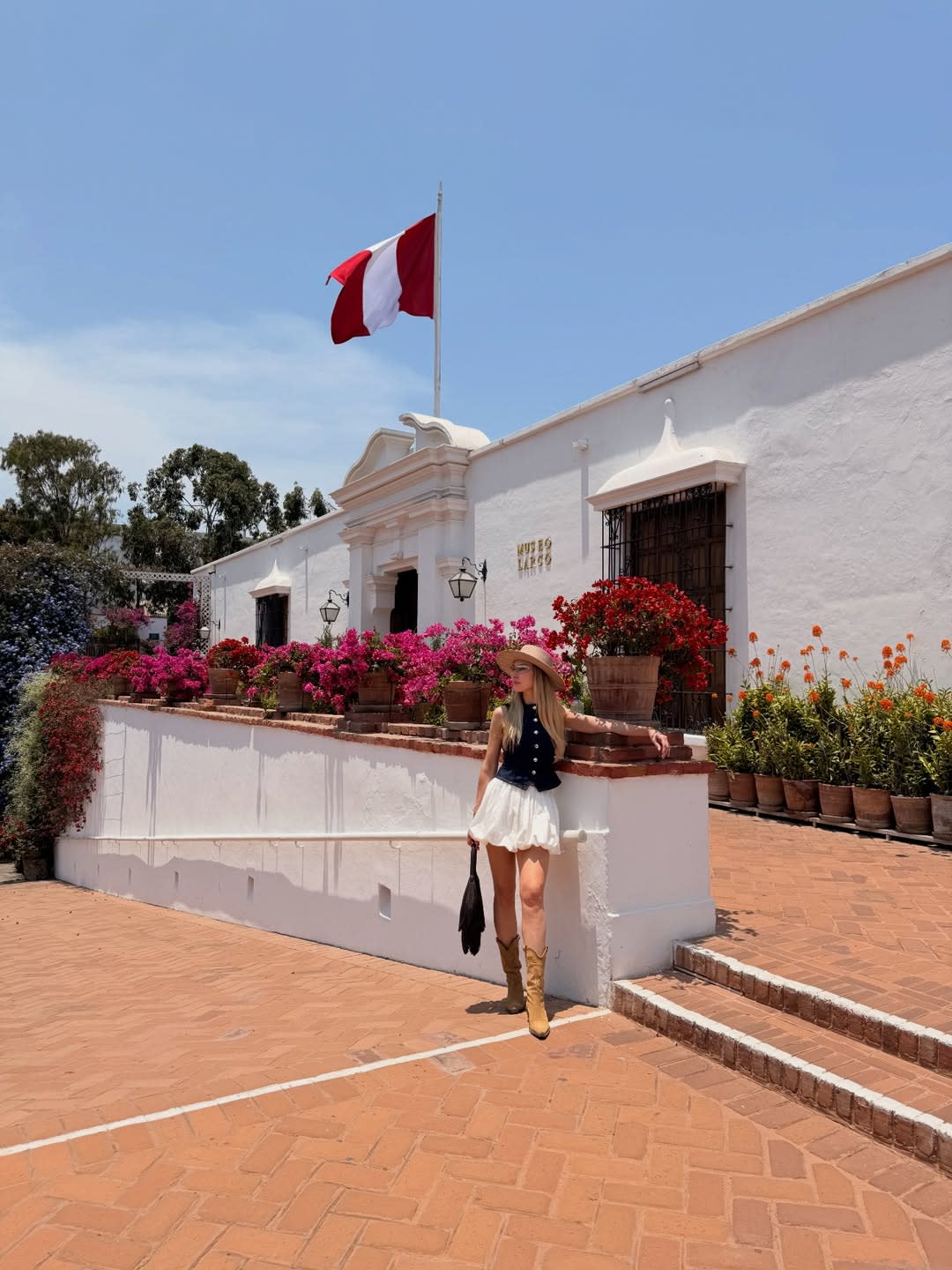
The visit runs approximately ninety minutes. We time it to the morning light in the courtyard, which enters from the east and crosses the cedar arcade at the hour that best reveals the grain and colour of the wood. For guests whose Lima itinerary includes the Larco Museum, we position Casa de Aliaga at the start of the same stay: the portrait archive here reads in dialogue with the Moche portrait vessels at the Larco — both are acts of preserving a specific face across centuries, made in entirely different conditions and for entirely different purposes, and the comparison is more interesting when it develops slowly across a Lima visit rather than landing as a curator's observation.
For guests with specific genealogical or architectural research interests, we can arrange extended access to the house's documentation archive — property records and correspondence that trace in an unbroken line from the sixteenth-century land grant.
Expert Insight
"Every guest expects a beautiful colonial house. What they don't expect is the feeling that they are in someone's home. The portraits are not labelled. The chapel is not roped off. The family historian refers to Jerónimo de Aliaga as 'our ancestor' — present tense, without drama, as if five hundred years is simply how long one family has lived on one street. After the Larco — where the objects were made for the dead — Casa de Aliaga is the experience of an archive that is still, conspicuously, alive."
— Katherine Cjuiro, Founder & Travel Director, KADA Travel
A Practical Note
Casa de Aliaga is a private home first. The access it extends to visitors is an act of custodianship, not a commercial transaction, and we ask that our guests dress accordingly: conservative clothing, closed shoes, no food or drink in the reception rooms or the chapel.
The Centro Histórico is a working urban neighbourhood and Jirón de la Unión is a pedestrian commercial street — vendors, government workers, school groups, and the full ambient noise of central Lima. The house is thirty seconds from the Plaza Mayor, Lima's founding square, where the Presidential Palace, the Lima Cathedral, and the Archbishop's Palace compose the colonial ensemble the city was planned around. We recommend combining the Aliaga visit with a walk to the Plaza Mayor and, for guests who want to close the morning properly, a pisco sour at the Bar Inglés in the Gran Hotel Bolívar — a bar that has been serving them since 1924, in a room that has not changed much since.
Written by Kada Travel Editorial
Frequently Asked
No. It is a private home in continuous habitation since 1535. The Aliaga family manages visits as a cultural custodianship, not an institutional programme. This is material to the experience: the rooms are arranged as living spaces, not exhibition environments, and the family's relationship to the stories is personal.
At least four weeks, and ideally when we are designing the Lima itinerary. The private morning access — before the group schedule begins — requires coordination with the family's calendar. We do not arrange same-week access. For guests whose schedule allows only a group-hour visit, we can sometimes arrange this with shorter notice, though we do not combine our guests with other groups.
The chapel is accessible by prior arrangement as part of the extended private visit. We request this specifically at the time of booking. The space is quiet and the visit brief by the nature of the room; it is also the part of the house that our guests most consistently describe as the most unexpected.
Yes. The experience works as a domestic archive rather than a history lecture — the portraits, the cedar columns, the courtyard, and the weight of accumulated occupation are compelling without requiring prior context. Guests who arrive without a reading list consistently leave with a clearer sense of what 1535 means than guests who arrive with one.
Design Your Journey
Design your bespoke Peru journey
We talk. We listen. Then we design an itinerary that belongs only to you.
Start Planning