Unfolded· 7 min read·13 July 2026
The Thousand-Year Harvest
Caccaccollo — a rural Quechua community in the hills above Pisac where the morning is a native potato harvest using a tool the Inca standardised, the afternoon is a *huatia* lunch cooked underground, and the economic architecture was designed by the community itself.
By Kada Travel Editorial
Peru has more than three thousand native potato varieties. The potato originated in the Andes — specifically in the highlands of what is now southern Peru and Bolivia, where wild potato species were domesticated between eight and ten thousand years before present — and the agricultural diversity preserved in highland Andean communities represents one of the largest concentrations of crop genetic heritage on earth. In the supermarkets of Lima and the restaurants of Europe, a handful of potato varieties circulate commercially. At Caccaccollo, at 3,800 metres in the hills above the Pisac valley, families harvest potatoes in colours and textures and flavours that do not exist outside the communities that have maintained the seed stock across generations.
The morning harvest at Caccaccollo is not a demonstration of a historical practice. The fields being worked are the fields the community depends on. The harvest happens because it is the season for the harvest — not because visitors have been scheduled to observe it. The community has structured its visitor programme around activities that are already taking place in the agricultural calendar; guests participate in the work rather than watching a re-enactment of it.
This distinction matters more than it might appear. The Andean highland communities in the tourist corridor around Cusco have been the subject of cultural tourism programmes for decades — most of them designed by operators who were not members of those communities, with economic structures that directed the majority of revenue to intermediaries. The Caccaccollo programme was built on a different premise: the community controls the schedule, the content, the pricing, and the direct payment. The fee Kada pays for the visit goes to the families involved, in amounts the community assembly has agreed. The arrangement is not perfect. It is the one we are willing to include in our itineraries.
The Community
Caccaccollo is a comunidad campesina — a highland farming community — in the hills above the Pisac valley, at an altitude that places it in the k'eswa ecological band where native tubers and certain cereals are the primary crops. The community has approximately sixty to eighty families; the agricultural economy is based on native potato cultivation, quinoa, and livestock — primarily cattle, guinea pigs (cuy), and some alpaca kept for both fibre and meat.
The visitor programme was developed in consultation with a Cusco-based organisation focused on indigenous community economic sovereignty. The starting point was a refusal of the standard model — in which an outside operator designs a cultural programme for the community to perform — and a replacement of it with a process in which the community members decided what they were willing to share, under what conditions, at what scale, and at what price. The resulting day programme shows the community's actual daily life, in season-appropriate agricultural activities, with the food they actually eat and the tools they actually use, framed by a community member rather than an outside guide.
The Harvest
The primary tool for the potato harvest at this altitude is the chakitaklla — the Andean foot plough, a pole with a footrest that allows the operator to drive the blade into the soil with body weight, turning the earth to expose the potato rows beneath. The chakitaklla predates the Inca period and is still the practical tool for this operation on steep Andean slopes where mechanised equipment cannot function. The physical technique is straightforward in principle; the sustained application of it across a morning in highland clay soil at 3,800 metres, with a realistic idea of how many rows remain, produces a different understanding of what subsistence agriculture at this elevation requires.
The native potato varieties in the Caccaccollo fields include types not available outside highland Andean communities: chuño — the freeze-dried potato preserved over several nights at altitude, one of the oldest food preservation technologies in the world — and moraya, processed differently from chuño through a water-leaching method that produces a different texture and a milder flavour. Fresh varieties in the field range from deep purple to yellow to white, in shapes from elongated fingers to dense rounds; they are not selected for commercial distribution because they are too small, too irregular, or too perishable for industrial supply chains. What makes them significant is not their appearance but the genetic specificity that has been maintained through careful seed selection across hundreds of generations — each family's stock adapted to the specific conditions of their particular soil, altitude, and microclimate.
The community member who hosts the harvest explains what is being harvested and why each variety is grown, in Quechua with my translation. The knowledge he carries about the specific field — its drainage, its yield history, the seed sources for the varieties in it — is the kind of information that exists only in the person who farms it. No written record preserves it. No agricultural manual covers it. The explanation of a field by the person who works it is one of the things that disappears when a community's agricultural practice is replaced by commercial monoculture; at Caccaccollo, it is the primary content of the morning.
The Huatia
The huatia is the lunch. The name refers both to the earth oven and to the meal it produces: a construction of soil, built into a domed form over heated stones, filled with potatoes and corn and the meat that the family has prepared, sealed and left to cook by retained heat for approximately ninety minutes. The result is a meal that has been made this way in the Andean highlands for centuries: the potatoes emerging from the earth with a texture and flavour that no conventional cooking method produces, the corn sweet from retained steam, the meat tender from low sustained heat.
The huatia is not a tourist version of a traditional food. It is the lunch the community actually eats when harvesting — the meal form historically associated with agricultural labour, because it can be prepared in the field without requiring a kitchen, using rocks and the heat of a fire built from what is available. The adjustment made for guests is minimal: a table rather than blankets on the ground, ceramic plates rather than eating communally from a shared pile, and chicha de jora from the community's own production alongside water. Everything else is as it would be if guests were not present.
The huatia preparation begins around 10:00 AM — while the harvest continues — so that the fire has reduced and the dome has been sealed well before noon. The cook judges the food ready by the behaviour of the steam at the edge of the dome; the opening is performed when the cook is satisfied, not when the clock suggests it. The smell released when the earth is removed — the mineral heat of the volcanic stones combined with the steam from the food — is one of the more specific sensory experiences the Andes produces.
What Kada Arranges
The day at Caccaccollo runs from approximately 9:00 AM to 2:00 PM. Transfer from Cusco takes thirty to forty minutes; from the main Sacred Valley hotels, twenty to thirty. The morning harvest and the post-harvest weaving session — a household demonstration of the backstrap loom tradition as it exists in a highland farming community, shorter and less technically detailed than the Chinchero cooperative but specific to the domestic context — complete before noon, with the huatia ready for the early afternoon.
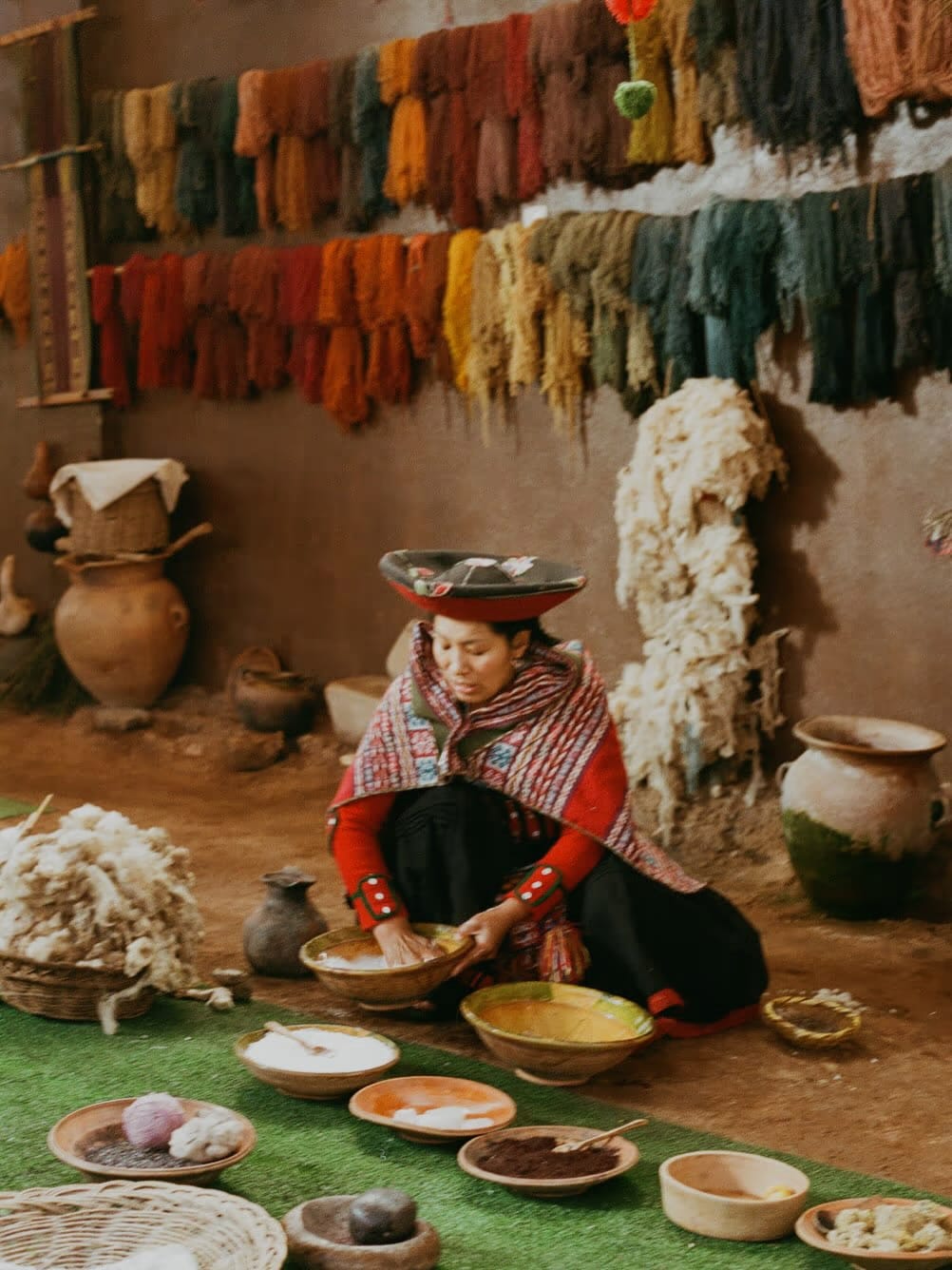
The weaving session at Caccaccollo is not the technical programme available at Chinchero or Awana Kancha; it is the tradition as it exists in a kitchen alongside agricultural work, where the telar is a household object and the manta is daily dress. The demonstration shows the same craft from a different angle: not the mastery of a dedicated practitioner but the competence of a person for whom weaving has always been one of several daily activities. Both registers are worth encountering.
Maximum group size is four to six. The payment goes directly to the host family and the community fund, with no commission retained by Kada on the community-side fee. We confirm the visit with the community coordinator two weeks before the date, not further in advance — the agricultural calendar is managed at shorter range than urban itineraries typically allow, and we accommodate this in the planning.
Expert Perspective
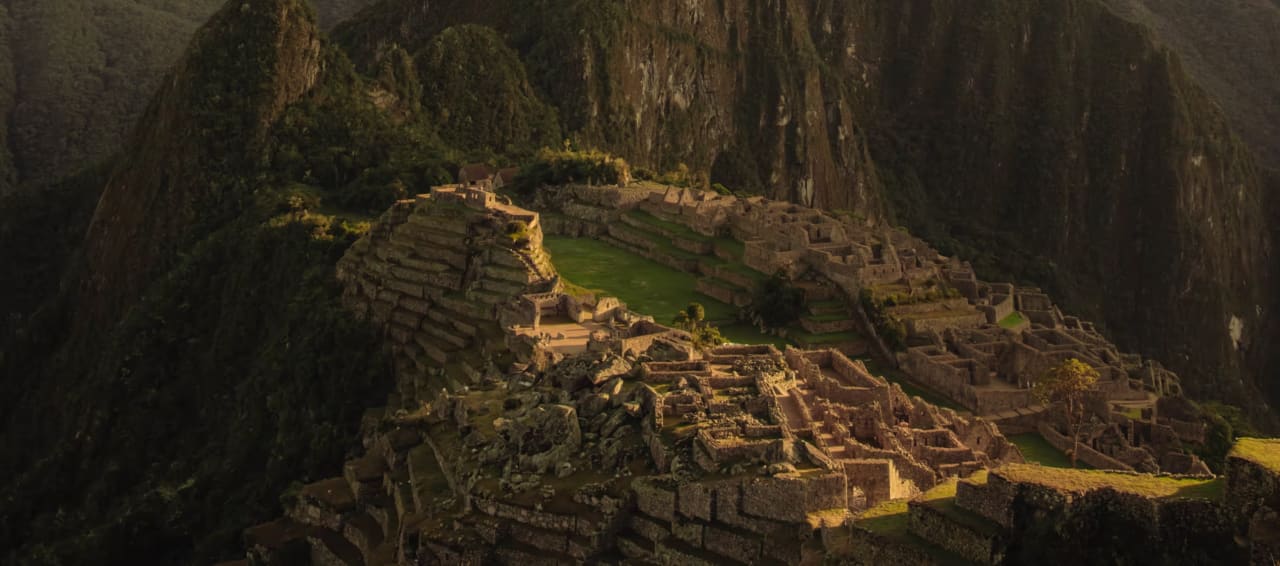
"What the Caccaccollo visit does, for guests who have already been at the Inca sites, is change the frame. By the time they arrive here, they have seen the terraces at Pisac from above, the walls at Sacsayhuamán, the circular system at Moray. All of that is archaeology — evidence of what the Inca did with this landscape, read from the outside. At Caccaccollo, what you are inside is what the Andean relationship with this landscape looks like when the state is absent and the community is managing its own resources. The chakitaklla the community member is using is the same tool the Inca standardised for terraced field cultivation. The potato varieties in the ground are part of the same genetic diversity the Inca maintained through their redistribution economy. The huatia cooked at the edge of the field is the same preparation the mit'a labour gangs ate. The difference is that in 2026, no empire is organising it. The families are doing it themselves, with the knowledge their grandparents passed down, because it works."
— Jaime Ttito, Head of Guides & Cultural Interpreter, KADA Travel
A Practical Note
Caccaccollo is at 3,800 metres — above Pisac and significantly above the Sacred Valley floor. A minimum of three full days in the Sacred Valley at lower altitude before scheduling this visit is required. The morning harvest involves sustained physical work at this elevation; guests who are not yet acclimatised will find the combination of altitude and exertion genuinely difficult, and the experience is materially better when the body has had time to adjust.
Footwear: sturdy boots. The field terrain is rough, wet from overnight dew in the early morning, and the soil is heavy highland clay. Trail shoes are manageable; anything else is not. We specify boots at the booking stage.
The huatia lunch includes meat. For guests with dietary restrictions, we communicate requirements to the community coordinator two weeks in advance; the family adjusts accordingly and is experienced with this. The adjustment is made without disruption.
Written by Kada Travel Editorial
Frequently Asked
The main harvest in the Caccaccollo fields runs from March through May — the end of the wet season, when the potatoes are mature. Outside these months, the visit focuses on other elements of the community's agricultural year: planting preparation, the *chuño* and *moraya* processing that happens November through July when overnight freezing temperatures are consistent, and the weaving work that runs throughout the year. The food programme adjusts to the season. We advise on the specific programme content for each guest's travel dates.
Kada pays the community a programme fee set by the community assembly. The fee is distributed by the community coordinator to the host family and to the community fund, which the assembly directs toward specific infrastructure projects. Kada does not retain a commission on the community-side payment; our fee covers coordination, transport, and Jaime's guide services only. Guests are welcome to make additional direct contributions to the community fund at the end of the visit; the coordinator explains the current priorities.
Yes — the community sells small quantities of fresh native varieties for guests to carry to their accommodation. The varieties available depend on the season. International transport of fresh produce is subject to agricultural import regulations at the destination. *Chuño* and *moraya* — the dried and processed potato products — are not subject to the same restrictions and are available in larger quantities; they also keep well and travel easily.
Shorter and less technically detailed, but different in kind. This is the backstrap loom as a household object — the *telar* in the kitchen, the *manta* on the bed, the weaving skill as part of a full life that also includes farming, cooking, and everything else. The mastery available at Chinchero is not present here; what is present is the context that the cooperative visit does not show. For guests visiting both, the Caccaccollo session makes the Chinchero one more legible, and vice versa.
Design Your Journey
Design your bespoke Peru journey
We talk. We listen. Then we design an itinerary that belongs only to you.
Start Planning