Unfolded· 8 min read·7 July 2026
The Three Readings of Pisac
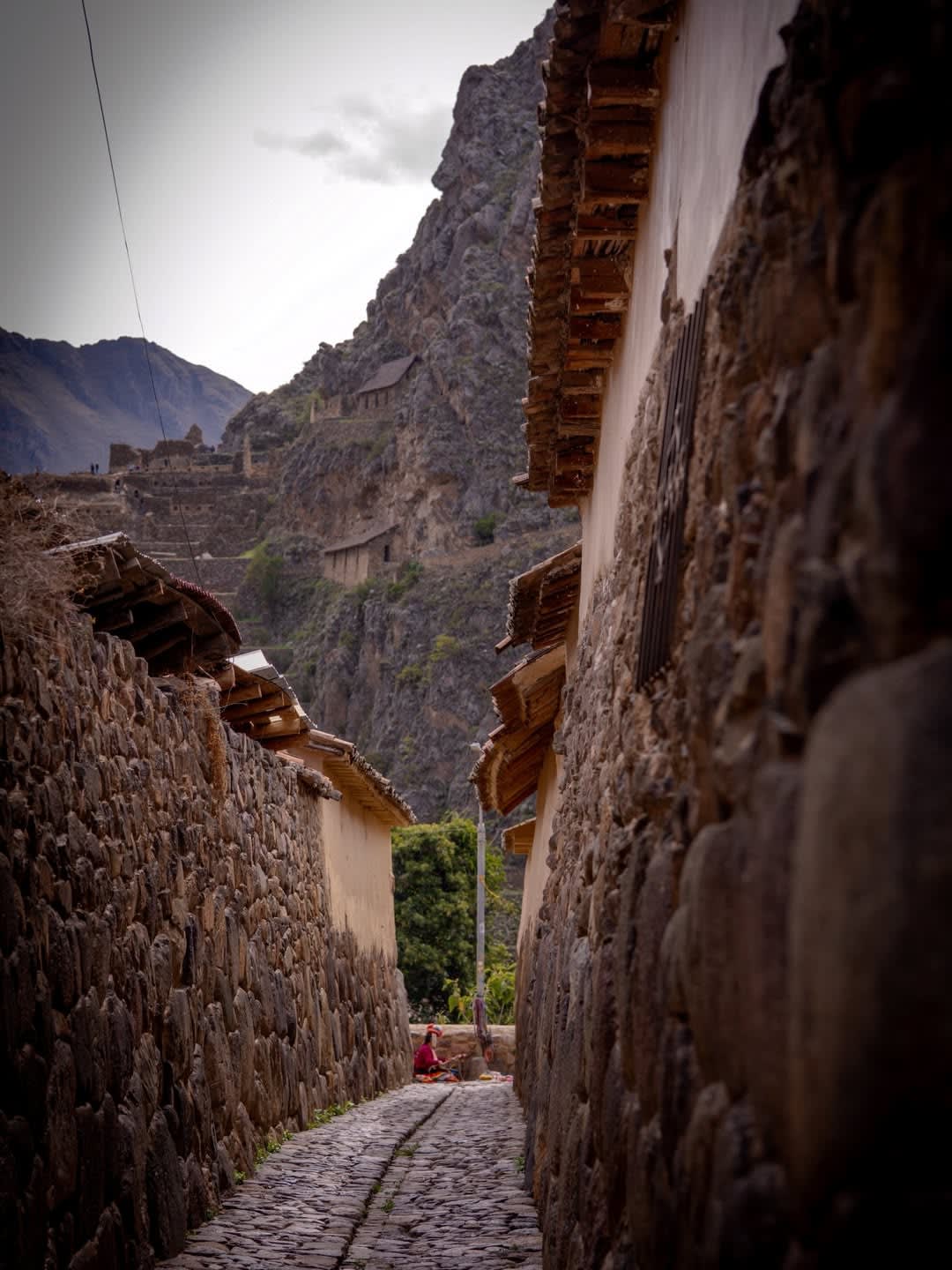
Pisac before the market opens — the agricultural terraces with an archaeologist, the cliff-face cemetery that holds the largest concentration of Inca burial niches in Peru, and the Sunday market that operates below for reasons that have nothing to do with the Inca and everything to do with the valley's living economy.
By Kada Travel Editorial
Pisac is three different sites in the same mountain. The first is archaeological: the Inca citadel and agricultural complex at 3,970 metres, one of the most extensive terrace systems in the Sacred Valley, with astronomical structures and a military position that controlled the upper valley approach to Cusco. The second is the cemetery: carved into the cliff face below the citadel, more than three thousand burial niches cut into the rock — the largest concentration of Inca funerary architecture in Peru, and the most damaged, systematically looted through the twentieth century. The third is the market town below: Pisac village on Sunday morning, where the weekly market operates at the base of the mountain the citadel occupies.
Most visitors see one of these three things, or pass through two of them too quickly to read either. The visit Kada arranges is a full morning at all three, in the sequence that makes the relationship between them intelligible: the terraces first, in the early light, before the market buses arrive below; the cemetery as the descent; the market at the point when its actual character — distinct from its tourist reputation — is legible to a guest who has just spent three hours on the mountain above it.
The Terraces
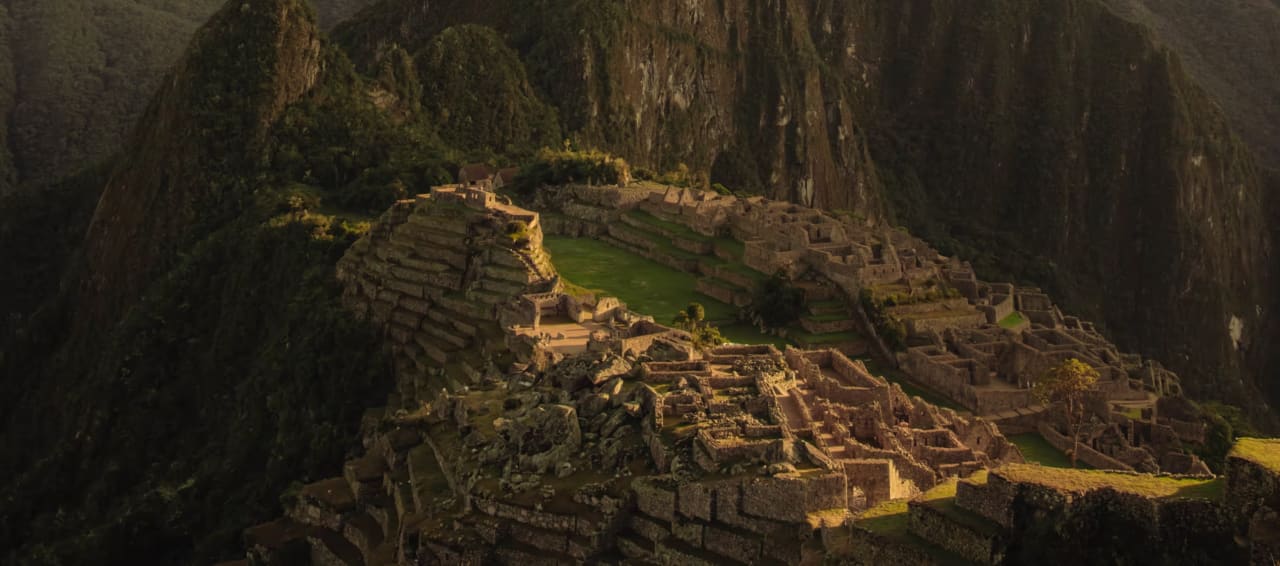
The Inca complex at Pisac is one of the largest in the Sacred Valley: an integrated system of agricultural terraces, hydraulic infrastructure, and residential and ceremonial structures that together cover approximately fifteen hectares of a mountain that rises sharply from the valley floor.
The agricultural terraces are the most visible element from the valley — the stepped platforms running across the mountain face in both directions from the Q'allaqasa sector, which is the citadel at the centre of the complex. The terraces are engineering rather than decoration: each platform is supported by a retaining wall, each retaining wall drained to prevent waterlogging, and the whole system connected by a network of stone channels that bring water from springs above the site. The cultivable depth of soil on each terrace was achieved by filling the platforms — carrying soil from lower elevations — because the bedrock at this altitude produces insufficient agricultural depth on its own.
The citadel itself contains structures that the archaeologist we work with identifies as relating to astronomical observation, religious practice, and military function simultaneously. The Intihuatana at Pisac — the "hitching post of the sun" structure — is positioned to track solar alignments at specific calendar points. The military logic of the site is different from Ollantaytambo's: where Ollantaytambo controlled the valley entrance from below, Pisac controlled the high ridge approach — the route by which the Chanka confederation, the Inca's historical rivals, could have entered the Sacred Valley from the north.
The archaeologist we work with at Pisac reads the site in terms of current scholarship: what is known, what is contested, and where the gaps are. The Pisac complex has been partially excavated and is partially understood; a significant portion of the upper structures above the agricultural terraces remains unexcavated, and the full relationship between the citadel, the terraces, and the cemetery below it is not yet the subject of a complete published analysis.
The Cemetery
The cemetery at Pisac occupies the cliff face below the citadel's eastern escarpment: a vertical rock wall in which the Inca cut chullpa niches — burial chambers for the mummified dead — in hundreds of rows extending across the entire visible cliff face. Current estimates put the number at three thousand to five thousand niches; the exact count depends on how badly damaged sections are categorised. It is the largest Inca cliff cemetery known to survive in Peru.
It does not survive intact. The systematic looting of Inca tombs — huaqueo, conducted by huaqueros working individually and in organised groups — ran at scale through the twentieth century and targeted Pisac extensively because the cemetery was accessible and the mummies within it were associated with grave goods. By the mid-century, the great majority of the niches had been opened and emptied. What remains are the chambers themselves — some with their sealing walls still partially intact, some open to the sky, some collapsed — and the view from below of the full extent of what was built here.
The scale of the cemetery is most legible from the path that runs along the base of the cliff. Standing at that level and looking up at the rows of niches extending across the rock face, the visitor confronts a funerary project of a scope that the standard interpretation of Pisac — "an important Inca site in the Sacred Valley" — does not convey. The Inca brought their dead to this cliff and cut chambers for them at an altitude where the cold preserved the mummies naturally, at a position that faced the rising sun, at a scale that suggests the entire upper valley community used this site across multiple generations.
The archaeologist frames the cemetery not as a tragedy of looting but as an active area of archaeological attention: the excavation record from the intact niches that were studied before looting reached them provides significant data about Inca mortuary practice, diet, and social organisation. What the cliff holds now is still meaningful.
The Market
The Sunday market at Pisac village is one of the oldest continuously operating markets in the Sacred Valley. Before the conquest, the Inca administered a market system at Pisac that served the communities of the upper valley; the market in the colonial period became a site of economic exchange between indigenous communities and the colonial administration; the contemporary market serves the valley's agricultural communities, the town's residents, and, since the 1970s, an increasing proportion of tourists.
This history produces what any visitor to the Sunday market encounters: a market with two concurrent functions, running simultaneously in the same space. One function is the exchange economy of the valley — the produce market, the livestock section, the agricultural inputs, the domestic goods that local families come to buy. The other function is the craft and textile market that has developed in response to the tourist economy — weavings, ceramics, silver, mass-produced Andean textiles for the visitor trade.
These two things are not in conflict, and they are not easily separated at a glance. The guest who arrives at Pisac market without context sees a colourful market. The guest who has spent the morning with the archaeologist on the terraces above arrives with a different question: what is the relationship between this market, operating in the valley below, and the agricultural system on the mountain above it? The answer — that the terraces fed a redistributive economy that the market also served, and that the market's position in the valley's economic life has not fundamentally changed across five centuries of political reorganisation — is the third layer of the Pisac reading.
What Kada Arranges
The full Pisac visit runs approximately five hours: a 7:00 AM start at the upper site, three hours across the terraces and citadel with the archaeologist, descent via the cemetery path, arrival at the village by 10:30 to 11:00 AM when the market is in full operation but has not yet reached the midday crush.
Access to the upper site before the public opening hour is coordinated through our institutional arrangements with the Parque Arqueológico de Cusco; the same mechanism used for Sacsayhuamán's pre-opening access applies here. The archaeologist meets our guests at the upper car park at 6:45 AM.
The descent from the citadel to the village is on foot via a path that includes the cemetery cliff section: approximately forty-five minutes of walking on stone paths and compacted earth, with moderate gradient and some uneven sections. Guests who need to avoid the descent on foot can return by vehicle to the lower car park and meet the group at the market entrance; we manage the logistics for both options.
Lunch in Pisac village is in a restaurant the archaeologist knows — not a tourist lunch venue but a place where the valley's own produce and cooking tradition is represented. This closes the day's three-layer reading with a fourth, domestic one.
Expert Perspective
"What I tell guests before we go to Pisac is: there are three things here, and each one is worth a full morning on its own. The terraces are one of the finest examples of Inca agricultural engineering in the valley. The cemetery is the scale of the Inca relationship to their dead — a scale that most visitors do not register because they are looking at empty niches rather than imagining three thousand intact ones. And the market below is the continuing life of the same valley, on the same ground, with the same families. I have been to Pisac more times than I can count. I have not been once without learning something new from the cemetery. The holes in the cliff face tell the story of what was lost there. They also tell the story of everything that was done before the loss, which is a different kind of reading."
— Jaime Ttito, Head of Guides & Cultural Interpreter, KADA Travel
A Practical Note
Pisac is at 3,970 metres at the upper site — a significant altitude for sustained walking. A minimum of three days in the Sacred Valley (2,800m) before the Pisac visit is recommended; guests who acclimatise properly find the three hours at the citadel demanding but manageable. The descent via the cemetery is at a lower altitude and is less strenuous than the citadel circuit.
Sunday is the principal market day; Thursday is a secondary market. The visit is most complete on Sunday, when the full dual market is operating and the relationship between the local economy and the tourist economy is most visible. On weekdays, the market is considerably reduced and the citadel is quieter — a different balance, appropriate for guests who want more time at the upper site with fewer visitors.
The Boleto Turístico covers entry to the upper Pisac site. The market has no entry fee. Both the archaeologist's session and the cemetery descent are included in our programme arrangements.
Written by Kada Travel Editorial
Frequently Asked
Active organised looting at the scale of the mid-twentieth century has been significantly reduced by improved site security and legal enforcement since the 1990s. Isolated incidents of informal excavation in the more remote sections of the cliff continue to be reported, but the principal damage was done in the decades when the site had no meaningful protection. The current archaeological programme at Pisac is focused on documentation and conservation of what remains, including the surviving intact niches in the most inaccessible sections of the cliff that *huaqueros* did not reach.
The craft and textile section of the Sunday market sells weavings of variable quality — from machine-made synthetic textiles aimed at the tourist trade to genuine hand-spun and hand-woven alpaca work produced in local communities. The archaeologist or Jaime can advise on quality indicators. For guests interested in textiles, the market is a useful introduction to the range, though the dedicated weaving communities at Chinchero and among the Q'ero provide a more controlled encounter with the highest-quality traditional work.
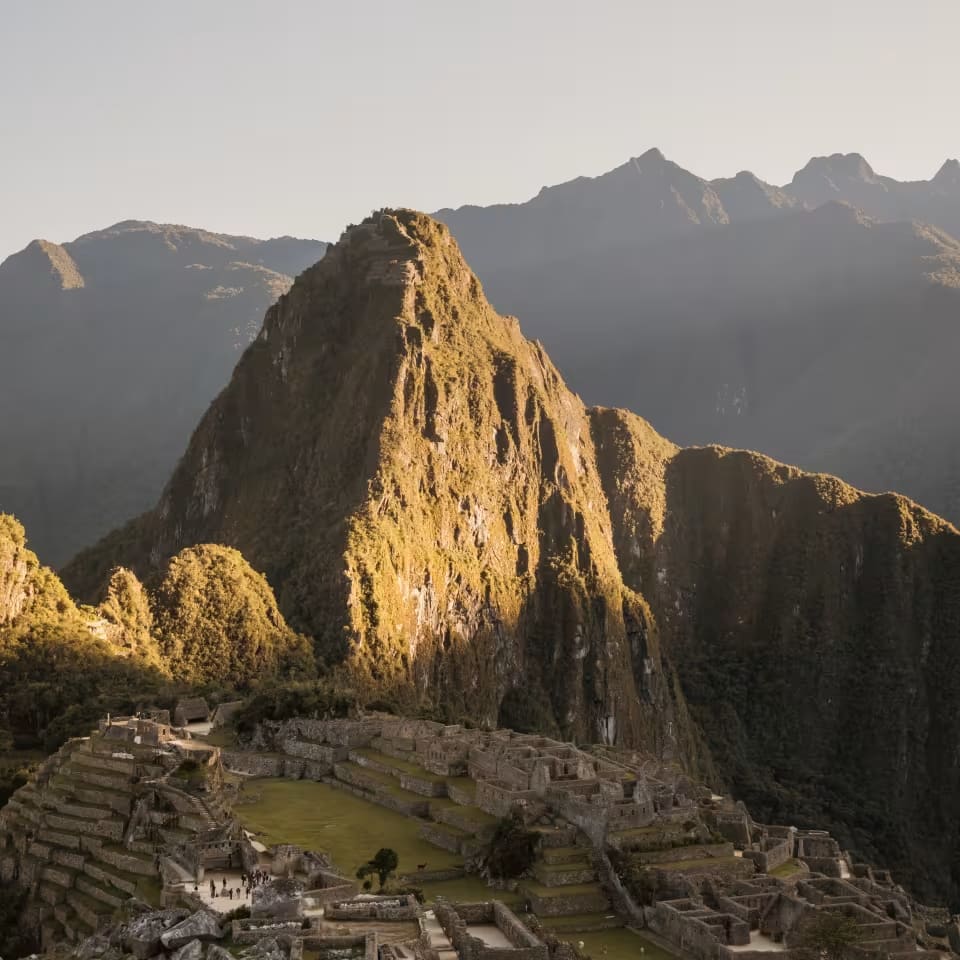
They are not comparable in the way most visitors expect. Machu Picchu is a concentrated, exceptionally preserved royal estate — a single vision executed with maximum resources. Pisac is an integrated valley system: agriculture, urbanism, religion, and mortuary practice spread across an entire mountain and its base. Pisac is less photogenic and less famous; it is also, in some respects, more legible as a document of how the Inca organised a valley economy, because the full system — from the terraces to the cemetery to the market below — is still visible in its relationship.
For guests doing the Sacred Valley as a half-day circuit (the standard Cusco tourism product, covering Pisac market, Ollantaytambo fortress, and one or two intermediate stops in a single day), the Pisac encounter is typically reduced to twenty minutes at the market. That visit and this are not the same experience. The upper site, the cemetery, and the market as three distinct readings require five hours and a guide who reads them in sequence; the circuit does not provide this. We recommend them as separate half-day visits for guests who have the time.
Design Your Journey
Design your bespoke Peru journey
We talk. We listen. Then we design an itinerary that belongs only to you.
Start Planning