Unfolded· 8 min read·31 July 2026
The Cemetery That Has Not Been Closed
Chauchilla necropolis, 30 kilometres south of Nazca — the Nasca mortuary site where bodies interred between 200 and 600 CE remain in their original funerary positions, preserved by extreme desert aridity, with an archaeologist who converts the visit from proximity to human remains into a reading of Nasca mortuary culture.
By Kada Travel Editorial
Thirty kilometres south of Nazca on the road to Ingenio, the desert floor has been interrupted at intervals since the 1990s by low wooden covers that shade the open graves. Beneath each cover: a Nasca burial in situ — a body in the squatting position characteristic of the culture's mortuary practice, wrapped in the textile layers of the funerary bundle, positioned above the ceramic offerings and agricultural goods that accompanied the dead. The graves are between 1,400 and 1,800 years old.
The bodies are intact. Not cleaned-and-mounted intact in the manner of museum display — intact in the sense that the person buried here is still, anatomically, a person: braided hair, dried skin on the skull and hands, the textiles still folded in the pattern in which the family placed them. The Nazca desert averages less than four millimetres of annual rainfall. The extreme aridity that makes the Lines on the pampa legible after two millennia is the same condition that preserved everything placed in the ground here. The desert did not decay the Chauchilla dead; it kept them.
The standard visit to Chauchilla is forty-five minutes with an audio guide or a guide who covers twelve tombs in a standard circuit, providing factual information about the culture and the preservation. The Kada visit is three hours with an archaeologist whose research at and around the site has produced published work on Nasca mortuary practice. The difference is not the access — both visit the same twelve tombs — but the interpretive depth at each one: what the specific objects in this specific grave indicate about the social position of the person buried here, the technological level of the weaving, the agricultural calendar implied by the offerings, and the funerary ritual that the physical evidence allows to be reconstructed.
The Aridity That Made This Possible
The Nasca region is technically part of the Atacama Desert system — the rain shadow created by the Andes blocking the Amazonian moisture that would otherwise reach the Pacific coast. Annual rainfall at Nazca is typically below four millimetres; there are years with none. The underground water system (the puquios) that sustained the Nasca culture — aqueducts carved into the alluvial plains at angles that maintained flow through gravity — was an engineering response to conditions that made surface water management impossible.
The same conditions that required such engineering also created the accidental archive of Chauchilla. A burial in humid soil decomposes at a rate that leaves bones, occasionally, and almost nothing else. A burial in the Nazca desert decomposes differently: the bacterial processes that break down soft tissue cannot operate without moisture, and without moisture, a body desiccates rather than decays. The result, at fourteen centuries of distance, is an archaeological record of a quality that has no analogue in high-humidity environments: not only the human remains but the textiles — some with intact embroidery and visible dye colour — the ceramic vessels with their original pigments, the braided hair, the woven bags of seeds.
This preservation is the site's scientific value. It is also why the visit, with proper interpretation, is not macabre in the sense the word typically implies but analytical: these are legible people in legible context, and the task of the archaeologist working the site is to read what the legibility offers.
What the Funerary Bundle Contained
The Nasca funerary bundle — the fardo funerario — is the cultural object at the centre of Chauchilla. A bundle was constructed around a deceased person positioned in a squatting, flexed posture: knees drawn up, body seated, spine upright. Around this core, layers of textile were applied — plain weave, embroidered cloth, nets, cotton padding — until the bundle formed an ovoid mass that could be several times the volume of the body it enclosed. The bundle was then placed in a pre-dug grave, often with the face of the innermost textile layer oriented toward the direction from which the sunrise came in the relevant agricultural season.
The contents of the grave around the bundle — ceramics, agricultural offerings, tools — were selected according to the social position and occupation of the deceased. Graves of high-status individuals contain multiple ceramic vessels in the polychrome Nasca style: forms including the double-spouted bottle, the bridged jar, the bowl with negative resist design in black and red. Graves of agricultural producers contain different assemblages: bags of seeds, wooden farming implements, dried fish from the coast.
The textile layers of the bundles at Chauchilla are, in some cases, of extraordinary craft quality — a fact more visible to the specialist than to the general visitor. The embroidered panels that survive in intact bundles show a technical vocabulary of figurative imagery — flying figures, supernatural beings, trophy heads — that appears across Nasca material culture and whose specific symbolic grammar the archaeologist can read with some precision. Standing before a bundle at Chauchilla with a specialist who can identify the figure embroidered on the outermost layer as a specific supernatural being in the Nasca iconographic system converts the visual encounter with well-preserved cloth into a reading of Nasca cosmology.
The Site's Research History
Chauchilla has a complicated history that the standard tourist circuit glosses over and that the archaeologist will address directly. The site was extensively looted by huaqueros — grave robbers — throughout the twentieth century; the state in which many of the tombs were found when professional archaeologists first documented the site in the 1990s was one of systematic disturbance, with grave goods removed, bundles opened, and bones scattered across the surface. Some of the current twelve open tombs contain material that was reorganised — objects placed back in archaeological position — rather than fully undisturbed original context.
This history does not invalidate the site's scientific value; it contextualises it. The objects that survive in undisturbed graves or in regional museum collections from Chauchilla remain extraordinary; the twelve open tombs, even with their complex custody history, provide a reading of Nasca mortuary practice that no other accessible site offers. What the archaeologist's briefing provides is the honest account of what is primary evidence and what is curated presentation — a distinction that the standard visit either elides or does not know.
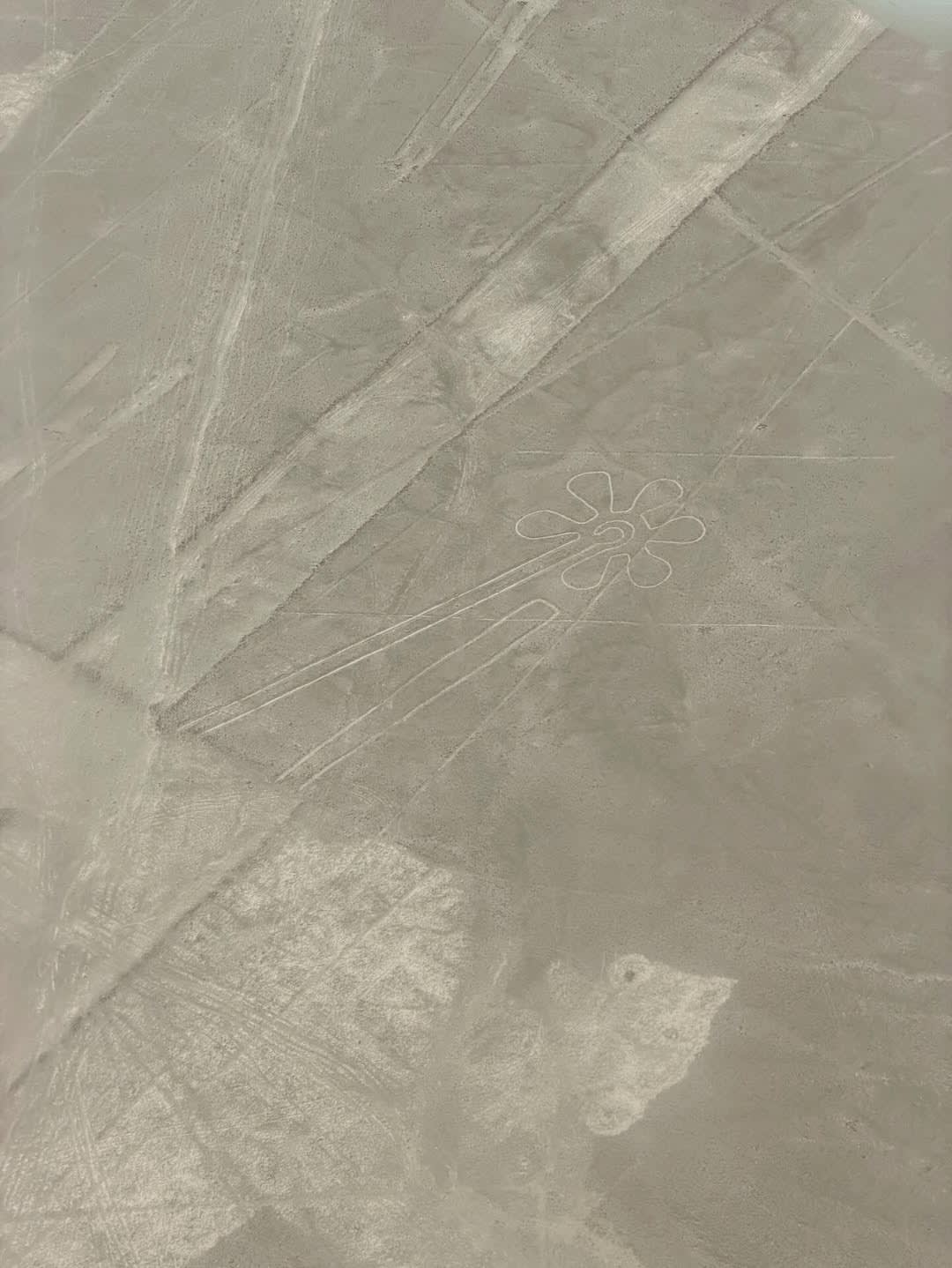
Ongoing research at and around Chauchilla uses ground-penetrating radar and other non-invasive methods to map the extent of the necropolis beyond the twelve open tombs. The full burial ground is considerably larger than the visible portion; the visible portion is the excavated fraction. The archaeologist can speak to current research questions and the relationship between the Chauchilla graves, the Cahuachi ceremonial complex, and the Lines — the three-part Nasca cultural geography that the overflight positions aerially.
The Connection to the Lines and Cahuachi
The three principal Nasca sites — the Lines on the Pampa Colorada, the cemetery at Chauchilla, and the ceremonial complex at Cahuachi — are not independent curiosities but a connected system of Nasca cultural geography. Understanding this connection is the argument for the three-site itinerary Kada designs for the Nazca programme.
The Lines, in the most compelling current interpretation, functioned as processional paths in a ritual landscape oriented toward Cahuachi — the pilgrimage centre twenty-eight kilometres west of town. The dead at Chauchilla were prepared for connection to the same religious system that the ceremonial centre administered: the funerary bundles, the offerings, the orientation of the graves are all consistent with a cosmological framework in which the dead had ongoing relationships with the agricultural and hydraulic forces that the Lines and Cahuachi addressed. Chauchilla is not adjacent to this system; it is a component of it. The archaeologist's ability to articulate this relationship across the three sites — which the specialist has visited, researched, and in some cases excavated — is what the three-day Nazca itinerary makes possible that no single-day circuit does.
What Kada Arranges
Private vehicle from the hotel to Chauchilla: approximately thirty to forty minutes south of Nazca on paved road. The drive through the pampa landscape that connects the Lines and Chauchilla is part of the interpretive context — the same arid geology that made both sites possible is visible along the route.
On site: three hours with the archaeologist. The standard twelve-tomb circuit is the structure; the archaeologist's commentary at each tomb is the substance. The visit is not rushed, and the circuit is covered at the pace of the question that arises at each tomb rather than the pace of a group itinerary. Private visit means no other group; the archaeologist speaks at conversational volume in a silence appropriate to the site.
Kada coordinates the Chauchilla visit in conjunction with the Nazca overflight and the Cahuachi programme: the three-site Nasca itinerary runs across two days and gives the region the treatment it warrants rather than the single-day circuit that compresses all three into an insufficient sequence.
Expert Perspective
"People arrive at Chauchilla expecting to be disturbed. The bundles, the faces, the hair — yes, it produces an initial reaction that is about proximity to death. But that passes quickly if the interpretive frame is correct. Once you start reading the textiles — once you understand that this particular embroidered panel represents the same figurative vocabulary as the polychrome ceramics in the regional museum, and that the person buried here was significant enough to warrant this level of craft investment in their funerary preparation — the reaction shifts. The question becomes: who was this person? What was their relationship to the ceremonial system at Cahuachi? Chauchilla, properly interpreted, is not a cemetery in the modern sense. It is an archive."
— Jaime Ttito, Head of Guides & Cultural Interpreter, KADA Travel
A Practical Note
Access: the drive from Nazca to Chauchilla is approximately 30 kilometres on paved road, taking around 35-40 minutes. The site is at low elevation — similar to Nazca, approximately 500-600 metres — with no altitude consideration.
Conditions on site: the site is open-air desert with no shade at the tombs. The morning visit is recommended both for temperature (Nazca days become hot by midday) and for the quality of light over the grave surfaces. Sun protection, water, and appropriate footwear for unpaved desert terrain are practical necessities.
Photography: photography at Chauchilla is technically permitted in the open-tomb areas. Kada's experience is that guests who manage a camera frame throughout the visit have a different quality of engagement than those who leave the camera aside for most of the time and ask questions. There is no policy prescription on this; it is a private decision.
Physical demand: the site is not physically demanding. The path between tombs is unpaved desert surface; visitors with mobility considerations should flag this at booking for appropriate vehicle and access planning.

Written by Kada Travel Editorial
Frequently Asked
The site history is complex. Some of the twelve open tombs contain material reorganised from its pre-looting state; others contain undisturbed original context. The archaeologist addresses this at each tomb and identifies what is primary evidence and what is reconstruction. The assessment is honest rather than promotional.
Yes. The standard two-programme day places the Nazca overflight in the early morning — wheels up before eight, return by nine — and the Chauchilla visit in the late morning and early afternoon. The drive from the airfield to Chauchilla takes approximately forty minutes; the schedule is comfortable. The combined day is full but not exhausting.
The site presents human remains at close range. Parents should make this decision with knowledge of their children's specific responses; the standard recommendation for children under twelve is to discuss the site's nature before arrival. The archaeologist Kada works with is experienced in calibrating interpretation for mixed-age groups.
Independent visits to Chauchilla are permitted. Without specialist interpretation, the preservation is evident but the reading of each grave — the social status indicators, the craft quality analysis, the relationship between burial contents and the wider Nasca material culture — is not available. The specialist's value at Chauchilla is specifically interpretive: the site is unusual enough that what the eye sees requires significant background knowledge to convert into understanding.
Design Your Journey
Design your bespoke Peru journey
We talk. We listen. Then we design an itinerary that belongs only to you.
Start Planning