Unfolded· 7 min read·21 July 2026
The Stitch That Marks a Village
A private morning with an embroidery master in the Colca Valley, where a hat's shape and a skirt's stitch still declare which of two ancient peoples — Collagua or Cabana — a person belongs to.
By Kada Travel Editorial
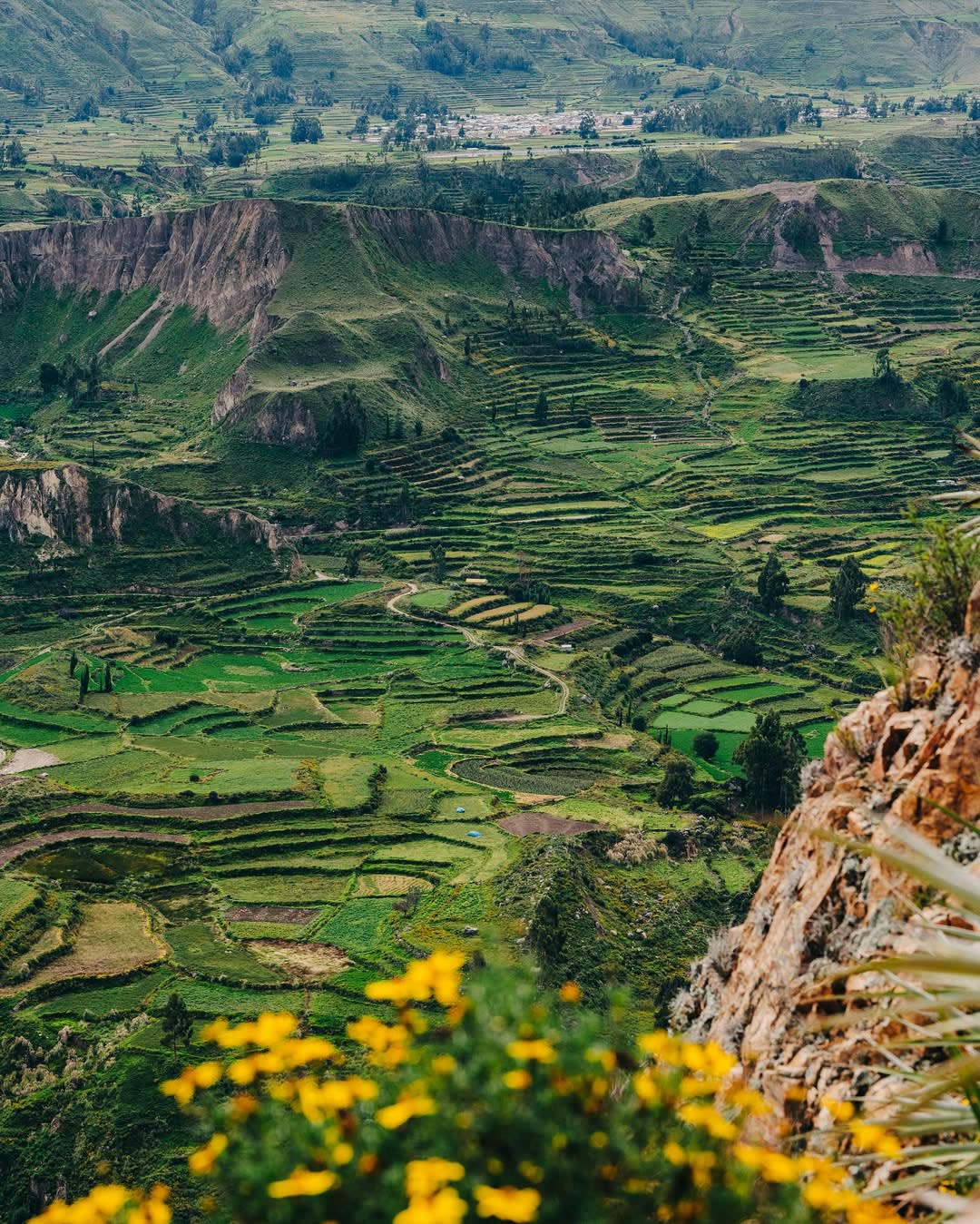
Walk through any town in the Colca Valley on a market day and the region's oldest division becomes legible within minutes, without anyone saying a word about it. It is stitched into the hats.
Long before the Inca absorbed this valley into their empire, it belonged to two distinct peoples — the Collagua, associated historically with the upper valley and llama herding, and the Cabana, associated with the lower valley and agriculture. Colonial administrators and, later, ethnographers documented the division largely through dress, because dress was how the two peoples had always marked it themselves: differently shaped hats, distinct embroidery motifs, and skirt panels whose stitching a trained eye — or, more precisely, a Colca eye — can read at a glance.
A Craft That Functions as an ID
The embroidery itself is dense, brightly coloured work, typically executed by hand or with a hand-cranked machine passed down within families, covering hat brims, bodices, and skirt hems in floral and geometric motifs. What makes it more than decorative is specificity: the shape of the hat brim, the particular combination of colours and patterns, and details as fine as how a particular flower motif is rendered can identify not just Collagua versus Cabana, but which specific town within that broader grouping the wearer is from.
This is a living practice, not a museum reconstruction — women in the valley's towns wear this dress as daily and festival clothing today, and the embroidery tradition continues to be taught within families, generation to generation, largely outside any formal institution.
What the Morning Actually Involves
We arrange time with an embroidery master — typically a woman working from her own home workshop, continuing a craft she learned from her mother or grandmother — who walks guests through the actual technique: how a motif is drafted, how the machine or needle is worked, and what specific patterns mean within her own community's visual vocabulary. Guests who want a hands-on component can attempt a simple stitch under close guidance; most leave with considerably more respect for a craft that looks, from a market stall, deceptively simple.
The conversation extends naturally into the broader Collagua–Cabana division — how it persisted through Inca incorporation and Spanish colonisation, how it is understood and discussed within the valley today, and how visible it remains, a rare case of a pre-Columbian ethnic distinction that never fully dissolved into a single regional identity.
What Kada Arranges
We work with a specific embroidery master whose family workshop we know directly, in a town selected for that guest's broader Colca itinerary, and we bring a guide able to translate and add historical context where the artisan's own account moves into dialect or assumes local knowledge. For guests with a genuine interest in textiles more broadly, we can pair this morning with the valley's other craft traditions, building a fuller picture of Colca's material culture across a single, unhurried day.
Expert Insight
"Most guests photograph the hats in Chivay's market without ever learning that what they're looking at is closer to a passport than a costume. Spending a morning with someone who makes this work changes the rest of the Colca itinerary — every hat afterwards becomes legible, and the valley stops looking like one place and starts looking like the two peoples who have always lived in it side by side."
— Katherine Cjuiro, Founder, KADA Travel
A Practical Note
This experience depends on a specific artisan's availability and is best arranged with some advance notice rather than as a same-day addition. We compensate the artisan directly and transparently for her time, separate from any purchase a guest chooses to make from her work — there is no obligation to buy, though most guests do, given the quality and the story now attached to it.
Written by Kada Travel Editorial
Frequently Asked
Both are possible — guests can simply observe and ask questions, or attempt a guided stitch themselves. We confirm preference in advance so the artisan can prepare accordingly.
Yes, directly from the artisan, at a fair price we help guests understand relative to the time and skill involved — considerably more transparent than a market-stall transaction with no context.
*The Canyon's Two Peoples* covers the broader Collagua–Cabana history and cultural context; this experience is the hands-on craft counterpart, spent with a single artisan rather than surveying the culture more generally. The two pair well together.
Yes — children tend to respond well to the hands-on stitching component, and most artisans are happy to work at a pace and complexity suited to younger guests.
Design Your Journey
Design your bespoke Peru journey
We talk. We listen. Then we design an itinerary that belongs only to you.
Start Planning