Destinations· 13 min read·1 October 2024
How to Reach Machu Picchu in 2026: The Five Decisions That Define the Experience
The journey to the sanctuary is not logistics — it is half of the trip. Each of the five decisions about how to arrive has consequences that only become visible later, and the choices that look minor are the ones that most define what dawn at the site will be.
The first thing to understand about reaching Machu Picchu is that arrival is not a transfer problem. The journey from Lima — or from wherever a traveller begins — to the citadel involves five decisions, each with operational consequences that are not visible at the moment the choice is made. Some become visible at the entrance to the site. Others become visible only on the return, when it is too late to revise them.
The five decisions are not equal in weight. The first is made before departure and cannot be undone. The last is made online, weeks in advance, with a passport number and a credit card. All five interact: the decision about where to board the train determines the acclimatisation window; the decision about whether to overnight in Aguas Calientes unlocks access to a different version of the site than the one available on a day trip; the circuit selection — a dropdown menu on the official website — determines which part of the citadel a visitor will actually walk through.
What follows is not a comparison of options laid out in parallel. It is a sequence of decisions in the order in which they affect each other. A traveller who works through them in order arrives having chosen the trip — not having accepted a default.
What Changed Since 2024 — and Why It Matters for Your Decisions
The Ministry of Culture introduced a series of access regulations to Machu Picchu in 2024 that remain in effect in 2026, with minor adjustments. Understanding them is not bureaucratic preparation — it is the context that makes the five decisions intelligible.
The daily visitor cap. The site operates at a maximum of 4,500 visitors per day, divided between two time blocks: a morning session (6:00 a.m. to noon) and an afternoon session (noon to 6:00 p.m.). Each session has its own ticket pool. The practical consequence is that in high season — May through September — both pools exhaust two to four months ahead of date. Arriving at the official website three weeks before departure and finding only afternoon slots on the day you planned to visit is not an unusual scenario. It is the standard outcome for travellers who did not plan the booking window.
The five numbered circuits. Entry to the site is no longer open access. Each ticket purchases admission to one of five designated circuits — specific routes through the citadel with fixed entry times and defined paths. The circuits differ in duration, physical demand, and what they include. Selecting between them is a consequential decision, not an administrative detail. It is covered in full in Decision 5.
Passport-linked tickets. All tickets must be purchased with the buyer's exact passport number and are non-transferable. Any modification — change of date, change of circuit, change of time block — requires returning to the official portal before travel and rebooking against the same document. Tickets obtained through third-party sellers without the correct passport linked will result in access being refused at the entrance. There is no on-site remedy.
Morning versus afternoon. The two daily sessions are not equivalent. Morning entry captures the site before the bulk of day-trip arrivals at 9:30 a.m. and before the late-morning fog clears from the lower valleys. Afternoon entry from 3:00 p.m. onward is quieter during shoulder months (April, May, October) but not materially less crowded during the June-to-August peak. The decision between sessions is covered in Decision 5.
Drones. Prohibited within the entire sanctuary perimeter without exception — site, access roads, and surrounding protected area. The fine is applied immediately. This covers all aerial devices regardless of size or declared purpose.
The cumulative effect of these changes is that the planning window is no longer compressible. For high-season access with preferred circuits: four to six months minimum. For Huayna Picchu or Montaña Machu Picchu additions: six months.
Decision 1: Cusco Direct or Lima First — Altitude as the Silent Variable
The altitude of Cusco — 3,400 metres above sea level — is the silent variable in Machu Picchu logistics. It determines whether the first two days in the Andean interior are productive or incapacitating, and it is the factor that most directly affects physical condition on the morning of the visit.
Machu Picchu itself sits at 2,430 metres. Aguas Calientes, the town at the foot of the site, is at 2,040 metres. The altitude differential that makes acute mountain sickness a real risk is the Cusco approach — not the citadel. A traveller who arrives in Cusco having spent two nights in Lima at sea level will be measurably better adjusted to 3,400 metres than one who flew direct from a coastal city the previous morning.
For travellers arriving from Europe, North America, or coastal South America: flying Lima first, spending two nights at or near sea level, then flying to Cusco and proceeding immediately to the Sacred Valley (which sits between 2,800 and 3,000 metres — a useful intermediate stage), is the architecture with the clearest operational logic. The two nights in Lima are not days spent waiting. They are the acclimatisation window that determines what the body is capable of at altitude.
For travellers arriving already acclimatised — from Bolivia, Ecuador, or other high-elevation destinations — a direct Cusco connection is appropriate. The same applies to returning visitors who have documented their own altitude response on a previous trip.
The practical question is simple: on which day is the Machu Picchu visit scheduled, and how many days at altitude — defined as above 2,500 metres — will the traveller have accumulated before that morning? The answer to that question determines the correct entry architecture for the rest of the itinerary.
Decision 2: The Train — Station, Service Class, Booking Window
The railway between the Sacred Valley and Aguas Calientes is the only motorised route to Machu Picchu. It descends from 2,800 metres at Ollantaytambo to 2,040 metres at Aguas Calientes in two hours, following the Urubamba canyon as it tightens around the track and the vegetation shifts from high-plateau scrub to dense cloud forest. The landscape is not incidental to the journey — it is the reason Kada recommends the train over any alternative framing of the trip as a simple transfer.
The three departure stations. Trains to Aguas Calientes depart from three points: Poroy (20 minutes outside Cusco by road), San Pedro (Cusco's historic-centre station, for travellers based in the city), and Ollantaytambo (in the Sacred Valley, 72 kilometres from Cusco). Ollantaytambo is the recommended point of departure for almost all itineraries. The altitude is lower than Cusco (2,800 metres against 3,400), the ride to Aguas Calientes is shorter (two hours against three and a half from Poroy), and departing from Ollantaytambo follows naturally from a night in the Sacred Valley — itself an acclimatisation stage. Boarding from Cusco requires either a 4:00 a.m. departure or a sacrifice of the morning altitude window.
The two operators. PeruRail and Inca Rail share the line and offer structurally equivalent service tiers at similar price points. The choice between operators is less significant than the choice between service classes. Both are reliable; neither has a consistent quality advantage at the same tier level.
Service classes, in order:
Expedition (PeruRail) / The Voyager (Inca Rail): The functional services. Wide windows, comfortable seats, basic snack service. The landscape is identical from these carriages as from any higher class. Appropriate for a traveller whose priority is the citadel and for whom the journey is a connection, not a destination.
Vistadome (PeruRail) / The 360° (Inca Rail): Panoramic ceiling windows and an open rear balcony on the last carriage. The ceiling windows produce a material difference in the cloud-forest section — the segment where the canyon walls close overhead and the light comes from above rather than the side. The rear balcony, open between stations, provides a brief and unmediated encounter with the canyon at speed. Worth the premium for any traveller for whom the journey itself counts.
Vistadome Observatory (PeruRail) / First Class (Inca Rail): The preceding tier's physical attributes plus a panoramic open-air observation deck and a tasting menu aligned to the landscapes traversed. For a traveller who wants the journey to be a full experience rather than an enhanced version of a functional one.
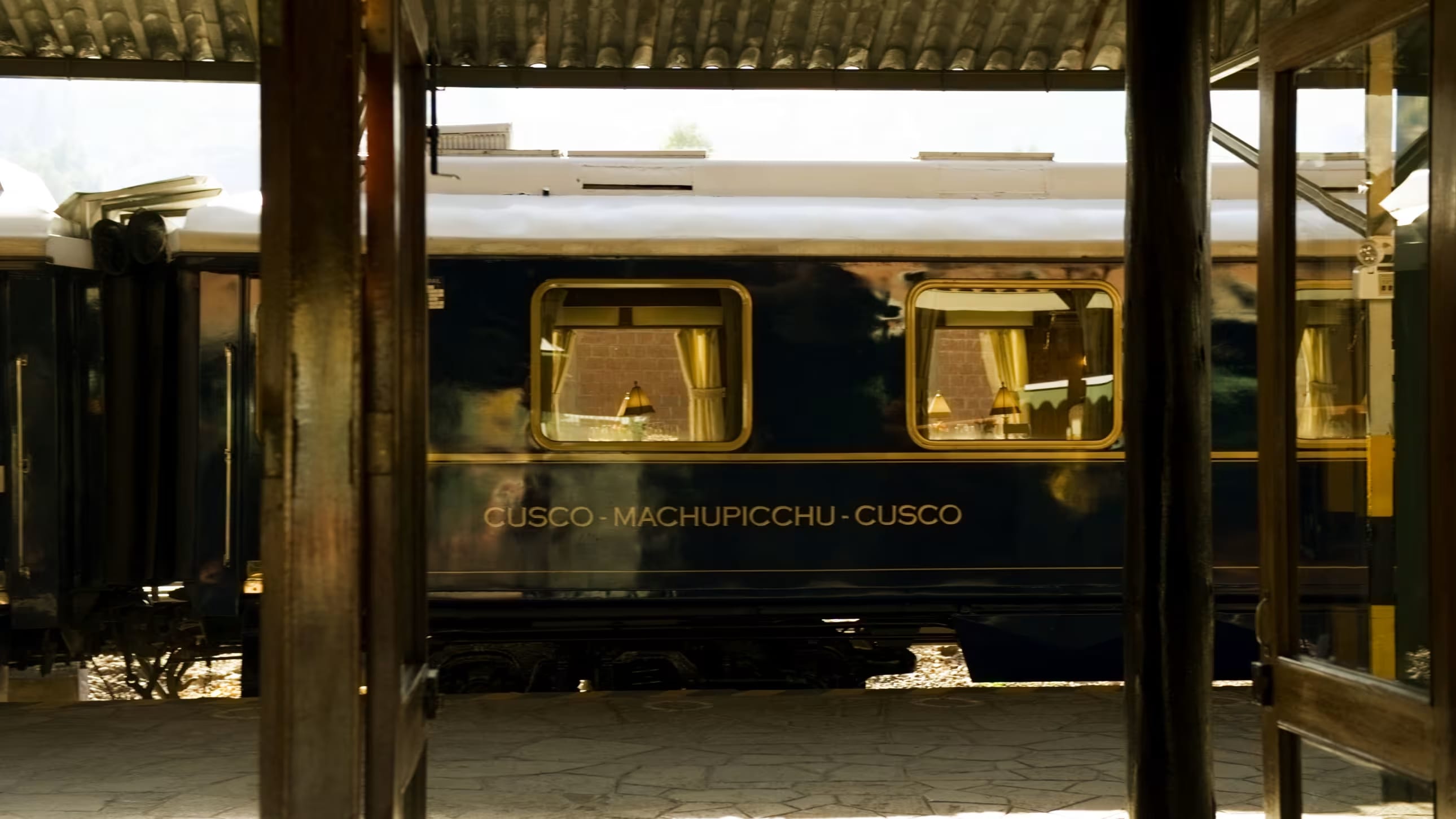
Belmond Hiram Bingham: A restored 1920s Pullman with thirty seats per departure, live music in the observation carriage, brunch served on the outward journey, afternoon tea on the return, unlimited pisco and wine, and a site entry that bypasses standard entrance queues. It costs five to ten times the functional fare. The differential is not speed — the train covers the same track in the same time as every other service. It is the passenger-to-space ratio and the character of the rolling stock itself: thirty people in a carriage designed to be inhabited. Booking window: eight to twelve months for high-season departures.
Decision 3: One Night in Aguas Calientes or Return the Same Day
A day trip from Ollantaytambo to Machu Picchu and back is logistically possible. It involves a pre-dawn departure from the Sacred Valley, four to five hours at the site, and a return train arriving late. The visit fits within a single day. It is also the format most likely to produce the feeling, on the return, that something essential was not quite reached.
What the overnight in Aguas Calientes unlocks is access to a different site. The morning entry window opens at 6:00 a.m. Buses from Aguas Calientes begin running to the citadel entrance at 5:30 a.m. In the interval before the day-trip trains arrive — from roughly 6:00 to 9:00 a.m. — the citadel holds a fraction of its eventual daily population. The mist that appears in nearly every photograph that captures Machu Picchu as something other than a crowded terrace requires being there before 8:00 a.m. The traveller on a day trip, arriving by the first Vistadome from Ollantaytambo, reaches the entrance no earlier than 9:30 a.m.
A second operational consideration: the overnight makes it practical to hold morning tickets for two consecutive days on different circuits. Circuit 2 on day one, Circuit 4 on day two — together covering the citadel more completely than any single extended visit allows. The day-trip traveller has one ticket, one circuit, one entry window, and a return departure to catch.
The hotel decision in Aguas Calientes is a separate architecture. Three properties serve the site, each with a different relationship to it. That selection is covered in detail in Three Doors to Machu Picchu; the specific trade-off of the only property directly adjacent to the entrance is in Is Sanctuary Lodge Worth It?
For travellers with very short Peru itineraries, very tight connection schedules, or returning visitors for whom the site is a known destination rather than the primary event: the day trip is a viable format. For a first visit in which Machu Picchu is the anchor of the journey, the overnight is the architecture that allows the visit to be what it is.
Decision 4: Walking or Train — The Alternative Branch
For nine out of ten travellers, Decision 2 and Decision 3 cover the relevant territory. Decision 4 is the branch for the remaining traveller — the one for whom arriving on foot is not an alternative to the train but the point of the journey.
The Classic Inca Trail (four days) follows the ceremonial stone path built between Ollantaytambo and the citadel. The route passes through cloud forest, high-altitude puna, and a series of Inca ruins — Llaqtapata, Runkurakay, Sayacmarca, Phuyupatamarca — that appear on days two and three with a frequency the citadel visit cannot replicate. Arrival is through the Sun Gate at dawn on day four, after an hour and a half of pre-dawn climbing in darkness. The citadel appears below, in early light, before the first day-trip buses have loaded in Aguas Calientes.
The permit quota is 500 total people per day including guides and porters, leaving roughly 200 trekkers. Permits are sold six to eight months in advance for high season and sell out within hours of becoming available. The trail closes in February for maintenance. This is not the walk for a traveller who decides in June that they want to do it in August.
The Short Inca Trail (two days) boards the train to kilometre 104 and walks six hours to the Sun Gate. Physically demanding but not technical. The same ceremonial arrival as the classic trail at a fraction of the commitment.
The Salkantay Trek (five days) does not arrive through the Sun Gate — the final day takes a train from Hidroeléctrica to Aguas Calientes. The five days cross the Salkantay pass at 4,630 metres and descend through primary cloud forest to Lucmabamba. The Salkantay is not the Inca Trail with a sold-out permit. It is a different journey with a different landscape that ends at the same site.
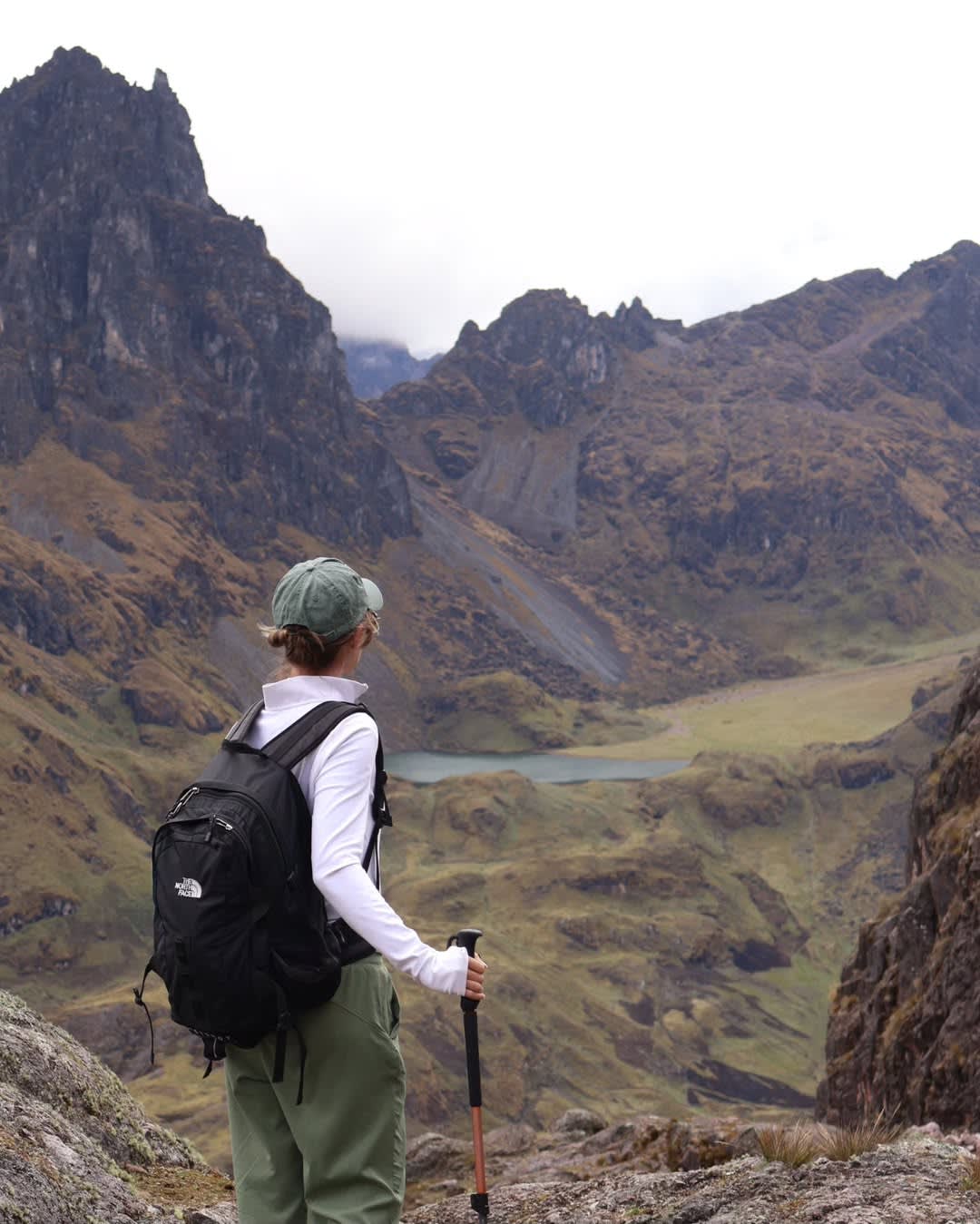
The Lares Trek passes through Quechua communities in the high valleys north of Cusco and arrives by train. Its interest is ethnographic rather than archaeological — for the traveller whose primary concern is cultural context rather than the citadel itself.
Walking and taking the train are not options within the same decision. They produce different journeys that converge at the same place. The question is which journey is actually being made.
Decision 5: The Circuit and the Schedule Inside the Site
The circuit selection is the decision most often made without adequate information, and the one with the most direct consequences for what a visitor actually sees. Once the ticket is purchased — circuit, time block, date, passport number — the decision is fixed.
The five circuits, described by what the visitor sees:
Circuit 1 follows the panoramic route above the principal agricultural terraces. It provides the elevated view of the site — the defining angle of the ruins against the mountain backdrop — without descending into the urban core. Duration approximately ninety minutes. Best suited for visitors whose primary objective is that defining perspective and who have limited time or a physical constraint.
Circuit 2 is the most complete option for a first visit. It covers the Guardhouse, the Sun Temple, the Royal Tomb, the Main Plaza, the Residential Sector, and the Wayrona Gate — the full traversal of the citadel's significant spaces in a logical sequence. Duration approximately two and a half hours. The correct default for a single-visit ticket.
Circuit 3 covers a shorter path through the residential and industrial sectors, omitting the upper terraces and some ceremonial structures. For repeat visitors who know the site and want a focused walk through the sections they have not examined closely before, rather than a full circuit.
Circuit 4 is the extended option: everything in Circuit 2 plus the Temple of the Condor, additional agricultural terraces, and lower-sector residential structures. Duration approximately three hours. For the traveller with a full morning available, or on a second day at the site with a particular interest in the city beyond its photographed landmarks.
Circuit 5 accesses the Patallaqta archaeological sector on the Urubamba — recently reopened as a twenty-minute interpretive stop on the short Inca Trail. Patallaqta was a functioning Inca city the day Hiram Bingham arrived at Machu Picchu in 1911. For the traveller who has completed the standard circuits and wants the valley context that the citadel visit alone cannot provide.
Morning versus afternoon. Morning entry (6:00 a.m.) provides the best light for photography, the probability of low mist in the valley below, and the site before the day-trip bulk arrives after 9:30 a.m. Afternoon entry is quieter from 3:00 p.m. onward in April, May, and October. In July and August, the afternoon session is not meaningfully less crowded than the morning; the late afternoon light at 4:00 p.m. in the dry season is worth having for its own reasons.
Huayna Picchu and Montaña Machu Picchu require a separate additional ticket and sell out three to four months ahead of date. Huayna Picchu is the steep, shorter ascent with exposed sections and a vertiginous ridge walk; Montaña Machu Picchu is the longer, more gradual climb with a broader panoramic summit. Both are worth considering for a second visit, after the citadel itself is a known quantity.
The Options We Do Not Recommend
Van to Hidroeléctrica, then walking the railway. A budget route involving a six-hour van journey on mountain roads to the Hidroeléctrica station, followed by an eleven-kilometre walk along the railway line to Aguas Calientes. The van operates without seatbelts on roads with significant exposure. The walk along the rails, while photographed well, happens at the end of a long day. The cost saving against the functional train service is minimal against the physical cost.
Direct helicopter Cusco to Machu Picchu. Does not exist. Helicopter operations in the Cusco region are regulated by the DGAC and the Ministerio de Cultura; no aircraft is permitted to land within the Machu Picchu sanctuary perimeter. Helicopter access to the Sacred Valley and to remote Andean sites is available and used — the detail of what helicopter operations in the Cusco region actually cover is in The View the Road Cannot Reach. The specific offer of a direct helicopter to Machu Picchu is either a misunderstanding of the regulations or a fabrication.
Third-party ticket resellers. Tickets must be purchased on the official Ministerio de Cultura portal with the buyer's passport number. A ticket with the wrong document attached — or no document — will not grant access at the entrance gate. There is no correction available on-site.
Drones for photography. Prohibited without exception anywhere within the sanctuary perimeter. Commercial and editorial use is not exempt. The fine is applied immediately.
What Kada Coordinates for the Arrival at Machu Picchu
The guest's role in the logistics of reaching Machu Picchu is limited: hold a valid passport, be at the Ollantaytambo platform at the confirmed departure time, and carry no more than five kilograms of luggage onto the train. Remaining luggage is stored at the Sacred Valley or Cusco hotel in advance of the transfer and recovered on the return.
Everything prior to that point is coordinated in advance. Passport details for all travelling parties are collected during the planning process and used to purchase site tickets with the correct document linked — circuit and time block selected in consultation with the traveller profile established in the first conversation. Train bookings for the Belmond Hiram Bingham are placed eight to twelve months ahead; Vistadome services four to six months out. Hotels in Aguas Calientes are notified of luggage coordination requirements before the outbound departure.
A contingency protocol is documented before every departure that includes Machu Picchu. Train service interruptions on the Urubamba line — caused most commonly by heavy rain events in the November-to-March wet season, and occasionally by community actions on the track — occur with enough frequency that an undocumented itinerary carries real risk. The response depends on the duration and timing of the interruption: options include rerouting via overland connections where available, rebooking on the next train, or resequencing the Sacred Valley component of the itinerary to absorb the delay. The guest is notified before the disruption affects a scheduled departure.
Virtuoso partnership access applies to confirmed allocations on the Belmond Hiram Bingham and to room category considerations at the Belmond Sanctuary Lodge when inventory permits.
Expert Perspective
"I have coordinated the arrival at Machu Picchu for hundreds of guests. The pattern I see most consistently is this: guests who leave the site feeling rushed — who feel they saw it without quite having it — almost always trace that back to a decision made months before the departure. A circuit purchased without understanding what it included. A day-trip format chosen because the overnight felt unnecessary. A morning entry slot missed because the booking window closed while the itinerary was still being revised.
The five decisions in this article are the ones that actually determine what the visit will be. Not the weather — you have no control over that. Not the crowds — you have some control over that, through circuit selection and morning entry. The decisions. The site does the rest: Machu Picchu has never disappointed a guest who arrived on their own terms."
— Gustavo Arenas, Guest Relations, KADA Travel
A Practical Note
Luggage: Trains to Aguas Calientes permit one carry-on per passenger — five kilograms, 62 linear inches. Remaining luggage is stored at the Sacred Valley or Cusco hotel at no charge.
Altitude at Aguas Calientes: 2,040 metres — below Cusco and the Valley. Time there is a recovery window, not an additional altitude challenge.
Best season: April through October (dry season). Peak crowding: June through August. May and September offer the best balance of clear skies and manageable visitor numbers.
Booking windows: Belmond Sanctuary Lodge: 8–12 months for high season. Belmond Hiram Bingham: 6–8 months. Site tickets: 2–4 months standard season; 4–6 months for Huayna Picchu and Montaña Machu Picchu additions.
Drones: Prohibited within the entire sanctuary perimeter. No exceptions, no permits.
Written by Gustavo Arenas
Frequently Asked
Two nights in Aguas Calientes is the architecture that allows the site to deliver what it is. One night allows a single morning entry; two nights allow two consecutive morning sessions on different circuits, which together cover the citadel more completely than any single extended visit. For a ten-to-fourteen-day Peru itinerary, the standard sequence is two to three nights in the Sacred Valley, two nights in Aguas Calientes, then transfer back to Cusco. The total days dedicated to the Machu Picchu segment — including the overland transfer — is four to five days of a longer journey.
The Hiram Bingham is worth considering when the train journey is part of what the trip is for — not when it functions as transport to the site. The two-hour descent of the Urubamba is identical for both services. What differs is the passenger-to-space ratio, the presence of a full meal service, and the atmosphere of thirty people in a restored Pullman carriage against a standard service of two hundred. For a traveller whose primary priority is the citadel and for whom the train is a connection, the Vistadome Observatory is the better cost-to-experience ratio. For a traveller for whom the railway journey is a memory in its own right, the Hiram Bingham is the correct choice.
Yes. A day trip involves a pre-dawn departure from Ollantaytambo and a late return. What is lost is not primarily time at the site — it is the 6:00 a.m. entry window before the day-trip bulk arrives and the possibility of a second morning on a different circuit. For a traveller with a very short Peru stay or for whom this is a second visit and the site is a known quantity, a day trip is a reasonable format. For a first visit in which Machu Picchu is the anchor of the journey, the overnight is the format that allows the visit to be complete.
Train interruptions on the PeruRail and Inca Rail lines occur periodically — most commonly during heavy rain events between November and March, and occasionally during community actions on the track. Kada documents a contingency protocol for every itinerary that includes Machu Picchu access. The specific response depends on duration and timing; the guest is notified before it affects the scheduled departure. Itinerary resequencing — shifting the Sacred Valley and Cusco components — is the most common resolution for short disruptions.
No. Drones of any size are prohibited within the Machu Picchu sanctuary perimeter — including the citadel, access roads, and surrounding protected area. The prohibition applies to all visitors regardless of professional credential or declared purpose. The fine for violation is applied immediately. There are no permit exceptions for commercial, documentary, or editorial use.
Design Your Journey
Design your bespoke Peru journey
We talk. We listen. Then we design an itinerary that belongs only to you.
Start Planning