Unfolded· 6 min read·27 July 2026
The Bean That Travelled Uphill
A private bean-to-bar chocolate workshop in Cusco, working with cacao grown thousands of metres below in Peru's jungle valleys — the same country holding more cacao varieties than any other on Earth.
By Kada Travel Editorial
Cusco sits at over three thousand metres, in terrain far too cold and high to grow cacao — and yet the city has become an increasingly serious centre for bean-to-bar chocolate craft, built on cacao carried up from the warm jungle valleys of Peru's Amazon-adjacent regions, the country that holds, by most counts, more distinct cacao varieties than any other on Earth.
A Country of Origin Few Guests Know About
Peru's cacao diversity traces to its position at the crop's own centre of genetic origin — wild and semi-domesticated cacao varieties still grow across the country's jungle regions that simply don't exist anywhere else, a genetic reservoir that international chocolate makers increasingly seek out for single-origin bars. Most guests encounter Peruvian cacao, if at all, as an ingredient line on a European chocolate bar's packaging; few understand that the country producing it also has a growing domestic craft chocolate movement working directly with these varieties.
What Bean-to-Bar Actually Means
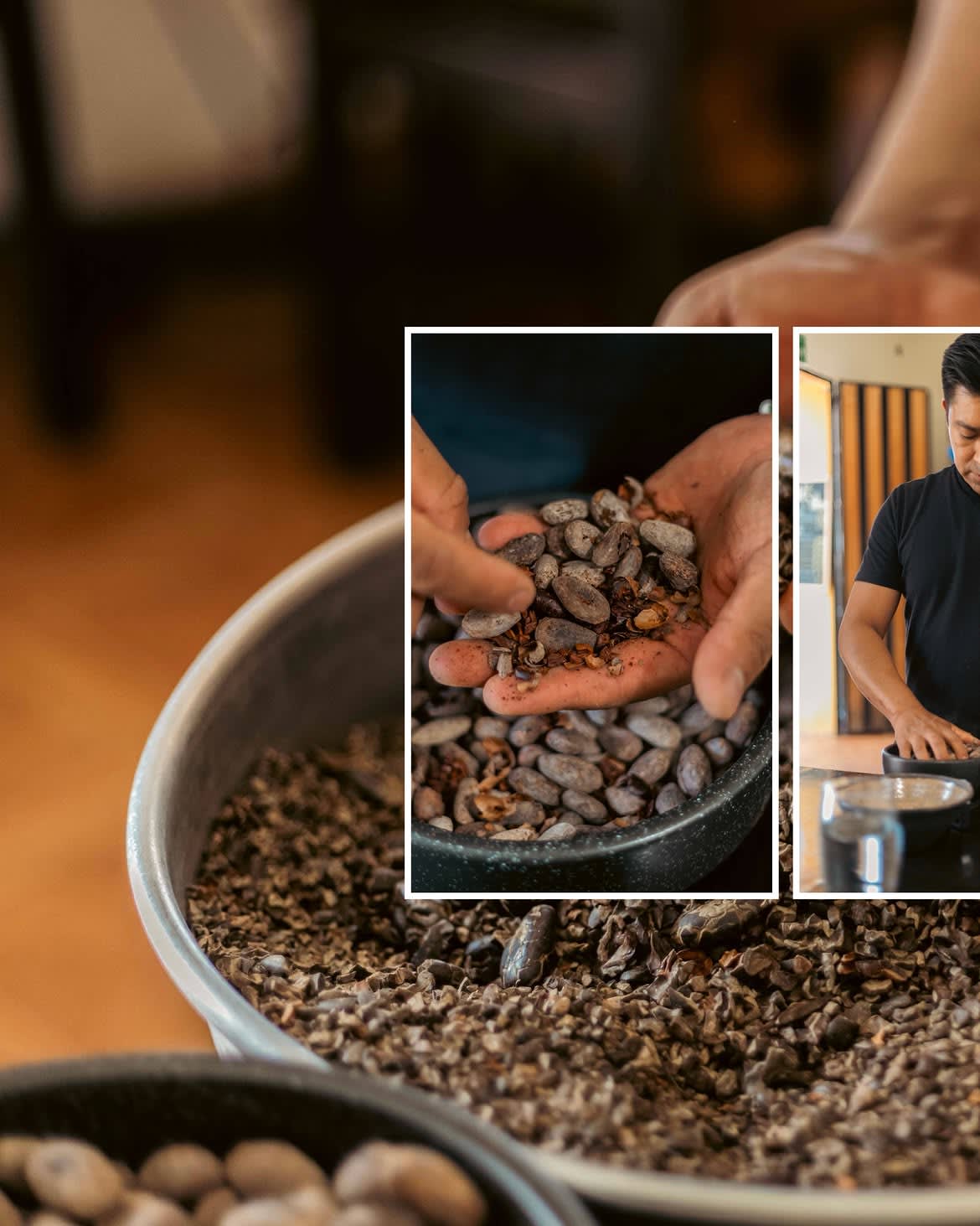
A bean-to-bar workshop walks the full transformation: raw cacao beans, fermented and dried at origin, roasted to develop flavour, cracked and winnowed to separate the nib from the husk, ground over an extended period into a smooth paste, and finally tempered and moulded into finished chocolate — each step affecting the final flavour in ways a guest can taste directly by comparing beans and chocolate at different stages. This is considerably more hands-on and technical than a standard "chocolate tasting," closer to a genuine craft demonstration than a sampling session.
What Kada Arranges
We arrange a private session with a Cusco-based chocolate maker working with specific single-origin Peruvian cacao, walking guests through the full process with tastings at each stage — comparing, for instance, how the same bean tastes raw, roasted, and finished, and how varieties from different Peruvian regions differ in flavour profile. Guests interested in the fuller picture can extend this into a conversation about the supply chain connecting jungle-grown cacao to this specific workshop, and the broader movement toward craft, single-origin Peruvian chocolate as an emerging category distinct from the country's raw-material export history.
Expert Insight
"Most guests are surprised to learn Peru is a cacao origin at all, let alone one of the most genetically diverse on Earth. We like ending the Cusco portion of a trip with something guests can taste and take home — a small, direct connection to a part of Peru's agricultural story that has nothing to do with textiles or ruins, and everything to do with a crop most people assume belongs to somewhere else entirely."
— Isabela Santos, Travel Designer, KADA Travel
A Practical Note
This experience is hands-on and suitable for most ages, though younger children may need adjusted pacing given some steps require patience (particularly the grinding stage). Guests typically leave with a small quantity of chocolate they've made themselves.


Written by Kada Travel Editorial
Frequently Asked
Both — the workshop is genuinely hands-on, with guests participating in each stage under guidance rather than only watching.
Roughly two to three hours, given the multiple stages involved in the process.
Yes, generally — the tactile, hands-on nature tends to work well for families, with pacing adjusted as needed.
Yes, both what guests make during the session and additional bars from the workshop's regular production.
Design Your Journey
Design your bespoke Peru journey
We talk. We listen. Then we design an itinerary that belongs only to you.
Start Planning