Unfolded· 7 min read·30 July 2026
The Contract with the Mountain
A private despacho ceremony with a Q'ero paqo at altitude — the ancient Andean offering that is not arranged for visitors, but negotiated on their behalf.
By Kada Travel Editorial
The despacho is not arranged for the people who attend it. It is arranged for the Apus — the mountain spirits that hold the Andean world in their keeping — and for Pachamama, the earth beneath the offering. This is not a metaphysical distinction for the purposes of framing a luxury experience. It is the practical basis on which the ceremony works, and the reason a paqo who has spent decades learning to perform it approaches the bundle of offerings differently from a facilitator who learned the ritual format for a tourism context.
Most visitors to the Sacred Valley encounter some version of a despacho ceremony. The variable that determines its value is who is performing it and why.
The Offering
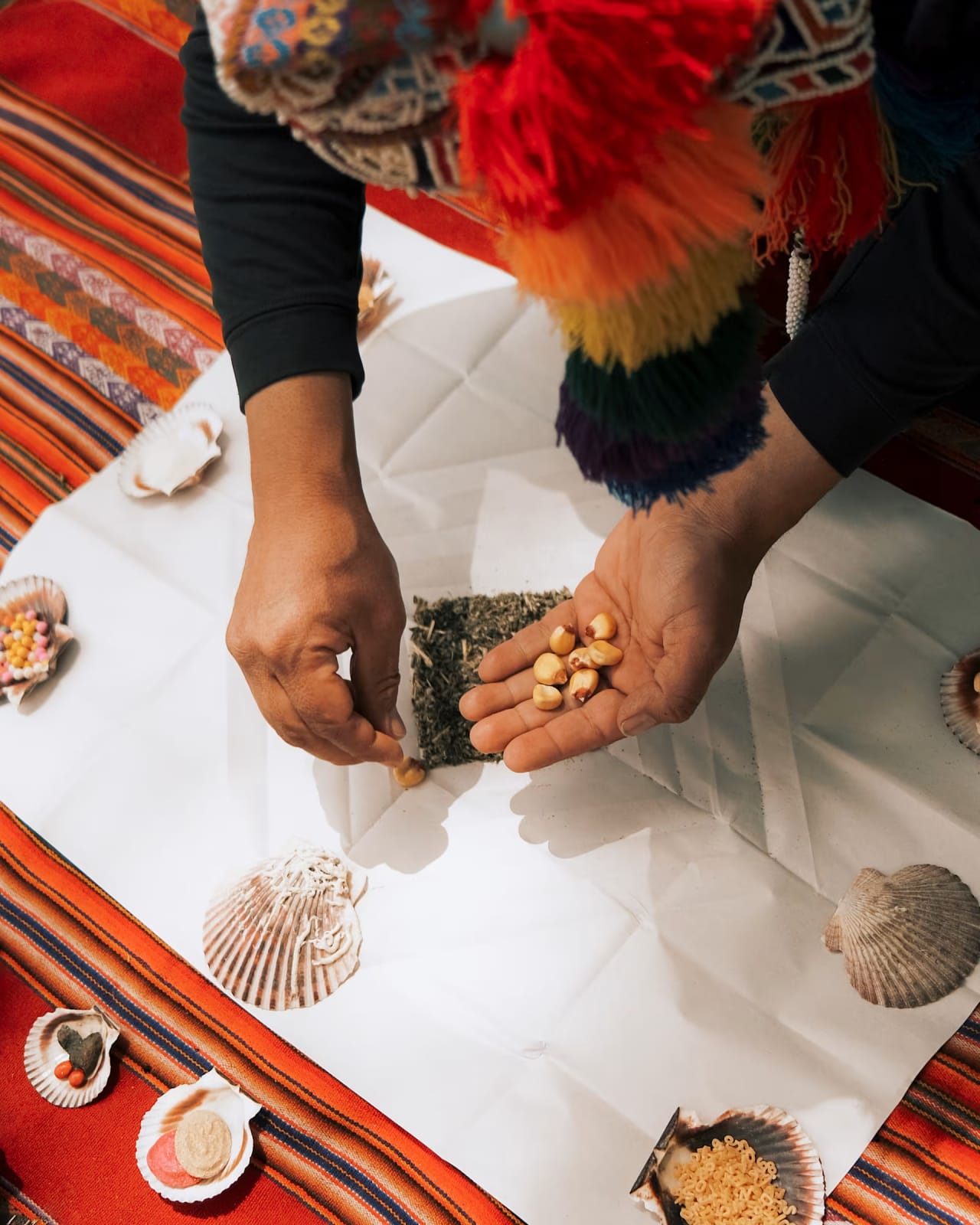
The despacho is a ceremonial bundle — assembled piece by piece on a woven manta, then folded, tied, and burned. The bundle is an offering to Pachamama and the Apus: an act of reciprocity, acknowledgment, and intention. Not prayer in the petition sense. A contract, with specific terms, between the participants and the landscape that holds them.
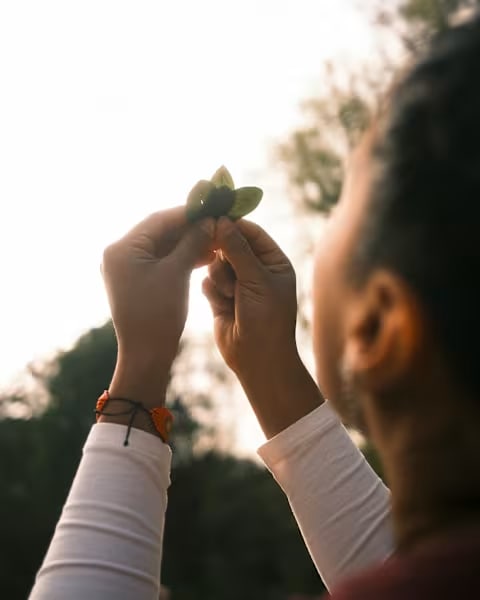
The contents of a despacho vary according to its purpose — there are despachos for the land before planting, for the opening of a new house, for a journey, for gratitude — but the core elements are consistent: coca leaves, including the k'intu (three perfect leaves, selected with care, blown with intention, the breath carrying the participants' specific requests into the bundle), seeds, flowers, confections in animal forms, llama fat (sebo de llama), colored papers, shells, and grains. Each element is placed in sequence, with the paqo directing the assembly, explaining what each piece represents, occasionally adjusting an element if the placement is not correct.
The final act is the burning. The bundle, folded and tied in the manta, is placed in a fire at sunset or at the ceremonial fire prepared for the occasion. The paqo reads the fire as it takes the bundle: a clean, complete burn — the bundle consumed without resistance — is a sign the offering was received. The work continues in the paqo's practice for three days afterward.
The Paqo
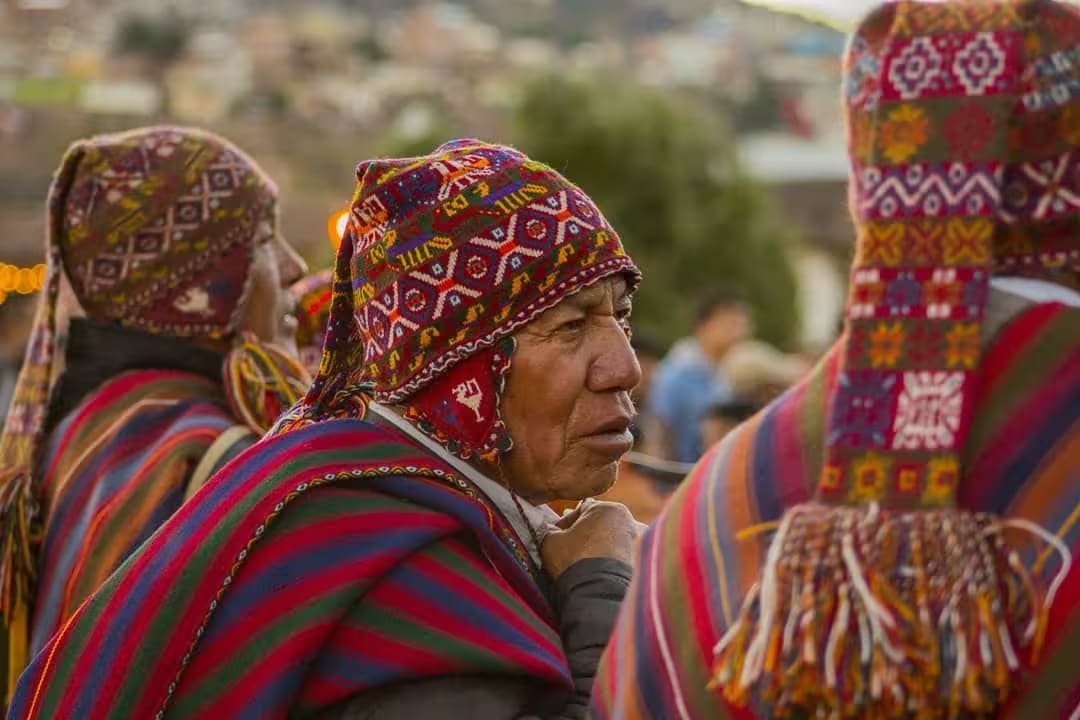
A paqo is an Andean ceremonial practitioner — a role that is inherited, initiated, and maintained through ongoing practice within a specific community's spiritual life. The Q'ero paqos are the most respected in the Andean world because the Q'ero communities, at 4,400 metres and above in the highlands above the Cusco valley, maintained the full pre-Hispanic ceremonial tradition through five centuries of colonial pressure. The altitude that made their communities inaccessible to Spanish missions and hacienda systems is also the reason their practice arrived intact.
A legitimate paqo is not a cultural guide who has learned the ceremony for tourism. He has been initiated through a specific process, typically beginning in childhood; he practices within his own community's ongoing ceremonial calendar; and when he performs a despacho for external guests, he is extending a practice that was not created for that purpose. The distinction between this and a performance of the ceremony is apparent to anyone who has seen both.
The paqo we work with is a Q'ero elder who maintains his ceremonial practice in his home community and works with us selectively and on his own schedule — not as an employee but as a practitioner who chooses when to extend his work to external guests. He does not perform ceremonies on request. He performs them when the timing is correct, the guests are prepared, and the purpose of the ceremony has been honestly communicated.
What Kada Arranges
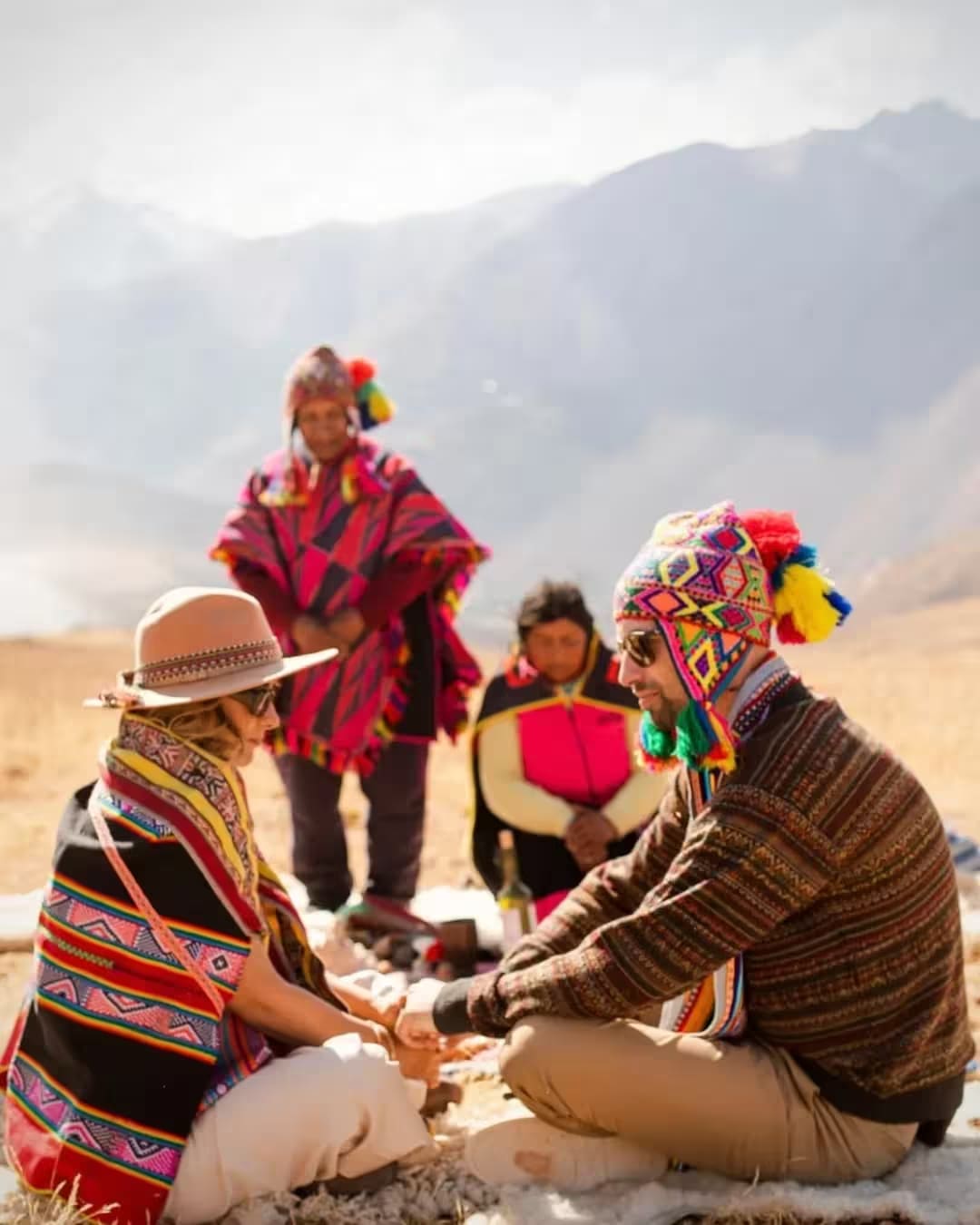
The despacho takes place at an elevated site with an unobstructed view of the surrounding Apus — the mountains the ceremony addresses by name. We use sites in the Sacred Valley above Urubamba, or the hillsides above Cusco at 3,600-3,700 metres, depending on the season and the paqo's preference. The ceremony requires the mountains to be visible; a clouded morning changes the timing.
The session runs two to three hours. Jaime Ttito provides cultural context in a briefing before the ceremony begins — the cosmovision the despacho operates within, the specific Apus that will be addressed, the role guests play in the ceremony. During the ceremony itself, Jaime interprets when the paqo is directly addressing the guests; otherwise the ceremony proceeds without real-time translation, because the interruption of constant interpretation breaks the quality of presence the ceremony requires.
Guests are active participants, not observers. They are asked to hold the k'intu — the three coca leaves, in their right hand — and to breathe their intentions into them before handing them to the paqo for placement. The intention can be spoken aloud in any language; it does not need to be communicated to the paqo in words, because the breath carries it. Guests who come with a genuine intention — something specific to their life, a transition, a gratitude, a question — consistently report that the experience is more present and more demanding than they expected.
We ask our guests not to record the ceremony on video. Photographs before and after are welcome; the ceremony itself is the kind of thing that is diminished by the screen between the eye and the event.
Expert Perspective
"I have translated at many despacho ceremonies for foreign guests over the years, and the ones that stay with me are the ones where the guests understood, before we started, that they were not the audience. They were the ones asking. The paqo does not perform the ceremony for guests to watch — he performs it on their behalf, with their intentions folded into the bundle. When the fire takes the bundle fully — clean, complete, no part resisting — that is the sign the message was received. I have seen guests who arrived with very specific questions about their lives watch that fire and go completely quiet. That silence is different from the silence of watching something beautiful. It is the silence of being heard."
— Jaime Ttito, Head of Guides & Cultural Interpreter, KADA Travel
A Practical Note
The despacho is performed at altitude — typically 3,500-3,700 metres. A minimum of two to three full days in the Sacred Valley (at 2,800m) before the ceremony is required; guests who attend a despacho on their first or second day in the region are not physically present in the way the ceremony asks them to be. We schedule the despacho in the second half of the Cusco portion of any itinerary, not the first.
The ceremony is conducted outdoors, in the morning or early evening. Both are cold at altitude; dress in warm layers that can be shed if the morning sun arrives strongly. The ceremony requires sitting on the ground for two to three hours; we provide cushions and a ground cover, but the seated posture is not negotiable.
The paqo schedules his availability in advance but cannot always guarantee a specific date — his own community obligations take priority. We confirm the ceremony date two weeks before the visit, not six weeks, and we build this flexibility into our guests' itineraries accordingly.

Written by Kada Travel Editorial
Frequently Asked
The latter. The *paqo* we work with performs *despacho* ceremonies as part of his own community's ongoing ceremonial life. When he extends this to external guests, he does so on his own terms and schedule. He has declined requests that he deemed inappropriate — for timing, for purpose, for the nature of the guests — and we accept those decisions without pressure. This is what makes the ceremony what it is, rather than a service.
Yes. The *despacho* works differently for guests who arrive with something specific — a transition they are navigating, a relationship they want to acknowledge, a journey they are beginning or ending — than for guests who arrive without one. The ceremony will proceed regardless, but it is richer with a genuine intention. We ask our guests to arrive knowing what they want to place in the bundle.
The *paqo* makes the call. A clouded morning may push the ceremony to late afternoon, when the Apus are visible again; a fully overcast day may result in a short postponement to the following morning. We build a day of flexibility around the *despacho* in every itinerary that includes it. The ceremony does not happen in a covered space; it requires the mountains.
Yes. The *paqo* has performed ceremonies for guests with no prior knowledge of the cosmovision and for guests with deep study of it, and his approach adjusts accordingly. What he asks of guests is not background knowledge but genuine presence. The briefing Jaime provides before the ceremony gives guests enough context to be present without being distracted by what they don't know.
Design Your Journey
Design your bespoke Peru journey
We talk. We listen. Then we design an itinerary that belongs only to you.
Start Planning