Experiences· 7 min read·4 April 2025
Private Textile Experiences: Learning from Master Weavers
Three days with master weaver in her home-studio — from spinning to mythological pattern, with direct purchase.
By Kada Travel Editorial
For travellers with genuine interest in textile art, standard visits to weaver communities —two to three hours with quick demonstration and purchase— are insufficient. There is a deeper version: the three-day private textile workshop, where the traveller spends a week or more at a certified master weaver's home, learns each step of the process, and takes home not just a piece but real understanding of the craft. This guide describes the three masters offering this format.
Centro de Textiles Tradicionales de Cusco — Nilda Callañaupa
Nilda Callañaupa Álvarez is Peru's most internationally recognised weaver. Founder of the Centro de Textiles Tradicionales de Cusco (CTTC) in 1996, author of four books on Andean textile, has taught at US universities (Harvard, Smithsonian) and curated exhibitions at European museums. Her CTTC in Chinchero receives travellers with serious interest in three to seven-day workshops.
The three-day programme includes: day 1 of theory (introduction to Andean iconography, textile cosmovision, pre-colonial techniques) with class with Nilda; day 2 of practice (hand spinning with spindle, natural dye with cochineal and plants); day 3 of weaving on backstrap loom (simple pattern guided step-by-step). Cost: USD 1,800-2,500 per person in group of 4-6.
Extended seven-day programme: learning a complete pattern (5-7 hours daily on loom), includes visit to source communities (Patabamba, Pisac, Pitumarca), dinner at Nilda's home. Cost: USD 4,800-6,500. Six-month reservation.
Patabamba with Doña Bernardina Apaza
Doña Bernardina Apaza, mentioned in our Andean shamanic ceremonies guide, is also a master weaver specialised in feminine ceremonial textile. Her textile programme is more intimate: one student at a time (not in group), three days at her home-studio in Patabamba.
The emphasis is on specifically feminine patterns —"iqu", "qhasqa", "saya"— encoding mythological memory of Andean women. Each pattern tells a story (creation of the moon, star cycles, earth fertility) learned together with weaving technique.
Cost: USD 2,500-3,500 per person, all-inclusive (lodging in private room in adjacent house, family meals, ingredients for natural dye). Three-month reservation. Only for women travellers with genuine interest.
Taquile with male master weavers
Taquile Island, on Lake Titicaca, is the only Peruvian community where men are the main weavers (women spin; men weave). This gender inversion is pre-Incaic and was declared UNESCO Intangible Cultural Heritage in 2005.
Three to five-day workshops can be arranged in Taquile with a master weaver —Cipriano Mamani or Don Tomás Quispe are the most recognised. The programme covers the specific Taquile technique (chumpis, sashes for ceremonial use), local iconography ("T'akarpu" patterns unique to Taquile), and daily life on a car-free island.
Cost: USD 1,200-1,800 per person, all-inclusive (family lodging, meals, boat transfer from Puno). Two-month reservation. Recommended for travellers combining Titicaca visit with textile interest.

What is learned in three days
Three days with a master weaver cover four stages of the Andean textile process.
First, hand spinning. The weaver shows the spindle (puyto), teaches finger position and rhythm (1,000-1,200 turns per hour). The visitor learns to spin sheep wool into acceptable thread —not master quality, but usable. The practice is repetitive and meditative.
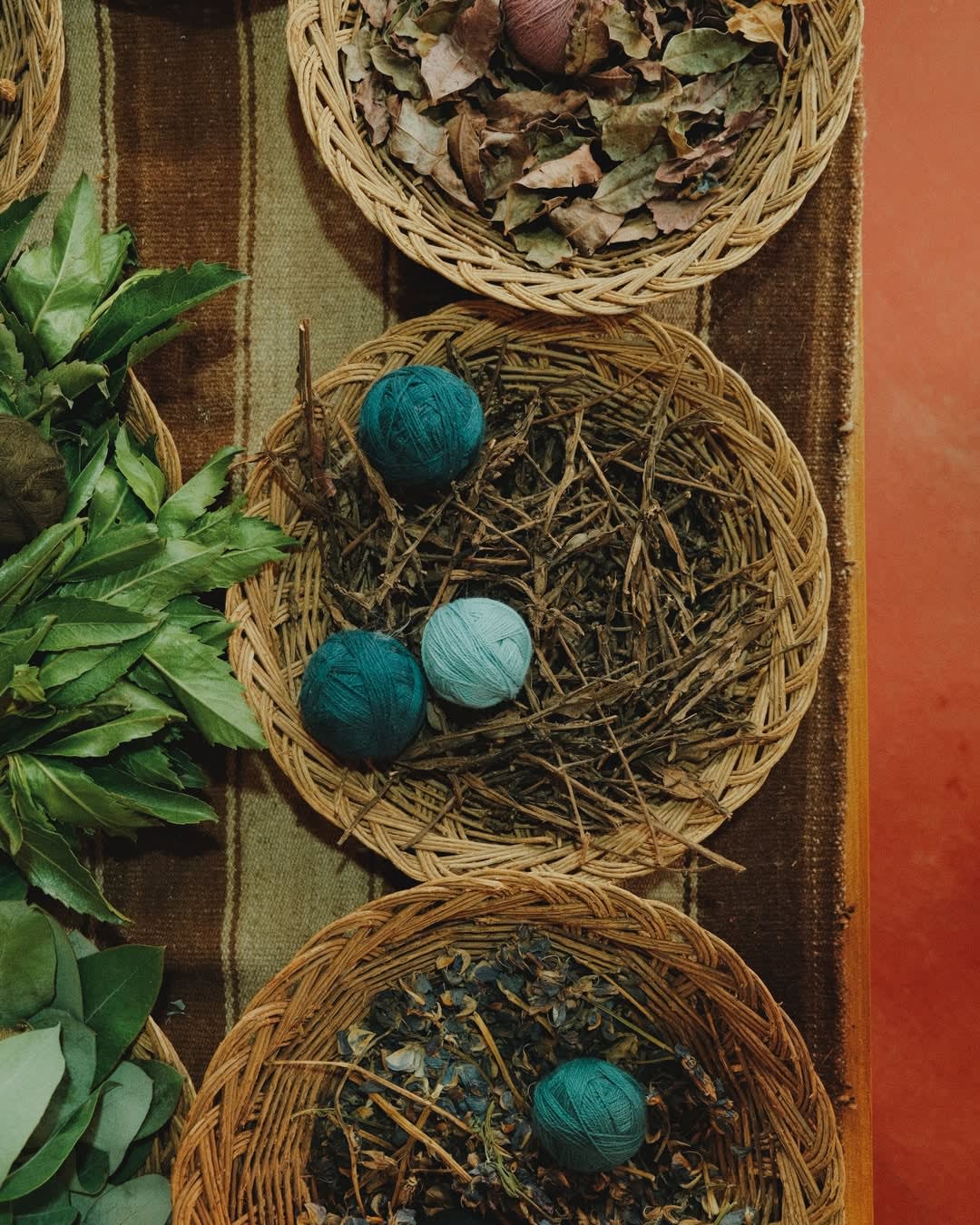
Second, natural dyeing. Local plants (chilca, qolle, queñual) and cochineal (cactus insect) are boiled in water to produce colours. The weaver shows each plant, explains what colour it dyes, and teaches how to fix colour with mineral salts.
Third, pattern design. Each traditional pattern has specific mythological meaning (Inti=sun, Mama Cocha=sea, Huaca=sacred place). The weaver explains available patterns for the visitor and lets them choose a simple one to weave.
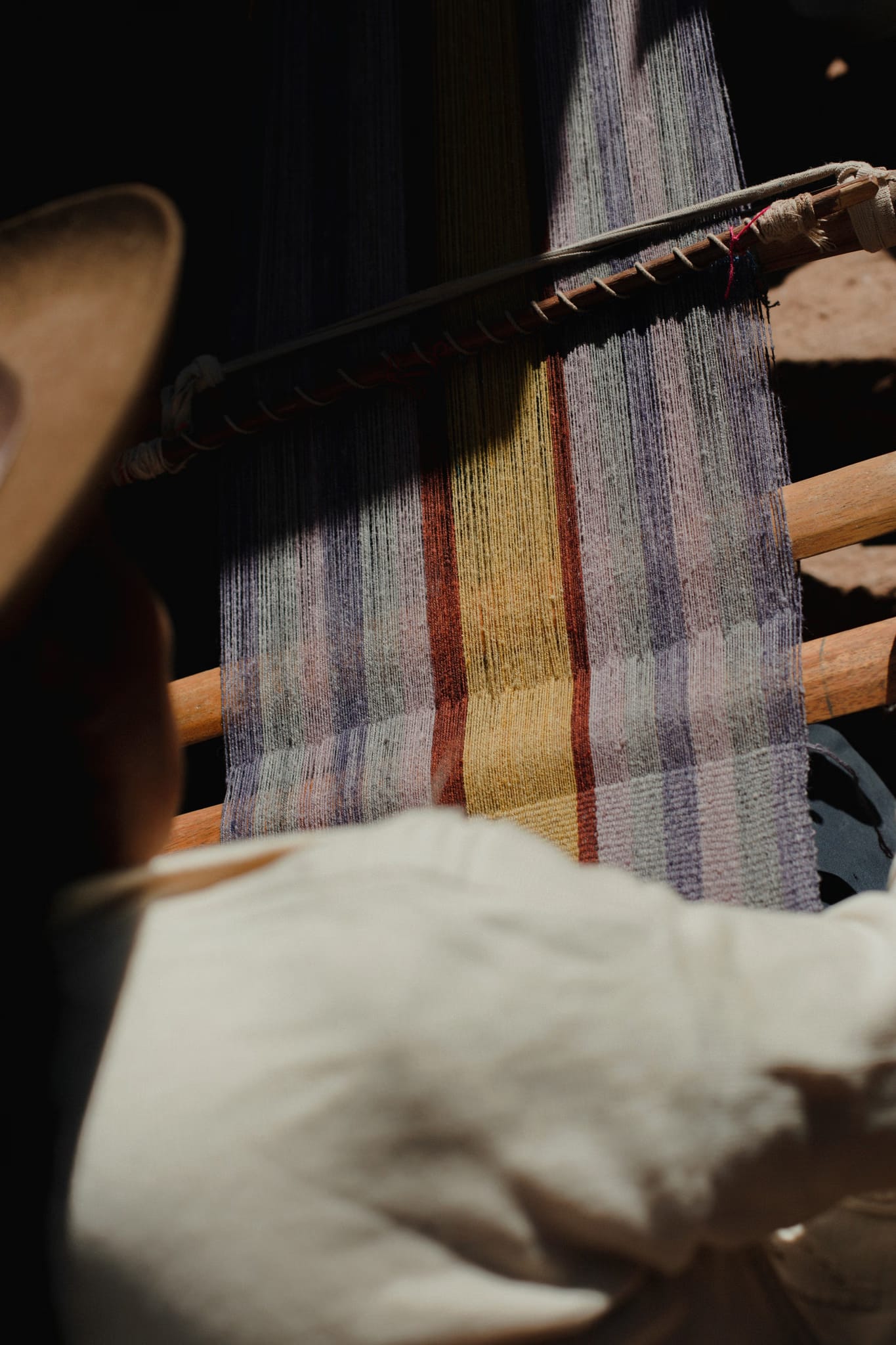
Fourth, backstrap-loom weaving. This is the most demanding stage. The loom ties to the weaver's waist and a post, maintaining constant tension. Each thread crosses with specific technique encoded by the pattern. A simple pattern (60 cm sash) takes 3 to 5 days of practice with guidance.
What you take home
The visitor finishes the programme with: a self-woven piece (amateur quality but personal), a piece bought directly from the master (master quality, USD 280-1,500 by pattern), written natural-dye recipes, and step-by-step process photographs.
More importantly: real understanding of the craft. Industrial textiles seen in any Peruvian market become immediately recognisable after a workshop —perfect fringes betray mechanical cutting, too-uniform colours betray synthetic dye, too-regular weave betrays industrial loom.
Learning to weave on backstrap loom does not turn the visitor into a weaver. But it forever changes how they see any Andean textile. After three days, a headband at Pisac market is not just object: it is reading of months of work.
Kada Travel
How they are booked
Workshops with Nilda Callañaupa require six-month advance. Doña Bernardina, three months. Taquile, two months. For our travellers, coordination includes private transfer to destination, prior communication with the master about visitor preferences, and combination with the rest of the Peru trip.
Written by Kada Travel Editorial
Frequently Asked
Children over 12 with interest and patience. The practice is repetitive; younger ones tend to get bored.
May-October due to dry season. Workshops are indoors but dye processes require sun.
Guarantee of exposure to the complete process, not mastery. Three days is serious introduction; seven days allow a complete piece with assistance.
Yes. CTTC with Nilda admits couples. Doña Bernardina prefers solo women. Taquile admits couples.
For textile lovers yes. The difference between 2h and 3 days is real learning vs tourist exposure. Price reflects the difference.
Comfortable clothing (practice is sitting on the floor), jacket for cold afternoons. Notebook and optional camera. Everything else (wool, ingredients, loom) is provided.
Design Your Journey
Design your bespoke Peru journey
We talk. We listen. Then we design an itinerary that belongs only to you.
Start Planning