Unfolded· 7 min read·7 July 2026
The Patio Where the Evening Belongs to No One Else
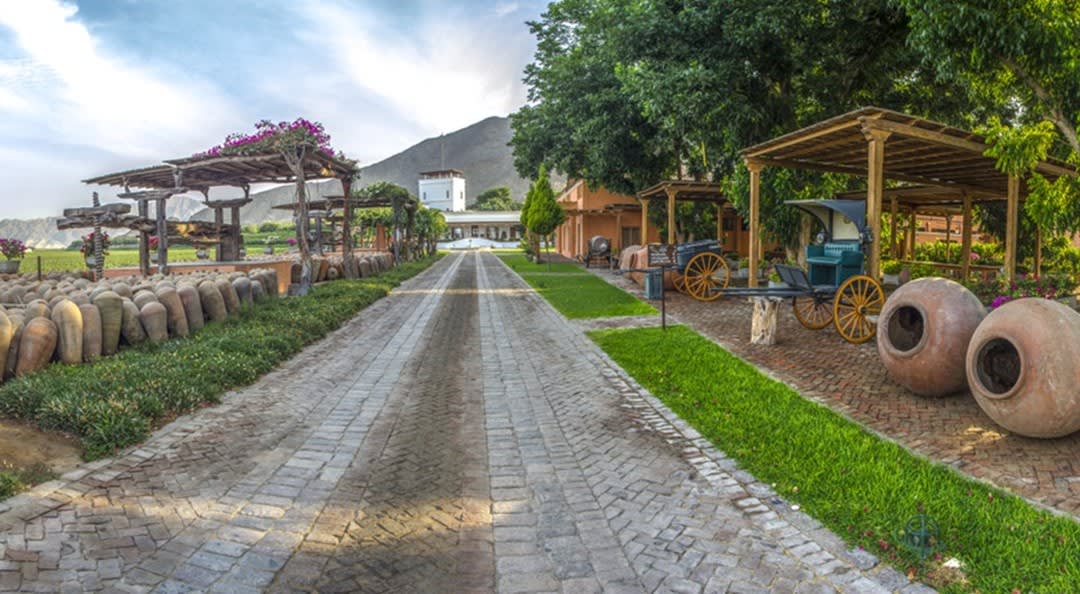
Private dinner at a colonial hacienda in the Ica valley — a table set in a seventeenth-century patio or comedor, with a menu built from the hacienda's own huerta and the valley's produce, wine and pisco from neighbour bodegas, and no other guests in the building.
By Kada Travel Editorial
The Ica valley's colonial haciendas were not built for drama. They were built for function: the administration of large agricultural estates in a desert climate, with the domestic architecture organised around the central patio as the ventilation and social core of a building that had to shelter people from heat that rises past thirty-five degrees in the day and falls to single digits at night. The arcaded courtyard, the thick adobe walls, the narrow windows, the stone-flagged floor that holds the cool of the night through the long afternoon — these are engineering decisions, not aesthetic ones. The buildings are extraordinary because they solved the problem they were built to solve, and the same solution is still in place three centuries later.
The dinner Kada designs at one of the Ica valley's partner haciendas takes the engineering as given and places a table in the middle of it. There are no other guests in the building. The patio or the comedor is set for the group only — the candles are already lit, the wine from a neighbour bodega is already open, and the kitchen has been working since mid-morning with the hacienda's own produce and the day's market ingredients from the valley.
What distinguishes this from a restaurant dinner in an old building is the specificity of both the setting and the food. A restaurant in a heritage building has clientele moving through it throughout the evening; the heritage is the backdrop to a commercial operation. At the hacienda, the building is not a backdrop. It is the host. The kitchen works with the season's huerta and the relationships the estate has with the valley's producers — the neighbour who grows the asparagus, the bodega whose wine belongs at this table, the fisherman whose catch arrived from the coast this morning. The menu is not designed; it is assembled from what the valley offers on this specific day.
The Valley as Table
The Ica valley's agricultural abundance is concentrated in a relatively small irrigated zone surrounded by desert, which produces both its quality and its character. The asparagus, for which the Ica valley is one of the world's principal export producers, is here in its domestic form — the thin stalks grown for flavour rather than the calibrated uniform size required for export. The local peppers, the fresh choclo (corn), the valley herbs, the tubers from the highland markets nearby — the ingredients that appear on the hacienda table are a different version of Peruvian produce than what reaches Lima or further.
The fish arrives from Paracas, an hour and a half away: the corvina, the flounder, the shellfish from the same cold Humboldt Current waters that the morning's Ballestas visit covered. In the context of a hacienda patio in the desert valley, the coastal fish on the table is the physical evidence of the geographical argument the Paracas/Ica itinerary makes: the ocean, the desert, and the agricultural valley are one continuous landscape, and the table at the hacienda is where their produce meets.
Pisco and wine from the valley's bodegas are the accompaniment throughout. The sommelier's selection — or Kada's selection on the sommelier's recommendation — brings two or three expressions from estates whose grapes were grown within fifteen kilometres of the patio where they are being consumed. This is the local wine culture in its actual form: the valley that produces the spirit also produces the table that drinks it.
The Architecture of the Evening
Colonial hacienda architecture in the Ica valley follows consistent logic: the main building's ground floor organised around a central courtyard, the residential and reception rooms accessible from covered arcades on the courtyard's interior perimeter, the kitchen in a separate structure adjacent to the main building to manage fire and heat. The comedor — the formal dining room — typically opens directly onto the courtyard arcade, so that a meal can be served with the patio visible and the night air circulating.
The specific hacienda Kada uses for this programme varies by availability and group; the valley has several partner properties at which Kada has established access for private dinners. Each property has its own specific architectural character — some are strictly colonial, some have later nineteenth-century additions, some have been maintained with original furnishings and some have been adapted. What they share is the quality of the space: the scale appropriate to a private group, the absence of commercial service infrastructure that would convert the experience into a restaurant visit, and the kitchen team that operates under the brief that the hacienda is hosting rather than the hacienda is catering.
The Menu
The menu is built at the time of the booking, in conversation between Kada, the hacienda's kitchen, and the group's preferences and restrictions. The structure follows the valley's produce logic rather than a fixed template: a cold opening of valley vegetables and coast fish in a ceviche register; a warm middle of the valley's meats or a fish preparation suited to the evening temperature; a desert close that draws on the valley's citrus and tropical fruits.
The pisco presence at the table is deliberate and educational. An aperitivo of pisco puro — the first glass of the evening, served before the food, in the Ica valley tradition of the pre-prandial copa — sets the register before the wine service begins. A mosto verde appears at some point in the evening's progression, usually with the dessert, as the expression that most completely demonstrates what the valley's best grape can become when the distiller makes the right decisions. The evening is not a pisco course; it is a table where the spirit is native.
What Kada Arranges
The programme is designed as a fixed dinner for the group in the evening, following the day's other Ica valley activities. Kada coordinates the hacienda access, the kitchen brief, the wine and pisco selection from the valley's partner bodegas, and the table logistics. Private vehicle from the hotel in Ica or Paracas for the evening transfer and return.
The hacienda dinner works most naturally as the capstone of the Ica valley sequence: after the Tacama visit or the pisco route during the day, the evening at the hacienda is the day's argument extended into the night, with the same valley's produce and the same valley's wine at a table set in the architecture that has presided over this valley's dinners for three centuries.
The dinner runs two to three hours. The hacienda is cleared for the group: no other guests, no events running in parallel, the kitchen team's attention entirely on this table. What the staff at the hacienda provides is the hosting that the architecture warrants.
Expert Perspective
"The hacienda dinner works because the building does most of the work. I have hosted dinners in this valley in modern hotel restaurants with excellent food, and in colonial patios with simpler menus, and the colonial patio is the better experience almost every time — not because the food is better, but because the setting is doing something the restaurant cannot. You are eating in a building that has hosted several hundred years of evenings. The asparagus on the table grew twenty minutes from the patio. The wine in the glass was made by someone whose property is visible from the road we drove in on. That proximity — the food and the architecture and the landscape all from the same place — is what makes the evening feel complete in a way that an excellent restaurant rarely does."
— Daniel Ramos, Co-Founder & CEO, KADA Travel
A Practical Note
Availability: the hacienda dinner is booked in advance; it is not a walk-in programme. Partner properties have limited availability for private dinner bookings; Kada coordinates this at the itinerary design stage, with a minimum lead time of two to four weeks depending on the specific property and the season.
Group size: the programme is designed for groups of two to eight guests. Larger groups require additional advance coordination; Kada discusses this at the planning stage. The optimal group size for the hacienda dinner is four to six — enough to animate a table in the patio setting, small enough that the service remains intimate.
Evening temperature: the Ica valley nights are cold — temperatures in the desert valley drop significantly after sunset, particularly in the austral winter. An outdoor patio dinner requires wraps or light jackets; the hacienda team provides braziers or portable heating for outdoor service. The comedor option (indoor dining) is available for guests who prefer it.
Written by Kada Travel Editorial
Frequently Asked
Kada works with several partner haciendas in the Ica valley and selects based on availability, the group's preferences, and the specific character of each property. The programme description applies across partner properties; the specific hacienda is confirmed at booking. Guests with a preference for a particular architectural period or setting style should indicate this in advance.
Yes. The menu is built in direct conversation with the kitchen, and the hacienda's kitchen teams are accustomed to working within dietary restrictions. The valley's produce range is wide enough that vegetarian, pescatarian, and most allergy-related restrictions are manageable without reducing the quality of the meal. Restrictions should be communicated at booking, not on the evening.
Yes, and this is the standard configuration. The day-to-evening flow — bodega visit and hacienda lunch at Tacama, or pisco route through the valley, closing with the hacienda dinner — gives the Ica valley its full expression across a single long day. Kada builds the logistics to make the sequence comfortable rather than rushed.
No. The hacienda dinner is at a private colonial estate, not a hotel. There are no hotel guests in the building, no hotel service staff, and no hotel pricing structure. The hacienda team hosts in the original sense: the building is their property, the kitchen is built around the valley's produce, and the experience is designed with this group in mind rather than adapted from a standard hotel package.
Design Your Journey
Design your bespoke Peru journey
We talk. We listen. Then we design an itinerary that belongs only to you.
Start Planning