Unfolded· 7 min read·8 July 2026
The Oasis at the Hour of the Long Shadow
Huacachina, Ica — private 4x4 with a driver who has operated in these dunes for over a decade, arriving at the specific dune face that catches the last light, with the oasis visible in the valley below and the buggy fleet still on the opposite ridge. Optional sandboarding. Optional cocktail at the dune's edge. No shared vehicle.
By Kada Travel Editorial
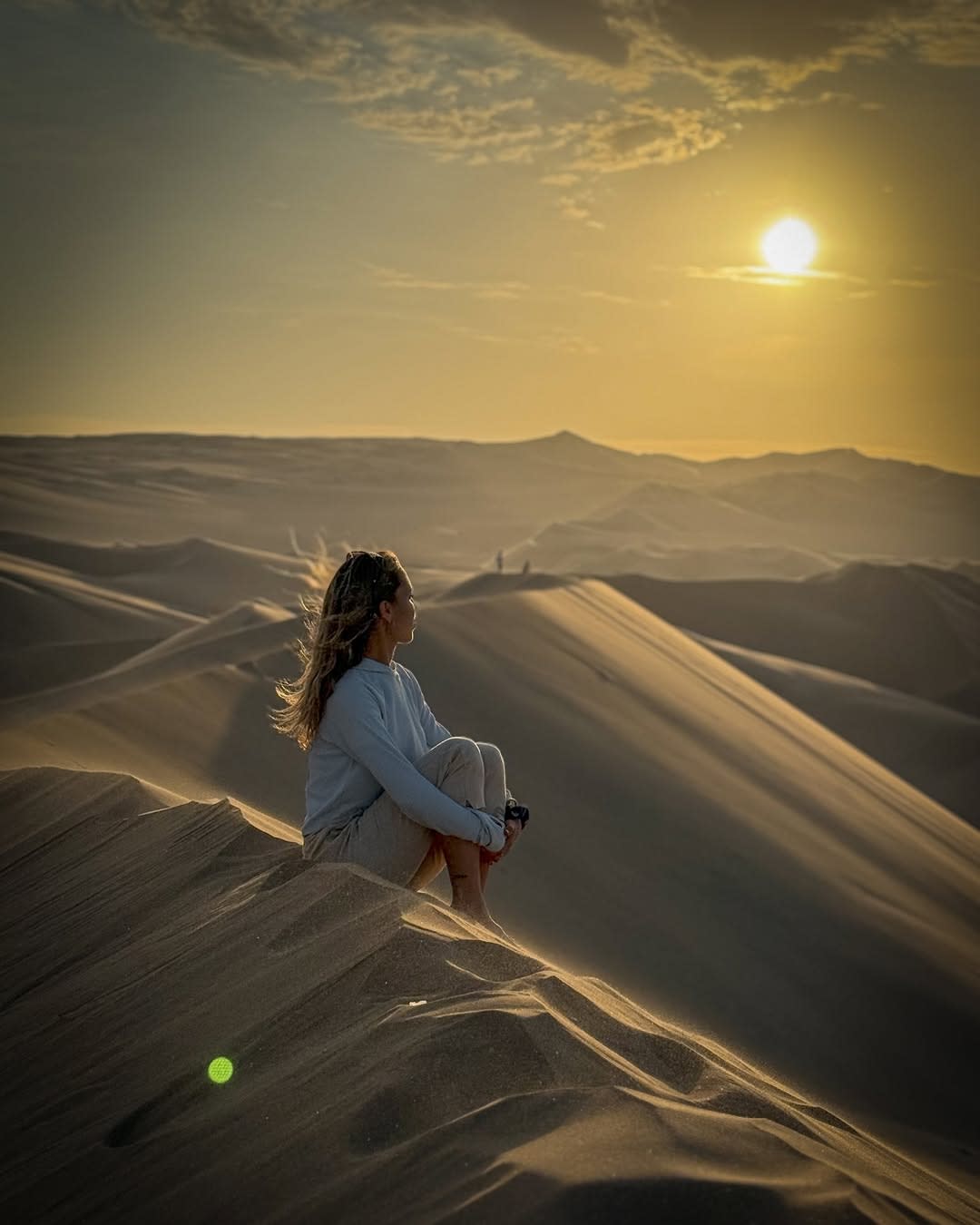
The dunes at Huacachina are at their most legible for approximately forty-five minutes each afternoon — the window when the low sun crosses the western ridge and the shadow-to-light contrast on the sand faces reaches its peak. The ridgelines become precise edges. The bowl geometry of the oasis — this specific lagoon, the only natural desert oasis in South America, ringed on all sides by dunes that reach a hundred metres — reveals itself as a single coherent spatial argument. Outside that window, the dunes are remarkable. Inside it, they are something else: the specific visual event the desert produces once a day, every day, for anyone who arrives at the right hour in the right silence. Most visitors to Huacachina miss it entirely. The group buggy circuit runs its schedule without reference to the sun.
The standard experience at Huacachina involves a group buggy — a converted six-to-eight-seat dune vehicle — that takes a circuit of the dune field at speed, stopping for sandboard runs and photographs. The buggies are loud, they travel in convoy, and the dune surfaces they use have been compacted by years of vehicle traffic. The circuit is efficient and the dunes are the same dunes; the oasis in the valley below is genuinely beautiful from the buggy's stopping points. The experience is not the wrong thing to do at Huacachina; it is the most common thing, and the most common thing here compresses what the dune landscape offers.
What Kada sends instead is a private 4x4 with a driver who has been operating in this dune field for over a decade. The vehicle is different — higher clearance, more controlled power — and the route is different: not the shared circuit but a line that the driver knows leads to a specific dune face on the western side of the oasis bowl, the face that catches the last forty-five minutes of afternoon light when the sun falls toward the Pacific, forty kilometres away. At that hour, the dune geometry is at its clearest: the ridgelines are sharp-edged, the shadow-slope contrast is at maximum, and the oasis below is in shade while the upper dune surfaces are still gold. The buggy fleet, by this hour, is on the eastern dunes.
The Dune Geometry
The Huacachina dunes are sand dunes in the technical sense — the product of wind-sorted quartz particles deposited over thousands of years as the coastal desert winds blow off the Pacific. The specific shape of each dune is a function of the prevailing wind direction: the windward face is long and gradual (the face the wind builds against), the leeward face is steep and loose (the face that breaks). The ridgeline between them is the sharpest line the desert makes.
What makes the Huacachina dunes visually unusual, within the general dune landscape of the Ica coastal desert, is the bowl topography: the oasis sits at the bottom of a natural basin, and the dunes ring the basin on all sides, so that from any high dune, the oasis is always visible below — the dark oval of the lagoon, the green of the palms, the small human settlement around the water's edge. The spatial relationship between the dune height and the oasis depth — a hundred metres of vertical distance, compressed into the visual field — is the specific quality that makes Huacachina unlike any other dune landscape in Peru. This spatial argument is what the private timing is designed to give. The geometry exists at every hour; the light that makes it legible at maximum contrast exists for forty-five minutes, once a day, from the western face. The driver's knowledge of the dune field is, at its most precise, knowledge of where to stand when that window opens.
The light at sunset activates this geometry. The low sun angle creates shadows along the leeward dune faces that are as long as the dunes are tall; the ridgelines go from being gradients to being precise edges. The oasis, lit obliquely from the west, shows the palm canopy in silhouette against the darkening eastern dunes. The colour temperature of the light on the sand surface shifts from the white of midday to the ochre of late afternoon to the rose-gold of the last twenty minutes before the sun drops. Each of these is a different photograph and a different experience; the driver knows which dune position captures each register and times the circuit accordingly.
Sandboarding
Sandboarding — descending a dune face on a flat board, standing or prone — is part of the Huacachina experience for guests who want it. The technique for the standing version requires balance and a familiarity with the way loose sand distributes braking force differently from compacted snow; most guests find the prone version immediately accessible and the standing version requiring two or three runs to find the rhythm. The driver carries equipment and selects the appropriate face for the guest's stated comfort level — the accessible intermediate face for guests who have not done this before, the steeper faces for guests who want the full run.
The sandboard experience at Huacachina is physically modest compared to the dunes' scale. The hundred-metre dune height is the descent of a moderately serious ski run; the loose sand surface means the speed is self-limiting in a way that compacted snow is not. The memorable element is not the speed but the specific physical sensation of running across a surface that is simultaneously unstable and supportive — the sand compresses underfoot just enough to carry weight before it gives way. After two or three runs, most guests prefer to walk the ridgelines and watch the light rather than continue descending.
The Cocktail at the Dune
For groups who want the full sunset moment marked, Kada provides a simple cocktail service at the dune crest: pisco sour or a simpler pisco over ice, served at the edge of the leeward face with the oasis visible below and the sun at the horizon. This is not a full bar operation; it is one drink at the moment the light is best. The bartender-driver carries the equipment in the vehicle and deploys it at the sunset stop.
The pisco sour at the Huacachina dune crest is not incidentally from the Ica valley. The Quebranta grape that makes the pisco grew in the irrigated agricultural zone visible from this dune, fifteen kilometres across the desert to the east. The citrus in the glass is from the valley below. The drink is from here; this is where it makes the most sense to have it.
What Kada Arranges
The driver Kada works with at Huacachina has been operating in this dune field for over a decade — not on the shared buggy circuit but as a private 4x4 driver who knows the dune geometry in the specific seasonal and daily detail that only sustained, repeated presence produces. He knows which face on the western side of the oasis bowl catches the last light and what departure time from Ica is required to reach it before the fleet does. He knows the terrain well enough to position the vehicle precisely — not at the standard stopping points but at the angles where the shadow geometry and the oasis depth appear in the same frame at the same moment. The decade of this specific knowledge produces not a tour of the dunes but a guided arrival at the right hour, from the right direction, in the silence the circuit cannot provide.
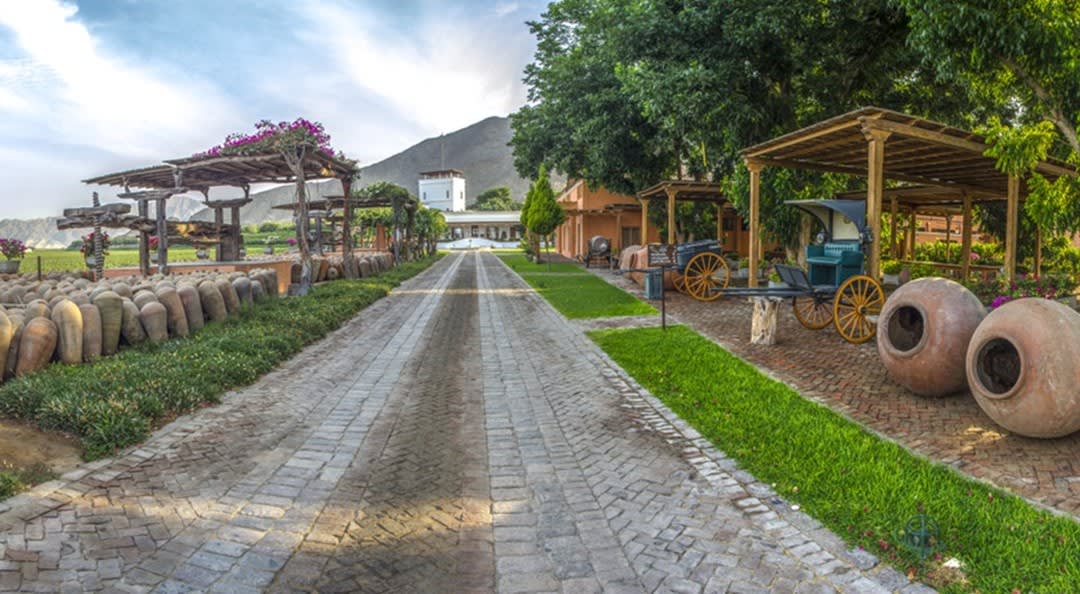
Private 4x4 from the Ica hotel or the hacienda where lunch was eaten; departure at approximately four in the afternoon to arrive at the dune system with two hours before sunset. The driver takes the group through the dune field in a sequence that moves from the orientation circuit — establishing the oasis geography and the dune system's scale — to the progressively more specifically positioned route as the light changes.
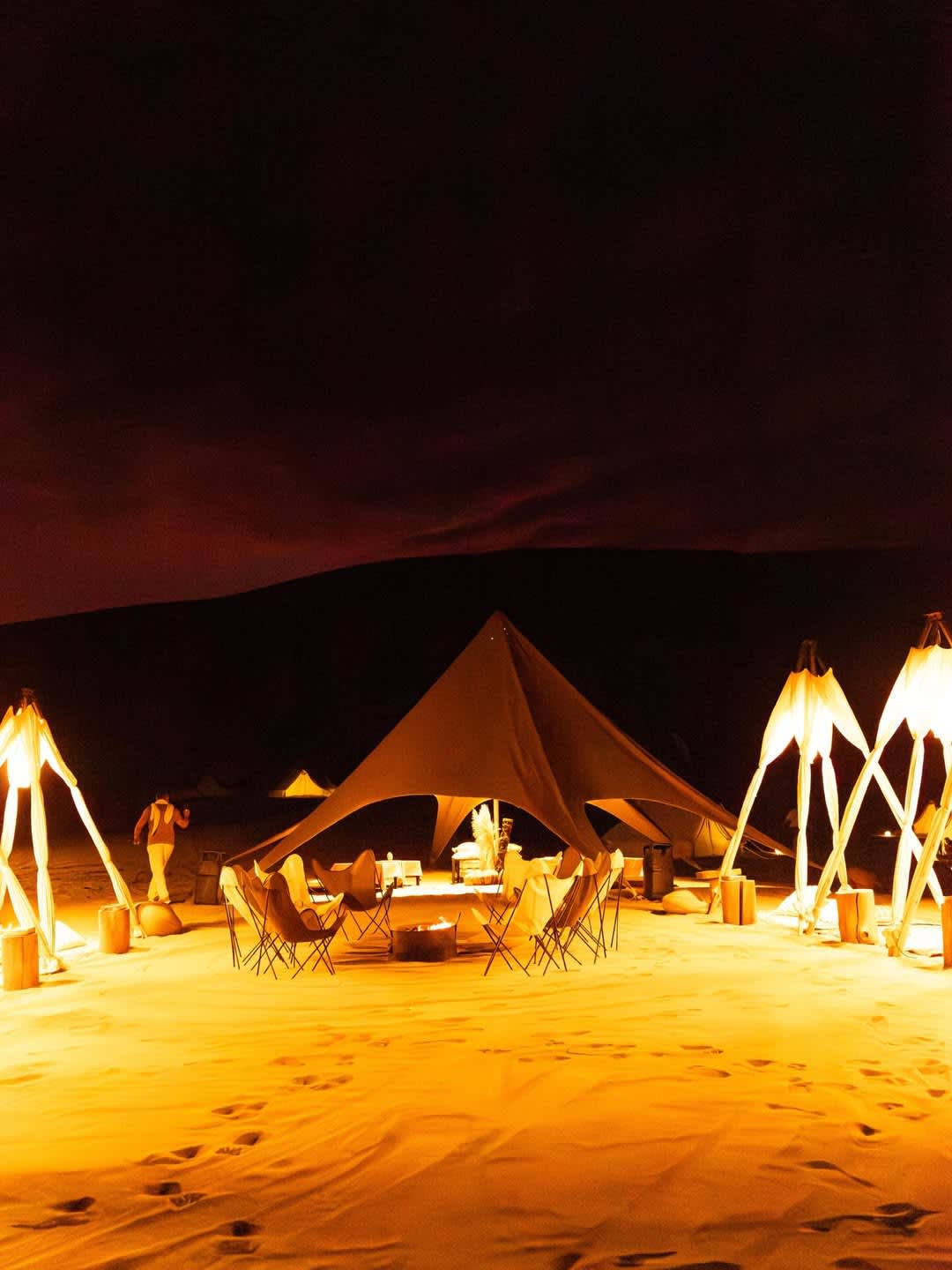
The Huacachina programme is typically a half-day and pairs naturally with the Tacama hacienda visit in the morning (morning at the bodega, afternoon at the dunes, back to the hotel by seven-thirty or eight). Guests who want to extend the desert experience overnight can continue to the glamping programme — the dunes at night, under the Ica sky — which requires a separate night's preparation and booking.
Expert Perspective
"I have done Huacachina at ten in the morning with a group buggy and at five in the afternoon in a private 4x4, and they are not comparable experiences. At ten in the morning, the light is flat, there are fifteen vehicles on the dune, and you are watching the spectacle from inside a moving object that is itself part of the spectacle. At five in the afternoon, alone on the western face with the sun coming at the right angle, the oasis a hundred metres below, and a pisco sour in your hand — that's the dune. That's why this exists. The oasis is remarkable. The desert around it is remarkable. Most people at Huacachina never get to the dune at the right hour in the right quiet."
— Daniel Ramos, Co-Founder & CEO, KADA Travel
A Practical Note
Timing: departure at approximately four o'clock provides two hours of good afternoon light and positions the group on the target dune face for the final sunset window. Earlier departures are possible but sacrifice the quality of the golden-hour light. Later departures risk arriving after the best light has passed; the driver will advise on the specific timing for the date of the visit.
Temperature: the Ica desert cools quickly after sunset — the air temperature can drop ten degrees in thirty minutes after the sun clears the western horizon. A light layer is appropriate for the drive back from the dunes; the windbreaker that was unnecessary on the ascent will be needed on the descent.
Physical considerations: reaching the dune crest on the western face involves a fifteen-to-twenty-minute walk on loose sand, gaining approximately sixty metres of elevation. This is a moderate physical effort; the sand surface makes it significantly more demanding than the same elevation gain on a firm path. Guests with significant cardiovascular or mobility limitations should discuss the programme with Kada in advance, as the driver can select alternative viewpoints with more accessible approaches.
Written by Kada Travel Editorial
Frequently Asked
Three differences: vehicle (the private 4x4 gives the driver more control and flexibility on the dune terrain than the group buggy circuit), timing (the private route is set to the sunset light rather than a fixed schedule), and silence (no group of eight strangers, no amplified music). The dunes are the same; the quality of being present in them is not.
Sandboarding equipment is included in the programme for guests who want to use it. It is optional; guests who prefer to walk the ridgelines and watch the light are not pressed to board. The driver carries the boards in the vehicle and deploys them if the group wants them.
The standard sunset service is a pisco sour or a simple pisco over ice. Non-alcoholic alternatives — sparkling water, a citrus infusion — are available on request; Kada notes dietary preferences at booking and prepares accordingly.
Yes. The 4x4 dune circuit is appropriate for children above approximately eight years old, subject to the driver's assessment of the specific terrain for the day. The sandboarding can be modified for children — prone boarding on gentler slopes is accessible from around six upward. Kada discusses the group's age range at booking to confirm the programme is appropriate and to adjust the route as needed.
Design Your Journey
Design your bespoke Peru journey
We talk. We listen. Then we design an itinerary that belongs only to you.
Start Planning