Unfolded· 7 min read·2 July 2026
Machu Picchu Before the Day
The first turn at dawn with a historian — the citadel before the crowds arrive, and the forty-five minutes when the fog lifts and Machu Picchu is fully legible.
By Kada Travel Editorial
The problem with Machu Picchu is that everyone has already seen it. The photograph precedes the visit by years — sometimes decades — so that when the citadel finally appears at the Guardhouse, in the morning fog above Aguas Calientes, the first response is confirmation rather than discovery. What is left, once the image confirms the image already held, is the question of what is actually there beyond the photograph.
The answer requires a historian, not a guide. And it requires the hour before the buses arrive.
The First Turn
The gates at Machu Picchu open at 6:00 AM for the first-turn visitors. The current government cap is 4,500 guests per day; the first turn, running from 6 AM to noon, shares approximately half of that number with the afternoon. At 6:15 AM, in practice, the site holds fewer than two hundred people — a fraction of what arrives by 8:30 AM, when the first buses from Aguas Calientes have completed their runs up the switchback road.
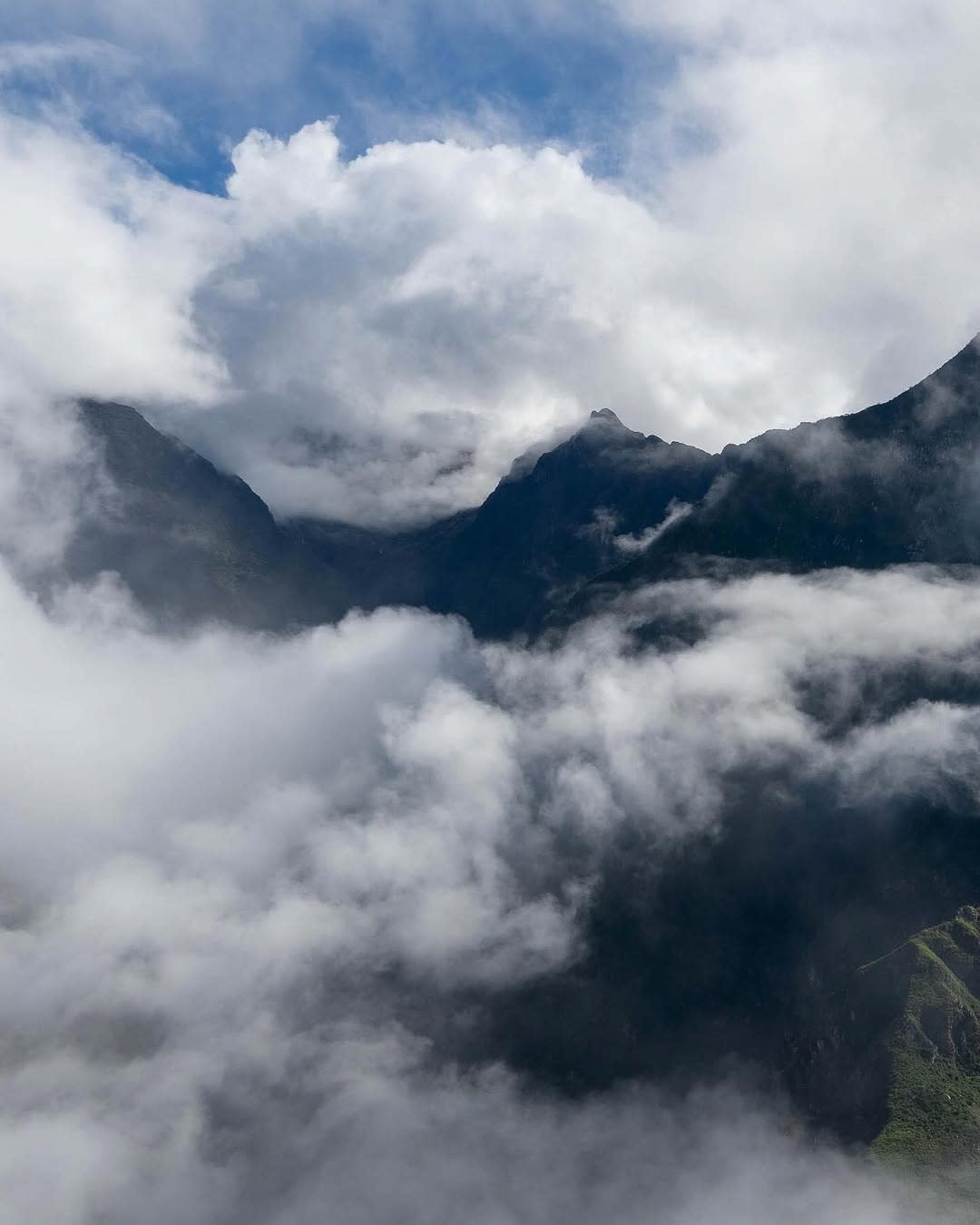
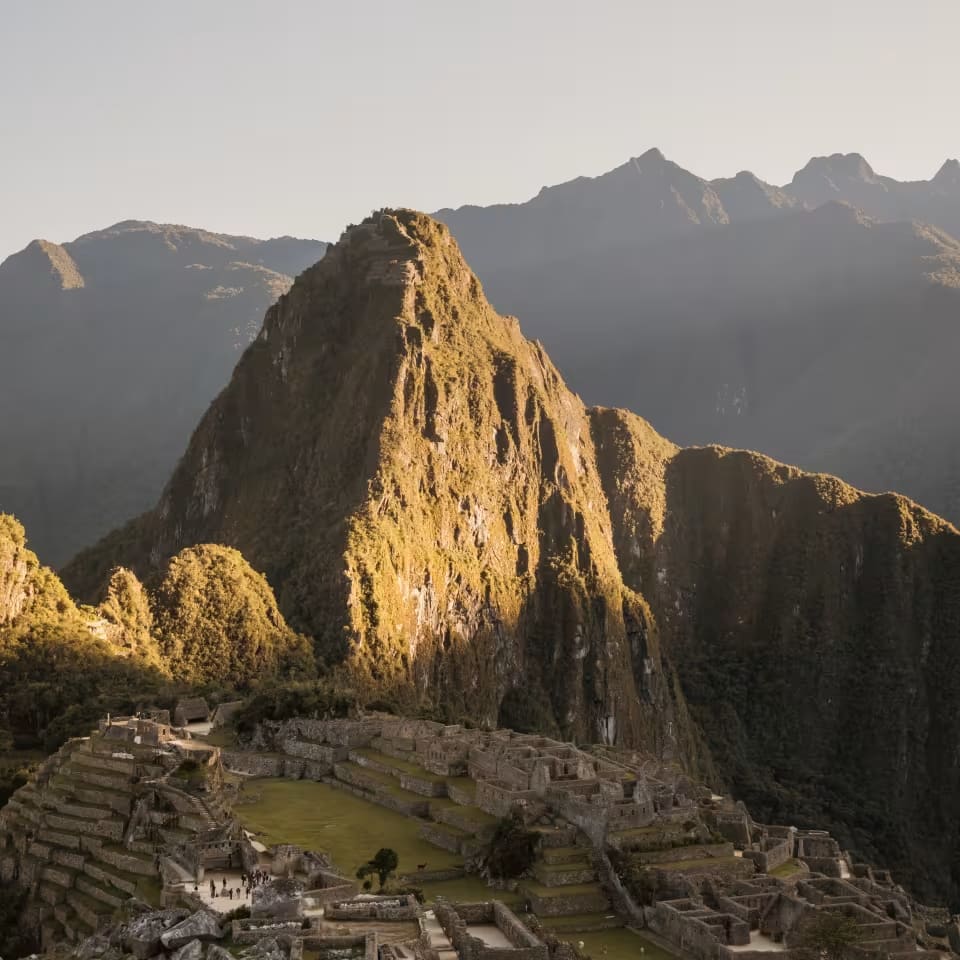
The Guardhouse is the first viewpoint above the main entrance: the elevated terrace where the full citadel spreads below and the silhouette of Wayna Picchu mountain rises behind it, which is the photograph. At 6:30 AM, the morning fog moves through the valley below the site — the cloud forest below the citadel is still in mist — and the light on the eastern terraces is flat, low, and detailed in a way that the harsh midday sun is not. This is the moment the site photographers and the travel editors know, but that most visitors, arriving by the second or third bus, do not reach.
By 8:30 AM, the site's character has changed. It is no longer possible to stand at the Intihuatana stone and have a conversation at normal volume. The historian speaks at a pitch calculated for two guests, not twenty; the early morning is when that register is available.
What the Historian Reads
The historian we work with holds a doctorate in Andean archaeology and has published on Inca architecture and astronomical alignment at Machu Picchu. He is not a licensed guide in the general tourist-certification sense; he is an academic who knows the site as a subject of ongoing study, and whose commentary reflects the current state of scholarship rather than the fixed interpretive script that most tour groups hear.
What that script typically provides: accurate dates, correct names for the major structures, a brief summary of the hydraulic system. What it omits: the open questions, the competing interpretations, and the specific details that transform a list of structures into a legible building.
The current consensus among scholars is that Machu Picchu was a royal estate built by the Inca emperor Pachacútec Yupanqui between approximately 1438 and 1471 — not a general city, not a military fortress, not a spiritual sanctuary in isolation from other functions, but the private estate of an Inca king who built it as an administrative and ceremonial centre tied to his personal power. This is a different building from the "lost city" narrative that still circulates; understanding what it was changes what you are looking at.
At the Temple of the Sun: the most precisely constructed building at the site, built over a natural granite outcrop. Its trapezoidal window is aligned to the winter solstice sunrise — the first light of June 21st enters the window at exactly the angle that throws a rectangle of light across the royal tomb below the tower. This is not an interpretation; it has been confirmed by astronomical survey. At the Intihuatana stone: the carved granite peg whose shadow vanishes entirely at noon on the equinoxes. The Inca term means "hitching post of the sun" — an instrument for tracking the solar calendar at the most precise points of the year. The agricultural terraces: 600 separate terraces, some showing evidence of crops from different altitude zones — consistent with the theory that Machu Picchu was also used as an agricultural experimental station, replicating in microcosm the full vertical ecology of the Andes. And the hydraulic system: sixteen stone fountains fed by a single spring two kilometres from the site, connected by a channel carved into the bedrock with a gradient precise enough that the water runs at a controlled speed. This system still functions.
What Kada Arranges
The train to Aguas Calientes departs from Ollantaytambo in the Sacred Valley. We use the Vistadome service or the PeruRail Sacred Valley train — the journey descends through the cloud forest from 2,800m to 2,000m, tracking the Urubamba river as it narrows into a gorge. The 90-minute descent is itself part of the transition: the landscape changes more dramatically in that hour than in the full drive through the Sacred Valley.
An overnight in Aguas Calientes is required for the first-turn visit. We select partner accommodation based on location and reliability, not chain affiliation. The town has limited accommodation; what matters is proximity to the bus line and a reliable 4:45 AM call. We manage this.
The bus departs from the Aguas Calientes bus station at 5:20 AM. The switchback road to the site takes 25 minutes. Our guests arrive at the gate at 5:45-5:50 AM, ahead of the official 6:00 AM opening. The historian meets them there.
Machu Picchu tickets require advance purchase through the official government booking system. First-turn tickets for specific dates in high season (June-August) are exhausted several months in advance. We handle the acquisition as part of the itinerary planning process, with the booking window confirmed at the time we design the trip. A maximum of six guests per historian session; the visit runs approximately three hours at the site.
Expert Perspective
"I have walked Machu Picchu with many guests over the years. The ones who remember the visit most specifically are the ones who were there at 6:15, before the site belonged to the crowd. There is a quality of attention available at that hour that disappears by nine — not just because of the numbers, but because the historian is reading the stones in a particular light and you are standing next to something that has been waiting five hundred years for the right question. Guests who arrive at noon have a real encounter with the site. Only the morning version has that quality of silence in which a specific question can be asked. The ruins answer differently when there is quiet enough to hear them."
— Jaime Ttito, Head of Guides & Cultural Interpreter, KADA Travel
A Practical Note
Machu Picchu is at 2,430 metres — significantly lower than Cusco (3,400m) or the Sacred Valley (2,800m). The descent is a physical relief for guests who have been acclimatising in the valley, and altitude is not the primary physical concern at the site. A minimum of three days acclimatisation in the Sacred Valley and Cusco is still required before the visit, as the travel day involves an early departure and sustained physical activity.
The site involves two to three kilometres of walking on uneven stone paths, with moderate elevation changes within the citadel itself. Sturdy footwear is required; sandals and fashion shoes are not appropriate for Inca-era stone surfaces. The Sun Gate extension — an optional 2 km hike above the main citadel, adding approximately 200m of ascent — is worth doing if our guests have the energy and the morning remains clear; the view back to the citadel from the Gate is the one the Inca pilgrims on the Inca Trail would have seen as their first sight of the city.
The government regulations around photography at the site change periodically; we advise guests on current restrictions at the time of the visit.
Written by Kada Travel Editorial
Frequently Asked
For the June-August high season, four to six months minimum. For the shoulder season (April-May, September-October), two to three months is generally sufficient. We always attempt to book as early as the trip design allows. For guests with confirmed trips who approach us late, we will be direct about which dates remain available for the first turn and which do not.
We use the Vistadome service or the PeruRail Sacred Valley train, depending on availability and scheduling for the specific itinerary. Both services are operated by PeruRail and offer panoramic windows. The train from Ollantaytambo takes approximately 1.5 hours to Aguas Calientes. We select the service that best fits the overall day's logistics at the time of planning.
Partially. The bus access from Aguas Calientes to the site entrance is fully accessible, and the entrance area and several of the main viewpoints are reachable without significant climbing. However, the full site — including the Temple of the Sun, the Intihuatana, and the agricultural terraces — involves substantial stair climbing and uneven surfaces that are not wheelchair-accessible. We discuss the specific mobility picture with each guest at the planning stage and design the visit accordingly, including an adapted itinerary for guests who want the morning experience with the historian at the structures that are accessible.
The Sun Gate hike is an extension we recommend for guests with the energy and time: approximately 1.5 hours from the main site, on a well-maintained path along the former Inca Trail route, with the citadel visible in increasingly dramatic perspective on the way up. Wayna Picchu mountain — the peak that appears in the classic citadel photograph — requires a separate timed ticket, available in very limited quantities; we advise on availability at the time of booking.
Design Your Journey
Design your bespoke Peru journey
We talk. We listen. Then we design an itinerary that belongs only to you.
Start Planning