Unfolded· 9 min read·3 July 2026
The Citadel That Requires the Walk
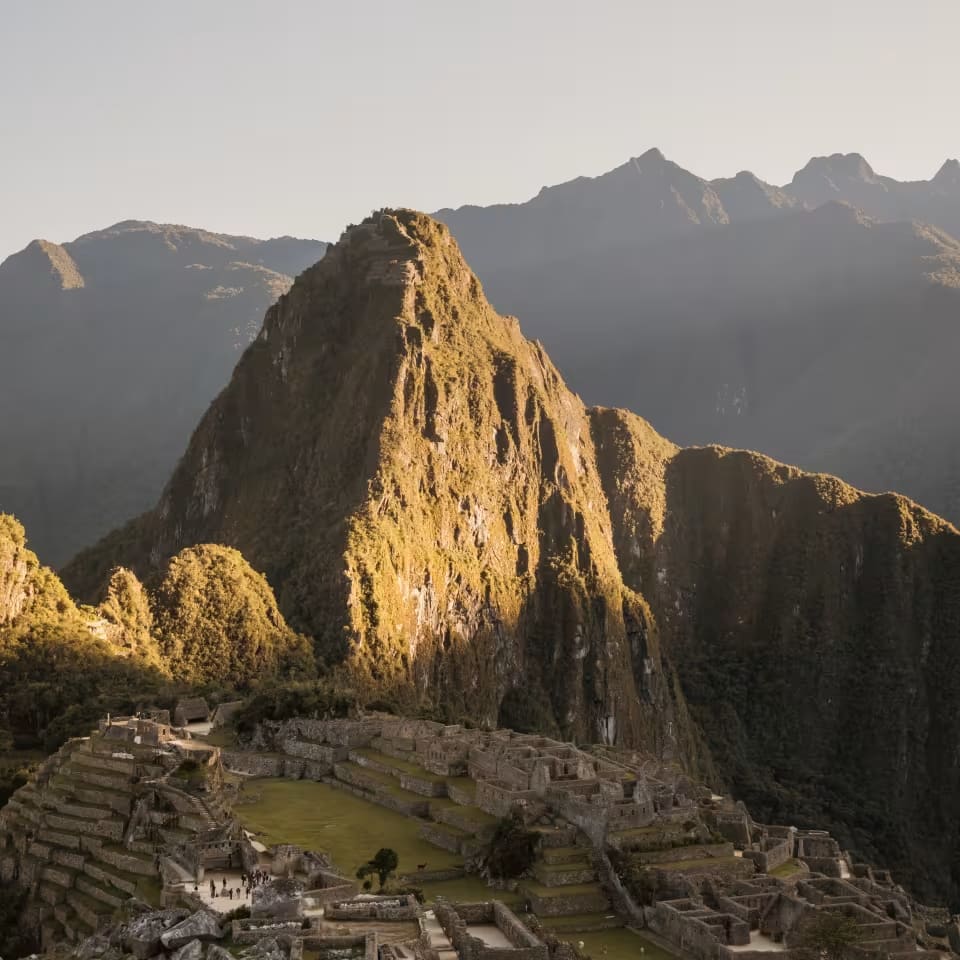
Choquequirao: the Inca citadel the trains never reach — four days into the Apurímac canyon, arriving at a site that ten visitors see on a given morning, where the white llama terraces wait for a guest who has earned the view.
By Kada Travel Editorial
Choquequirao does not appear in most itineraries because reaching it requires four to nine days on foot. This is, simultaneously, the reason it is worth reaching.
The site receives fewer than twenty visitors on an average morning — a fraction of the crowds at Machu Picchu, and fewer, in some months, than certain museums in Lima. The reason is not that Choquequirao is unknown. It is documented, studied, and discussed in the same scholarly literature as the other major Inca sites. The reason is that the road ends at Capuliyoc, above the Apurímac canyon, and everything after that is on foot and on a gradient that has no easy version.
What is at the end of the walk is an Inca citadel that is approximately 30 to 40 percent excavated — the rest still under cloud forest, the outline of further structures visible in the vegetation above the cleared plazas — and a set of terraces decorated with white stone llamas that exists nowhere else in the Inca world. Choquequirao is not a smaller version of Machu Picchu. It is a different kind of site, at a different kind of altitude, that has retained a quality of solitude the more famous citadel lost decades ago.
The Citadel
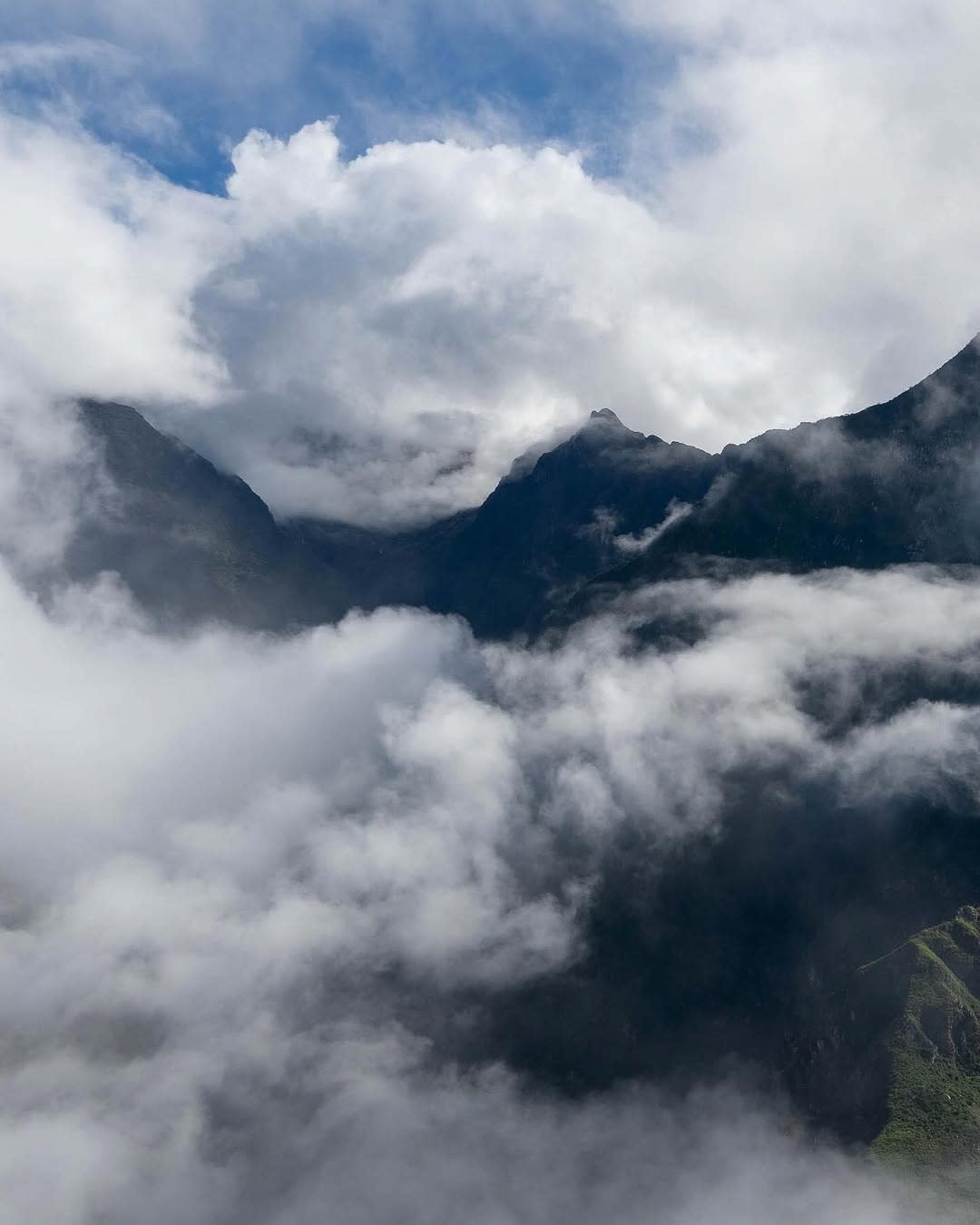
Choquequirao sits at 3,033 metres, on a ridge above the Apurímac canyon at a point where the river runs approximately 1,500 metres below the site. The canyon walls on both sides rise steeply; the Vilcabamba range is visible to the west, across the gorge. The position is not one of easy access — and that position is, in part, the point.
The site is associated with the Topa Inca Yupanqui period in its original construction, but its most significant historical moment came in the 1530s and 1540s, when Manco Inca — the last Inca ruler to hold active military and political authority — used the Vilcabamba region as his stronghold during the resistance against Spanish occupation. Choquequirao, on the eastern edge of that region, was one of the citadels from which the Inca resistance operated. The colonial administration never fully penetrated this territory; the Apurímac canyon was too steep, too remote, too difficult to supply an army into.
What the archaeologists who have worked the site since the 1970s are still uncovering: the full extent of the terracing system, which runs in levels down the canyon wall to a degree that suggests an agricultural purpose much larger than the visible structures; a lower ceremonial complex, separated from the main plaza by a steep descent, that was cleared only in the 2000s; and the white llama terraces — the site's most singular feature — on the south slope below the main complex.
The white llama terraces are not a decorative flourish. Thirty-six stone figures, inlaid in white granite against the dark stone of the terrace walls, depict llamas and human figures in profile — a form of monumental stonework with no parallel at any other excavated Inca site. The figures face outward, visible from the Apurímac valley below, which has led scholars to interpret them as a territorial or ceremonial declaration directed at the landscape itself. Whether they face the valley as an offering to the Apus or as a statement of Inca authority in the canyon — or both — remains an open question. They are remarkable regardless of the interpretation, and they are the image of Choquequirao that no photograph quite prepares a guest for.
The Route into the Apurímac
The standard approach to Choquequirao begins at Cachora, a village above the Apurímac canyon, accessible by road from Cusco in approximately four hours. From Cachora, the route descends 1,500 metres to the canyon floor at the Apurímac river crossing, then climbs 1,500 metres on the far side to the site — a round trip of approximately 60 kilometres with 4,500 metres of cumulative elevation change.
The standard itinerary is four to five days, camping both ways. An extended version — continuing from Choquequirao through the Vilcabamba range to Santa Teresa and Aguas Calientes — runs eight to nine days and connects the two sites on foot along the original Inca route between them. This is the most complete trek in the Cusco region: it earns Machu Picchu differently from any other approach.
The terrain is demanding but not technical. The paths are Inca-era or colonial-era mule trails; they are steep in places, narrow in places, and occasionally exposed, but they do not require mountaineering skill or equipment. What they require is physical fitness, several days of prior acclimatisation at altitude, and the willingness to walk six to eight hours per day in conditions that the Andes — not the calendar — ultimately determine.
The season matters. The dry season (April through October) is the reliable window; the wet season (November through March) makes the trails difficult, the views frequently obscured, and the camping uncomfortable in ways that reduce what the site can give. We schedule Choquequirao treks in the dry season and build weather flexibility into the itinerary.
The Luxury Version
There is no hotel between Cachora and Choquequirao. There is no restaurant, no medical post, and no mobile phone signal for most of the route. What the luxury version of this trek provides is not a mitigation of those conditions — they are part of what the journey is — but a removal of every logistical variable that would otherwise reduce a guest's capacity to be present.
Camp structures are premium: a raised sleeping platform under a weather-rated tent, with a sleeping bag rated to the temperature range of the canyon nights, which drop sharply. A field chef prepares meals from ingredients carried in by mule — not reconstituted trekking food but a menu adapted to the conditions and to what the mules can carry. Mules carry all luggage; guests carry only a day pack. Supplemental oxygen is available at camp and on the trail. A satellite communicator maintains emergency contact for the duration of the trek.
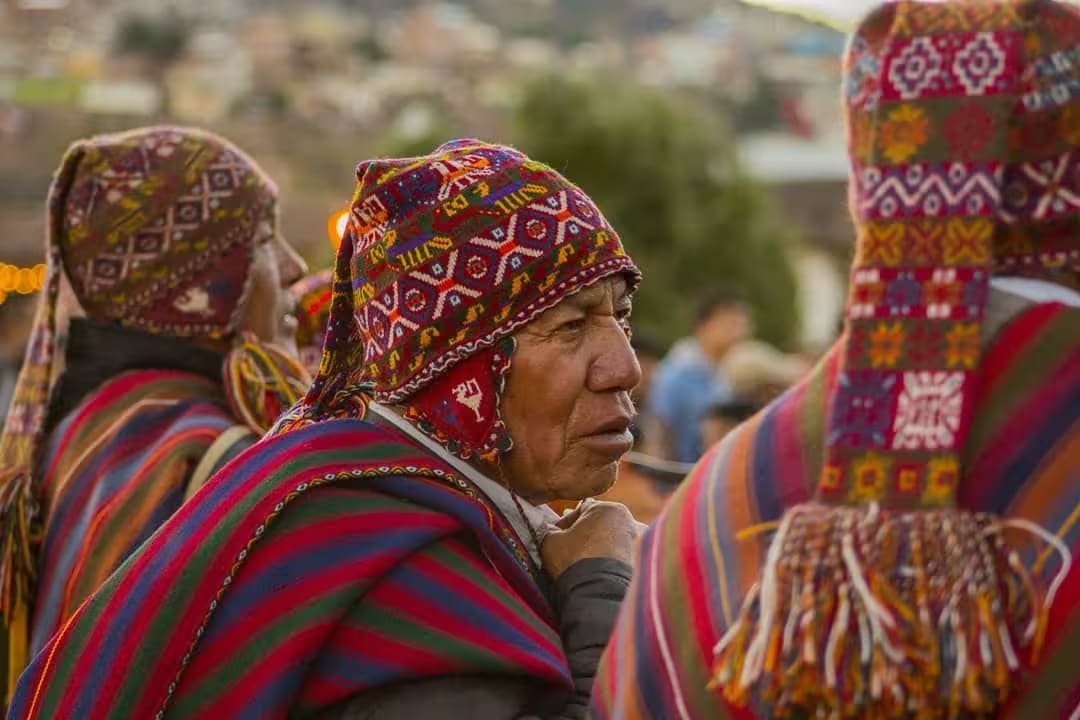
The guide for the Choquequirao trek holds a certification from the Instituto Nacional de Cultura and speaks Quechua as a first language — a detail that matters on a route that passes through high Andean communities where Spanish is a second language and Quechua is how the landscape is discussed. His knowledge of the site is scholarly: he reads the white llama terraces as a text, not as a spectacle.
Maximum group size is six guests. This is not a commercial trek; the camp is prepared and broken for this group specifically, at this pace, with this guide.
What Kada Arranges
The logistics begin four hours from Cusco and extend for the duration of the trek: transport to Cachora, the full mule train and crew, the camp infrastructure, the guide, the field kitchen, and the emergency protocol. We manage the mule drivers and camp crew — typically a team of five to eight for a group of four to six guests — as a coordinated unit. The guest's experience on the trail is complete presence and forward motion; the logistical machinery operates around them, not alongside them.
Permits for Choquequirao are required through the Ministerio de Cultura and are included in the logistical arrangements. The site is managed by the Dirección Desconcentrada de Cultura de Apurímac; access is controlled and the daily visitor numbers remain low as a direct result of the physical barrier that keeps the crowds elsewhere.
A note on the helicopter access question: helicopter operations to Choquequirao have been discussed as a future development by Peruvian authorities — a cable car project has been proposed and contested — but as of the time of writing, no civilian helicopter service to the site operates. The physical barrier is currently total. When and if authorised rotary-wing access is established under DGAC framework, we will advise our guests at the time of planning; we do not offer routes that are not operationally available.
The minimum preparation for this trek: three to four days in the Sacred Valley at 2,800 metres followed by two nights in Cusco at 3,400 metres. A minimum fitness baseline — the ability to walk six hours at sustained gradient — is required; we discuss this directly with guests at the planning stage. This is not a trek we recommend to guests who have not recently done sustained multi-day walking.
Expert Perspective
"The guests I have taken to Choquequirao fall into two categories. There are the ones who arrive at the white llama terraces and say nothing for several minutes — they have been walking for two days and they are standing at something that no road reaches, and the weight of that carries them somewhere they did not expect to go. And there are the ones who ask the best questions, because the effort required to reach the site does something to the quality of attention. You cannot arrive at Choquequirao passively. The walk makes you a different kind of audience than a bus would. Of all the sites in the Cusco region, this is the one where I have seen guests cry without expecting to. It is not the most beautiful site. It is the one that requires the most of you, and it gives back in proportion."
— Jaime Ttito, Head of Guides & Cultural Interpreter, KADA Travel
A Practical Note
The Choquequirao trek requires a minimum of five full days in the itinerary: the four-day round trip plus one additional day of recovery in Cusco after return. The extended version connecting to Machu Picchu requires nine to ten days from Cusco departure to Aguas Calientes arrival, with the additional logistical arrangements for the mountain crossing handled as part of a single coordinated expedition.
The altitude range of the trek is unusual: the route descends from approximately 3,600 metres at Cachora to 1,500 metres at the canyon floor, then rises back to 3,033 metres at the site. This oscillation between altitude zones in a single day is physically demanding in a different way from sustained high-altitude walking. The descent, in particular, is hard on the knees; poles are strongly recommended and are provided as part of our gear pack.
Choquequirao is not appropriate for guests who have not completed multi-day trekking recently or who have unresolved cardiac or pulmonary conditions. We are direct about this at the planning stage, not as a liability formality but because sending an unprepared guest into the Apurímac canyon is not something we would do. The conversation about fitness and health happens before the itinerary is confirmed.
Written by Kada Travel Editorial
Frequently Asked
Current counts run between ten and forty visitors per day, depending on the season — the low end in the wet season, the high end on peak dry-season days. This compares to 4,500 capped visitors per day at Machu Picchu. The practical experience of the site is one of near-solitude even on a busy day; on a morning when our guests are the first group to the white llama terraces, they may be the only people there for the first hour.
They are different experiences. The four-day version concentrates entirely on Choquequirao — the route in, the time at the site, the route out — and offers the cleaner single-purpose encounter with the citadel. The eight-day version is the more ambitious expedition: it connects two major Inca sites on foot along a historic route, arrives at Machu Picchu having walked from the previous site, and produces a fundamentally different experience of the more famous citadel. We recommend the extended version to guests who have done multi-day trekking before and are in strong physical condition; we recommend the four-day version to guests for whom Choquequirao itself is the primary objective.
Our emergency protocol includes a satellite communicator for contact with our Cusco operations team and supplemental oxygen at camp. For emergencies requiring evacuation, helicopter retrieval is available from several points along the route — this is a DGAC-sanctioned emergency use, coordinated through our emergency contacts and local authorities. We have not needed to activate a full evacuation on the Choquequirao route, but the protocol is prepared and tested for every trip.
The Choquequirao route is sustained gradient at altitude, not technical terrain. The most effective preparation is sustained cardio over the three months before the trip — specifically uphill walking or stair training rather than flat-distance running — combined with the altitude acclimatisation schedule in the Cusco region. Guests who arrive already acclimatised and with a recent history of hill walking find the trek demanding but manageable. Guests who arrive without either find the gradient and altitude combination more punishing. We provide a preparation brief at the time of booking.
Design Your Journey
Design your bespoke Peru journey
We talk. We listen. Then we design an itinerary that belongs only to you.
Start Planning