Destinations· 9 min read·23 February 2025
New Circuits and Tickets at Machu Picchu: 2026 Updated Guide
Five numbered circuits, fixed entry times, passport-linked tickets — how to navigate the current system without losing what matters.
By Kada Travel Editorial
Until 2023, visiting Machu Picchu was simple. You bought a ticket, climbed to the site, and walked freely through its ten main sectors until closing time. Free movement was part of the experience: each visitor designed their own route, lingered at what interested them, photographed from their preferred angles. That version ended.
Since 1 June 2024, Peru's Ministry of Culture has implemented the numbered-circuit system —from 1 to 5— with fixed entry times and mandatory routes. The measure aimed to preserve the site (five thousand daily visitors were eroding the walls) and democratise access (tour groups previously blocked key points). In 2026, the system remains in force with minor adjustments. This guide explains the five circuits, what each shows, and how to choose according to the trip.
The system, in figures
Five circuits. Five entry times (6 AM, 8 AM, 10 AM, 12 PM, 2 PM). Each circuit has a mandatory route, a maximum visit time (between 2 and 3.5 hours), and a one-way direction —you cannot backtrack. Tickets are linked to the passport: name and document number are registered at purchase, and site entry requires exact match. No resale possible.
Total daily capacity is 5,044 visitors (excluding guides and authorities). This is split among the five circuits in different proportions: circuit 2 (the most complete) has 1,700 daily entries; circuit 4, 1,000; circuits 1, 3 and 5, between 500 and 800 each. Tickets are bought on the official Ministry website (machupicchu.gob.pe) or through authorised tour operators, two to three months ahead in high season (June-September).
The five circuits, compared
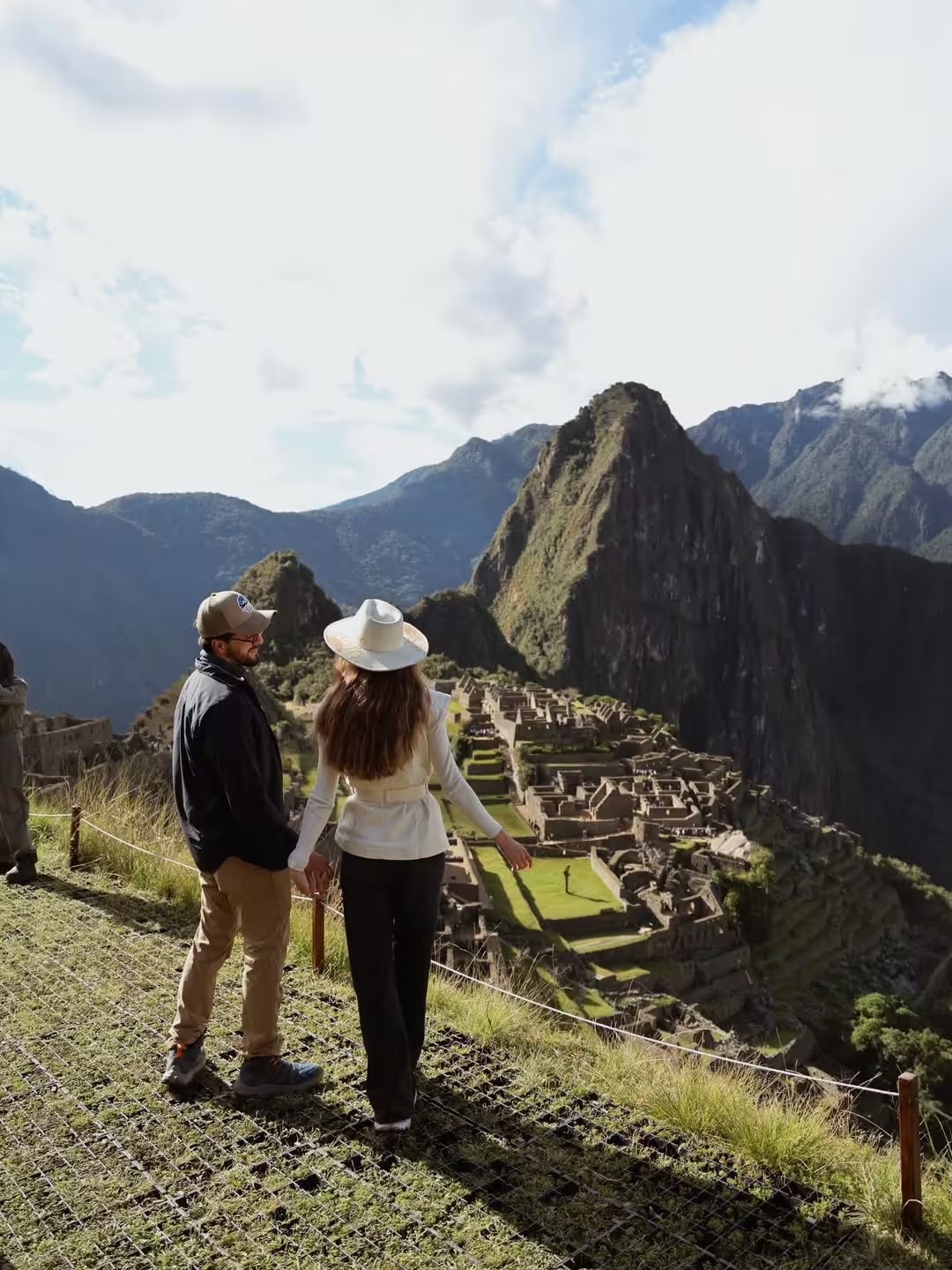
Circuit 1: Upper Panoramic. The shortest route (1.5 hours) and the one passing the classic viewpoint —the postcard photo of Machu Picchu from the Watchman's House. Then descends quickly through the agricultural sector and exits via the main gate. Recommended for visitors with limited time, older travellers with mobility issues, or those who already know the site and only want the view. Does not include temples.
Circuit 2: Classic Design. The most complete and most requested (3.5 hours). Starts at the viewpoint, descends to the urban sector, traverses the Sacred Plaza with the Sun Temple, the Temple of the Three Windows, the Intihuatana (Inca "solar calendar"), the residential sector, and the industrial sector. The circuit we recommend for most travellers: covers iconic points, allows time to appreciate engineering, and permits understanding the site's urban logic.
Circuit 3: Royal. Mid-length route (2 hours) concentrating on the royal sector: the Inca House, the Condor Temple (a subterranean temple carved into a natural rock shaped as an extended condor), noble residences. Does not include the classic viewpoint. Recommended for visitors who already know the postcard and want the rest.
Circuit 4: Industrial. The least visited (2 hours), covering the agricultural and industrial sector: cultivation terraces, grain stores, artisanal workshops. The classic panoramic view is not included, but the sector gives a concrete idea of how the site's economy worked. Recommended for amateur archaeologists and returning visitors.
Circuit 5: Royal Abbreviated. Short version of circuit 3 (1.5 hours), designed for visitors with limited energy or scarce time. Passes the Inca House and Condor Temple but not the full urban sector. Recommended for older travellers and families with small children.

Combinations with Huayna Picchu and Machu Picchu Mountain
Two peaks ring the main site: Huayna Picchu (north, 2,720 metres) and Machu Picchu Mountain (south, 3,082 metres). Both are climbed with combined ticket, and both have restricted capacity.
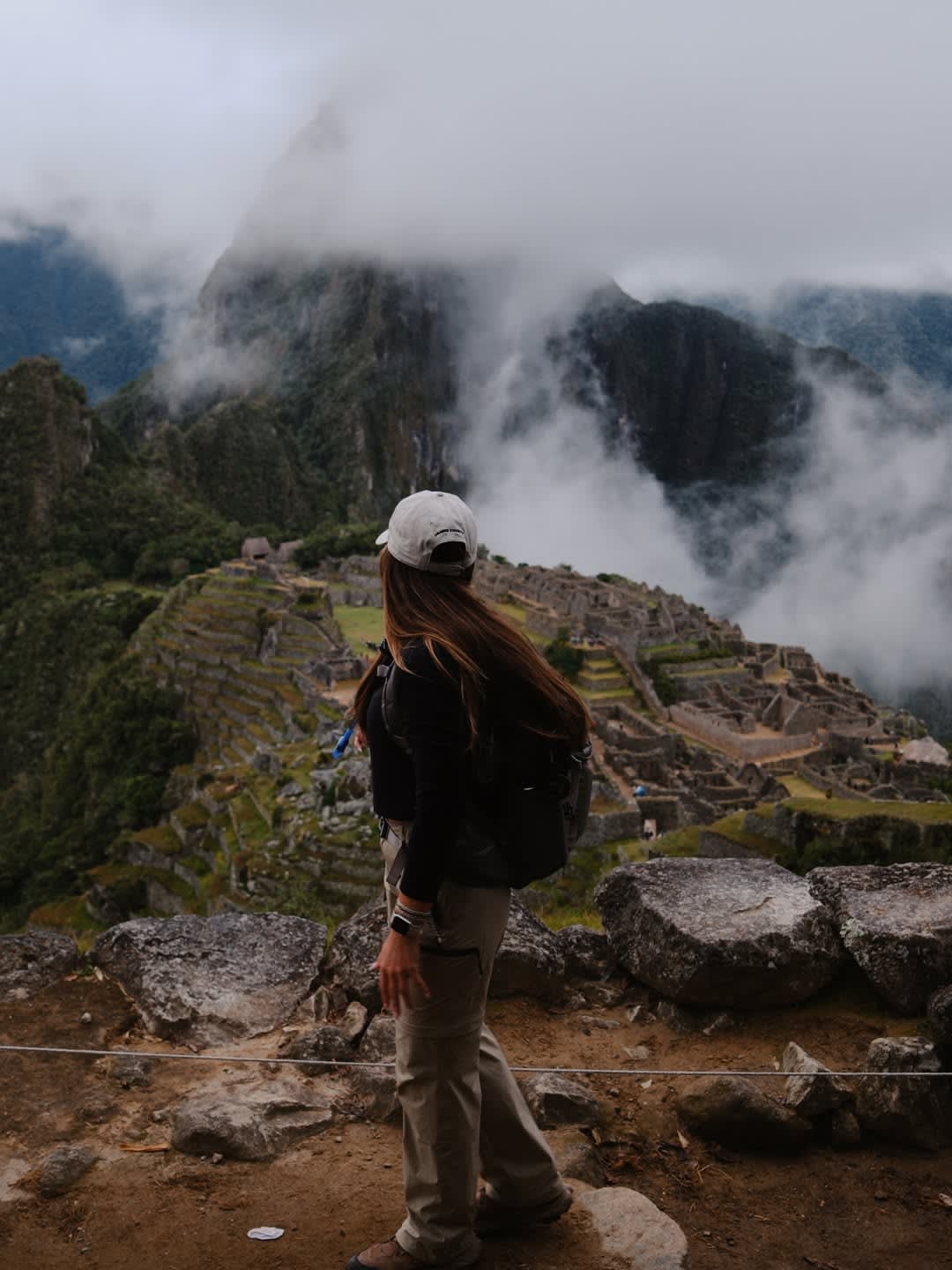
Huayna Picchu is the peak that appears behind the site in all photographs. The climb takes 60 to 90 minutes, demanding but achievable for those in average physical shape. The summit offers a zenithal view of the main site —the angle opposite the classic postcard. Capacity: 200 daily in two shifts (7 AM and 10 AM). Mandatorily combined with circuit 4. Reserve: three to four months ahead in high season.
Machu Picchu Mountain is the opposite peak, taller and longer (90- to 120-minute climb). The view is broader than Huayna's but less zenithal. Capacity: 400 daily in two shifts. Combined with circuit 3. Recommended for travellers in good shape with prior altitude experience.
There is also a lesser-known third option: Inti Punku, the Sun Gate, accessible from the main site by 60-minute uphill walk. The end of the Inca Trail, where hikers see Machu Picchu first at dawn. For those who did not do the Trail, climbing from the site permits access to the same view. No restricted capacity. Recommended for those with energy after the main circuit.
What changed in 2026
Three minor adjustments came into force in 2026. First: combined tickets with Huayna Picchu or Machu Picchu Mountain now release the circuit's one-way restriction once the peak is completed, allowing visitors to revisit parts of the main site before exiting. Second: 6 AM entry (the first shift) now permits an extended visit time of 4.5 hours, recognising that misty dawns require patience. Third: the Patallaqta sector (on the short Inca trail reaching the site) now includes a 20-minute interpretive stop, accessible only to those doing the trail, not to standard tickets.
These adjustments are minor but important for the considered traveller. The first-shift extension significantly changes the dawn experience: four and a half hours allow waiting for mist to clear without pressure.
How to choose the circuit
For the first Peru trip, we always recommend circuit 2. The most complete, gives the classic postcard, covers iconic points. Time: 3.5 hours within the site. Optimal time: 8 AM entry (after dawn but before midday heat).
For the returning visitor: combination of circuit 3 (royal sector) or 4 (industrial). These circuits cover what circuit 2 omits and give a second reading of the site.
For travellers with two Aguas Calientes nights (which we recommend for honeymoon or fourteen-day trips): circuit 2 day one, circuit 3 or 4 day two. Two dawns, two readings.
For those adding Huayna Picchu or Machu Picchu Mountain: the climb is demanding. Do not combine with the longest circuit on the same day. The formula we recommend is Huayna in the morning (7 AM shift) and short circuit 1 on return, or Mountain at dawn and short circuit 5 on return. Climbing a peak and doing full circuit 2 the same day exhausts even the seasoned traveller.
The numbered-circuit system did not impoverish Machu Picchu. It organised it. The difference between the 2018 site —saturated, chaotic— and the 2026 site —with controlled flow, clear views— favours both conservation and the experience.
Kada Travel
How tickets are bought
Three routes. First: official site machupicchu.gob.pe, in Spanish. The interface is not ideal but it works; payment by international card. Second: authorised agencies (the Ministry page publishes a list). Third: through the Kada Travel package, which includes ticket management with circuit, time and private-guide coordination.
The passport link is strict: the ticket is sold with full name and document number. If the passport is changed after purchase (renewal, loss), the ticket must be updated before travel on the official site. On the visit day, the guard compares passport against ticket at entry control. Without exact match, no access.
Current price (May 2026): standard circuit 2 USD 65 per person. Combined with Huayna Picchu: USD 90. Combined with Machu Picchu Mountain: USD 90. Students with UNESCO or ICOM card: 50% discount. Children 8 to 17: 50%. Under 8: free but with nominal ticket.
Written by Kada Travel Editorial
Frequently Asked
In low season (February, late September, November), sometimes yes. In high season (June-September), no. We always recommend buying two to three months ahead.
Only in very specific cases with medical certificate. Ministry policy is strict. We recommend travel insurance with illness-cancellation coverage.
Since 2024, all visitors must enter with an authorised official guide. Guides speak Spanish, English, French, German, Portuguese, and sometimes Japanese and Mandarin. For our trips, we arrange private certified guides.
For travellers in good physical shape, yes. The zenithal site view is unique. For older travellers, those with vertigo or fear of heights, we do not recommend: the climb has cable-handrail sections and vertical drops.
6 AM gives the dawn (sun entering from the east over the Putucusi wall), but usually has mist and requires patience. 8 AM gives clean light with crowds already at the site. For photography, 6 AM wins. For comfort, 8 AM.
Circuit 1 panoramic has accessible sections from entry to the classic viewpoint. Descent to the urban sector requires Incan steps and is not accessible. For limited mobility we recommend only the viewpoint via circuit 1.
Design Your Journey
Design your bespoke Peru journey
We talk. We listen. Then we design an itinerary that belongs only to you.
Start Planning