Unfolded· 7 min read·8 July 2026
One Building, Two Religions
Qoricancha and Santo Domingo — the most consequential architectural overlay in the Americas, read by someone who grew up in its shadow.
By Kada Travel Editorial
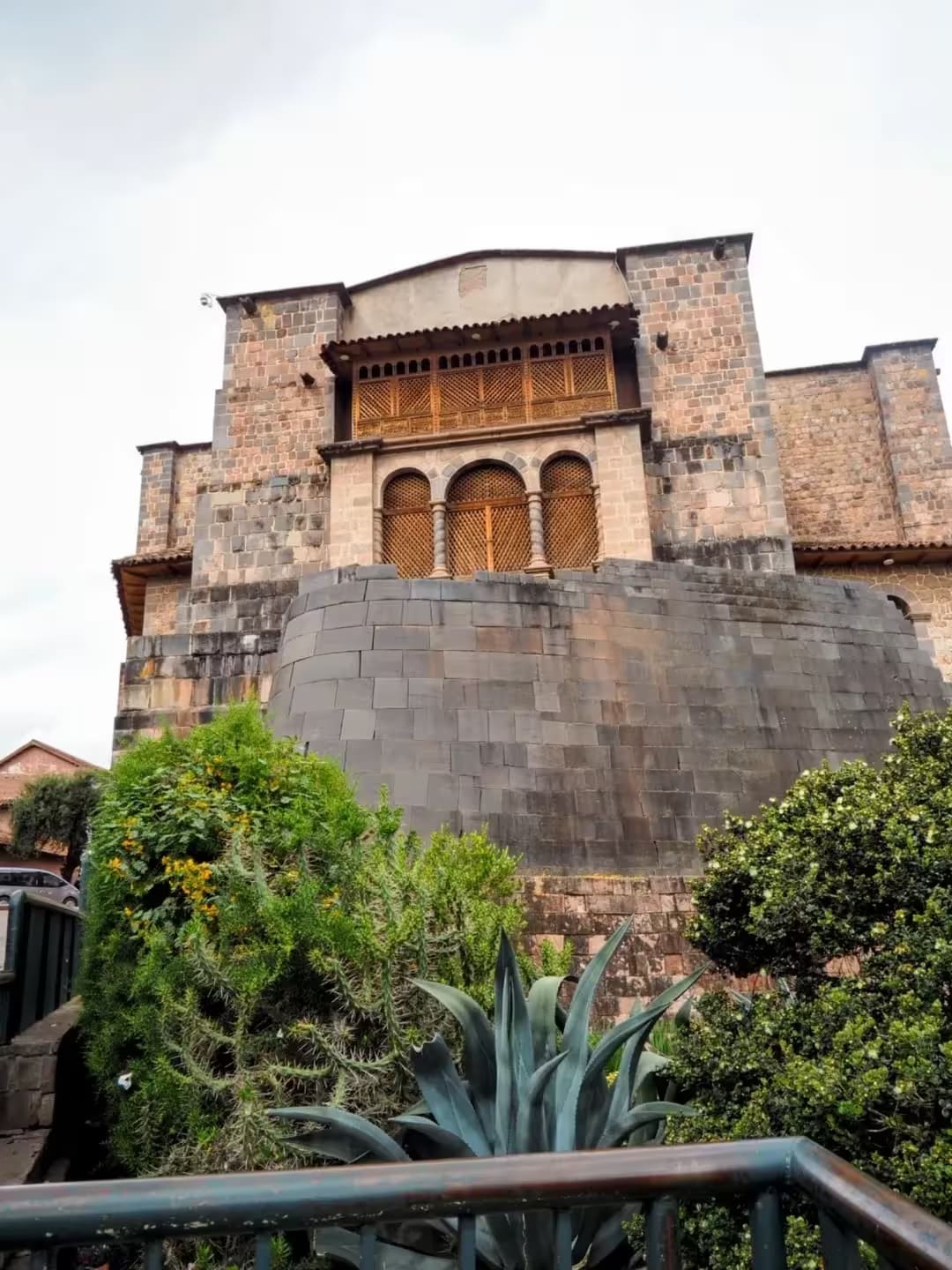
The Dominican church of Santo Domingo in Cusco is not built next to Qoricancha, the Inca Temple of the Sun. It is built on top of it. The walls of the colonial nave rest on Inca foundations. The apse of the church incorporates the curved wall of the Sun Temple's most sacred koricancha — the golden enclosure — as its own exterior surface. The colonial structure used the Inca structure as its base, its platform, and in some sections its walls, in a single building that is simultaneously a fifteenth-century Inca temple and a seventeenth-century Spanish Dominican convent.
This is not a metaphor for colonialism. It is the literal state of a building you can walk through on a Tuesday morning in Cusco.
I grew up here. My parents brought me to Santo Domingo before I understood what I was looking at, and the building looked like a church — which it was, and which I had no reason to see as anything else. What changes, when you learn the full history of the site, is not the building. The building does not change. What changes is the frame you stand in while looking at it.
Qoricancha
Qoricancha translates from Quechua as "golden enclosure." This was the most sacred structure in the Inca empire: the primary Temple of the Sun, dedicated to Inti — the sun deity — and the ceremonial centre from which the Inca administered the spiritual relationship between the imperial capital and the heavens.
The pre-conquest accounts of Qoricancha describe a structure that is difficult to hold in the mind as a physical reality. The interior walls were sheathed in gold sheet — not gilded, not decorated with gold, but covered with hammered gold panels fitted to the stone surface. The great courtyard held a garden in which every element was reproduced in gold and silver: stalks of maize, soil tilled by gold figures, llamas with their puqui, priests in miniature. The mummified remains of previous Inca emperors were kept in Qoricancha, brought out for ceremonies, consulted as oracles, fed chicha through gold tubes.
The accounts were written by the Spanish after 1532, which means they were written after the gold was already gone. When Francisco Pizarro arrived in Cusco, the stripping of Qoricancha for the Atahualpa ransom had already removed most of what the Spanish chroniclers then described from second-hand Inca testimony. What remained, when Pizarro assigned the site to the Dominican order in 1534, was the architecture: the most refined ashlar stonework in the Inca world, stripped of its covering, standing at full height.
The Conquest
The Dominicans began building their convent on the site in 1534. The logical engineering decision — given that the Inca walls were standing, intact, and built to a standard that the sixteenth century could not replicate — was to use them as the foundation for the colonial structure. The nave of the church was oriented over the main courtyard of the temple. The colonial walls were raised on Inca platforms. The apse of the church wrapped around the curved wall of the original koricancha structure — the curved wall that is now visible from the street below, the most photographed element of the contemporary building.
The 1650 earthquake damaged the colonial additions while leaving the Inca foundations intact. The 1950 earthquake did so more dramatically: the colonial superstructure cracked and partially collapsed, while the Inca walls beneath it held. The earthquake exposed sections of Inca stonework that had been plastered over in the colonial period, and the subsequent archaeological survey revealed the full extent of what the Dominicans had built on top of. The repairs to Santo Domingo after 1950 were conducted with the preservation of the visible Inca stonework as a stated priority — the result of the first serious archaeological attention the site had received.
What visitors walk through today is the consequence of all of this: a building in which the seventeenth century and the fifteenth century occupy the same walls, where the junction between them is visible at multiple points as a horizontal seam between two different masonry traditions, and where the architectural quality of the older layer is, in measurable terms, higher than the layer built on top of it.
The Overlay
The most remarkable section of the building is the curved wall of the original koricancha enclosure, visible from Avenida El Sol below. This wall, built of andesite ashlar cut and fitted to the standard that no mortar is visible at the joints, curves continuously across its entire length — a form that the Inca used in their most significant ceremonial structures and that the Spanish builders above it did not attempt to replicate. The colonial apse rises from it as from a plinth.
Inside the complex, the archaeological zones are sequenced to reveal the overlay progressively: the colonial cloister, built over the open courtyard where the emperor's mummies were kept; the remaining koricancha chambers, now roofed at colonial height but with their Inca walls exposed at the lower register; and the apse, where the interior of the curved wall is visible from within the church as the foundation of the high altar.
The claustro — the Dominican cloister — incorporates the most complete surviving section of the Qoricancha's inner ceremonial space. The stone surface here is the original Inca ashlar, unplastered, at the quality of the royal installations: the kind of surface where the joints are so precise that the standard test — a sheet of paper inserted at the seam — produces nothing.
Private access at Qoricancha-Santo Domingo extends beyond the areas open to general visitors: the refectorio — the Dominican refectory above the nave — and the upper claustro walkway that provides the view of the Inca wall junctions from above, where the horizontal seam between the Inca and colonial courses is most legible. These areas are not open without prior arrangement.
What Kada Arranges
The visit runs ninety minutes to two hours, entering at the opening of the general site (typically 8:30 AM) and continuing into the restricted areas with access arranged in advance through our institutional contacts with the Dominican community that still administers the church.
I guide this visit when my schedule permits; when I cannot be present, I arrange it with a historian of colonial religious architecture whose knowledge of the Escuela Cusqueña and the Dominican building project is scholarly rather than general. Jaime Ttito is available for the Quechua-language context — the pre-conquest function of the space, the Inca architectural tradition visible in the lower walls — in coordination with the art-historical reading of the colonial superstructure.
Maximum group size is four to six guests for the restricted-access component. The general site is managed by the Ministerio de Cultura; admission for the public areas is ticketed and does not require advance arrangement. The private areas require prior coordination, which we handle as part of the itinerary planning.
Expert Perspective
"I have a specific memory of the first time I understood what this building was. I was studying art history — I had been reading about the colonial overlays in Cusco in an academic context, in books — and then I came back to Santo Domingo, which I had been to dozens of times, and I stood in the claustro and looked at the seam where the Inca stonework ends and the colonial masonry begins, about two metres above the floor, and I understood for the first time that these were not two things in the same place. They were one building in two time periods, and the earlier one was better built. That seam is the most honest document of the conquest that Cusco contains. It tells you exactly what happened: who built with more skill, who had more power, and how those two things can be different."
— Katherine Cjuiro, Founder, KADA Travel
A Practical Note
Qoricancha-Santo Domingo is in the centre of Cusco, a ten-minute walk from the Plaza de Armas. The visit is most productive in the early morning, when the light enters the claustro from the east and the Inca wall surface is fully illuminated — the joints in the ashlar are visible as fine dark lines against the warm andesite, which is the condition under which the masonry precision can be properly appreciated.
The site is at 3,399 metres — standard Cusco altitude. The acclimatisation timeline that applies to all Cusco activities applies here: a minimum of two full days in the Sacred Valley at 2,800 metres before extended time in Cusco at altitude. The visit itself involves no sustained physical exertion beyond the stair access to the upper claustro.
Photography is permitted in the general areas of the site and in the archaeological zones. The church interior is subject to the photography restrictions of an active religious building; we advise guests on current rules at the time of the visit.
Written by Kada Travel Editorial
Frequently Asked
A significant portion of the Inca walls survive — primarily the lower register of the *koricancha* chambers, the curved exterior wall, and the sections exposed after the 1950 earthquake. The great majority of the gold-sheathed interior decoration was removed in 1532-1534 and does not survive. The stonework itself — which is the primary evidence of the Inca architectural tradition — is in good condition and extensively visible. The garden of gold and silver replicas, the mummified emperors, the full ceremonial programme of the temple exist only in the colonial chronicles. What Qoricancha gives today is the architecture without the contents; what the architecture communicates, even emptied, is substantial.
Yes. The Dominican community maintains the church and the upper sections of the convent as an active religious site. The sections open to visitors — the archaeological zones, the cloister, the nave during non-liturgical hours — are managed in coordination with the Ministerio de Cultura. The restricted areas accessible on the private visit are within the Dominican community's own administration; the access is the result of a longstanding relationship with the community rather than a public programme.
They are complementary and should not be collapsed into a single day for guests who want to read both properly. Qoricancha-Santo Domingo is the most dramatic colonial overlay in Cusco: one religious building constructed on top of another, with the junction between them visible in the walls. The Cathedral is a different kind of encounter: a colonial structure built on an Inca palace, containing four hundred years of painting from the Escuela Cusqueña. Both are half-day visits when done with specialist access; they work well on consecutive days, each with its own guide.
Early morning — 8:30 to 10:00 AM — for the light in the cloister and the lower visitor density. By 10:30 AM, the site fills significantly; the curved exterior wall from Avenida El Sol is best photographed in the late afternoon when the sun comes around to illuminate it from the west. For guests who want both the interior reading and the exterior photograph in optimal light, a short return to the street at 5:00 PM adds a productive final element to the day.
Design Your Journey
Design your bespoke Peru journey
We talk. We listen. Then we design an itinerary that belongs only to you.
Start Planning