Unfolded· 7 min read·9 July 2026
The Workshop District
San Blas — the colonial artisan quarter above the Plaza de Armas, where the workshops that built Cusco's churches are still open, and a conversation with the descendants of the guild masters who made them changes what the city looks like.
By Kada Travel Editorial
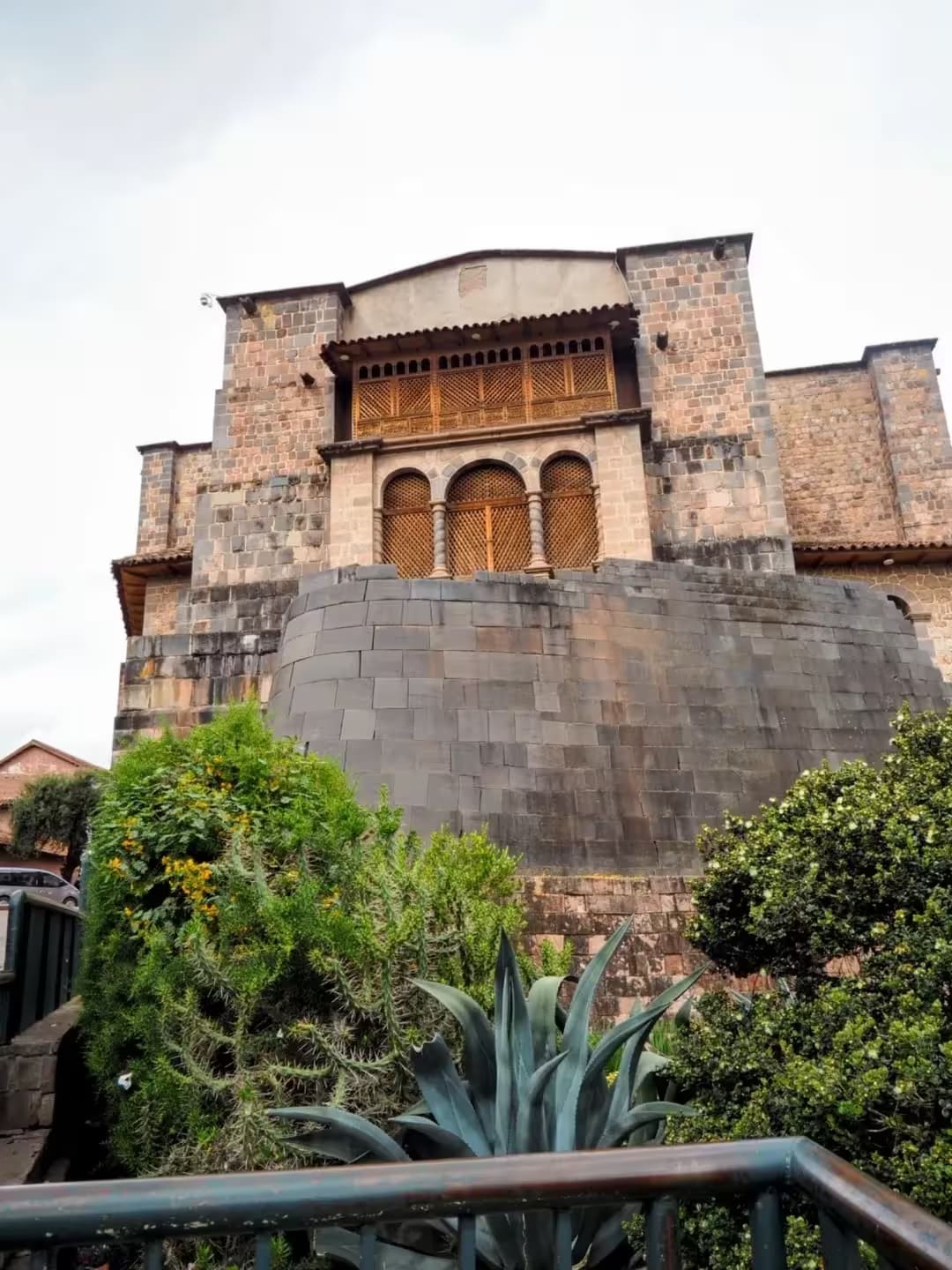
San Blas is the neighbourhood above the Plaza de Armas where the craft workers who built colonial Cusco lived — and where, in a number of workshops that have been in the same family for multiple generations, they still work. The street pattern is unchanged from the colonial period: steep cobbled alleys that climb the hillside in switchbacks, the occasional stairway connecting two street levels, the neighbourhood centred on its small plaza and the church that is, by most accounts, the finest example of Andean Baroque woodcarving in Peru.
The district's colonial character is genuine rather than preserved. San Blas is not a heritage zone maintained for aesthetic continuity; it is a neighbourhood that looks the way it looks because the families who live in it have not substantially altered its physical fabric. The workshops on the alleys produce work sold in Lima, in collections abroad, in the churches of the Cusco region — and some of those workshops are run by the third or fourth generation of a family that traces its craft lineage directly to the colonial guild system that organised skilled labour in Cusco from the sixteenth century onward.
The District
The Spanish colonial administration in Cusco organised skilled craft workers — maestros of carpentry, masonry, painting, silverwork, weaving, and the ceramic trades — into guild structures that determined where they lived, what they produced, and for whom. San Blas was the designated district for the artisan guilds whose work served the Catholic building programme: the churches, the convents, the religious institutions that the colonial government was constructing across the city and the surrounding valley.
The logic was both administrative and practical. Concentrating skilled craft workers in a single neighbourhood made them accessible to the religious commissions that required their labour, and it created the conditions for apprenticeship — the transmission of technique across generations — within a geographic and social community. A master woodcarver whose workshop was on Calle Suecia could apprentice his son to the silversmith two alleys away; the technical knowledge of both trades circulated within a community small enough that it accumulated.
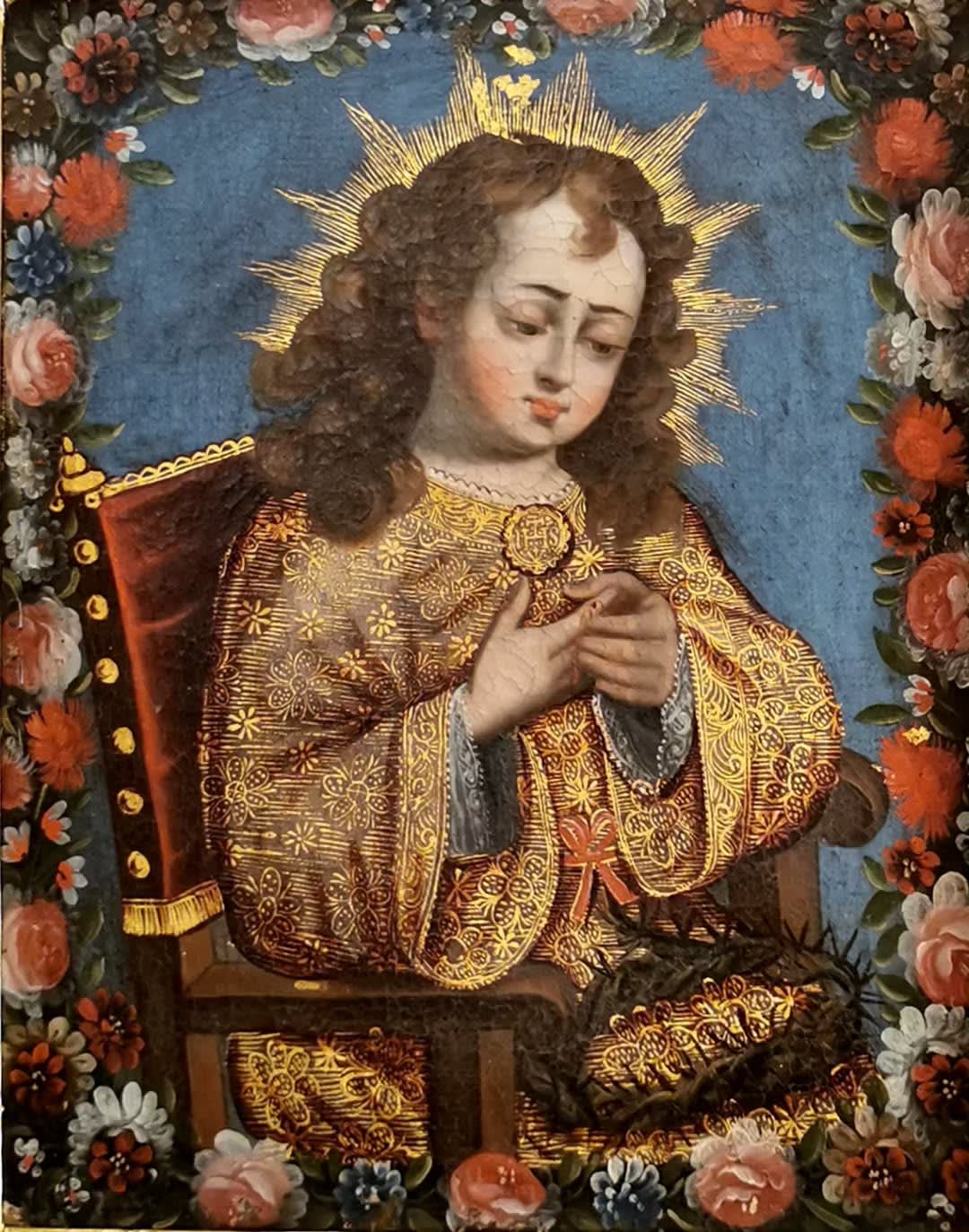
What that accumulation produced was the Escuela Cusqueña — the distinctive school of art that combined Inca, European, and Flemish influences into a visual tradition unlike anything produced in Europe or anywhere else in the Americas. The paintings in the Cathedral, the carved pulpits in the valley churches, the silver devotional objects in the sacristies: all of these came from craftsmen who lived and worked in this neighbourhood, many of whose descendants still do.
The Church
The church of San Blas is small — the smallest of Cusco's colonial churches — and contains what many historians of colonial religious art consider the most extraordinary single object produced by the Andean artisan tradition: the carved cedar pulpit.
The pulpit occupies the right side of the nave. It was carved from a single trunk of cedar — the entire structure, including its base, body, and canopy, cut from one tree. The carving is in relief, running from base to canopy across every surface: figures of saints, angels, and ecclesiastical scenes worked in a detail that requires a magnifying lens to fully read. The style is Andean Baroque — the same hybridised visual language as the Cusqueña paintings, where European iconographic conventions are executed with indigenous faces, indigenous plants and animals, and a relationship to ornamental surface that belongs to the Andean aesthetic tradition rather than the European one.
At the base of the pulpit, on the underside of the carved column that supports the entire structure, is a skull. Its exact identity has been debated in the art-historical literature for more than a century. One tradition holds that it is the skull of the pulpit's master carver — that the craftsman requested burial at the base of his greatest work. Another holds that it is the skull of a heretic, placed at the base of the pulpit to be trampled symbolically by the feet of the preacher above. The church authorities have not made a final determination, and the ambiguity is itself part of the object's history.
The Workshops
The working visits Kada arranges in San Blas are to workshops in active production — not to studios that have converted to gallery format or to demonstrations staged for tourist groups. The distinction matters, and it is increasingly difficult to find the former as the neighbourhood's commercial character has shifted toward the tourist economy.
The silversmiths we visit work on commission: pieces for Lima galleries, devotional objects for private clients, contemporary jewellery in designs that reference the pre-Columbian metalwork tradition without replicating it. The technique they use — repujado, the hammering of silver sheet over a form, combined with cincelado, the chasing of detail into the surface — is the same technique their grandfathers used, transmitted through apprenticeship rather than through a school curriculum.
The retablo makers in the district produce the portable altarpiece tradition that originated in the colonial period: a hinged box, opened to reveal a three-dimensional scene in painted clay and wood, combining Catholic iconographic subjects with Andean figures, animals, and landscape. The retablo began as a portable altar for itinerant priests working highland communities; it evolved in the hands of craftsmen like the Jiménez family of Ayacucho and their counterparts in the Cusco tradition into a narrative art form of considerable sophistication. The retablistas in San Blas still make them — small pieces for the tourist market and large commissioned works for institutions — and the conversation with the craftsman about what goes into a specific retablo and why is an education in the continuity of a visual tradition that the art market is beginning to take seriously.
The Conversation
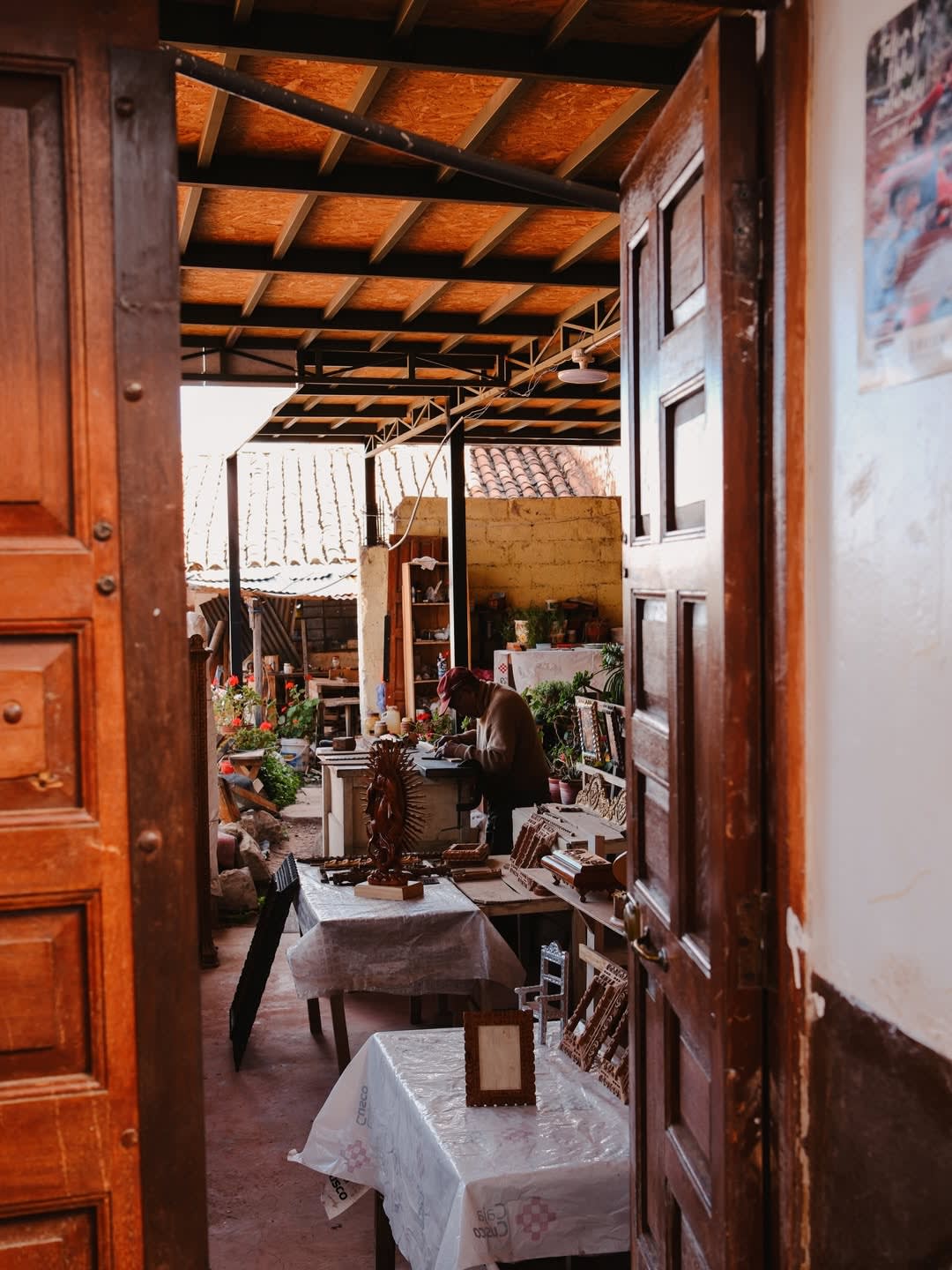
The master craftsman we bring guests to in San Blas is a woodcarver whose family has worked in the neighbourhood for four generations. His great-grandfather worked on the restoration of one of the valley churches in the early twentieth century; his grandfather was a tallador de retablos; his father carved architectural woodwork for religious institutions in Cusco. He carves furniture and devotional objects for clients in Lima and abroad, and he teaches the technique to two apprentices in his workshop.
The conversation is not a demonstration and not a sales session. It begins with the workshop itself — the tools, the wood selection, the current commissions — and moves into the family history of the craft. He is candid about what has changed: the wood supply is different, the client base has changed, the apprenticeship model is harder to sustain when young people in the neighbourhood have other options. He is equally candid about what has not changed: the technical standard he learned from his father, and the standard he requires of his apprentices, is the same standard the church commissions required of his great-grandfather. It is the same because anything less would be a different trade.
What Kada Arranges
The San Blas morning runs two to three hours, beginning with the church (including specific attention to the pulpit) and continuing through the neighbourhood to the workshops. The sequence is: the church at opening (7:30 to 8:00 AM, before the tour groups begin), the neighbourhood walk with attention to the architectural detail of the colonial alley system, the silversmith workshop, and the woodcarver's conversation.
I lead this visit personally when my schedule permits, because San Blas is where I grew up and the craftsmen we visit are people I have known since I was a child. When I cannot be present, the visit is guided by the art historian we work with for the Cathedral visit — the two visits form a natural pair, and many guests do them in sequence.
The workshops are private businesses in active production. We visit with advance arrangement and in groups no larger than four; the woodcarver's workshop is small, and more than four people in it changes the quality of the conversation. We ask that guests not photograph the craftsmen without explicit consent, and that they approach the work with the attention they would bring to a studio visit rather than a market.
Expert Perspective
"What I think about when I walk through San Blas is transmission. Every object in this neighbourhood — the pulpit in the church, the silver on the workbench, the retablos in the boxes on the shelf — exists because someone showed someone else how to make it. The colonial guild system was coercive in ways I don't want to minimise, but one thing it did was create the conditions for a very specific kind of knowledge to survive five centuries. The craftsman whose grandfather carved the church porch knows things about cedar that are not in any manual, because the knowledge was passed through hands, not through text. When our guests sit in that workshop, they are in the presence of a transmission that is still running. That is different from being in a museum."
— Katherine Cjuiro, Founder, KADA Travel
A Practical Note
San Blas is reached from the Plaza de Armas by a steep cobbled climb of approximately ten minutes — 3,399 metres at the base, slightly above at the neighbourhood's upper alleys. For guests with mobility concerns, the climb from the plaza can be replaced by vehicle access to the neighbourhood's upper entrance; all of the workshop visits are accessible from that point without significant gradient.
The neighbourhood is busiest between 10:00 AM and 2:00 PM on weekdays, and throughout Sunday mornings when the craft market operates in the central plaza. Our visits are timed for the pre-rush window: the church before the tour groups arrive, the workshops before the mid-morning pedestrian volume reduces the quality of the conversation.
Photography in the church is subject to the church's own regulations, which vary by season and have restricted certain areas in the past; we advise guests on current conditions at the time of the visit.
Written by Kada Travel Editorial
Frequently Asked
The craft market in the San Blas plaza operates primarily on Sundays and is a useful complement to the workshop visits — but a different kind of encounter. The market sells finished goods across a wide quality range; the workshops provide the context for understanding how those goods are made and what distinguishes craft from production. For guests who want to purchase work from the artisans we visit, we facilitate direct commissions where the craftsmen are willing — which tends to produce better work than the market stock and provides an income more directly to the maker.
The *Escuela Cusqueña* is the school of painting and craft that developed in Cusco from the late sixteenth century onward, combining European iconographic conventions with Andean visual sensibilities — indigenous faces in biblical scenes, local flora and fauna in religious backgrounds, a relationship to gold and surface decoration that derives from the pre-Hispanic metalwork tradition. It is most visible in the Cathedral's painting collection, but its influence runs through the entire San Blas craft tradition: the *retablos*, the carved altarpieces, and the silverwork in the neighbourhood's workshops all operate within a visual language developed in this district over four centuries.
With sufficient lead time, yes. The silversmith accepts commissions with a minimum of four to six weeks for significant pieces; the woodcarver's timeline depends on complexity and his current workload. For guests who want to commission something before leaving Cusco, we advise on what is possible within the visit window. For guests who want something more substantial, we can manage the commission remotely after departure — pieces are shipped to any international destination by the craftsmen's own established arrangements.
It works as a standalone morning for guests interested in the craft tradition specifically. It pairs naturally with the Cathedral visit as a two-day sequence: the *Escuela Cusqueña* argument encountered first in the paintings (Cathedral, day one), then in the craft workshops where that visual language is still being produced (San Blas, day two). The sequence in that direction — Cathedral first, San Blas second — gives the workshop visit the context that makes it most legible. The reverse order also works for guests who prefer to encounter the craft tradition before the formal art-historical argument.
Design Your Journey
Design your bespoke Peru journey
We talk. We listen. Then we design an itinerary that belongs only to you.
Start Planning