Destinations· 9 min read·21 November 2024
The Pisco Route: Private Visits to the Bodegas of Ica
Tacama, Caravedo, Vista Alegre and Tres Generaciones — the geography of Peru's national spirit, in curated visits.
By Kada Travel Editorial
The Ica valley begins where the desert ends. Travellers arriving on the southern Pan-American highway from Lima see, for three and a half hours, sand of a single colour. Then, without transition, the road enters a green valley of vineyards, palms, ostrich farms and Republican-era haciendas with bell towers. The difference is water: the Ica river, born in the cordillera, descends to the desert and has allowed, since the sixteenth century, the only consistent winegrowing region in Peru.
From that cultivation came pisco. A spirit distilled from uva pisquera —not from fermented must, like cognac, but from the juice of fresh grape distilled in a copper alembic. The name comes from the port of Pisco, from which it was exported in clay vessels to the viceregal court. The denomination of origin, defended by Peru since 1991 (with permanent dispute against Chile), requires six specific grape varieties, eight authorised regions and a rigorously codified distillation process.
The four bodegas that matter
The Ica valley concentrates the four bodegas with private visits we recommend to our travellers. Each represents a distinct version of the pisco tradition, and the four-bodega route —two per day, over two days— gives a complete picture of the Peruvian pisco world.
Tacama
Tacama is the oldest vineyard in the Americas. Founded in 1540 by the Olaechea family with vines brought from the Canary Islands, it has produced pisco and wine for five hundred years under the same family. The hacienda —a colonial-Republican building with seventeenth-century chapel and pre-conquest Inca pyramids on its lands— combines the historical visit (the oldest vineyard in the Americas) with the enological one (four pisco styles, two whites, three reds). The Bandolero restaurant, inside the hacienda, serves traditional Ica cooking with valley produce. We recommend lunch here on day one.
La Caravedo
Hacienda La Caravedo, founded in 1684, is the maker of Pisco Portón —the Peruvian pisco most recognised internationally, founded by Johnny Schuler. The ninety-minute guided visit covers the original copper alembic (the oldest in continuous use in the Americas), the quebranta vineyard —the flagship grape— and the ageing cellar. The final tasting compares pure quebranta pisco with acholado and mosto verde. It is the most educational of the four: if only one bodega is done, this is the one we recommend.
Vista Alegre
Vista Alegre, founded in 1857, is the most visual bodega: hectares of flat vineyards against the desert, adobe buildings painted red and white, alembics in a high-roofed open hall. Production is mass —it is the largest commercial bodega in Peru— but the private visit, outside public hours, gives access to the solera cellar where the special piscos age. The tasting takes place in a room with a balcony over the vineyards. It is the option for those wanting industrial scale with personalised service.
Tres Generaciones
Tres Generaciones is the artisanal bodega: the Carrasco family produces only four thousand cases a year, all in copper alembics and all sold directly to premium Peruvian restaurants. The visit is intimate —usually with one of the Carrasco brothers as host—, no groups, with a tasting of four varieties in the family dining room. It is the closest version to "artisanal pisco" that survives in Ica. Recommended for the traveller curious about the craft rather than the brand.

The grapes and the styles
Pisco is made from six authorised grapes, divided into aromatic and non-aromatic. The aromatic are italia, torontel, moscatel and albilla; the non-aromatic, quebranta and negra criolla. Each variety is distilled in its own alembic and produces a distinct profile.
Pure pisco is made from a single grape. Quebranta gives a round, soft pisco, ideal for pisco sour. Italia produces a floral, more perfumed one, better for sipping neat. Torontel is the most aromatic, almost jasmine. Acholado blends several grapes —the whisky equivalent— usually with italia and quebranta as a base. Mosto verde is the most coveted: the must is distilled before fermentation finishes, requiring more grape per bottle (up to double) and producing a silkier, more expensive pisco.
In a private tasting, we always recommend comparing three versions: a pure quebranta, an acholado, a mosto verde. The difference orders the visitor's mind for everything else in the valley.
Where to sleep, what to eat
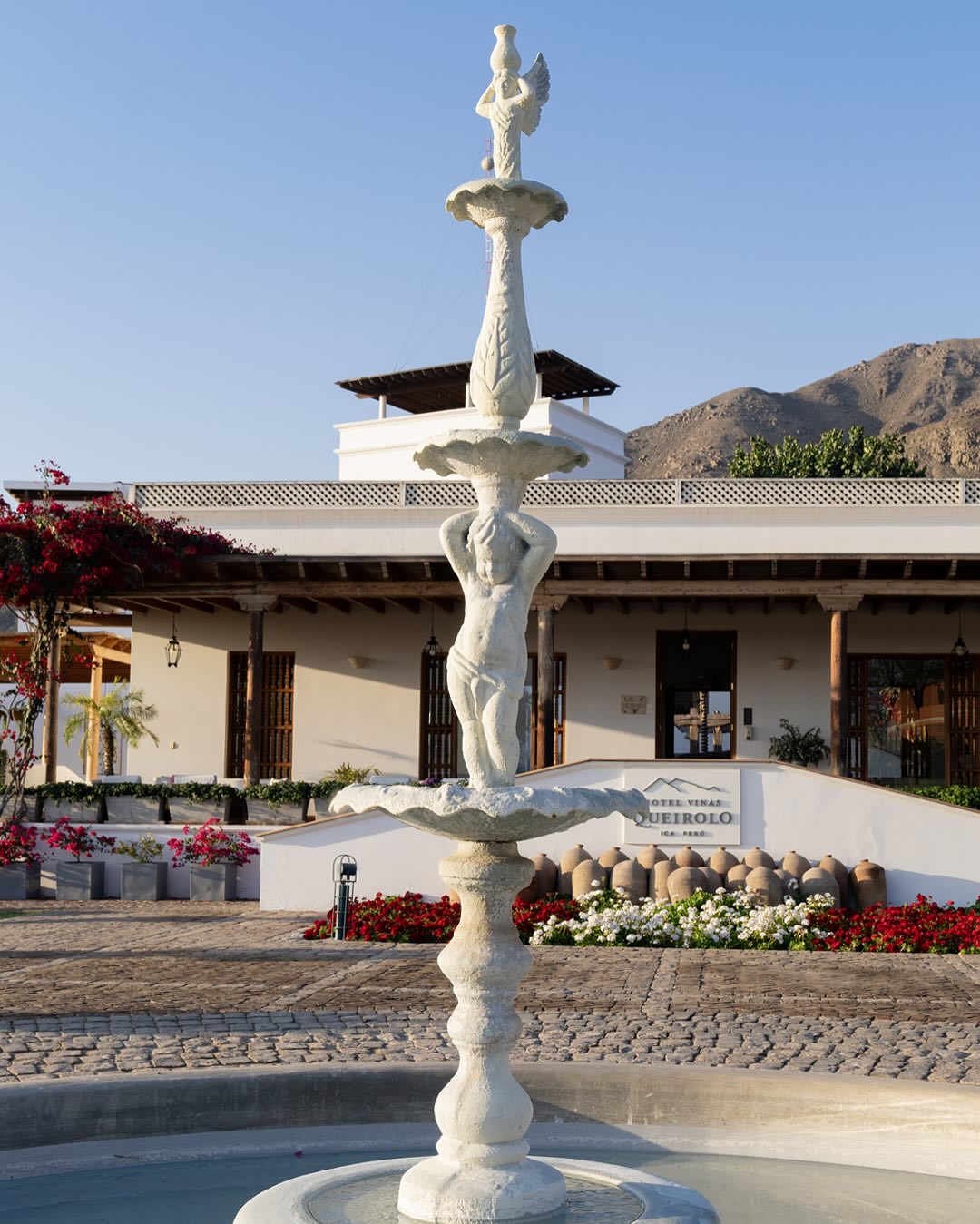
For the night in Ica we recommend two options, depending on mood. Hacienda La Caravedo has fifteen rooms inside the vineyard, breakfast served in the manor gallery and direct access to the cellars. It is the more romantic, more intimate option. Hotel Las Dunas, in Huacachina, is the option to combine pisco with desert experience: contemporary rooms, pool, and buggy and sandboarding tours over the dunes (the highest in Peru: up to one hundred metres).
For lunches outside the bodegas, two Ica restaurants are worth knowing: La Olla de Juanita, in Subtanjalla, serves Peruvian Creole cooking in a Republican hacienda —shrimp chowder is the specialty—; and Restaurante El Catador in San Juan Bautista, inside a small artisanal bodega, serves a fixed-menu lunch with pisco tasting included.
Pisco is not rum, not cognac, not brandy. It is fresh-grape distillate, no added water, no required wood ageing. It is the only spirit in the world made this way.
Kada Travel
How to combine it with Paracas
The natural route is: Lima to Paracas (3.5 hours), two nights in Paracas with Ballestas and Reserve, one hour to Ica. One night in Ica with two bodegas on day one, two more on day two morning, lunch at Tacama or La Caravedo, return to Lima by afternoon. Total five days from Lima.
To combine with Nazca, add a night in Nazca after Ica (two hours by car). The Nazca overflight is shorter and cheaper than from Pisco. Nazca to Lima is then seven hours by car: we recommend splitting the return with a Paracas stop or taking a domestic flight from the Pisco airfield if logistics allow.
One final note: pisco is exported more and more, but the pisco tasted in Ica —at its origin, with the person who made it, with the grape visible from the dining-room window— does not reproduce in another geography. That is why the pisco route is a destination rather than a product. As with all things in Peru, what matters is not what you take but what stays.
Written by Kada Travel Editorial
Frequently Asked
Two at most. Each private visit with tasting lasts ninety minutes to two hours. Three bodegas in one day is physically possible but by the fourth tasting they feel the same. Better two in depth.
Group visits, yes, without booking. Private visits with curated tastings and access to cellars require booking two to three weeks ahead. To visit outside public hours (which is what we recommend), booking is mandatory.
They are different products with the same name. Peruvian pisco is distilled from fresh grape, no water added, no mandatory ageing. Chilean allows wood ageing and water addition. They are legally different drinks; the name dispute is commercial.
For travellers with children or combining the pisco route with desert experience, yes. The dunes are the tallest on the Peruvian coast (up to one hundred metres), the oasis is scenographic, and sunset from the big dune is worth the climb. For adult travellers uninterested in sandboarding, an hour suffices.
Yes, in limited quantity. Tacama produces whites and reds that have won South American awards over the last decade; Tabernero too. Production is small and most stays domestic. Not comparable to Argentina or Chile in scale, but enological curiosity is well served.
Like any alcoholic liquid over 100ml, it must travel in checked luggage. Sealed bottles, in the main suitcase. For US entry, up to one litre tax-free per person; larger amounts require declaration. Bodegas wrap bottles in bubble wrap and sturdy packaging.
Design Your Journey
Design your bespoke Peru journey
We talk. We listen. Then we design an itinerary that belongs only to you.
Start Planning