Unfolded· 8 min read·18 July 2026
The Pass Above the Clouds
The Salkantay — four days at altitude through the most demanding of the classic Machu Picchu approaches, with a mountain infrastructure built for the way serious travelers move: a field chef, a mule team, supplemental oxygen at the high camp, and a final morning above the ruins.
By Kada Travel Editorial
The Salkantay Trek is not the Inca Trail. The distinction matters for anyone deciding between them. The Inca Trail is an archaeological route — its interest is in what the Inca built along it: the small ruins and waystations that line the path from Km 82 to the Sun Gate, accumulated over five centuries of use as a ceremonial and administrative road. The Salkantay is a mountain route. Its interest is in what the Andes built: the 6,271-metre peak of Salkantay itself, the glaciated saddle at 4,600 metres that the route crosses, the descent from alpine tundra through cloud forest to the subtropical air of the Aguas Calientes approach. One is a walk through history. The other is a walk through a mountain.
Both end at Machu Picchu. The question of which to take depends entirely on the traveler.
For guests who are physically prepared for altitude and who want the Machu Picchu arrival to be earned rather than delivered — who want four days of changing terrain, changing temperature, changing ecology, and one morning at 4,600 metres where the mountain is what there is to be understood — Kada arranges the Salkantay as a full expedition programme. The mountain infrastructure is built around what that kind of travel actually requires: a field chef who works four campsites instead of three restaurants, a mule team that carries the weight the altitude should not, supplemental oxygen at the high camp for acclimatisation management, and a guide whose knowledge of the route is in his legs rather than his notes.
The Route
The standard Salkantay Trek departs from Mollepata — a village in the Limatambo district southwest of Cusco, at approximately 2,800 metres — and crosses the Salkantay pass at 4,600 metres on the second day before descending through the Salkantay valley toward Santa Teresa and the final approach to Aguas Calientes. The total walking distance is approximately seventy kilometres over four days. The route is not technically demanding — it requires fitness and acclimatisation rather than mountaineering skill — but the second day, crossing the pass, is a genuine high-altitude effort and should be treated as one.
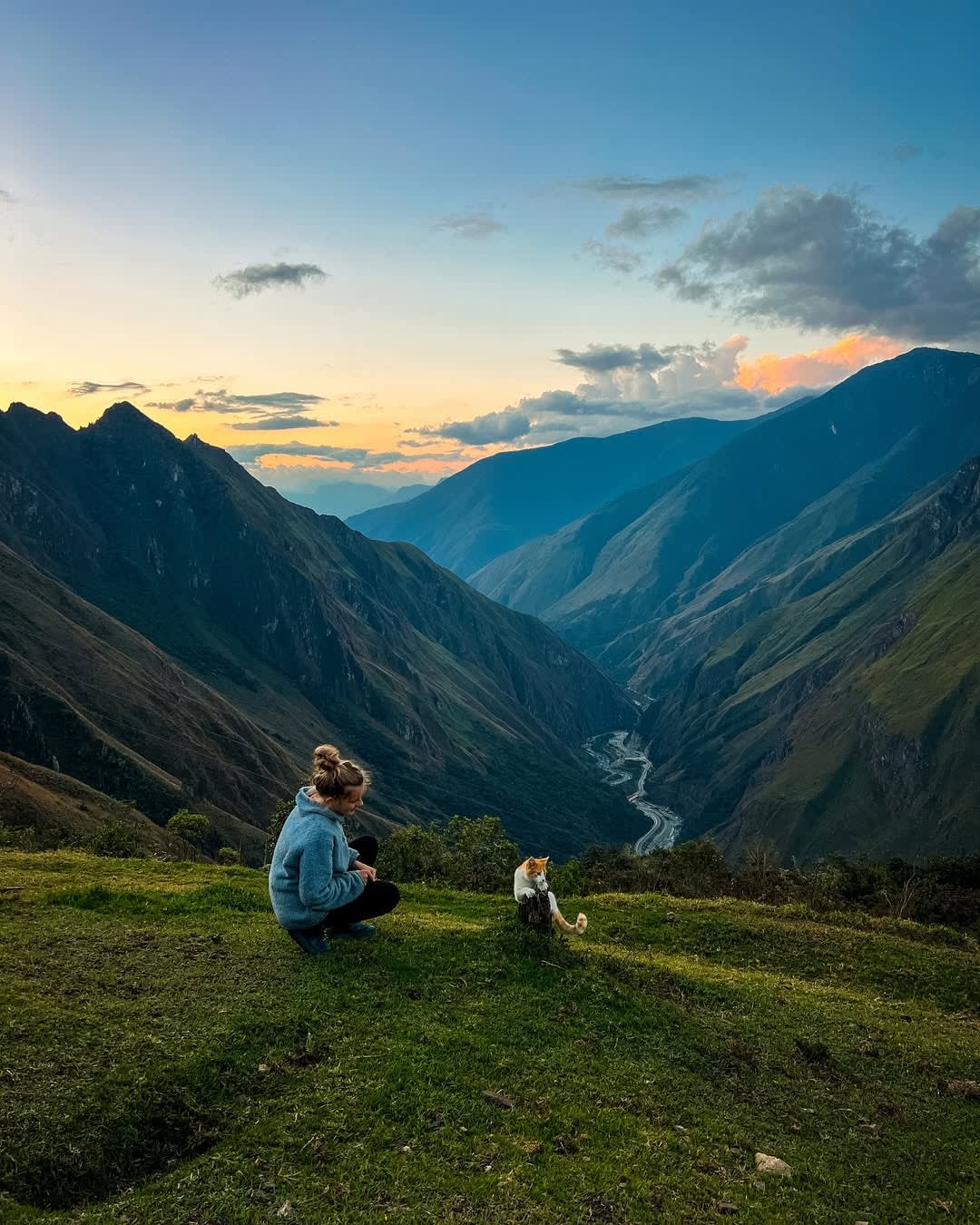
The ecological range the route covers in four days is the reason serious mountain travelers choose it over alternatives. The first day climbs from highland puna — the high grassland above the tree line, treeless, windswept, the domain of alpaca and the spectacled bear's range — to the high camp below the pass. The second day crosses the pass itself: the glaciated saddle directly beneath the Salkantay peak, where the landscape is entirely mineral — rock, ice, scree, snow — and the air is at its thinnest. The descent from the pass into the Salkantay valley begins the transition: the vegetation returns in stages, the temperature climbs, the air thickens, and by mid-afternoon the route enters the upper cloud forest belt. The third day is cloud forest — a material change in environment, from open cold to enclosed warm, the smell of decomposing vegetation replacing the mineral cold of the high camp. The fourth day brings the subtropical river valley below Santa Teresa, then the ascent to Aguas Calientes and the following morning's Machu Picchu entrance.
The route can be walked in four full days or extended to five with a slower pace at the cloud forest transition — the option Kada recommends for guests who have not trekked at this altitude before, or who want the cloud forest descent to be something other than a transit.
The Mountain Infrastructure
The logistical architecture of a well-executed Salkantay Trek is not visible to the guest until it is absent. The mule team — six to eight animals depending on group size, managed by an arriero from the local Mollepata community — carries the camp equipment, the food supplies, the emergency oxygen, and the personal luggage that guests should not be carrying over a 4,600-metre pass. This is not a comfort provision. At 4,600 metres, the body's resources should be directed at breathing and movement, not at bearing a pack weight that the altitude multiplies. The mule team arrives at each campsite before the trekking group; the camp is established when the group arrives.
The field chef prepares meals at four campsites across the four walking days. The significance of this is not the meal itself — though the quality is materially different from the group cooking arrangements of standard trek programmes — but what the field kitchen does to the experience of arriving at camp. After a day of altitude hiking, the first thing a trekking party needs is hot liquid, followed by food that is edible rather than functional. The field chef provides both, and the resulting camp evenings — the group eating around a table in a tent at 4,200 metres with the Salkantay peak above — are a distinct quality of experience.
Supplemental oxygen is carried at the high camp. This is not an emergency provision; it is a standard acclimatisation tool for the nights at and above 4,000 metres, where sleep quality degrades and the body's rest is compromised by reduced oxygen partial pressure. The guide monitors the group through the high-altitude section and advises on supplemental use based on observed physiological response. Guests who have come directly from Cusco city at 3,400 metres without prior altitude preparation should not attempt the pass on day two; Kada designs the pre-trek schedule with sufficient acclimatisation time in the Cusco region to make the high-camp nights productive rather than purely punishing.
The Pass
The Salkantay pass crossing — the second morning, departing the high camp before dawn to reach the saddle at first light — is the expedition's defining event. The approach to the pass in pre-dawn cold, with headlamps and the glaciated peak of Salkantay visible above, is one of the more specific mountain experiences available in the Peruvian Andes. At the saddle itself, the world on both sides is visible: the valley behind, the Salkantay valley ahead, the peaks of the Cordillera Vilcabamba to the north. The offering of coca leaves to Apu Salkantay — the mountain deity of the Quechua tradition, whose name the peak carries — is not a tourist ceremony. It is what the arriero does every time he crosses, because the mountain is what it is regardless of who is watching, and the appropriate acknowledgment is the appropriate acknowledgment.
The descent from the pass into the Salkantay valley is physically demanding in a different register from the ascent — steep, loose in sections, the legs accumulating the descent's specific fatigue — but the altitude drops quickly and the air thickens within an hour. By the time the route enters the cloud forest, the body has already begun to recover from the pass, and the arrival at the lower camp in the early afternoon has the quality of return.
What Kada Arranges
The Salkantay programme is built around a specific departure from Cusco on day one — typically 5:00 to 6:00 AM to reach Mollepata by mid-morning and begin the first day's ascent with enough daylight for the camp approach. Kada designs the two days preceding the trek departure as preparation: a day at Sacred Valley altitude (2,800 metres) and a final day in Cusco at rest, with no demanding activities. This is the minimum responsible acclimatisation architecture for a 4,600-metre pass on day two of the trek; guests who want to reduce the risk further should plan for an additional acclimatisation day.
The guide who leads the Salkantay programme is a high-altitude specialist. The route does not require mountain guide certification — it is a trekking route, not a technical climb — but the knowledge required to manage a group safely through the high-altitude section, to monitor acclimatisation, to make the call on turning back when the weather changes on the pass, is the knowledge of a person who has crossed this specific mountain many times, in many conditions. Kada does not assign general guides to the Salkantay programme.
Group size: a maximum of eight. The mule team, the field chef, and the guide infrastructure is designed for groups up to this size; larger groups change the dynamics of the camp and the pace of the high-altitude section in ways that compromise the experience for everyone.
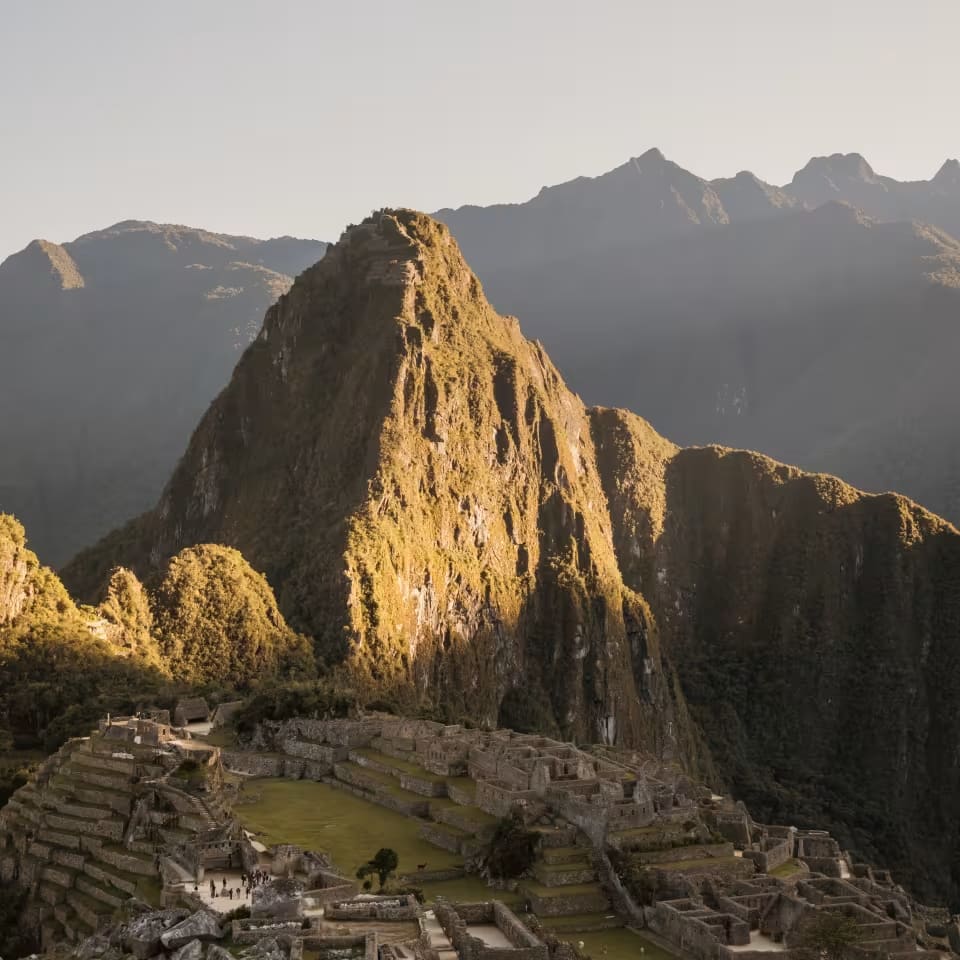
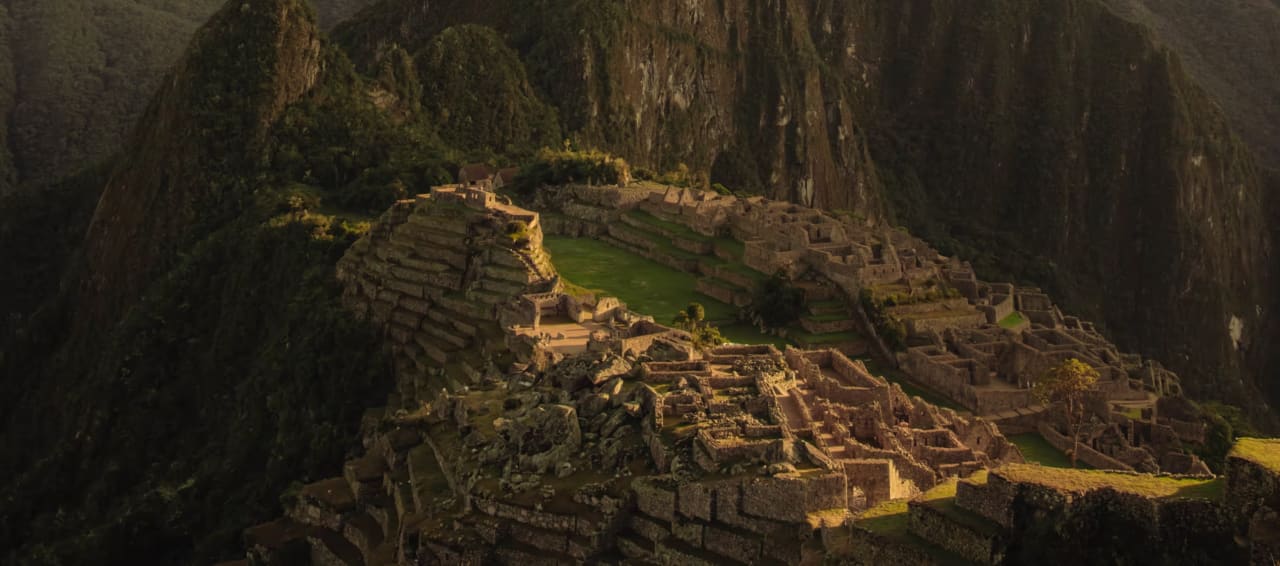
Machu Picchu entrance is arranged for the morning of day five — the day after arriving in Aguas Calientes — for the early first entry. The Machu Picchu visit itself is designed separately from the trek and runs for two to three hours in the morning before the group returns to Aguas Calientes for the afternoon train to Cusco. The connection between the trek's four days and the final morning at the ruins is the point: arriving at Machu Picchu from above, having crossed the mountain that is visible from the citadel's western edge, is a different arrival than the train from Poroy.
Expert Perspective
"The guests who get the most from the Salkantay are the ones who understand, before they start, that the mountain is what the experience is about — not Machu Picchu. The ruins are at the end, and they are extraordinary, but they are the conclusion of a four-day physical argument with the Andes, not the point of it. When we cross the pass at dawn on day two, with Salkantay directly above us and the cold working through every layer, I always find myself watching the guests rather than the mountain, because the moment when they understand that they earned the view is the same moment they understand why this route is worth walking. Machu Picchu has been there for five hundred years and will be there for five hundred more. The pass is different every time."
— Jaime Ttito, Head of Guides & Cultural Interpreter, KADA Travel
A Practical Note
The Salkantay Trek requires a minimum fitness baseline. Guests should be comfortable hiking eight to twelve kilometres per day at altitude over consecutive days, with elevation gain of 800 to 1,200 metres on the uphill days. Prior trekking experience at altitude is strongly recommended; guests who have not walked at above 3,000 metres before should discuss the programme with us at the planning stage rather than committing to it without that conversation.
The Salkantay operates year-round, but the dry season (May through October) is the standard window for high-altitude trekking in this range. The pass in the wet season — November through April — is manageable on most days, but the unpredictability of afternoon weather in the December-to-March peak wet months requires a different contingency architecture. Kada runs the wet season programme for guests who cannot travel in the dry season; the planning conversation for wet season dates is more detailed.
Minimum group size: two. The mule and field chef infrastructure scales down for two guests; the Salkantay as a private expedition for a couple is among the most considered versions of the route, with the guide's attention undivided.
Written by Kada Travel Editorial
Frequently Asked
The routes offer fundamentally different experiences. The Inca Trail is an archaeological route: the primary interest is the series of Inca waystations and ceremonial sites along the path, culminating in the Sun Gate above the ruins. The Salkantay is a mountain route: the primary interest is the Andean ecology and the 4,600-metre pass of one of the range's most significant peaks. Both routes require similar fitness and acclimatisation. For guests whose primary interest is the mountain experience rather than the archaeological route, the Salkantay is the natural choice; for guests whose interest is in the Inca infrastructure that produced Machu Picchu, the Inca Trail provides that context more directly.
A minimum of three full days at Sacred Valley altitude (approximately 2,800 metres) before the trek departure is required. The pass on day two sits at 4,600 metres — 800 metres above Cusco city and 1,800 metres above the valley floor. A body that has not had time to adapt to valley altitude will not perform well at the pass; the combination of physical exertion and reduced oxygen partial pressure at that elevation produces a genuine medical risk for guests who arrive unprepared. We enforce this requirement in the itinerary design rather than leaving it to guest discretion.
The guide's judgment is final on the high-altitude section. If weather on the pass creates conditions the guide judges unsafe — the pass is exposed and wind conditions can change within an hour — the group descends to the high camp and waits. If a guest develops serious altitude sickness symptoms at the high camp or on the pass approach, the guide's protocol is immediate descent, supplemental oxygen, and evacuation. We carry full emergency communication equipment and the guide has the route to evacuation points committed. We do not discuss this scenario at length at the planning stage because it creates anxiety that the statistics do not warrant; we do discuss it in the trek briefing because it is the guide's working protocol and guests should understand it.
Yes. A three-day programme omits the first night at the lower highland camp and begins the pass approach from a vehicle drop at 3,600 metres, rejoining the standard route at the high camp. The pass crossing remains on day one of the walk rather than day two, which increases the acclimatisation pressure. We recommend the three-day option only for guests who have trekked at altitude recently and who are confident of their physiological response above 4,000 metres. The four-day programme is the standard for a reason.
Design Your Journey
Design your bespoke Peru journey
We talk. We listen. Then we design an itinerary that belongs only to you.
Start Planning