Unfolded· 7 min read·9 July 2026
The Stone the City Is Made Of
A morning in the active sillar quarries outside Arequipa — at the point of extraction, with the cantero who cuts the blocks by hand, in the landscape that produced every building in the historic centre.
By Kada Travel Editorial
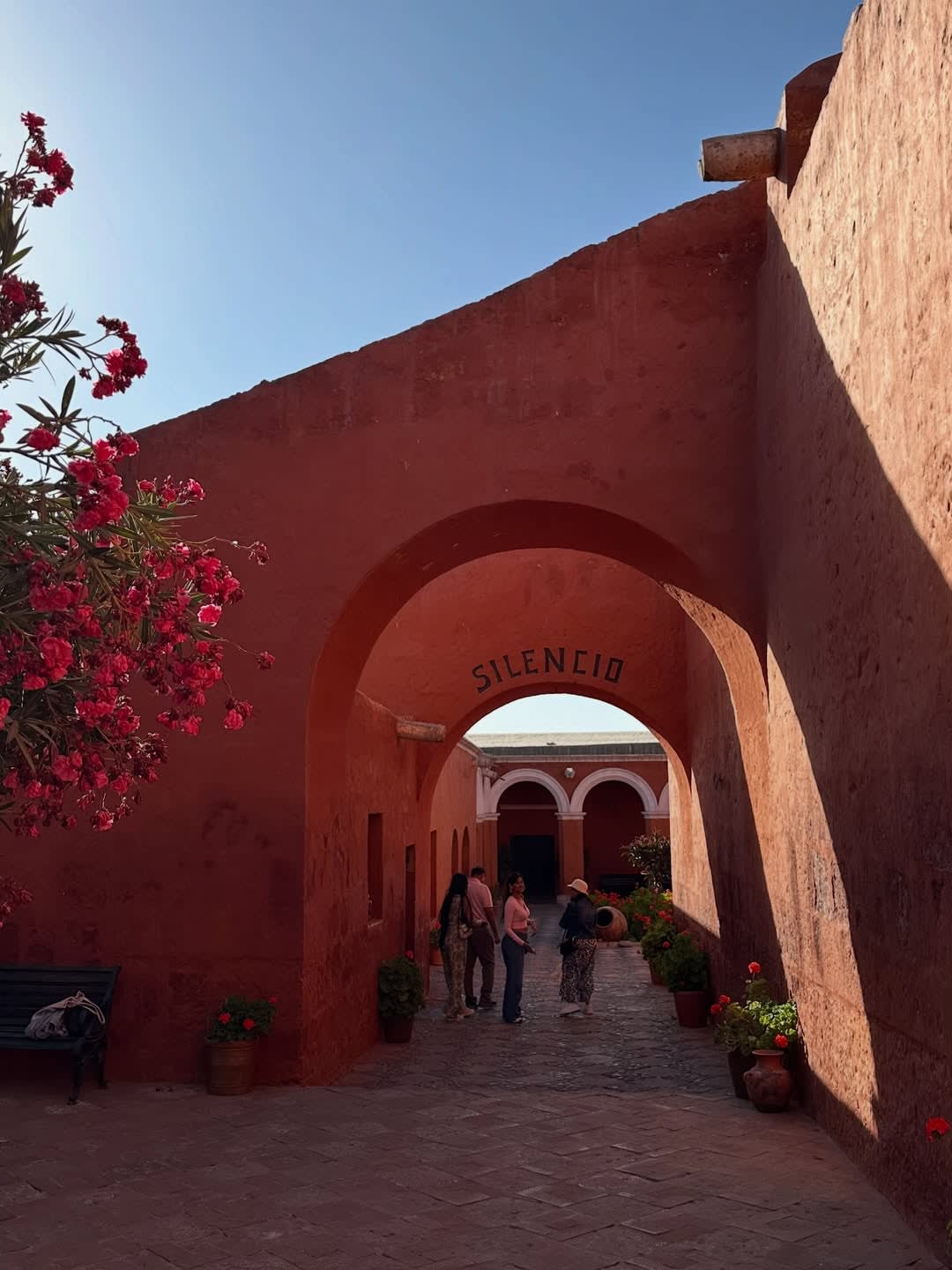
Every building in Arequipa's historic centre is made from the same material. The cathedral, the churches, the colonial mansions, the arcaded Plaza de Armas, the walls of Santa Catalina — all sillar. The stone is volcanic, pale cream to white, occasionally rose-coloured, quarried from the flanks of Chachani at a site called Añashuayco, approximately forty minutes from the city centre. The quarries are still active. The city is still being built.
Sillar is ignimbrite — a type of volcanic tuff formed when pyroclastic material ejected by the Misti and Chachani volcanoes cooled and compacted into rock. The geological conditions of the Arequipa basin produced an unusually consistent and workable stone: soft enough to cut with hand tools when freshly extracted, porous enough to insulate against both heat and cold, and white enough to give the city its earned nickname, La Ciudad Blanca. The stone hardens as it dries; a block cut in the morning is measurably harder by evening. What appears to be a limitation — a stone that must be worked quickly — turns out to be a property that the canteros have understood and worked with for five centuries.
The Quarry
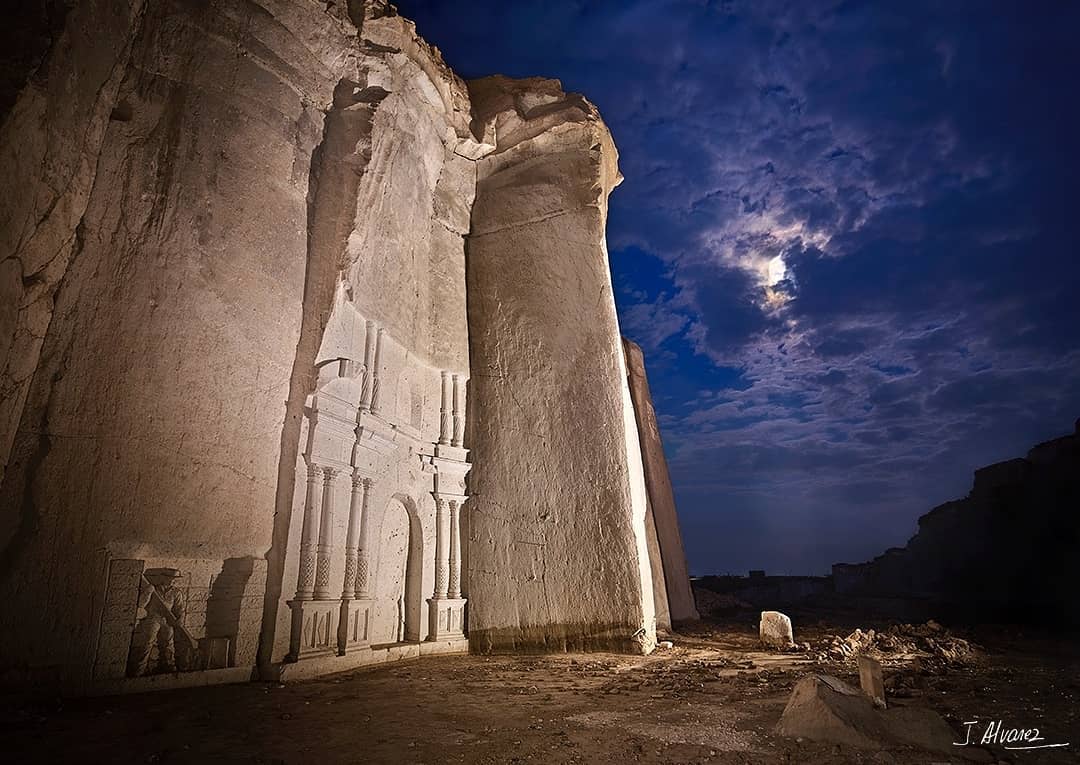
The Añashuayco quarry is not what visitors typically imagine when they hear the word. It is not an industrial pit with heavy machinery and blasting. It is a landscape that has been carved — by generations of canteros working with hand tools — into a white labyrinth of extraction channels, carved walls, and extraction faces. The stone is white to cream, with occasional rose and grey seams that indicate different mineral compositions within the same ignimbrite deposit. The light in the quarry at midmorning, reflecting off the pale cut faces in every direction, is the same light that makes Arequipa's historic centre luminous at the same hour.
The canteros work in family groups — knowledge transmitted from father to son, occasionally from father to daughter, over generations. The tools are a picota (a heavy pick for rough extraction), a barreta (a steel bar for wedging and splitting), and a cincel and mazo (chisel and mallet) for finishing. Each standard block is cut to a dimension of approximately 40 by 20 by 20 centimetres — a unit that hasn't changed in four centuries because the dimension is calibrated to what a mason can handle alone, to what fits the arched openings of colonial construction, and to what the sillar's structural capacity can sustain in a multi-storey wall.
The cantero Kada works with has spent more than thirty years in the Añashuayco quarry. He knows the stone's grain — the direction in which it splits cleanly versus the direction in which it fractures unpredictably. He knows which faces of the quarry produce the whitest material and which tend toward the rose variety; the rose sillar has been used for decorative elements and cornices since the colonial era, its warmth considered more appropriate for church facades than the colder white. He knows which sections of the quarry are still being worked and which have been exhausted, and he has opinions about what the next twenty years of extraction will look like as the quarry face deepens.
The Cut
The walk Kada arranges includes a demonstration of the traditional hand-cut technique — not a performance staged for visitors, but a continuation of the cantero's actual working day. The extraction process begins with reading the stone: identifying the natural grain and the direction in which a clean split can be made, then marking the cut line with a chalk or scratch line across the face of the rock. The barreta is driven in at multiple points along the cut line, each insertion widening the crack incrementally, until the block separates from the face cleanly. This process, when done correctly, produces a block with naturally rough faces on two sides and clean cut faces on the remaining four — the rough faces are what give sillar walls their characteristic texture at close range.
The finishing cut removes the rough peaks from the extraction faces when the block is destined for a visible surface. The chisel and mallet work is slower and more precise, and it is this phase of the process that produces the sillar dust — white volcanic powder that coats the cantero's arms, clothing, and the surrounding rock face, and that fills the air with a particular smell that is simultaneously mineral and dry and unlike anything from outside the quarry.
The sound of the quarry is worth noting before it begins: before the first tool strikes, what visitors hear is silence, the quality of silence that open volcanic landscape at elevation produces, interrupted occasionally by wind through the stone channels. Then the barreta strikes, and the sound is different from what visitors expect — a dull, fibrous impact rather than a sharp ring, because the sillar absorbs rather than reflects the force of the blow. The stone's porosity is audible.
What Sillar Built
The walk includes a section that addresses what the quarry has produced over five centuries — which is to say, what Arequipa is. The cantero's frame of reference for this is not architectural history but practical knowledge: he knows which buildings in the historic centre are made from early colonial sillar (darker, slightly rougher, from quarry sections now exhausted) and which from later material; he knows the difference between sillar used in load-bearing walls and sillar used in decorative carvings, because the two applications require different grades of material; he knows the specific quarry sections that have produced stone for specific buildings, because this information is part of the knowledge passed down within his family.
The discussion also addresses what sillar cannot do. It is not a structural material for tall buildings — the porosity that makes it thermally efficient makes it less strong than granite or limestone under compressive loads. Colonial Arequipa is almost entirely one to three storeys high; the architects and builders who worked in sillar understood its limits and designed within them. The city's horizontal character — its wide plazas, its single-storey cloisters, its low-profile skyline relative to its size — is partly a consequence of the stone that built it.
What Kada Arranges
The walk begins with private transport from central Arequipa to the Añashuayco quarry — approximately forty minutes, travelling through the outer districts and into the volcanic landscape at the base of Chachani. The quarry is not a tourist destination in the normal sense; there is no entrance fee, no signage, no visitors' centre. Kada coordinates access directly with the cantero and the quarry's working organisation.
Duration at the quarry is approximately two hours, depending on pace and the depth of conversation. The walk covers the main extraction areas and includes time to watch the work, ask questions, and move through the carved landscape of the quarry itself, which has its own visual logic — a space shaped entirely by human extraction, over a very long period, from a single geological material.
Return to central Arequipa completes the morning. The experience pairs naturally with any of the colonial heritage visits in the city centre — walking Santa Catalina or a casona after the quarry makes the building material of those places legible in a way it was not before.
Expert Perspective
"I work with a lot of materials in my professional life — I've been to textile workshops in the Sacred Valley, pottery studios in Quinua, woodworkers in the jungle. What I remember most about the sillar quarry is the stillness of it. The cantero works with tools that haven't changed in five centuries, in a landscape entirely shaped by that work, in conditions of light and dust and sound that are specific to this one place on earth. I find that genuinely rare. Most craft traditions that survive have been adapted, simplified, or made for an audience. The sillar quarry has not been made for an audience. It continues because the city continues to need the stone."
— Isabela Santos, Senior Travel Designer, KADA Travel
A Practical Note
Timing: The quarry is most active in the morning, from roughly 7:30 AM to noon. Kada schedules the visit for 8–10 AM to coincide with working hours and the best quarry light. The stone's white reflectivity makes afternoon visits harsher for both photography and for extended time outdoors.
Altitude and terrain: The Añashuayco quarry site is at approximately 2,400–2,500m — slightly above Arequipa city (2,335m). The terrain is uneven cut stone; closed-toe shoes are required. Kada provides hard hats if the visit includes areas adjacent to active extraction faces. The walk is moderate in physical demand — no extended climbing, but uneven footing throughout.
Dust: Sillar dust is fine volcanic particulate. Guests with respiratory sensitivities should inform Kada in advance; a simple mask can be provided. The dust settles quickly in still air and is not a hazard in normal conditions, but its presence should be expected.
Duration: Two hours on site, plus transport (approximately 40 minutes each way from central Arequipa). Total half-day commitment.
Language: The cantero's primary language is Spanish. Kada's guide provides interpretation for non-Spanish-speaking guests. Direct conversation with the cantero in Spanish, for guests who speak it, adds significant depth.
Written by Kada Travel Editorial
Frequently Asked
Yes. The Añashuayco quarry is an active extraction site, not a heritage museum. Buildings in Arequipa are still being built and repaired in sillar; the colonial historic centre requires sillar for restoration work; the tradition of sillar construction continues in contemporary Arequipa vernacular architecture outside the historic core. The cantero's livelihood depends on current production, not on tourism.
Three main varieties are found in the Añashuayco quarry: blanco (white, the most prized for facades), rosa (rose, used for decorative elements and some churches), and gris (grey, used for structural work where appearance is less important). All three are ignimbrite from the same geological deposit; the colour differences reflect variations in mineral composition within the deposit. The cantero can identify the appropriate variety for a given application by sight and by the sound the stone makes when struck.
Sillar's specific combination of workability and insulating properties is what made it the material of choice for colonial Arequipa. It can be cut with hand tools when fresh, it hardens as it dries, it maintains interior temperature stability (important in a city with significant day-night temperature variation), and it does not absorb rainwater in the same way as sedimentary stone. The consistent white colour is also geologically specific — ignimbrites elsewhere in Peru are darker and coarser. The Añashuayco deposit is unusual.
Small fragments and chips are generally not restricted — these are produced in quantity by the cutting process and are of no commercial value. Intact blocks cannot be taken; they are the cantero's livelihood. Kada's guide will clarify what is appropriate.
Design Your Journey
Design your bespoke Peru journey
We talk. We listen. Then we design an itinerary that belongs only to you.
Start Planning