Unfolded· 8 min read·8 July 2026
The Closed City After Five
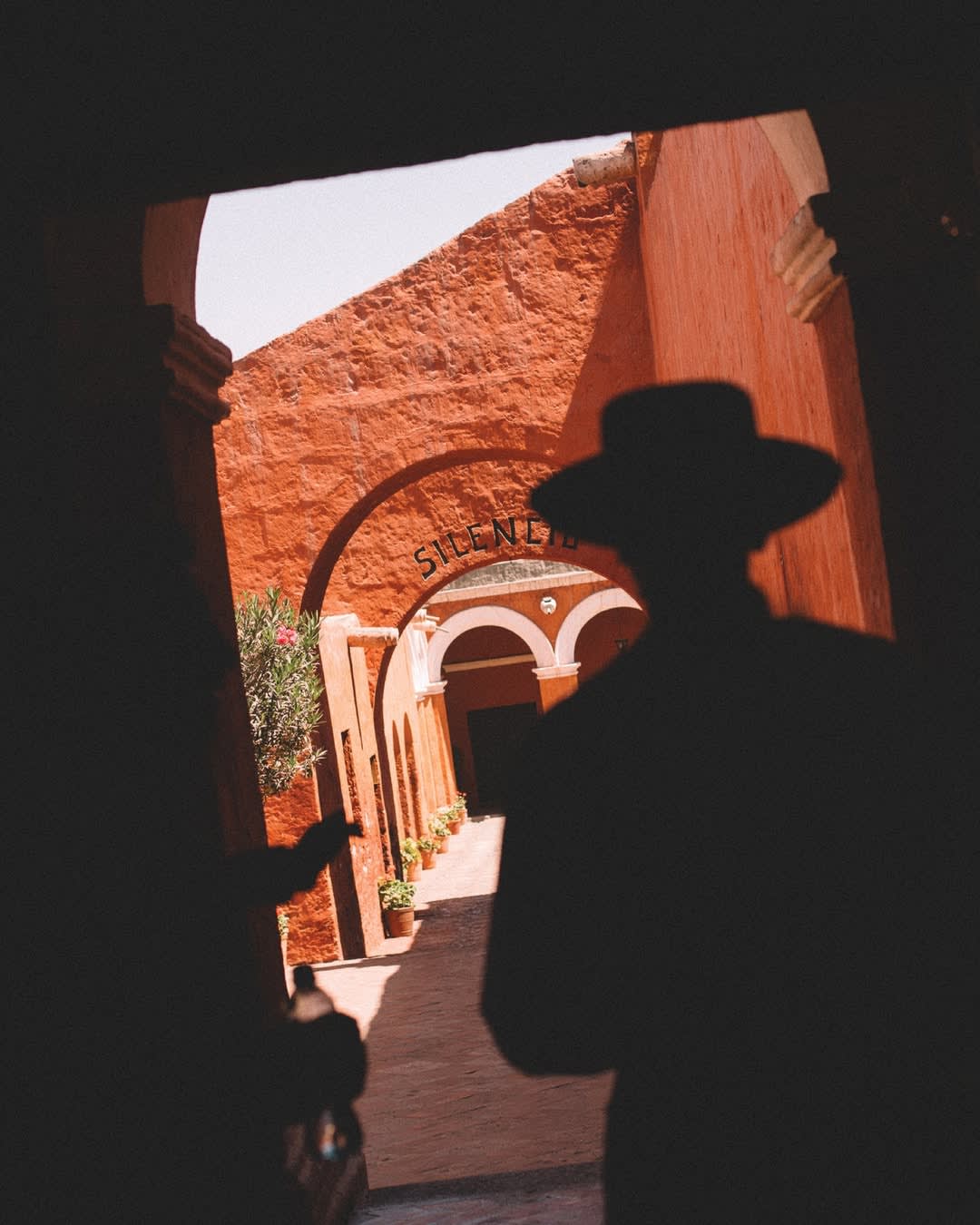
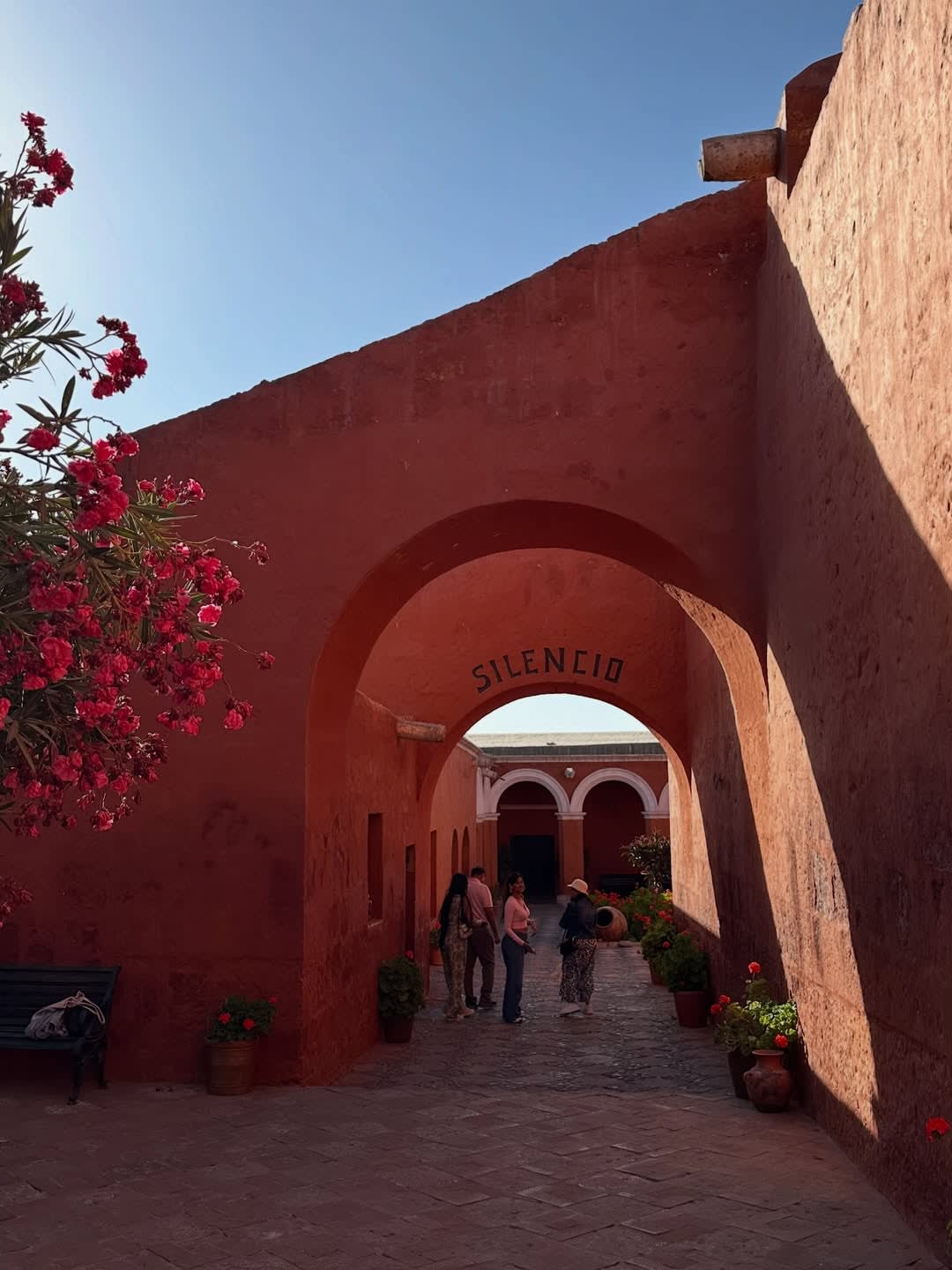
Santa Catalina Convent, Arequipa — a private visit after the regular hours close, with the curator who knows which rooms the day tour does not enter.
By Kada Travel Editorial
The regular tour closes Santa Catalina's gates at five in the afternoon. This is when the experience Kada arranges begins.
Santa Catalina de Siena Convent was founded in 1579 on a piece of land donated by a wealthy widow, María de Guzmán, to the Dominican order. For the next three hundred and ninety-one years it was closed to the public entirely — a self-contained city of Dominican nuns occupying twenty thousand square metres in the centre of Arequipa, with its own streets, plazas, laundry blocks, refectory, chapels, private oratories, and water cisterns. The nuns who entered did not leave. The world did not enter. In 1970, facing financial difficulty, the convent opened its main precincts to visitors. The nuns retreated to a smaller section in the northeast corner, where approximately twenty still live today, and the rest became a museum.
What this history means for a visitor who arrives at half past five, after the last tour group has filed through the gate and the guards have cleared the main alleys, is that the building is suddenly its own thing again. The cloister courts are empty. The late afternoon light comes in at the low angle that the indigo and madder walls were painted to receive — colours mixed from local mineral pigments by Dominican nuns four centuries ago, the same tradition maintained in each repainting since, a particular quality of deep saturated tone that exists nowhere else in Arequipa. The silence is architectural, which means it is produced by thick sillar walls and stone floors rather than by the absence of human presence alone.
The Building Kada's Curator Walks
The standard day visit moves through the established circuit: the main entry, Calle Sevilla, the laundry, the Plaza Zocodover, the painting gallery. These are the precincts prepared for public movement. The after-hours visit has a different itinerary.
Kada's curator — a specialist in colonial religious art and architecture with direct access to the convent's administrative staff — moves through the second floor of the Calle Toledo sector, which is not part of the regular circuit. This is where individual cells sit above the ground-level corridor, each with its own private oratory: a small room with a personal altar, a window onto an interior courtyard, and the accumulated objects of a particular nun's devotional life. The contents of some oratories have been preserved exactly as they were when their last occupant died. The curator explains not the names — those are lost — but the practice: what it meant to inhabit a private oratory in seventeenth-century Dominican life, what objects a nun was permitted to own, what the distance between private and communal worship looked like within these walls.
The refectory, where communal meals were taken, is included in the route. The long wooden tables are original. There are rope marks on the stone floor from centuries of the nuns dragging the tables into formation each evening — a physical record of repeated motion that no exhibit can replicate. The kitchen adjacent to the refectory contains the batán, the flat stone grinding surface that was the primary food-preparation tool of the convent for three hundred years, before the convent opened to the modern city and modern cooking equipment became available.
The Art
Santa Catalina's collection of colonial religious painting is among the most significant in the south of Peru. The works were commissioned from the Cusqueña school — the seventeenth and eighteenth-century workshop tradition centred in Cusco that produced a distinctly Andean variant of Counter-Reformation religious imagery, notable for the faces of local indigenous people appearing in sacred scenes, for the technical vocabulary of European baroque combined with Andean compositional instincts, and for the particular palette of deep reds, ochres, and golds that the available pigments allowed.
The curator walks through the specific works on the circuit, explaining what the iconography meant to the commissioning nuns, how the faces reflect the community around the convent rather than any European model, and what the individual workshop signatures in the painting style indicate about who made them and under what conditions. This is not a reading of art history from a guidebook. The curator's engagement with these works is specific and ongoing — she works with them, has opinions about them, notices things that changed since the last time she looked.
What Kada Arranges
The after-hours access is coordinated through Kada's direct relationship with Santa Catalina's administration — a relationship that has been built over time and that requires active maintenance. The convent does not offer this access through a standard tourism channel. Security staff remain present throughout the visit; the curator manages the movement through the restricted sections.
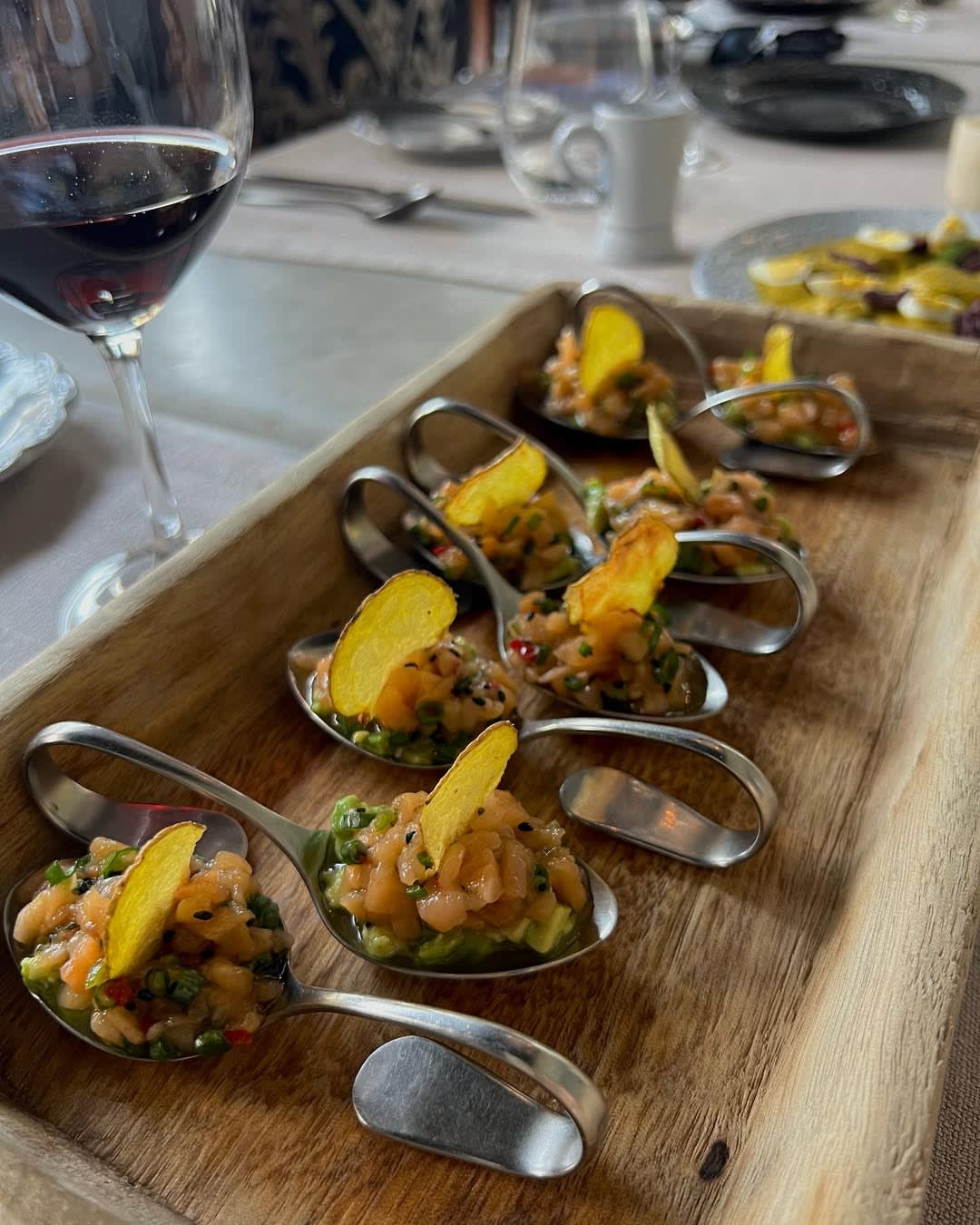
The visit lasts approximately ninety minutes to two hours, depending on the depth of conversation and what the guests want to return to. A light catering arrangement can be set in one of the interior courtyards for after the tour — this is not a formal dinner, but a moment to sit inside the building after the route is complete, in a space that has been empty of visitors for the past hour, before the night security closes the final doors. The catering, if requested, is arranged with a local Arequipa provider.
Transport to and from the city center is included; Santa Catalina is in the centre of Arequipa, walkable from most of the city's accommodation, but Kada arranges private vehicle if the guest's hotel is further out.
Expert Perspective
"The thing I am most often asked when I guide this visit is whether Santa Catalina is sad. The answer is usually not the one people expect. The building is not sad — it was built by people who chose to be there, and who organised their lives with a specificity and intention that the objects they left behind make very legible. What strikes me, every time, is how much the building knows about time. The marks on the floor, the tonal fade at the base of the walls where the colour is oldest, the particular depth of the silence in the private oratories — this is a building that was built to contain a particular quality of daily life, and the quality is still there, in the architecture, in the air, in the pigments that were made here. Arriving after the tour groups leave is the condition under which you can actually hear it."
— Katherine Cjuiro, Founder, KADA Travel
A Practical Note
Timing: The visit begins at 5:30 PM, immediately after the convent closes to regular visitors. Arrivals after 5:45 PM should be communicated to Kada in advance so the access window can be adjusted with the administration.
Duration: 90–120 minutes inside the convent, plus catering time if arranged (add 30–45 minutes).
Physical access: The route includes stairs to the second floor; the terrain is stone floors throughout. Not recommended for guests with significant mobility limitations. Kada will design an alternative ground-floor route if needed — the curator's knowledge extends to what is accessible and what is not.
What to bring: The light inside the convent after hours is low and directional. Guests who photograph seriously should bring equipment appropriate to interior low-light conditions. Tripods are not permitted, but the curator can identify surfaces where a camera can rest for longer exposures.
The nuns: Approximately twenty Dominican nuns still live in the northeast section of the convent, which is not part of the visit route and is closed to all visitors. Guests should be aware that the building remains an active religious community, and that the after-hours visit is permitted as a condition of the relationship Kada has built with the administration, not as a standard visitor entitlement.
Written by Kada Travel Editorial
Frequently Asked
Not through a standard channel. The access Kada arranges is coordinated through a direct ongoing relationship with the convent's administration. Some other operators have tried similar arrangements at various points; Kada does not comment on what others offer. What Kada guarantees is that the access is confirmed with the convent directly and that the curator is part of Kada's established working relationship with the institution, not a last-minute hire.
Photography for personal use is permitted throughout the route, including in the areas not covered by the regular tour, with the exception of any areas where the curator specifically advises against it — typically sections adjacent to the nuns' living quarters. Commercial photography and video production require separate authorisation directly from the convent administration, which Kada can help initiate.
It refers to the architectural and decorative style unique to Arequipa's colonial buildings, in which Andean artisans — working under Spanish patronage to build churches and civic buildings in the baroque tradition — incorporated their own iconographic vocabulary into the stone reliefs: serpents, pumas, stylised maize and cactus flowers, solar motifs. The result is a style that is visually baroque in structure but Andean in its detail, and that exists in this specific form only in Arequipa. Santa Catalina's construction is in sillar — the same white volcanic stone as the rest of the city — and the building participates in this tradition through its stonework and its proportions, if not always in its surface decoration, which is more strictly Dominican.
Kada requires a minimum of ten days' notice to confirm after-hours access with the convent administration. During high season (June–September), two to three weeks is recommended. The access is not available on days when the convent hosts private events.
Design Your Journey
Design your bespoke Peru journey
We talk. We listen. Then we design an itinerary that belongs only to you.
Start Planning