Unfolded· 7 min read·15 July 2026
The Wave at La Herradura
A private surf session at Lima's best-kept secret — with a former Peruvian national champion and lunch at the cevichería the fishermen use.
By Kada Travel Editorial
La Herradura is not a secret. Lima's serious surfers have been working its left and right breaks in the Chorrillos bay for decades, and the wave appears on every credible list of Peru's underrated surf spots with the predictability of something that has been overlooked long enough to become conspicuous in its absence. What remains controlled is the level at which the wave is encountered.
The group lessons available on the beach work for beginners on foam boards in the white water. They are not designed to correct a bottom turn, to discuss the wave's specific behaviour across the tide change, or to make the distinction between the left break's shoulder and the right break's power section legible to someone whose surfing already has a foundation and wants to build on it. A former national champion working with a single guest on a private session is a different proposition.
The Bay
La Herradura — the horseshoe — takes its name from its shape: a curved bay at the southern end of Chorrillos, closed on the northwest by the Morro Solar headland, which blocks the northerly wind and creates the sheltered conditions that give the wave its particular character. The Humboldt Current arrives from the south with the consistency that makes Peru's coast one of the world's most reliable surfing destinations; at La Herradura, the current interacts with the bay's geometry to produce a wave that breaks cleanly on both left and right, holds its shape across a range of swell sizes, and — at the right tide and with the right southerly swell — runs for distances that the beach break alternatives in Miraflores cannot match.
The wave is not gentle. La Herradura at any size above waist-high is a performance wave — it rewards positioning and timing and punishes both errors at the same speed. For a surfer whose technique is established and whose aim is improvement rather than survival, this is the right amount of pressure: enough consequence to make the feedback immediate, enough quality to make the session worth having.
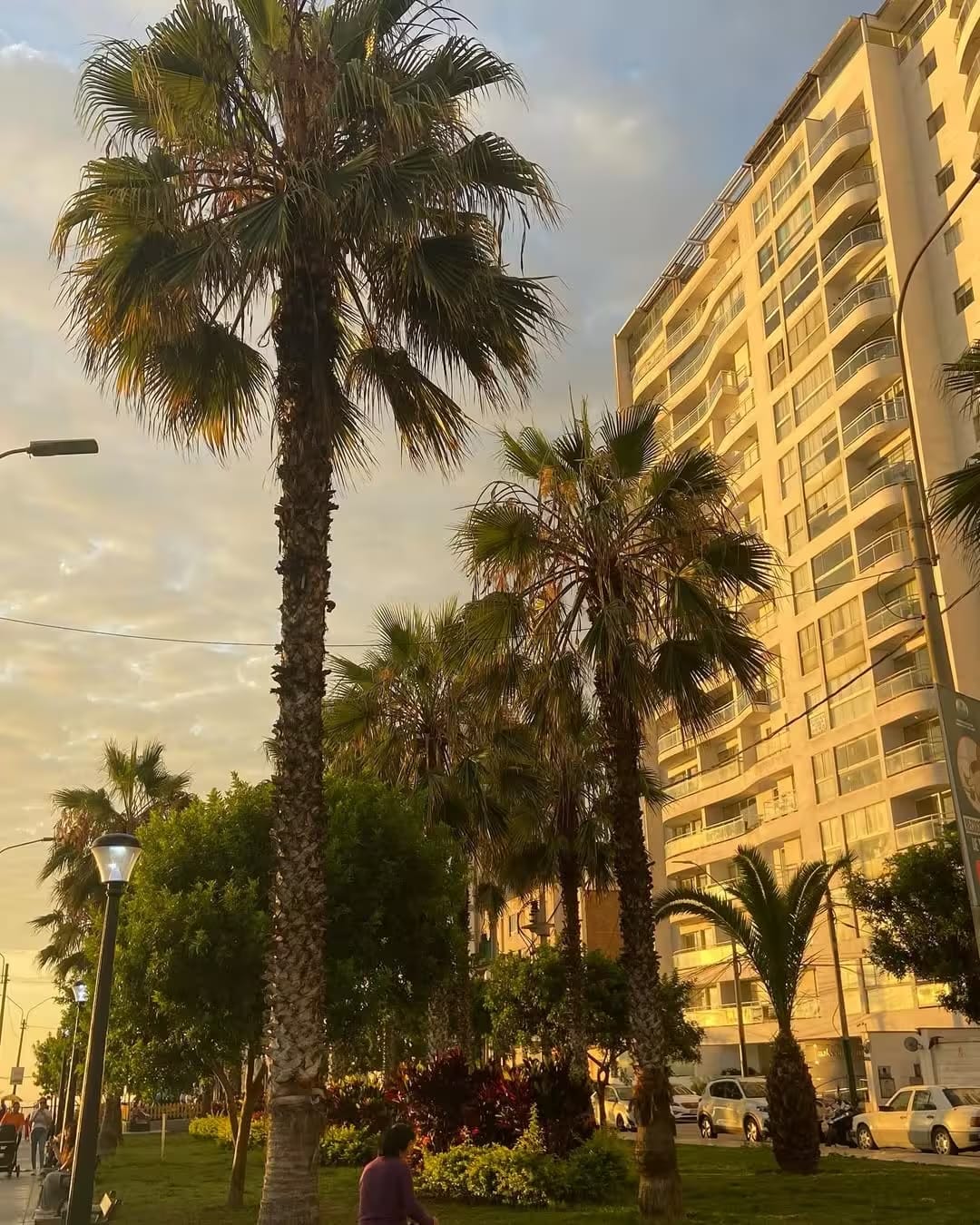
The bay also has the particular aesthetic of Lima's coast at this latitude: the Morro Solar behind, the city invisible except for the edge of the cliff above, the Humboldt's cold dark water, and the overcast that Lima's coastal fog produces for most of the year — a grey-white sky that flattens the light and makes the water read as dark pewter rather than blue. This is not the Caribbean. It is the Pacific in its Andean register: cold, powerful, and indifferent in a way that rewards attention.
The Session
The instructor we work with is a former Peruvian national surf champion with more than two decades of competitive and coaching experience. He has surfed La Herradura across every swell and tide condition the bay produces; the wave is not a location he uses with clients because it is convenient — it is the wave he has been surfing for most of his life, and the tactical knowledge of its specific breaks is biographical rather than general.
The private session begins on the beach: a ten-to-fifteen minute assessment of the guest's current level — based on a conversation about their surfing history and a review of the conditions that morning — followed by a specific plan for what the session will work on. This is where the private format separates itself from the school format. A school session gives everyone the same instruction regardless of where they are. A private session with a former champion begins with a diagnosis.
The instruction during the session is direct and specific. The bottom turn — the first critical maneuver after catching a wave, which determines everything that follows — gets corrected in real time. The instructor is either in the water alongside, reading the guest's technique from the same vantage point the wave provides, or on the shore with a waterproof camera whose footage is reviewed at the end of the session. The difference between a bottom turn that loses drive and a bottom turn that generates it is a matter of centimetres of weight distribution and milliseconds of timing; neither can be corrected by description alone, and the specific nature of the La Herradura left — the way the wave's shoulder invites the turn — is the teaching tool.
The session runs two to two and a half hours in the water, depending on the guest's stamina and the conditions. At La Herradura, two hours of focused practice with an instructor who is watching every wave produces more useful feedback than ten hours of sessions where the instruction is general and the attention divided.
The Lunch After
The cevichería at the base of the La Herradura cliff does not appear in any guide. It is the restaurant the fishermen from Chorrillos use after the morning dock work — the same dock our guests may have visited at dawn on the Markets at Six morning, one bay north. The menu is short because the kitchen works with what came in that morning. The ceviche is made from the same cold-chain catch that makes Lima's finest restaurants worth visiting; at this price point, in this setting, with the salt still on from the session, it is the most logical meal the city offers.
The lunch is not part of the arranged experience in a formal sense — there is no reservation, no special treatment, no curated menu. It is where the instructor eats after a session at La Herradura, and where we take our guests because eating in the same place as the people who have been working the coast since four in the morning is the correct way to close a morning in Chorrillos.
What Kada Arranges
The private session is arranged for experienced surfers — guests whose technique is established and whose goal is performance improvement rather than introduction to the sport. We are direct about this at the planning stage: La Herradura is not a beginner wave, and a private session with a former champion is not designed to teach someone to stand for the first time. For guests who are beginners or early intermediates, we arrange alternative Lima water experiences.
The instructor's availability is confirmed two to three days before the session, after he has assessed the upcoming swell forecast. La Herradura is best surfed on a specific tide and swell window; we do not schedule sessions without the instructor's confirmation that the conditions will produce a useful morning. On the occasional date when conditions are unsuitable, we reschedule to the next viable window rather than proceed with a session that will not deliver what the private format promises.
For guests whose Lima itinerary includes the Markets at Six morning, the La Herradura session connects naturally with the Chorrillos thread of the city — the fishing dock at dawn, the bay for the surf session, the cevichería at lunch: the same stretch of Lima's southern coast encountered across twelve hours.
Expert Insight
"The bottom turn is where most intermediate surfers lose the wave before they've even started. The problem is almost always timing — beginning the turn a half-second early or late, in a way that's invisible from the beach but completely apparent from the water beside them. A former national champion can see it in the first wave and correct it by the fifth. That's what the private format buys: not more instruction, but instruction that is specifically about the error this specific person is making right now."
— Daniel Ramos, Co-Founder & CEO, KADA Travel
A Practical Note
La Herradura is in Chorrillos, thirty minutes south of Miraflores. The water temperature year-round reflects the Humboldt Current: 16–19°C in summer, 14–17°C in winter. A full wetsuit is not optional; we confirm wetsuit thickness with the instructor based on the session date. All equipment — board selection, wetsuit, wax — is handled by the instructor based on the guest's level and the conditions.
The session is weather-dependent only in extreme cases — Lima's overcast is the normal condition and does not affect the wave. Wind is the primary variable: offshore (from the land, pushing toward the sea) is ideal; onshore (from the sea) degrades the wave surface. The instructor's swell and wind assessment before the session is based on the Costa Verde buoy data and his personal experience of how La Herradura reads specific swell directions and sizes.
Guests with pre-existing knee or shoulder injuries should discuss these with us before booking — certain surfing maneuvers are contraindicated for specific injury patterns, and the instructor adjusts the session plan accordingly.
Written by Kada Travel Editorial
Frequently Asked
We arrange La Herradura sessions for guests who surf regularly and can comfortably catch unbroken green waves, execute a basic turn, and read a wave's shoulder. The minimum useful level is a confident intermediate — someone who has surfed in ocean conditions (not only on indoor wave machines or in gentle beach breaks) and whose goal is technical improvement. For guests who are beginners, we arrange alternative water experiences in Lima.
The instructor brings a selection of boards appropriate to the guest's level and the day's conditions — typically three to five options from longboards to shortboards, all high-performance equipment. Guests who travel with their own boards are welcome to bring them; the instructor will assess whether the guest's board is appropriate for La Herradura's wave on that specific day and suggest an alternative if not.
Yes, with a realistic conversation about expectations. A surfer who was a confident intermediate five years ago and has not surfed since can expect the first thirty minutes of the session to be a recalibration — muscle memory fades, and La Herradura's wave requires more decisiveness than a beginner break. The instructor begins every session with this understanding and adjusts the plan accordingly.
Yes. The instructor records footage throughout the session using a waterproof camera; the edited footage is provided to our guests digitally after the session. For guests who want to work with an instructor in their home country after the Peru trip, the footage from La Herradura provides the specific technical reference for the instructor to work from.
Design Your Journey
Design your bespoke Peru journey
We talk. We listen. Then we design an itinerary that belongs only to you.
Start Planning