Unfolded· 6 min read·25 July 2026
The Dark Shapes Between the Stars
A private night session with an Andean astronomer in the Sacred Valley, reading the sky the way the Inca did — not through the stars themselves, but through the dark shapes the Milky Way's dust lanes trace between them.
By Kada Travel Editorial
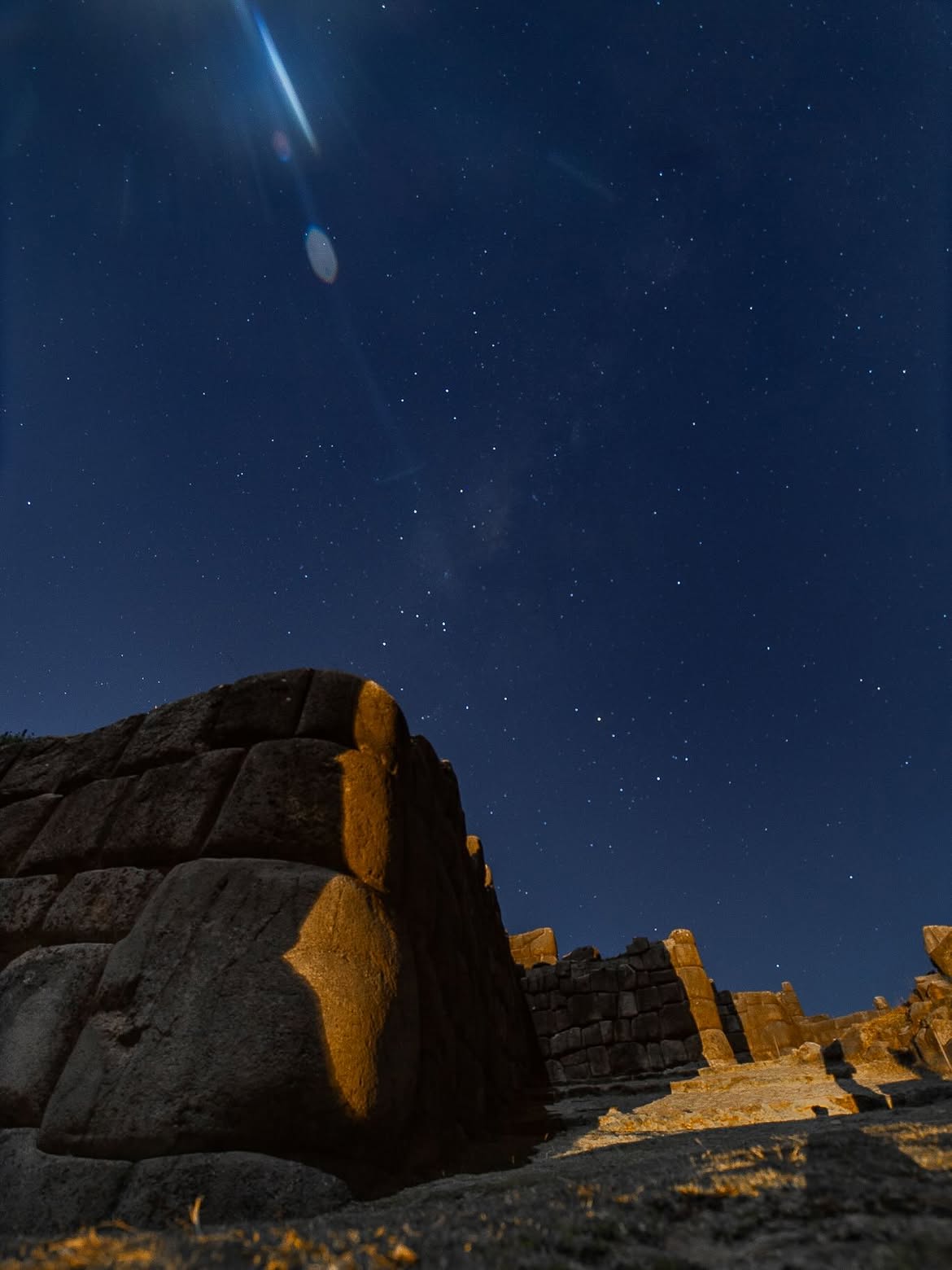
Most visitors who look up at the Sacred Valley's exceptional night sky read it the way Western astronomy taught them to — connecting bright stars into familiar shapes, hunting for recognisable constellations against the dark. Inca astronomy worked differently, and considerably more specific to this particular sky: rather than reading shapes in points of light, Andean sky-watchers read shapes in the absence of light — the dark dust lanes running through the dense band of the Milky Way, interpreted as animal figures moving across the celestial river.
A System Built on What Isn't There
These "dark cloud constellations" — a llama, a fox, a toad, a serpent, and others, depending on which ethnohistoric and ethnographic sources are consulted — required a night sky dark and clear enough to see the Milky Way's structure in genuine detail, conditions the high, dry Sacred Valley still offers away from artificial light in a way most of the world has long since lost. The system was deeply integrated into Inca agricultural and ritual timing, with specific dark-cloud figures rising and setting at times tied to planting, herding, and ceremonial calendars.
Understanding this system requires more than pointing a telescope at bright objects; it requires an eye trained to read negative space against the galaxy's structure, and a guide able to translate a set of concepts genuinely different from the star-pattern astronomy most international guests already know.
What the Session Involves
We arrange a private night session with a specialist in Andean archaeoastronomy, typically on a dark-sky night away from Cusco's own light pollution, moving between naked-eye observation of the dark-cloud figures and, depending on conditions, telescope viewing of specific bright objects for context and comparison. The conversation extends into how this system connected directly to Inca agricultural and ceremonial timing — a genuinely different way of relating to the sky than most guests have previously encountered.
What Kada Arranges
We select a viewing location and date based on lunar cycle and forecast conditions, since a bright moon or clouded sky significantly affects visibility of the dark-cloud detail. The guide is a specialist in Andean astronomy specifically, not a general astro-tourism operator working from a generic star-chart script.
Expert Insight
"Most guests have never been asked to look for a shape made of darkness rather than light before — it genuinely reorients how you see the night sky. Once someone points out the llama moving through the dust lanes of the Milky Way, you can't not see it again. We think that shift in perception is worth a genuinely late night in the Sacred Valley."
— Katherine Cjuiro, Founder, KADA Travel
A Practical Note
This experience depends entirely on clear, dark-sky conditions — we monitor weather and lunar phase closely and will reschedule if conditions won't support proper viewing. Warm layers are essential; Sacred Valley nights are genuinely cold regardless of season.
Written by Kada Travel Editorial
Frequently Asked
No — the experience is designed for genuine beginners, with the Andean framework itself being new to nearly every guest regardless of background.
The dry season (April through October) generally offers clearer skies, though we select the specific date based on lunar cycle regardless of season.
Roughly two to three hours, timed for full darkness and adjusted around moonrise/moonset.
Yes, for context and comparison, though the core experience is naked-eye observation of the dark-cloud figures against the Milky Way.
Design Your Journey
Design your bespoke Peru journey
We talk. We listen. Then we design an itinerary that belongs only to you.
Start Planning