Unfolded· 8 min read·2 July 2026
Before the Day Decides to Begin
Private dawn departure for the Islas Ballestas — the Pacific archipelago off Paracas holding Peru's most significant marine mammal and seabird colonies, with a marine biologist who has conducted research in the reserve, departing before the commercial fleet, in the hour when the sea between the mainland and the islands has not yet been disturbed.
By Kada Travel Editorial
The commercial Ballestas tours leave the Paracas pier at eight in the morning and return by ten. They are efficient and honest about what they are: large motorised launches carrying forty to sixty passengers around an archipelago of rocks covered in sea lions, while a guide names the principal species over the boat's audio system. The islands are remarkable; the experience, at that hour and that volume, is adjacent to the islands rather than present with them.
The hour the Kada boat leaves is five-thirty. It is not romantic exaggeration to describe the Pacific at that hour as glass — in the Paracas channel, before the prevailing westerly comes off the desert and raises the chop that characterises the mid-morning crossing, the water has a quality of stillness specific to the pre-dawn coastal desert. The sea lions on the rocks at the edge of the outer islands are still arranged in their overnight positions. The Humboldt penguins on the lower rock faces have not yet moved to their morning feeding formation. The Inca terns are in the cliff cavities. The colony is, for a few more hours, undisturbed.
What Kada sends at five-thirty is a fast private launch — capacity eight, carrying the group and the marine biologist who will spend the crossing explaining what will be seen before it is seen. By the time the commercial launches leave the pier, this group is already returning with two hours of documented encounter with the islands at the specific moment when the relationship between the human observer and the colony is most accurately described as observation rather than tourism.
The Humboldt Current's Archive
The abundance of life at the Islas Ballestas is not accidental geography. It is the terminus of an oceanic system that begins near the Antarctic edge and runs north along the South American Pacific coast: the Humboldt Current, a cold, nutrient-dense upwelling that carries Antarctic deep water to the surface as it runs against the continental shelf. The upwelling brings phytoplankton; the phytoplankton sustains anchoveta — the Peruvian anchovy — in quantities that make this one of the most productive fisheries on earth; the anchoveta sustains everything above it: the penguins, the sea lions, the seabirds, the pelicans, the boobies, the cormorants.
The Paracas Marine Reserve — 335,000 hectares of protected Pacific Ocean — is the only marine protected area in Peru. It exists, in part, because the Humboldt Current ecosystem is both extraordinarily productive and extraordinarily fragile: El Niño events, which warm the surface water and temporarily eliminate the cold upwelling, have repeatedly caused mass mortality events in the Ballestas colonies. The sea lion population, which numbers in the tens of thousands in normal years, has collapsed to a fraction of that in strong El Niño years, recovering over decades as the current re-establishes. The marine biologist on the Kada launch has observed two of these cycles and can read, in the current colony distribution and the age structure visible on the rocks, the recovery trajectory from the most recent event.
The Candelabro on the Outbound Crossing
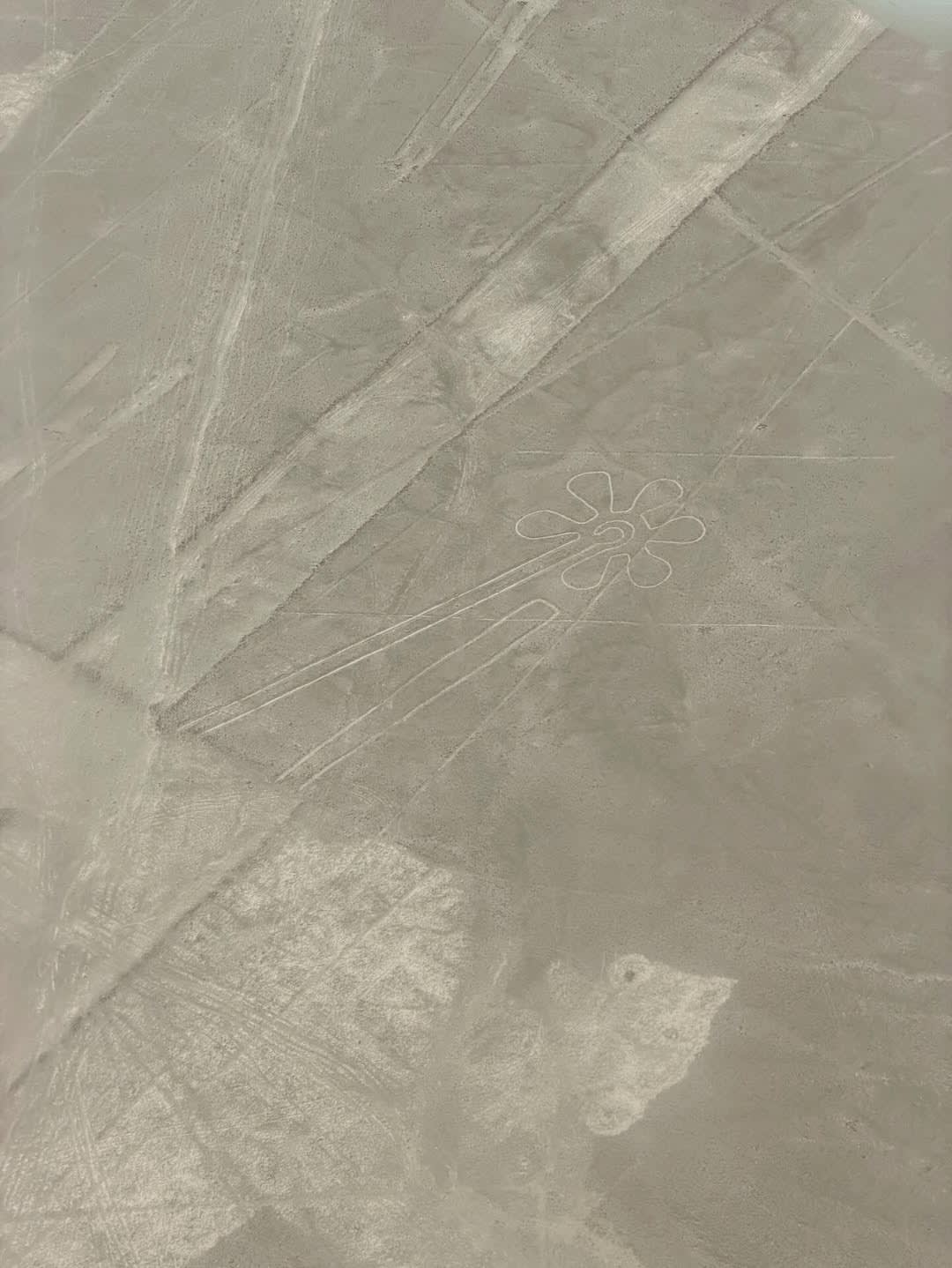
The geoglyph on the headland visible from the boat before the islands come into view — the Candelabro, carved into the sandy bluff above the bay — is not part of the Nazca Lines system. It is larger (approximately 180 metres in height), closer to the coast, and of different execution: the Nazca lines remove surface material from desert pavement; the Candelabro is incised into a sandy hillside above the ocean. Its age and purpose are unknown. The most common attribution places it in the Paracas culture period (800 BCE – 200 CE), predating the Nasca, but this is unverified by dating. The design — three diverging branches, or a trident, depending on interpretation — has generated proposals ranging from navigation marker to ritual symbol without scholarly consensus.
For the Kada programme, the Candelabro is the visual transition from the mainland to the islands: the boat passes it at close range on the outbound crossing, and the marine biologist addresses the coastal pre-Columbian geography before the focus shifts entirely to the marine environment. It is not a stop; it is a feature of the crossing route, noted and contextualised in a way that the standard tour, already focused on the sea lion headcount, does not provide.
The Colony Before the Fleet Arrives
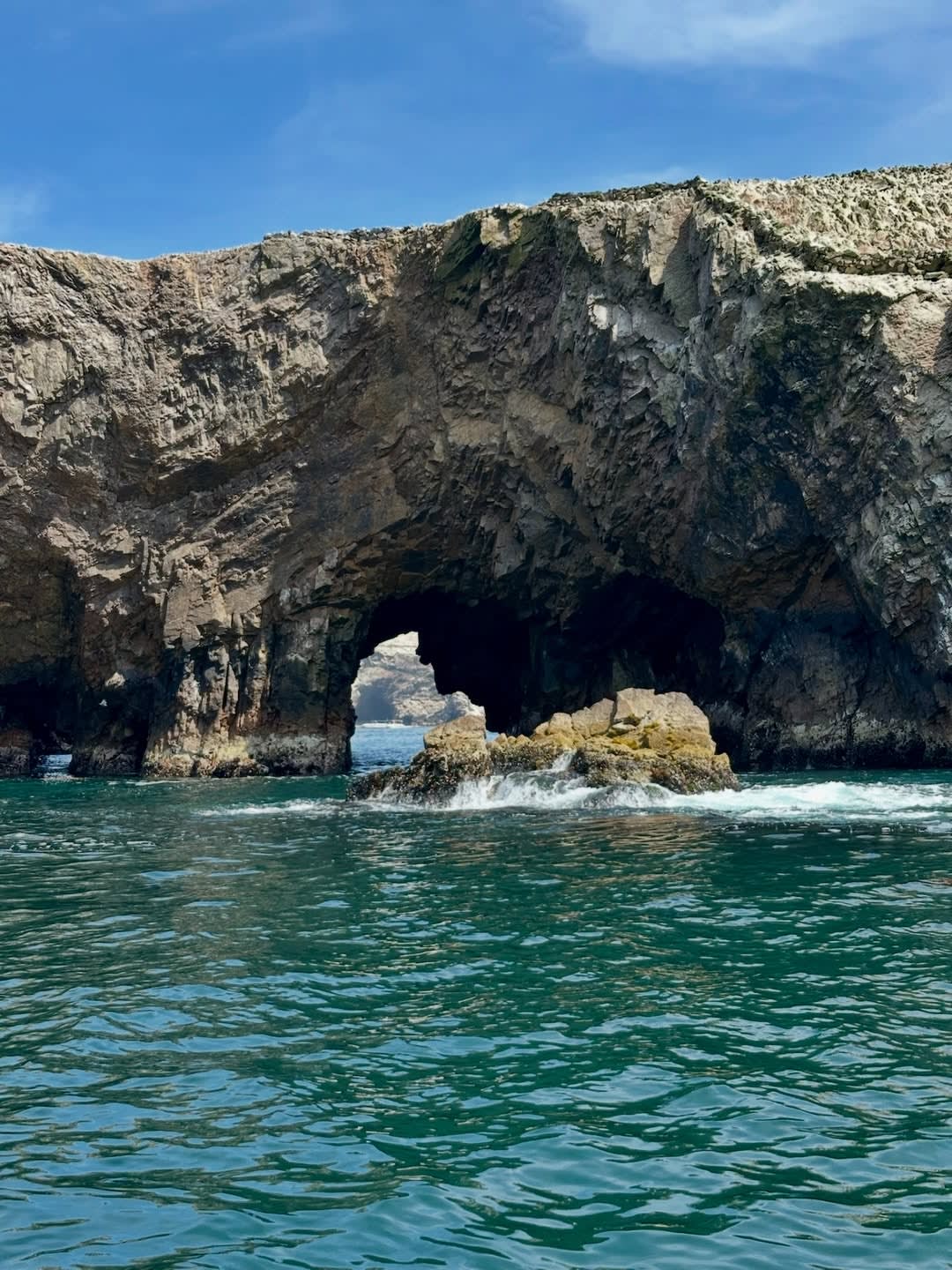
The Ballestas archipelago consists of three main groups of rocky islets, connected by arches and sea caves that the boat can enter in calm conditions. The sea lions occupy the lower rock shelves and the beach areas between the larger formations; their behaviour at dawn — the territorial males hauled out on the upper rocks, the females in the lower clusters, the pups from the previous breeding season in the water around the boat — is observable at proximity because no previous boat traffic has occurred.
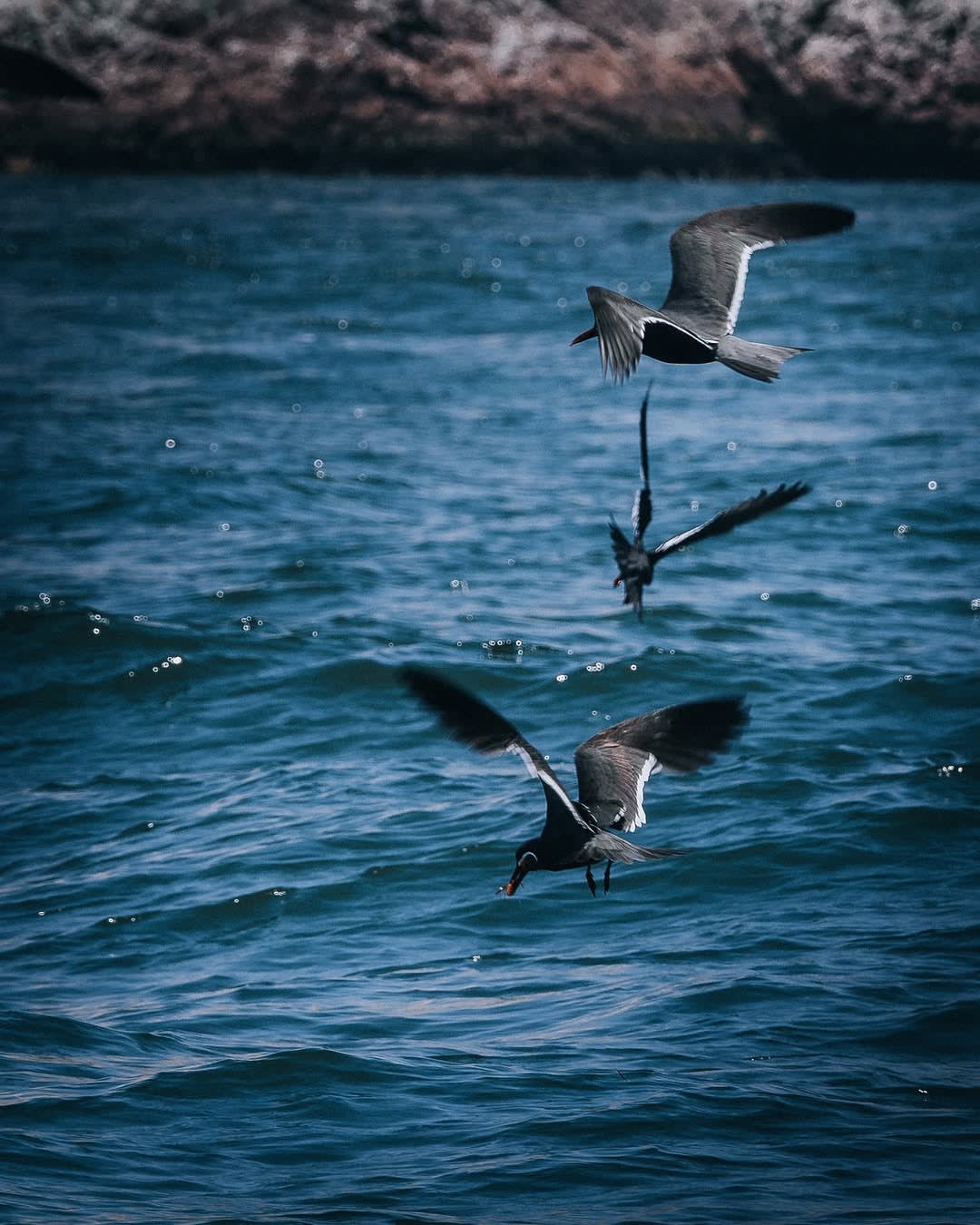
The Humboldt penguin colony on the outer island faces deserves specific attention. Humboldt penguins breed in guano deposits and rock crevices on the Peruvian coast; the Ballestas colony is among the largest accessible on the South American Pacific. They are not Arctic penguins — they are coastal desert penguins, adapted to the same arid conditions that preserve the Nazca Lines — and they share the rocky habitat with cormorants, boobies, and the Inca tern. The Inca tern, the grey-and-white seabird with the distinctive white facial plumes and red bill, is found only in the Humboldt Current ecosystem; seeing it at the Ballestas is seeing a species whose entire global range is the coastal desert strip from Peru to northern Chile.
The caves and arches on the eastern face of the outer islands create the specific acoustic and visual conditions that make the pre-dawn visit distinct. The sound of the Pacific in the confined cave space, the sea lions on the interior rock ledges visible in the early light, the Guanay cormorants on the upper cave walls — at a volume and stillness that sixty passengers in a loud launch do not permit — is the register of encounter that justifies the five-thirty departure.
What the Biologist Names
The difference between the standard Ballestas visit and the Kada programme is most evident not in what is seen but in what is named and why. The guide on a standard tour names the species in sequence; the marine biologist on the Kada programme describes the relationships: why the Guanay cormorant colony is on the north face of the island rather than the south, what the specific distribution of sea lion age groups on the rocks indicates about the current breeding cycle, why the Humboldt penguin and the Peruvian pelican share the same thermal boundary in the water column without competing for the same prey.
The biologist Kada works with for this programme has conducted field research in the Paracas Marine Reserve, monitoring the seabird colonies for population trends and studying the relationship between anchoveta availability and breeding success. This is not interpretive knowledge applied from a manual; it is the specific, locally held understanding of this colony's behaviour over years that makes the crossing a different quality of education. The technical accuracy of a species identification is not the rarest thing here; what is rare is the fifteen-year relationship between the observer and the colony being observed.
What Kada Arranges
Private launch from the Paracas pier, departure at five-thirty, coordinated with sunrise timing for the specific date. The marine biologist is on board from the pier; the crossing to the islands — thirty to forty minutes — is the briefing and the context, so that arrival at the islands is a recognition of what has been described rather than a first encounter with unfamiliar animals.
The circuit around the principal Ballestas groups runs sixty to ninety minutes, depending on the activity at each formation. The biologist guides the circuit in response to what is present — the colonies shift in activity and location — and adjusts the time at each formation to the quality of what is happening.
Return to pier by approximately eight to eight-thirty — before the commercial fleet departs. Guests have time for breakfast before the later programme of the day, whether the Paracas Reserve ground tour or a hotel return.
Sernanp regulations prohibit landing on the Ballestas Islands; the programme is a water-level circuit, not a shore landing. This is conservation-appropriate — the nesting colonies would be significantly disturbed by human presence on the rock — and the boat proximity at water level is adequate for the visual and acoustic encounter the programme is designed around.
Expert Perspective
"I started taking guests to the Ballestas twenty years ago, and the standard tour was the same then as it is now — lancha compartida, eight o'clock, everyone fighting for the railing. What I learned early was that the islands themselves are not the problem; the context and the timing are. When we go at five-thirty in a private boat with a biologist whose work is in this reserve, the experience is categorically different — not marginally better, categorically different. The sea lion colony at that hour has not been disturbed. The penguins are in the water doing what penguins do at dawn, not retreating from boat noise. I have been to the Ballestas in a shared tour and then again three days later at dawn, and they are not the same place. The biology is identical; everything else changes."
— Daniel Ramos, Co-Founder & CEO, KADA Travel
A Practical Note
Timing: departure at five-thirty requires guests to be at the pier by five-fifteen. The Paracas hotels are close to the pier; the pre-dawn departure is an early morning operation, not a hardship. Kada coordinates breakfast arrangements on return.
Temperature: the Pacific crossing before sunrise is cold. The coastal desert of Paracas maintains significantly lower temperatures at night and early morning than the Ica inland; a light jacket or windbreaker is appropriate for both legs of the crossing.
Sea conditions: the Paracas channel is generally calmer at dawn than later in the morning. Guests with moderate motion sensitivity generally find the pre-dawn crossing manageable; those with significant susceptibility should consult Kada at booking. The Humboldt Current water temperature is cold year-round; if anyone in the group goes in the water for any reason, the temperature is notable.
Photography: the low light of the pre-dawn crossing and the first hour at the islands requires a camera with strong low-light performance or acceptance that the most memorable moments will not be the best-lit photographs. Kada can advise on circuit timing for guests for whom photography is a priority.
Written by Kada Travel Editorial
Frequently Asked
Three reasons: the sea is calmer before the desert wind picks up; the colony behaviour at dawn is less disturbed by any boat traffic; and the private boat is the only vessel at the islands in those hours. By eight-thirty, multiple commercial launches have completed their circuits and the auditory environment at the islands has changed. The dawn advantage is operational, not promotional.
Sernanp regulations establish minimum approach distances for wildlife protection; these apply equally to all operators. The difference in the Kada programme is not proximity — the same minimum distances apply — but the absence of competing boat traffic and the length of time the programme spends at each formation. A private ninety-minute circuit at close range over multiple passes is different from a standard thirty-minute single-pass at the same regulatory distance.
The captain makes a sea condition assessment before departure. If the crossing is unsafe or significantly uncomfortable, the programme is rescheduled. Paracas is generally calm in the early morning; significant swell events that prevent the crossing are occasional rather than regular. Kada communicates the rescheduling policy at booking.
Kada works with biologists who are functional in English; the level of fluency varies by individual. The marine vocabulary and colony-specific identification that constitute the core of the interpretation are areas where biologists who are non-native English speakers often have strong technical command. If the group requires a specific language level, Kada can indicate this in advance and select accordingly.
Design Your Journey
Design your bespoke Peru journey
We talk. We listen. Then we design an itinerary that belongs only to you.
Start Planning