Unfolded· 7 min read·25 July 2026
The Market That the River Moves
Belén — the floating market district of Iquitos, where the commerce of the northern Peruvian Amazon arrives by canoe each morning, from river communities that the road network does not reach. A morning with an ethnobotanist through stalls of camu camu, aguaje, sangre de grado, and the botanical inventory of a biome that holds more plant species than any comparable area on Earth.
By Kada Travel Editorial
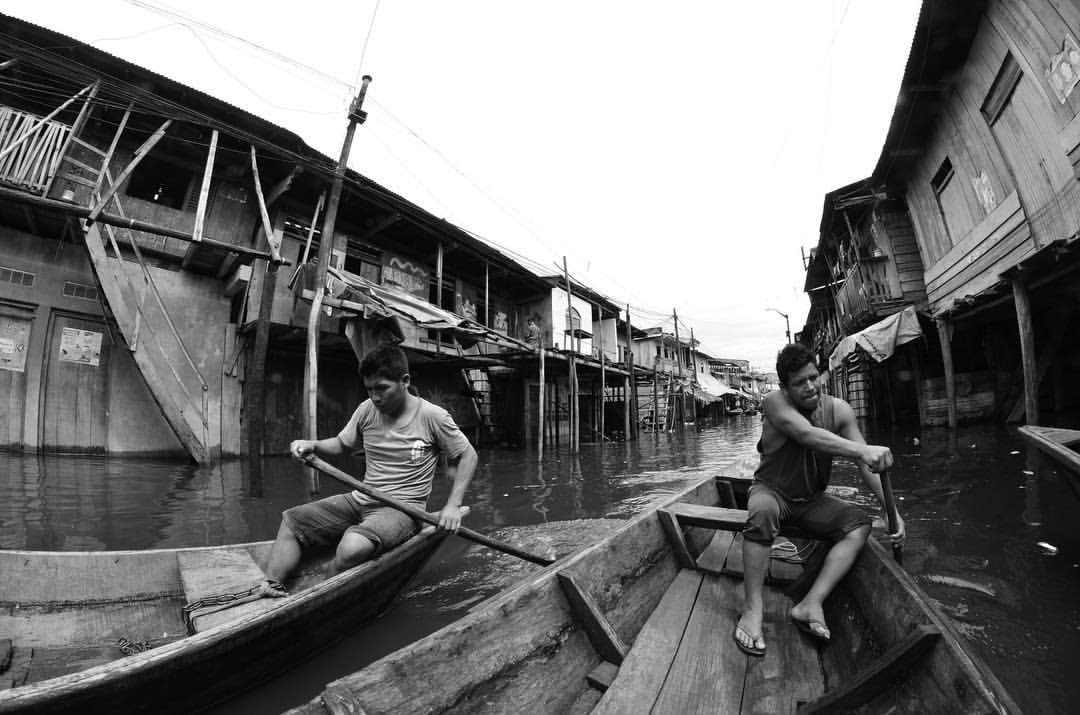
Belén is the oldest market district in Iquitos — a neighbourhood built partly on land and partly on the water, where the Amazon's seasonal flooding reshapes the commercial geography twice a year. In the high-water months (December through April), the lower Belén neighbourhood floats: the wooden platform houses rise with the river, tethered to pilings, and the market functions from dugout canoes navigating between structures that in the dry season sit on ground. In the dry season, those same canoes move through mud and exposed riverbank. The river does not stop the market; it simply changes the geometry in which it operates.
The market is the commercial point of arrival for the river communities of the Loreto region — the ribereño settlements along the Amazon, Nanay, Itaya, and the smaller tributaries that extend through the department. What those communities produce — fruit, fish, medicinal plants, palm products, game — arrives at Belén by canoe each morning, offloaded into stalls by sellers who may have paddled four or six hours from their river community and will paddle four or six hours back the same day. The buyers are the families of Iquitos, the restaurants of the city centre, and the intermediaries who distribute farther. The market economy of the northern Amazon, in its daily functioning, passes through this district.
The ethnobotanist who leads Kada's Belén programme was trained at the National University of the Peruvian Amazon in Iquitos and has spent two decades documenting the medicinal plant knowledge of ribereño communities in the Loreto region. His relationship to the Belén market is not that of a guide reciting names. He shops here. He knows the vendors — the women from particular communities who bring specific plants that are not available elsewhere in the city, the seasonal arrivals of fruit that correspond to flowering cycles he monitors as part of his research. The morning with him in the market is structured around the botanical inventory but produces, in practice, a map of where everything on the stalls came from and what knowledge its production represents.
The Botanical Inventory
The first thing the ethnobotanist addresses in the market — before the individual plants — is the question of why this inventory exists at all. The northern Peruvian Amazon holds, in conservative estimates, between thirty and forty thousand plant species in the Loreto department alone. The world's flora comprises approximately four hundred thousand known species; a single Amazonian department holds roughly ten percent of them. The market is not a comprehensive sample of this inventory. It is the intersection of that inventory with human use — the fraction of the forest's plants that the river communities have identified, cultivated or harvested sustainably, and integrated into daily food, medicine, and material culture over centuries of accumulated knowledge.
Camu camu (Myrciaria dubia) is among the most commercially significant Amazonian fruits in the current global health food market, and one of the most misrepresented. It grows on shrubs in the seasonally flooded margins of Amazonian rivers — várzea systems similar to those of Pacaya-Samiria — and produces a small, cherry-like fruit of intense acidity that, consumed raw, is almost unbearably sour. The vitamin C content of camu camu is among the highest of any known fruit — approximately sixty times the vitamin C concentration of a lemon by weight. In Belén, camu camu is sold fresh, as pulp in sealed bags, and as juice prepared on-site. The ethnobotanist's observation: the extraction and refrigeration methods used in mass-production for the export market destroy a significant proportion of the bioactive content that the fresh fruit or the traditionally prepared pulp retains. The Belén vendor's camu camu, consumed that morning, is a different product from the camu camu supplement capsule sold in a European health shop.
Aguaje (Mauritia flexuosa) — the moriche palm — is the most ecologically significant tree in many Amazonian wetland systems and the source of one of the northern Amazon's most culturally embedded foods. The palm produces a scaly, chestnut-sized fruit with a thin outer flesh over a hard seed — the flesh is eaten raw, prepared as aguaje cream (aguajina), fermented into a mild alcoholic drink (chicha de aguaje), or processed into ice cream and sweets. The ethnobotanist distinguishes between the two varieties present in Belén stalls: the cultivated aguaje, harvested from managed groves, and the wild-harvested aguaje, collected from populations that the community leaves to produce naturally. The nutritional profile differs; the community practices around each differ. The flavour of aguaje cream made from properly ripened wild fruit — dense, slightly fermented, intensely orange from the high beta-carotene content — is not reproducible from a processed product and is specific to the market stalls where it is made from fruit brought in that morning.
Paiche (Arapaima gigas) — the giant arapaima — is the largest scaled freshwater fish in the world. Adults reach three metres in length and two hundred kilograms in weight. In the twentieth century, unrestricted commercial fishing reduced wild paiche populations to near-extinction across most of their Peruvian range. The fish visible in Belén's market stalls today is primarily from farmed operations — managed paiche aquaculture that has developed in the Loreto region specifically to reduce pressure on wild populations while maintaining the fish as a viable commercial species. The ethnobotanist knows the supply chains: which vendors source from farms with documented sustainable practices, which source from cooperatives with community management arrangements, and which source from wild-catch operations in areas without effective monitoring. The distinction is not visible to a casual buyer. It is visible to someone who has been asking these questions for two decades.
Sangre de grado (Croton lechleri) — the sap of the dragon's blood tree — is a deep red latex produced by cutting the bark, used throughout the Amazon for wound healing, gastrointestinal conditions, and skin infections. In the Belén market it is sold in small bottles by vendors who obtain it from forest communities where the tree grows naturally or from managed groves. The ethnobotanist frames sangre de grado as one of the best-documented cases of the gap between Amazonian traditional knowledge and the pharmaceutical industry's engagement with it: the wound-healing compounds in the sap have been isolated, synthesised, and commercialised by pharmaceutical companies without compensation to the communities whose knowledge identified the plant's properties. The bottle in the Belén stall costs two soles. The synthetic compound derived from it appears in patented medical products sold at orders of magnitude higher prices in markets that have never heard of Croton lechleri.
What the Market Is Not
The ethnobotanist addresses the bushmeat section of the market directly, because it is there and because not addressing it would be a form of misrepresentation. The lower Belén market includes vendors selling wild animal products — dried river turtle eggs, smoked game including species whose conservation status ranges from vulnerable to critically endangered, and in some seasons, animals sold live. The ethnobotanist does not direct the morning's route through these stalls. He has a clear position: the trade in many of these species is not legal under Peruvian wildlife law; enforcement is inconsistent; the trade persists because the economic alternatives for river communities in the most remote sections of the Loreto department are limited and the regulatory presence is not continuous. He discusses it as a structural problem — the intersection of poverty, regulatory capacity, and conservation priority — not as a moral failing of individual vendors. Kada's programme does not involve purchasing from these sections or presenting the bushmeat trade as an attraction of the Belén experience.
What Kada Arranges
Morning programme, departing from the Heliconia Amazon River Lodge or the Treehouse Lodge for guests based outside the city, or from Hotel Casa Morey or the DoubleTree Iquitos for guests in the historic centre. Departure by 7:00 AM — the Belén market reaches its commercial peak in the morning hours, with the greatest variety of river-community produce arriving before 9:00 AM. The programme runs approximately two and a half to three hours.
The ethnobotanist leads the market circuit: the fruit section, the medicinal plant vendors, the fish stalls with the freshwater species of the Loreto river system laid out on ice. At each section, the conversation covers the species, its origin community and harvesting method, its cultural use, and its current commercial position — whether thriving, declining, or in a supply chain that Kada considers structurally sound enough to support.
The programme includes a prepared market breakfast at a riverside stall that the ethnobotanist selects for its use of Amazonian ingredients: jugo de camu camu, tacacho con cecina (smashed green plantain with smoked pork, a ribereño staple), and whatever the morning produces in terms of fresh fruit that the ethnobotanist judges worth tasting. This is not a curated restaurant. It is where people who work in the Belén market eat their own breakfast.
Expert Perspective
"Every city has a central market, and every central market is a version of the same story: this is what the region produces, this is what people have decided to eat, this is what the supply chain looked like at this particular moment in history. Belén is that story for the northern Amazon, and the Amazon version of it is unlike any other I know, because the depth of the botanical inventory is genuinely without parallel. What the ethnobotanist I work with in Iquitos does, over a morning in the stalls, is show you that the market is not exotic colour and unfamiliar smells — though it is both of those things — but a knowledge system. The aguaje cream vendor learned from her mother which trees to harvest from and at what stage of ripeness. The sangre de grado seller has a relationship with a specific forest community where the trees are managed on a cycle that keeps them producing. That knowledge is the market, not the product. The product is the evidence that the knowledge exists."
— Elizabeth Garcia, Senior Travel Designer, KADA Travel
A Practical Note
Timing: The 7:00 AM arrival is meaningful — by 10:30 AM, many of the most interesting river-community produce stalls are beginning to pack down, vendors returning by canoe before midday. A 9:00 AM arrival produces a materially less complete market circuit than an earlier start.
Footwear: The Belén market — particularly in the lower, riverside sections — is a working market, not a tourist infrastructure. Surfaces include wooden planking, compacted earth, mud in wet season, and fish-market floors that are kept clean by the vendors but are still fish-market floors. Closed shoes or sandals with secure straps are appropriate. Guests in open sandals or dress shoes are advised accordingly before the morning.
Hygiene: Market conditions are typical of a large working food market — the ethnobotanist carries hand sanitiser and advises on what to handle and what to observe. Samples offered by vendors at the ethnobotanist's direction are safe; Kada does not recommend accepting food offered by vendors the ethnobotanist has not evaluated.
Photography: Belén vendors are accustomed to being photographed and most are not averse to it. The ethnobotanist asks permission before directing guests to photograph individuals. Photographing the product stalls without a person in frame requires no permission. Close-range portrait photography is a different request — the ethnobotanist reads the vendor's comfort and guides guests accordingly.
Combining with the city programme: The Belén market morning pairs directly with the historic district afternoon (Art 7 — the Malecón Tarapacá rubber-era architecture with a local historian). The two halves of the same day give guests two different economic histories of Iquitos: the nineteenth-century rubber boom that built the mansions, and the river-commerce system that has sustained the city since. Kada designs the Iquitos itinerary in this sequence when the guest's schedule allows.
Written by Kada Travel Editorial
Frequently Asked
The Belén market is a dense, busy working market in a low-income neighbourhood of Iquitos. The standard urban precautions apply: don't carry valuables, don't display expensive camera equipment unattended, keep belongings close in crowded sections. The ethnobotanist who leads the programme is familiar with the market and navigates it continuously as part of his own work. Kada's programme has operated without security incidents in its documented history. The question of whether Belén is "safe" in the abstract is less useful than the specific condition of a market visit with a knowledgeable local guide — under those conditions, the morning is manageable and the experience is genuine rather than sanitised.
The floating Belén neighbourhood — the wooden-house community built on platforms that rise and fall with the river — is directly adjacent to the market. In the high-water season (December through April), canoe access to the floating houses is possible, and the ethnobotanist includes a brief canoe transit through the floating section when conditions are appropriate. In the dry season, the platforms rest on exposed mud and riverbank, and the character of the neighbourhood changes. Access to the floating section is available to guests who want it; the ethnobotanist assesses conditions on the morning and advises on whether the canoe transit adds meaningfully to the programme given current river levels.
Kada does not structure the programme as a shopping experience. The ethnobotanist brings the market circuit as a knowledge encounter, not a procurement exercise. Guests who want to purchase specific products — camu camu pulp, a bottle of sangre de grado, a small bag of dried medicinal herbs — may do so at his guidance; he knows which vendors supply products that are what they say they are and which are adulterated for the export market. Purchasing at Belén directly supports the river communities whose produce arrives by canoe; the ethnobotanist frames this as the relevant consideration for guests who want to participate economically in what the market represents.
Paiche aquaculture has become commercially viable in the Loreto region since the 2000s, and the regional government has incentivised farmed paiche production specifically to reduce wild-catch pressure. Wild paiche populations in Pacaya-Samiria National Reserve have shown signs of recovery under the reserve's managed fishing arrangements — the reserva nacional designation specifically allows regulated traditional fishing by the riparian communities who have historical fishing rights in the reserve. Commercial wild paiche fishing outside protected areas remains a conservation concern in unmonitored sections of the river system. The market at Belén contains both farmed and wild-caught paiche; the ethnobotanist identifies the distinction at the stall level, making the supply chain visible in a way that the consumer purchasing paiche at a Lima restaurant cannot access.
Design Your Journey
Design your bespoke Peru journey
We talk. We listen. Then we design an itinerary that belongs only to you.
Start Planning