Unfolded· 7 min read·23 July 2026
What the River Keeps in Its Interior
The boto — Inia geoffrensis, the Amazon pink river dolphin — in an oxbow lake at dawn, accessible by private skiff from Iquitos before 6:00 AM. The boto does not perform. It surfaces, rolls, and descends on its own logic, on its own schedule. What the dawn encounter provides is proximity to one of the world's few remaining freshwater cetaceans in the habitat it has occupied since the Miocene.
By Kada Travel Editorial
The Amazon river dolphin has been in the river system since before the Andes were fully formed. Inia geoffrensis — the boto, the pink river dolphin, the encantado of Amazonian mythology — is one of five freshwater dolphin species surviving on Earth, all of them relict populations from marine ancestry, isolated in river systems when sea levels fell during geological periods that most of us cannot visualise. The boto's nearest living relative in the marine world is the sperm whale. In tens of millions of years of freshwater isolation, the boto evolved a set of adaptations to the Amazon's specific architecture: a flexible neck that allows the head to rotate ninety degrees and look sideways — essential for navigating around submerged root systems in the flooded forest; a reduced dorsal fin replaced by a low dorsal ridge, because a full fin would catch in waterside vegetation; enlarged front flippers for manoeuvring in tight spaces; and an echolocation system of extraordinary precision, capable of resolving objects two centimetres wide at fifteen metres of distance, in complete darkness, through turbid water and submerged wood.
The boto is not rare in the way of a critically endangered species. Its population — estimated at tens of thousands across the Amazon and Orinoco basin — is stable where the river system is protected and fishing pressure is managed. But it is singular in another sense: it exists nowhere else on Earth. This river system and this geological isolation produced it, and this river system is the only place it is. The boto in the oxbow lake at dawn outside Iquitos is not one of many places to see it. It is one of the very few.
Why the Cocha, Why the Dawn
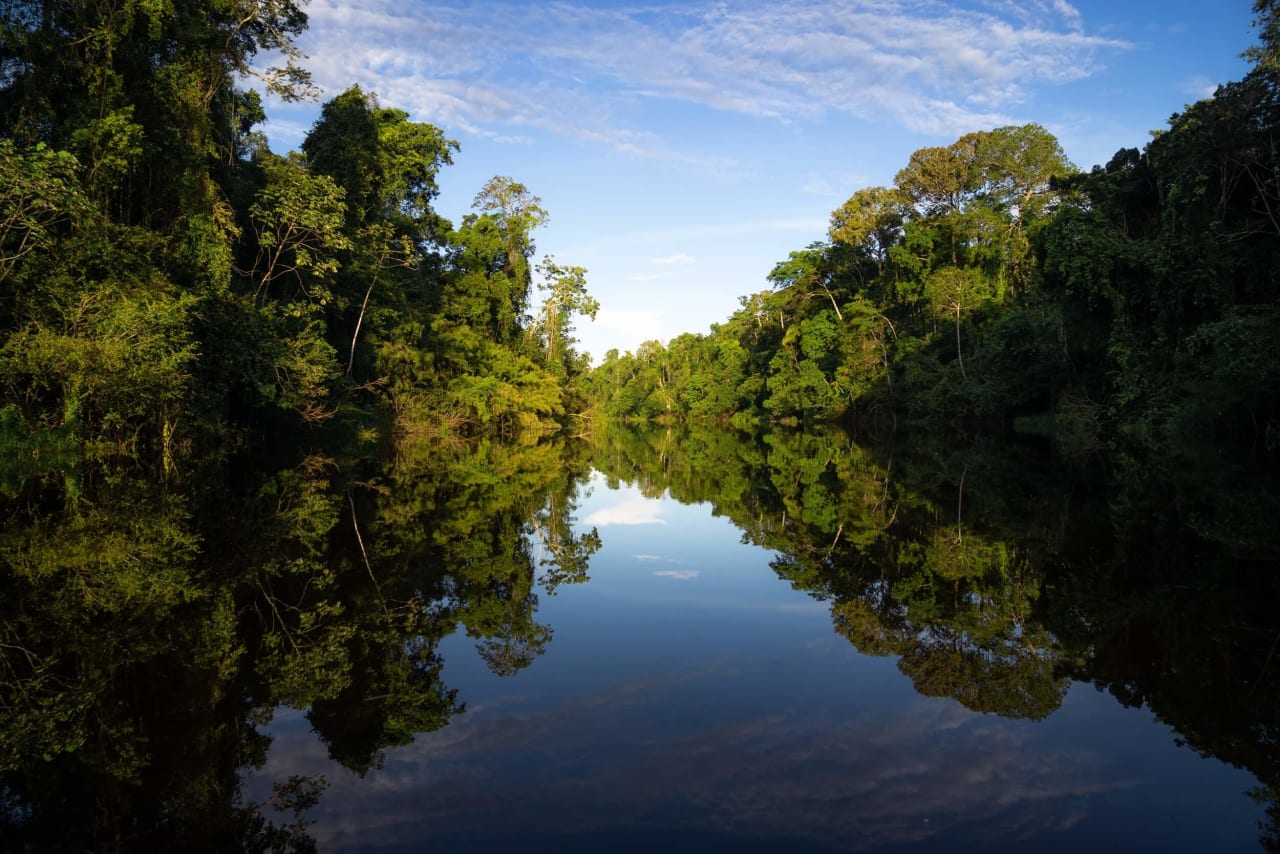
The boto in the main river channel is visible — its dorsal ridge rolling to the surface every thirty to forty seconds to breathe — but the encounters are brief, the approach distance from a navigating vessel is significant, and the main channel carries boat traffic that disturbs the animal's feeding behaviour. The encounter that produces proximity, duration, and legibility is the cocha: an oxbow lake, cut off from the main river by sediment deposition, with still or slow-moving water and no through-traffic. The boto uses cochas because the fishing is productive — still water concentrates the schooling species that the boto hunts — and because the cocha's acoustic environment is simpler, the echolocation finding less noise interference than in a main channel with current, turbulence, and motor traffic.
The dawn timing is the window when boat activity on the cocha is minimal and the boto is in its most active feeding phase. The species follows a metabolic cycle influenced partly by light: the two or three hours after dawn are the primary feeding window. A skiff that enters the cocha before 5:45 AM, cuts the motor, and drifts will encounter boto surfacing within fifteen to twenty minutes in a cocha where the population is active that morning.
The biologist Kada works with for the boto session — a freshwater cetacean specialist with ongoing survey work in the cochas accessible from Iquitos — manages the approach. The skiff is positioned in a known boto cocha based on the biologist's survey information: which individual animals have been documented in which lake in the preceding days, what the water level and current condition of each cocha is, what the feeding activity looked like on the previous morning's session. The motor is cut two hundred metres from the first confirmed surfacing position. The drift approach reduces the sound disturbance to the level where the boto will surface within ten to fifteen metres of the boat — close enough that the distinctive colouration of a mature male is visible in the morning light, close enough that the exhalation at the surface is audible.
The Biology of the Pink
The boto's colouration is not fixed. Juveniles are uniformly grey; the pink develops gradually with sexual maturity, and is more pronounced in males than in females. The intensity of the pink at any given moment is influenced by temperature and activity level — a boto that has been actively hunting or socialising in warm water is more intensely flushed than a resting animal in cool early-morning conditions. The colouration reflects vasodilation: blood vessels close to the surface, the skin flushing with the exertion of activity and the thermoregulatory demands of the animal's current state.
The boto in the cocha at dawn — cool water, the beginning of the feeding cycle rather than its peak — will typically show the grey-to-pale-pink range rather than the saturated pink of midday activity. The early morning session is not the session for observing the most intense pink. What it provides instead is proximity and extended surface time: the animal at its most active and most frequently surfacing, in the quality of light that low-angle morning sun produces on dark water, at the distance that a drifting skiff in a productive cocha makes possible.
What the River Communities Know
The boto occupies a specific position in the cultural geography of the Amazonian ribereño communities that the purely biological frame of the encounter does not capture. The encantado — the enchanted being — is the boto's cultural form in northern Amazonian mythology across Peru, Colombia, and Brazil: a being that takes human form at night, appears at riverside community festivals in white clothing, and returns to the river before dawn. The myth is specific, consistent across disparate communities, and serves a dual function — explaining certain social events (pregnancies attributed to boto encounters) and structuring a conservation ethic: communities that believe the boto can become human are communities that do not hunt it.
The biologist who leads Kada's boto sessions was born in Iquitos and grew up in a ribereño family on the river. His relationship to the boto is not exclusively scientific. He speaks about the encantado mythology not as superstition to be corrected, but as a parallel knowledge system — a structure of meaning that the boto generates in the communities that live with it over centuries, and that has produced more effective conservation outcomes in some areas than formal legal designations have. Guests who want to understand the boto as more than a species encounter find, in this conversation, the frame that the Amazon's human communities have worked out for living alongside it.
What Kada Arranges
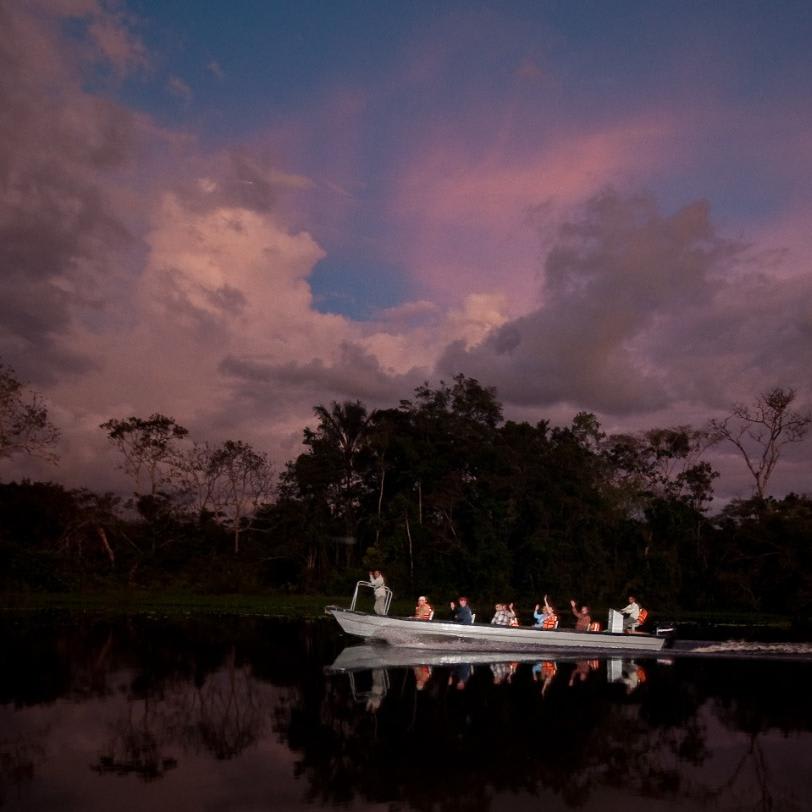
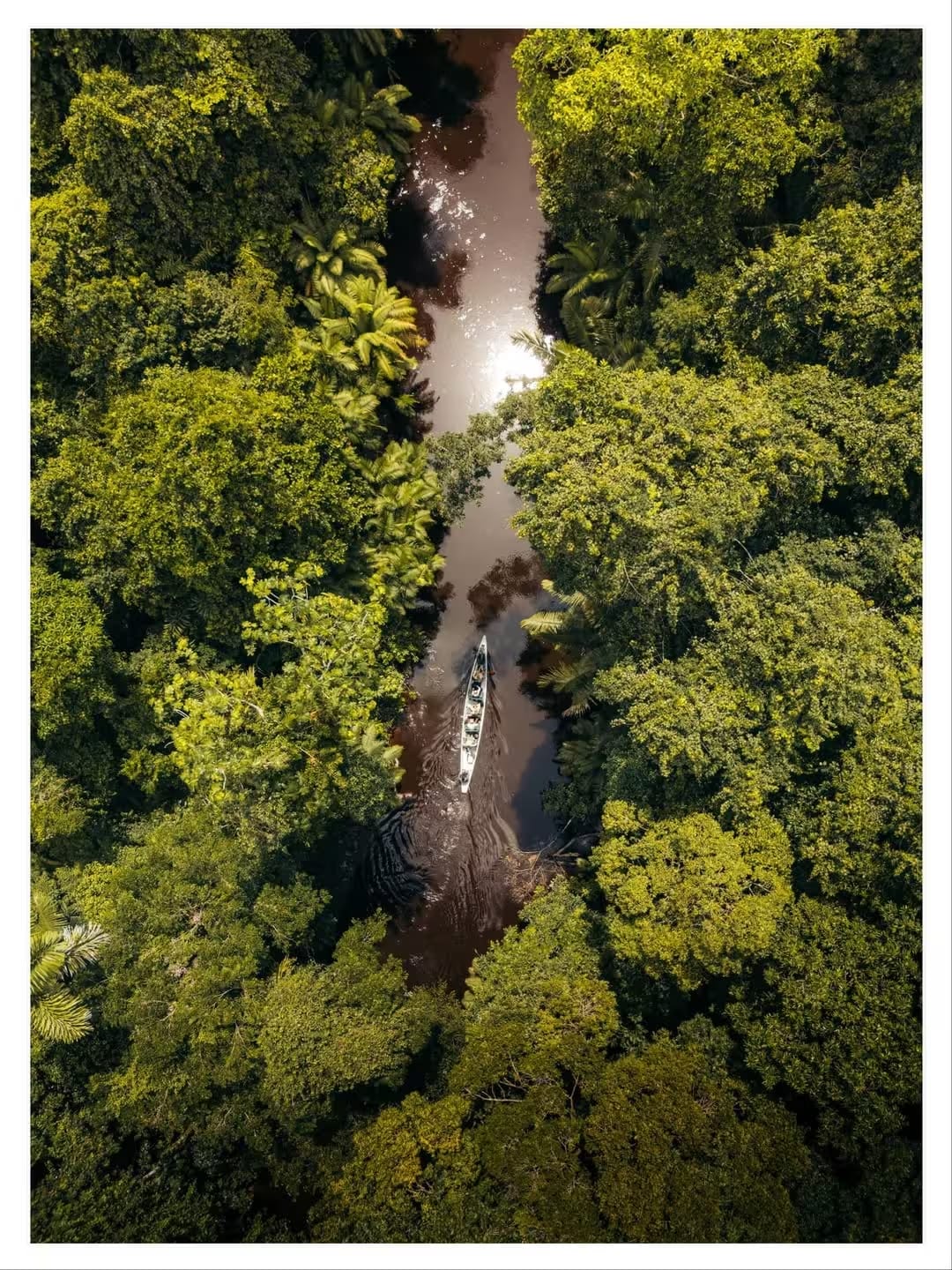
Private skiff with the freshwater cetacean biologist, departing from the Iquitos waterfront or from a river port near the selected cocha, at 5:00 AM — before dawn, to be in position before the morning feeding activity begins. Journey time to the cocha: fifteen to forty-five minutes depending on which lake the biologist has selected based on the previous day's sighting data. Time on the cocha: ninety minutes to two hours. Return to Iquitos for breakfast by 8:30 AM.
The programme can be extended to a second cocha with different hydrological characteristics — still water versus slow-moving inlet — to observe how boto behaviour shifts between habitats. This extended version adds approximately two hours. Kada recommends the extended programme for guests whose primary interest in Iquitos is the boto; for guests combining the dawn session with the city programme or the Belén market visit, the standard session is complete on its own.
Equipment provided: binoculars for each guest, waterproof seat cushions, insect protection for the pre-dawn river conditions. The biologist carries a hydrophone — an underwater microphone — that, deployed in the still water of the cocha, allows guests to hear the boto's echolocation clicks and signature calls through a small speaker while watching the animal surface above. The acoustic dimension of the boto encounter is not incidental. Hearing the echolocation of an animal actively navigating and hunting in water that the human eye cannot see through, while watching its dorsal ridge at twenty metres, connects the visual and the acoustic in a way that makes the animal's forty-million-year evolutionary history immediately and physically clear.
Expert Perspective
"I planned the first boto dawn session I did in Iquitos because I wanted to see one close up. I'd been on river boats where the boto surfaced alongside the hull and everyone crowded the rail, and by the time I got there it was gone. The cocha session was completely different. We cut the motor two hundred metres from the lake and the biologist paddled us in. By the time we stopped moving, there were two boto surfacing within fifteen metres — not performing, just breathing, completely indifferent to us. I sat still and watched for almost an hour. At some point I stopped trying to anticipate the exact moment each animal would surface and started just watching the water. The boto appears when it appears. That patience — the willingness to watch without knowing when the next moment is coming — is what the river teaches, and what I think about when I recommend this session to guests."
— Elizabeth Garcia, Senior Travel Designer, KADA Travel
A Practical Note
Timing: The 5:00 AM departure is the non-negotiable element of the programme. Boto activity in the cocha drops noticeably after 8:00 AM as water temperatures rise and the feeding cycle shifts. A 7:00 AM arrival — even in peak dry season — produces a materially different encounter than a 5:45 AM arrival. Guests who cannot physically manage a 4:30 AM wake-up should speak with Kada before booking; a midday variant of the programme exists with lower encounter probability and a different ecological framing, for guests with medical or practical constraints on early rising.
Weather: Rain does not affect boto behaviour. The boto is present in the cocha regardless of cloud cover or light rain. Overcast conditions often improve the quality of photographs — diffuse light on dark water is easier to expose correctly than direct equatorial sun at a low angle. Lightning and significant electrical activity cause the biologist to cancel on safety grounds; in the documented history of boto sessions from Iquitos, cancellations for weather have occurred fewer than a handful of times per year.
Children: The programme is appropriate for all ages. The skiff provides seating with life vests for young children. The ninety-minute duration on the water is appropriate for children aged six and above; very young children may find the wait between surfacings difficult to sustain. Kada discusses family ages before booking to confirm the session design is appropriate.
Photography: The boto presents specific photographic challenges: the surface exposure is brief (two to three seconds maximum), the surfacing position is not predictable from session to session, and the low light at dawn requires either a fast lens or high ISO tolerance. Continuous-shooting mode, pre-focused on the water surface at the approximate distance of the animal's most recent surfacings, is the standard method. The biologist will indicate the approximate position and direction of a likely surfacing based on the animal's tracked trajectory — a significant advantage over free-form wildlife photography.
Written by Kada Travel Editorial
Frequently Asked
No. The boto encounter is entirely observation-based — from the skiff, at close range. Some operators in the northern Amazon offer in-water boto encounters; Kada does not include this. The reasons are practical — the boto is a large, powerful, wild animal with an unpredictable turning radius and a bite that requires attention from experienced handlers — and conservation-ethical: habituating wild cetaceans to in-water human contact has documented negative consequences for the animals' behaviour and stress levels in populations observed over time. The close surface encounters from a drifting skiff are more informative, less disruptive, and produce better conditions for observation than in-water contact.
The boto (Inia geoffrensis) is classified as Endangered on the IUCN Red List. The primary threats are bycatch in commercial fishing gear, deliberate killing for use as bait in the catfish (mota) fishery, and habitat degradation from mercury contamination originating in illegal gold mining operations in the headwater rivers. In Pacaya-Samiria and the protected river systems around Iquitos, the population is considered stable. In unprotected sections of the Peruvian, Brazilian, and Bolivian Amazon, populations are declining. The biologist who leads Kada's boto sessions contributes sighting data to the national monitoring network that tracks population trends across the species' range.
Marine dolphins (Delphinidae) are social species that routinely approach boats, investigate swimmers, and display play behaviour toward humans. The boto is not asocial — it lives in loose social structures — but it does not approach boats voluntarily. A boto that surfaces near a drifting skiff does so because the skiff is non-threatening and the animal's feeding or movement route happens to pass through that position, not because it is curious about the people in the boat. This is not a managed encounter with habituated animals; it is a wild animal that has chosen proximity because the conditions allow it. That distinction is exactly what makes the encounter legible — the boto's indifference, its continued feeding behaviour, the absence of any display — and what most visitors understand as the most honest wildlife encounter they have had.
Yes, and Kada recommends the combination. The boto dawn session from Iquitos — in a known, accessible cocha before the cruise begins — provides the closest and most controlled individual encounter of the trip. The Pacaya-Samiria cruise then places that encounter in the full ecological context: the boto as one species among many in a 2.08-million-hectare flooded-forest system, observed across multiple sessions and habitats over four to seven days. The two experiences are complementary, not redundant.
Design Your Journey
Design your bespoke Peru journey
We talk. We listen. Then we design an itinerary that belongs only to you.
Start Planning