Unfolded· 7 min read·20 July 2026
The Storey Above the Forest Floor
The Amazon canopy at thirty-six metres in the Tambopata Research Center — a working biological station continuously operational since the late 1980s — with access through a resident researcher whose survey work maps the canopy community that the forest floor cannot reach. Not a zip-line. Not an adventure course. A research platform with a view into a distinct ecosystem that most Amazon visitors never see.
By Kada Travel Editorial
The canopy at Tambopata is a separate ecosystem from everything below it — and the part of the Amazon most visitors never reach. The standard access to the Peruvian lowland forest concentrates at river level and on ground trails; the canopy remains an overhead ceiling, visible in outline but not in detail. The species that live there full-time do not appear at ground level: the three-toed sloth (Bradypus variegatus), which descends to the forest floor only to defecate, approximately once a week; the spider monkey (Ateles chamek), present only in undisturbed old-growth primary forest and ecologically incompatible with the habitat edges where most Amazon lodges operate; the kinkajou, a nocturnal procyonid that never voluntarily leaves the canopy. The harpy eagle — whose nesting territories in the Tambopata reserve have been located and documented by resident researchers — is seen from canopy height or not at all. One structure in the reserve provides access to that zone: the observation tower at the Tambopata Research Center, at thirty-six metres.
The TRC is not an ecolodge with a canopy walk attached. It is a biological research station that has operated continuously in the core zone of the Tambopata National Reserve since the late 1980s — positioned approximately ninety kilometres upriver from Puerto Maldonado, inside the reserve boundary where the managed buffer zone gives way to the most protected interior. The station was founded through a collaboration between Earthwatch volunteers and Peruvian researchers for long-term macaw population surveys at the Collpa Chuncho clay lick; it now supports resident researchers across macaw ecology, canopy biology, arthropod diversity, and plant phenology. Its observation tower was built as a scientific instrument. The resident researcher who leads the canopy session uses it for active prospection surveys as part of ongoing fieldwork — the morning with a Kada group is also a field morning for him.
What the Canopy Contains
At thirty-six metres — the height of the TRC observation tower — the floor of the canopy is at eye level. What this means in practice: the surface that the ground observer sees as an indistinct green ceiling is, from the tower platform, a textured landscape of horizontal branch systems, epiphytic gardens, and gaps where emergent trees break through the canopy toward the sky.
The epiphytes are the defining feature. Bromeliads, orchids, ferns, and mosses colonise every available horizontal surface in the canopy — branches, branch forks, the accumulated humus of decades of decomposition on larger limbs. A single large tree in the Tambopata canopy may host several hundred individual epiphytic plants. The tank bromeliads are ecological structures in their own right: their central reservoirs hold standing water that becomes habitat for specialised invertebrates, frog eggs, and the larvae of species found nowhere else in the forest. The researcher who leads the canopy session at the TRC documents these bromeliad communities as part of his ongoing survey work. The morning on the tower is, from his perspective, also a field session in which data is being collected.
The birds visible from the canopy platform are the birds of the upper forest — the species that hunt from exposed branch tips, the cotingas and tanagers whose colouration is only fully visible at canopy height in open light, the antbirds that follow army ant swarms across the canopy surface. The harpy eagle (Harpia harpyja) — the largest eagle in the Americas, with a wingspan of two metres and talons proportioned to grip a howler monkey — nests in emergent trees in primary Amazonian forest. Its nest territories in the Tambopata reserve have been located and documented by TRC researchers. When conditions are favourable, the canopy session produces harpy sightings from the tower that the forest floor cannot. Each visit to the platform differs from the one before it. What does not differ is the frame: every species the researcher identifies, every epiphyte colony he documents, every fruiting tree on the canopy horizon he knows the macaw flight corridors through is part of a prospection record built from this tower across years. The canopy session at the TRC is a morning inside that record — the forest seen through the instrument the station built to read it.
The Research Center as a Site
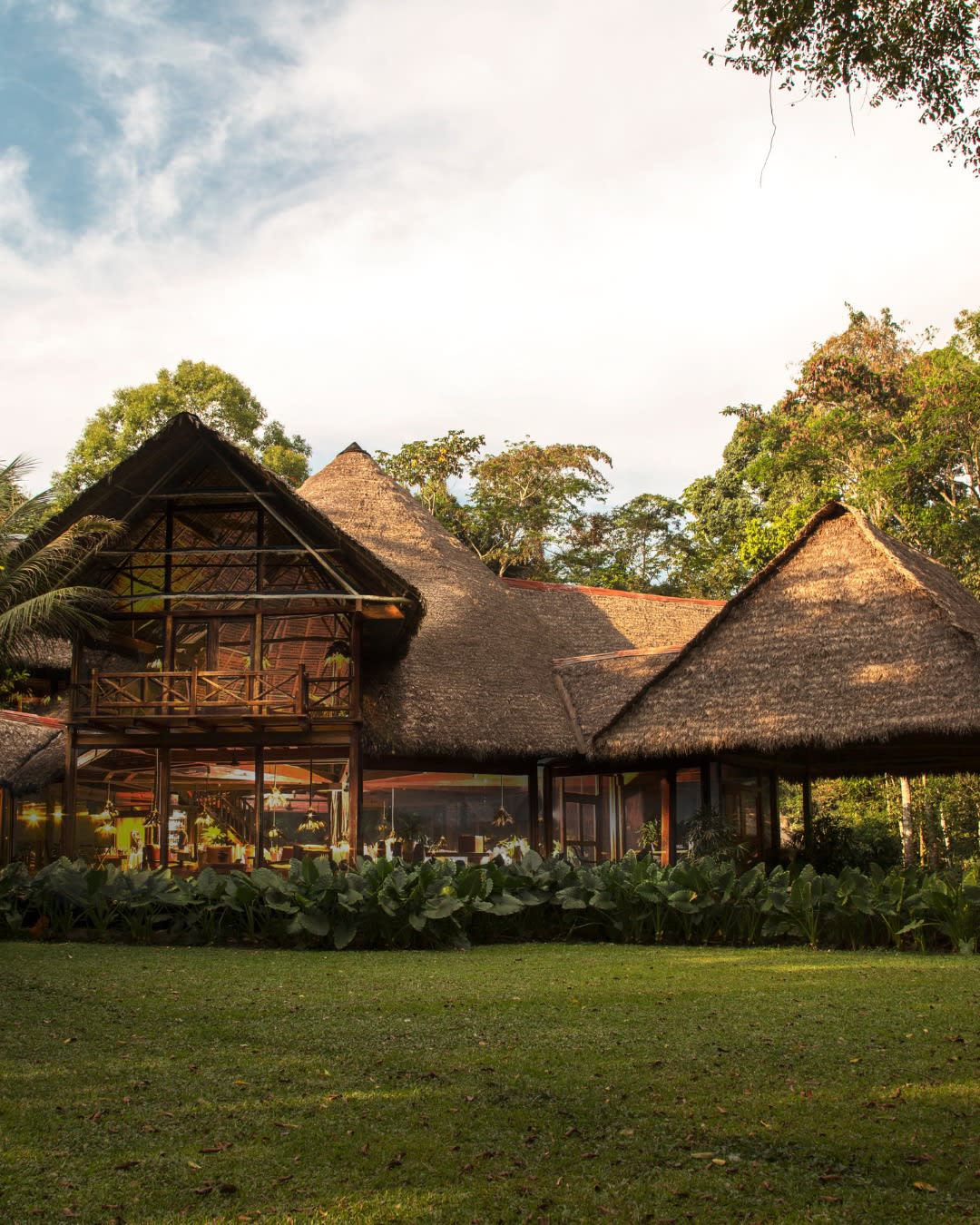
The Tambopata Research Center is not a luxury lodge in the conventional sense. It is the only accommodation in the innermost permitted zone of the Tambopata National Reserve, positioned where the managed buffer transitions toward the maximum-protection core. The cabin accommodation — built on stilts, with screened windows and fans, without air conditioning — is basic relative to Inkaterra Reserva Amazónica or Refugio Amazonas. The reason to go there is access: to the canopy tower, to the Collpa Chuncho at its most productive (the TRC is the closest lodge to the clay lick), and to a forest community in primary condition that reflects decades of complete protection.
Kada includes the TRC as the culminating stay in a Tambopata itinerary — two or three nights at one of the larger lodges at the reserve boundary, with their fuller amenities, followed by two nights at the TRC for guests who want the research station experience in the reserve's interior. The TRC is right for guests who understand that the most productive field stations in the world rarely have room service, and who are there specifically for what the research station provides rather than for what a premium lodge provides.
What Kada Arranges
The resident researcher Kada works with at the TRC has spent years conducting canopy prospection surveys in this specific section of the Tambopata reserve — not as a nature guide narrating a catalogue of species, but as a field biologist whose data on the canopy community of this forest block is part of the station's active research record. He monitors the epiphytic communities, tracks harpy eagle territory activity, and documents canopy bird movement corridors as part of ongoing work. The session he leads is calibrated by what the canopy is actually showing this season — which bromeliad communities are in documentation, what the current fruiting pattern means for spider monkey movement, where recent harpy sightings have placed the territorial pair. That knowledge is not a fixed programme; it is the working intelligence of someone who was last on this tower weeks ago, not years.
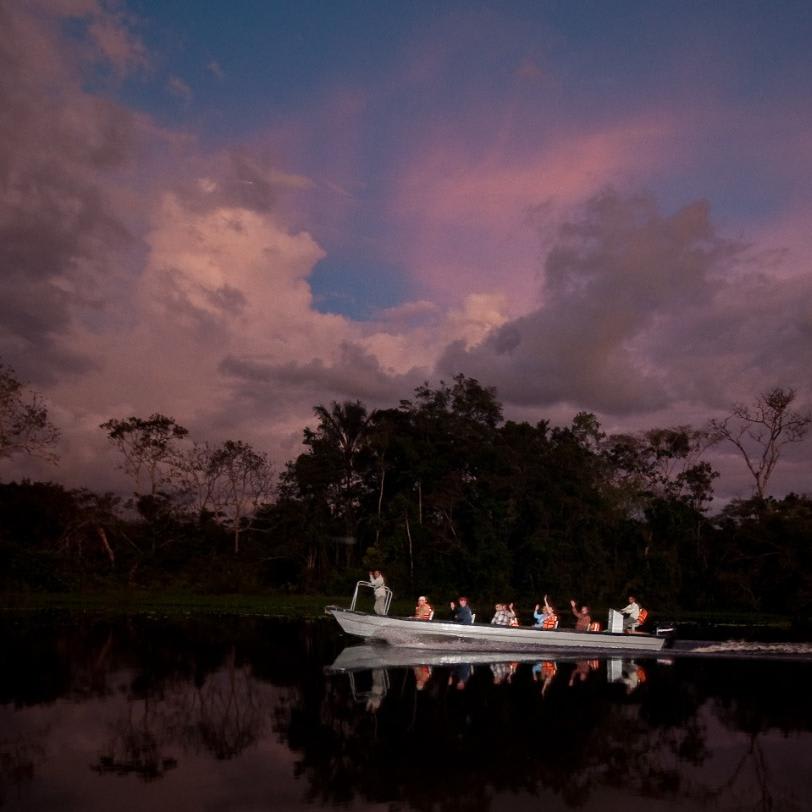
River transfer from Puerto Maldonado to the Tambopata Research Center takes three to four hours by covered motorised canoe, depending on river level. Kada coordinates this as part of the itinerary's internal logistics, with meals on the river for the transit.
The canopy session at the TRC is a half-day programme: morning ascent of the observation tower with the resident researcher, time on the platform for observation and orientation, descent for lunch at the station's communal dining area. Duration on the tower: two to three hours, depending on wildlife activity and cloud cover. A second, shorter platform visit in the late afternoon is often possible when the schedule permits.
Equipment: the researcher provides an annotated species checklist for the canopy community in the TRC zone; binoculars supplied; a spotting scope mounted on the tower rail. Guests should bring a lightweight wind layer — the temperature at thirty-six metres is consistently cooler than at forest floor level, and wind exposure on the open platform is significant on clear days.
Expert Perspective
"The first time I stood on the Tambopata Research Center tower and looked out over the canopy at thirty-six metres, I understood something I had read about but hadn't felt: the forest is not one thing. From the ground, it reads as a single green mass — dense, overwhelming, undifferentiated. From the tower, it resolves into layers. The canopy ceiling below you. The emergent trees above it. The dark interior of the forest beneath both. And the animals you see from the tower are not the animals you saw from the ground. The sloth on a horizontal branch at eye level. The macaws flying at canopy height from the collpa, which you can now see are not randomly distributed but moving along specific flight corridors between feeding sites. The research station at Tambopata has been generating that understanding for decades. The tower is one of the instruments. When we put guests on it with a researcher, the instrument is shared."
— Daniel Ramos, Co-Founder & CEO, KADA Travel
A Practical Note
Lodge conditions at the TRC: Cabins have private bathrooms and cold showers. Generator power is available for a limited number of hours each evening. There is no air conditioning. The forest microclimate at the TRC — inside the reserve, under primary canopy, with good airflow through elevated structures — is more comfortable than the description suggests, but guests who require consistent air conditioning should plan to use Inkaterra Reserva Amazónica or Refugio Amazonas as their primary accommodation and arrange a day-trip to the TRC instead of an overnight.
Tower access: The observation tower is accessed via a steel staircase — thirty-six metres, approximately 120 steps — with a safety cable and handrail throughout. The ascent requires moderate fitness and comfort with open steel structures. Guests with significant acrophobia should discuss this with Kada before booking. The platform at the top has a safety rail on all sides and is structurally rated for multiple occupants.
Research station protocol: The TRC is an active research station. Resident researchers have priority access to the tower for their ongoing survey work. Kada coordinates guest access around the researchers' field schedule. Guests may encounter researchers conducting transect work, species counts, or sample collection during their stay — these encounters are, in practice, among the most informative aspects of the visit.
Season: The canopy session is available year-round. Dry season (May through October) offers clearer visibility from the tower and more active bird movement across the canopy surface. Wet season (November through April) produces more dramatic cloud formations and the possibility of observing tree-fall dynamics in newly opened canopy gaps.
Written by Kada Travel Editorial
Frequently Asked
A research station accommodates scientists conducting field work. The TRC has resident biologists in quarters adjacent to the guest cabins, a library of field guides and active research publications, ongoing survey data collection infrastructure, and a programme orientation defined by what the station exists to study, not by what commercial tourism expects. Guests at the TRC will encounter data collection, specimen observation, and the working rhythm of a field station in a way that a commercial ecolodge does not produce. For guests who want that orientation, the TRC is irreplaceable. For guests who want consistent high-amenity comfort with structured nature activities, the larger lodges at the reserve boundary are the better match.
Several lodges in the buffer zone have constructed canopy walkway systems — suspended bridge networks connecting platforms between trees at eight to fifteen metres. These are different in character from the TRC tower: lower, wider, generally less research-connected. The TRC tower at thirty-six metres is the tallest fixed observation structure in the reserve accessible to non-researchers and the only one staffed by a biologist conducting active canopy surveys.
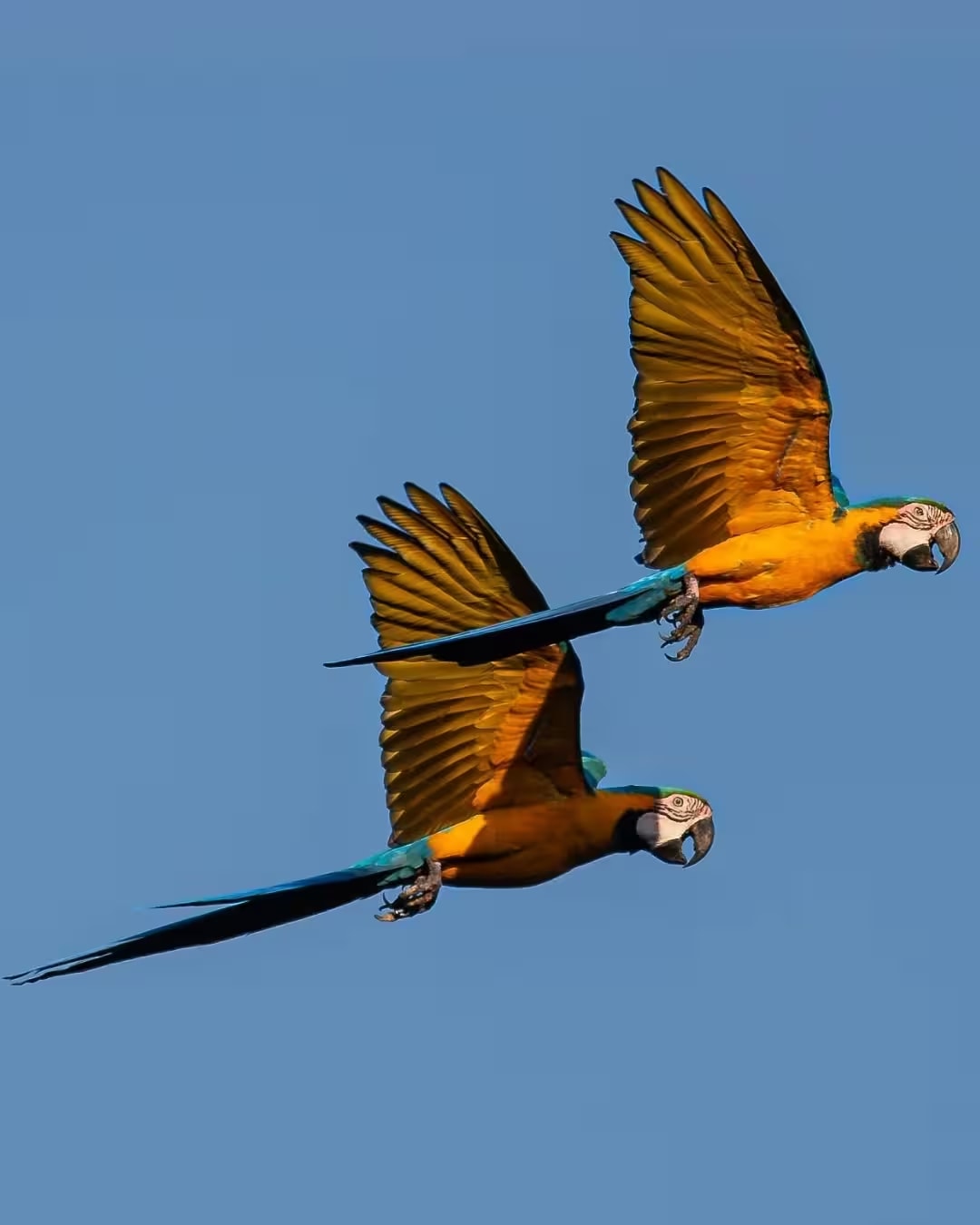
No. They access different species communities at different times. The collpa visit requires a pre-dawn river departure to observe the macaw colony at the clay face in the 5:30 AM window. The canopy session is a morning programme at the research station. Both are logistically possible from the TRC on the same multi-night stay. For guests who want the fullest Tambopata experience, both sessions are included in the itinerary Kada designs.
Wildlife observation in the Amazon does not operate on the reliability of a zoo exhibit. What the canopy session consistently produces: the epiphytic plant community at eye level in full detail, multiple bird species not visible from ground level, aerial views of the river and the forest structure, and a research-connected orientation to the canopy's ecology. What it additionally produces — and what the researcher has documented in this canopy zone but cannot schedule — includes sloths at close range, spider monkeys, toucans, and, occasionally, the harpy eagle. Each visit differs.
Design Your Journey
Design your bespoke Peru journey
We talk. We listen. Then we design an itinerary that belongs only to you.
Start Planning