Unfolded· 7 min read·19 July 2026
What the Forest Does After Dark
A ninety-minute walk in the Tambopata National Reserve with a herpetologist — after the macaws and the river otters have retreated, after the light has gone, when the Amazon becomes a different forest with a different population and different rules. Red-filtered lamps. Silence where possible. A biologist who has spent years cataloguing the nocturnal inventory of this specific reserve.
By Kada Travel Editorial
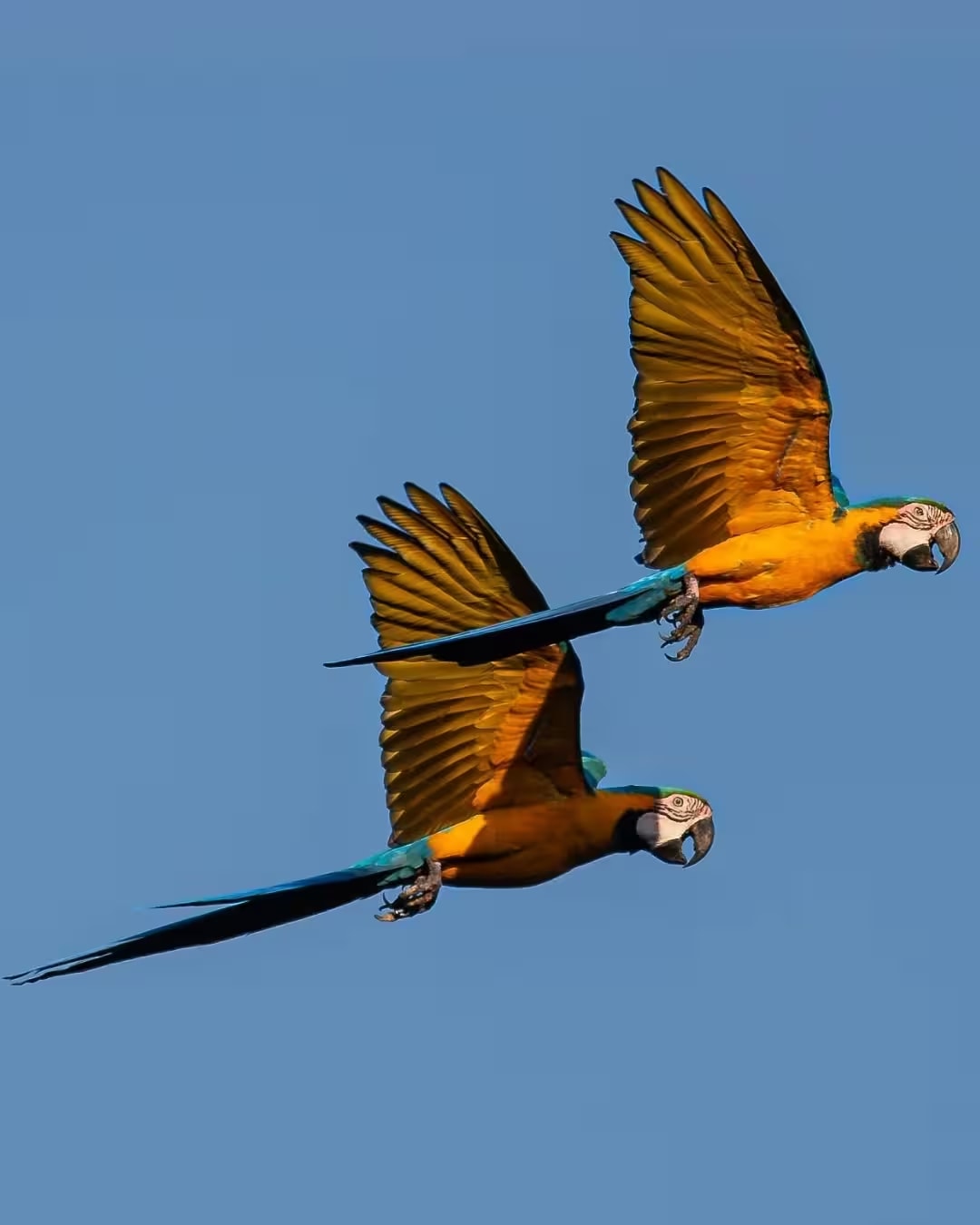
The Amazon rain forest is not one place. It is two — the diurnal forest and the nocturnal forest — that happen to occupy the same coordinates but whose inhabitants have almost no overlap. The birds and butterflies and river mammals that define the Tambopata experience from dawn through dusk have retreated by 7:00 PM to roosting positions, burrows, and canopy feeding sites that day-programme binoculars cannot reach. What replaces them is a population that most visitors to the Amazon never see, because most visitors are back at the lodge having dinner when the nocturnal shift begins.
The figure that field biologists cite — that approximately eighty percent of Amazonian faunal activity occurs after dark — is not hyperbole. It reflects a forest ecology shaped by predator-prey dynamics that run on darkness. The species that feed at night do so partly because the thermal regulation of cold-blooded animals is easier without the equatorial sun, and partly because the visual predators — eagles, hawks, the human gaze — are neutralised by darkness. The black caiman that is nearly invisible along the river's edge at midday will surface to within three metres of a still canoe at 9:00 PM, its eye-shine a pair of amber discs above the waterline, entirely indifferent to presence that it cannot see or hear.
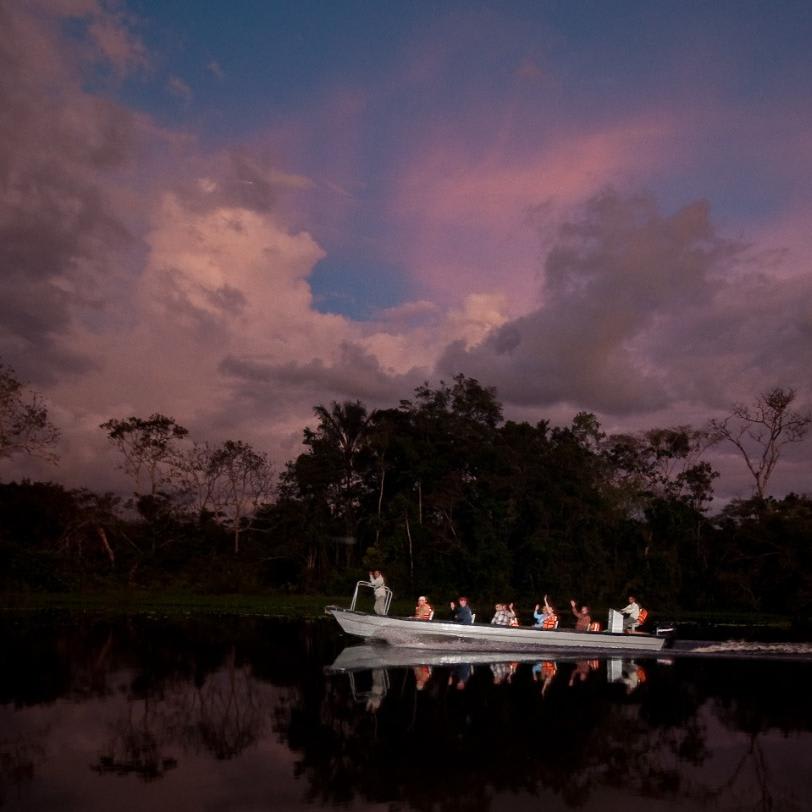
The walk Kada designs in the Tambopata National Reserve runs for ninety minutes, departs at 8:30 PM when the diurnal species have settled and the nocturnal community is in full activity, and is led by a herpetologist or entomologist — the specialist varies based on the guest's stated interests and the biologist's current research priorities. The trail is a confirmed route in terra firme forest adjacent to the lodge grounds, selected on the day according to rain, trail conditions, and wildlife activity from the previous evening's survey.
The Inventory After Dark
The species visible on a nocturnal walk in Tambopata are not supplementary to the Amazonian experience. For several taxonomic groups, they are the experience. Herpetology — the study of amphibians and reptiles — is almost entirely a nocturnal discipline in the Amazon. The 155 amphibian species and more than 100 reptile species documented in the Tambopata National Reserve are overwhelmingly active between dusk and 3:00 AM. A naturalist with a red-filtered headlamp and a decade of transect surveys in this reserve will locate, in ninety minutes of careful walking, species that a week of day-programme itineraries will never produce.
The poison-dart frogs (Dendrobatidae) are the most recognised: small, violently coloured frogs whose skin toxins were used by indigenous hunters on blowgun darts. At night they move at leaf-litter level — Ranitomeya and Ameerega genera, among others, working through the decomposing organic layer where their prey concentrates. The phyllomedusa tree frogs — large, slow-moving, waxy-skinned — sit in the understorey vegetation at eye level, motionless and available for close observation. The glass frogs, whose abdominal skin is transparent to the internal organs, call from streamside vegetation in bursts that are identifiable once the biologist has pointed them out and explained the acoustics of how the calling direction works.
The caimans are the signature encounter. The black caiman (Melanosuchus niger) is the apex predator in the Amazon basin — adult males reach four to five metres in length — and has recovered to healthy population numbers in protected reserves after severe twentieth-century hunting pressure. The juveniles — thirty to sixty centimetres, eye-shine orange in the lamp beam — are found along the shallow water margins and exposed root systems at the forest edge. The biologist can approach to within a metre of a resting juvenile caiman without disturbing it, which demonstrates the behavioural difference between an animal habituated to calm, non-threatening observation and one in a disturbed or heavily trafficked habitat.
The arthropods deserve specific preparation. Tambopata hosts some of the largest invertebrates on Earth: the giant centipede (up to thirty centimetres, mildly venomous, fast), the Goliath bird-eating tarantula (Theraphosa blondi, body length up to twelve centimetres), the rhinoceros beetle, walking sticks that mimic bark so precisely that field researchers step on them without seeing them. These are not incidental encounters on the walk. The entomologist or herpetologist will spend as much time on the arthropods as on the vertebrates, because the invertebrate biomass of the Amazon is structurally fundamental to the entire ecosystem and remains almost entirely invisible to visitors who arrive only in daylight.
What Makes This Walk Different from a Group Night Tour
The distinction is not primarily about the specialist or the equipment — though both matter. It is about pace.
A group night tour in the Amazon moves at a pace set by the slowest observer, stops for photography at the most obvious sightings, and accumulates a species list in the way that tourism itineraries accumulate sights. The walk Kada designs moves at the pace of the biologist, which is sometimes very slow — when he has stopped and gone quiet because something is moving in the undergrowth and he has not yet identified it — and sometimes faster, when conditions in one section are not productive and the route needs to shift to more active ground. The session is not structured as entertainment. It is structured as a field session that the guests are permitted to join.
The biologist carries a notebook. He names species in both common and Linnaean nomenclature. He explains not just what the animal is but what it is doing — the reproductive strategy of the tarantula whose silk-lined burrow entrance is visible in the leaf litter, the thermoregulatory behaviour of the snake resting on a rock that retained heat from the afternoon sun, the acoustic signalling system of the frog whose call range tells a trained ear what species it is before the lamp has found it. The difference between knowing you saw a caiman and understanding why the caiman is there — at that depth of water, at that hour, at that temperature — is the difference between a sighting and a comprehension.
What Kada Arranges
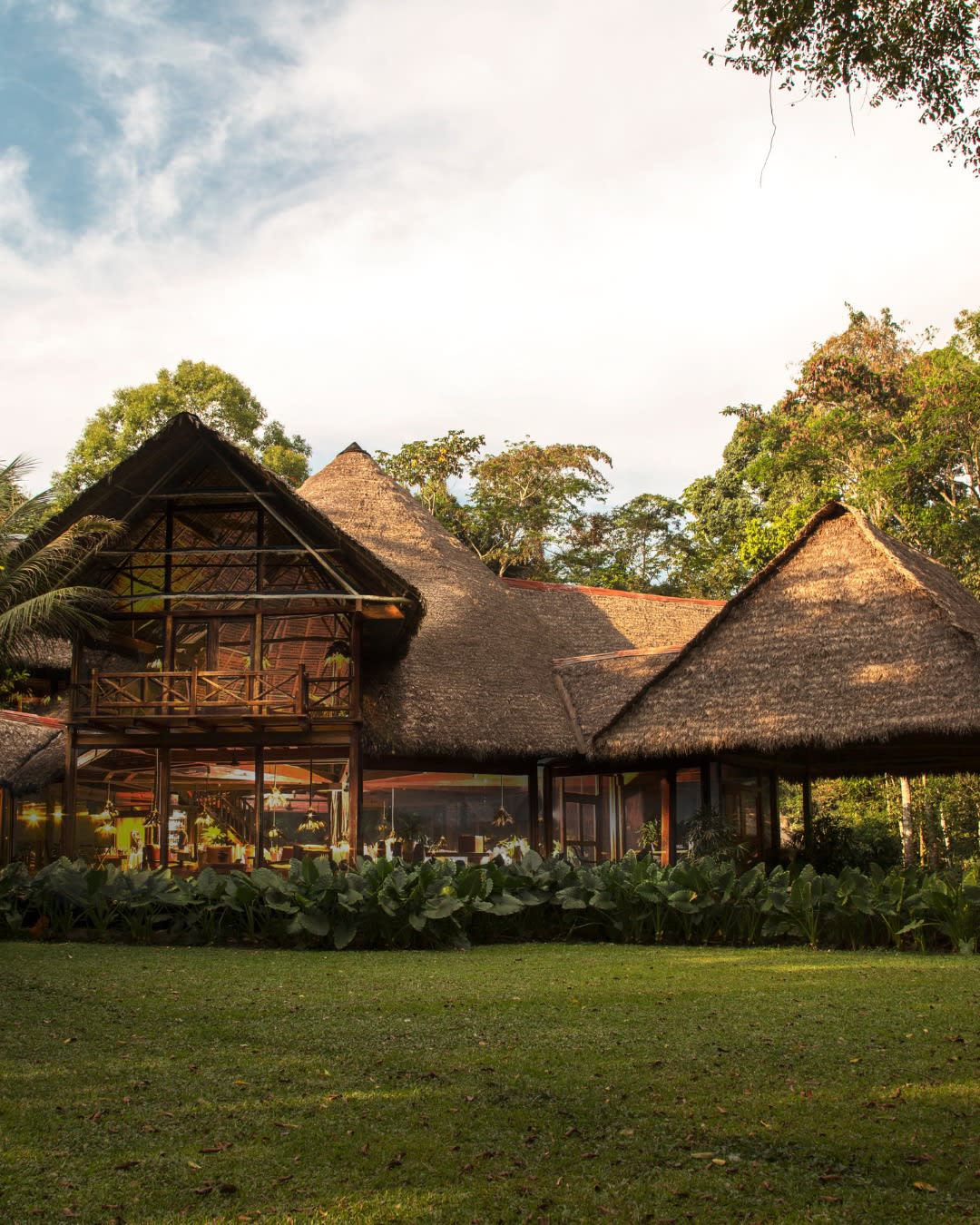
Departure from Inkaterra Reserva Amazónica or Refugio Amazonas at 8:30 PM, following a fifteen-minute briefing from the biologist on trail condition, expected species, and protocol for the walk — no sudden movements, red light only, absolute silence when the biologist signals. Equipment provided: calibrated red-filtered headlamps for each guest, rubber boots in the correct size, insect protection briefing (DEET plus long sleeves and trousers are required; the mosquito and midge pressure in terra firme forest after dark is significant year-round). The biologist carries a catch-and-release container for invertebrate close observation and a night-vision monocular for distant eye-shine identification.
The walk covers approximately 1.5 kilometres on established trails. Duration is ninety minutes to two hours depending on sighting activity. Return to lodge by 10:30 PM at the latest.
The night walk pairs naturally with the Collpa Chuncho dawn session as a two-programme combination that covers the full twenty-four-hour activity cycle of the Tambopata reserve — though Kada typically schedules these on consecutive days rather than the same day, to allow adequate rest between a late-night return and a pre-dawn departure.
Expert Perspective
"The question guests ask most before a night walk is 'will I be scared?' — and the honest answer is: not scared, but alert in a way that most people haven't been in a long time. The forest after dark in Tambopata is not a threatening environment if you stay on the trail and follow the protocol. But it is an environment that asks something of you — attention, stillness, a willingness to stop and wait when there's something moving in the dark that you can't immediately identify. What I find, consistently, is that guests who surrender to that alertness — who stop trying to manage the experience and just observe — are the ones who see the most. The caiman surfaces because they were still. The tarantula comes to the burrow entrance because nobody moved. The forest at night rewards patience in a way I can't replicate in any other setting."
— Elizabeth Garcia, Senior Travel Designer, KADA Travel
A Practical Note
Insect preparation: Long sleeves, long trousers, and closed boots above the ankle are required attire for the night walk — not suggested. DEET concentration of 30% or above is the standard. Guests who have strong reactions to DEET-based repellents should discuss picaridin alternatives with Kada before the visit; these are available and effective, though somewhat less so in high-pressure environments. The mosquito and midge population at ground level in the reserve after dark is highest immediately after rain and lowest in extended dry periods.
Season: The night walk is available year-round. Dry season (May through October) offers drier trail conditions and higher invertebrate activity in the leaf litter. Rainy season (November through April) increases amphibian calling and spawning activity dramatically — rainfall triggers breeding behaviour in frogs — and makes the herpetological inventory richer, though trail conditions are muddier.
Children: The night walk is appropriate for children aged twelve and above who can maintain silence for ninety minutes. For younger children, Kada can arrange a shorter lodge-grounds nocturnal session — thirty to forty-five minutes on lit paths — that introduces nocturnal species without the demands of the full reserve trail.
Photography: Night photography in the Amazon requires a camera body with ISO 6400 tolerance or higher, a fast prime lens (f/2.8 or wider), and realistic expectations about focus in red-light conditions. The biologist can position subjects for extended observation but cannot control when an animal moves. A red headlamp is the only illumination permitted during the walk — no flash under any circumstances.
Written by Kada Travel Editorial
Frequently Asked
The specific physical risks are snakebite (mitigated by staying on the established trail and wearing closed boots), insect stings and bites (mitigated by full protection protocol), and disorientation if separated from the group (mitigated by staying within arm's length of the biologist). In the documented history of night walks in the Tambopata reserve, guest injury from wildlife contact is extremely rare and, where it has occurred, has involved protocol violations. The risks are real, manageable, and proportionate to the experience.
The Tambopata National Reserve hosts approximately thirty-eight snake species, of which eight are venomous. The fer-de-lance (Bothrops atrox) and the bushmaster (Lachesis muta) are the two with the most significant medical consequence if a bite occurs. Both are present in terra firme forest and are active at night. The trail protocol — established path, closed boots above the ankle, no reaching under logs or into vegetation — reduces the encounter probability to very low levels. The biologist carries antivenom on all night walks. The lodge maintains a medical evacuation protocol to Puerto Maldonado with response times under two hours.
The jaguar (Panthera onca) is present in the Tambopata reserve. It is almost never seen on foot at night — jaguars avoid human presence and are not attracted to illuminated trails. The most credible jaguar sightings in the reserve occur at the river's edge in the early morning from a slow, quiet canoe. Kada does not represent the night walk as a jaguar experience. Guests whose primary interest is jaguar should discuss that as a separate objective with the biologist, who monitors current sighting information across the reserve.
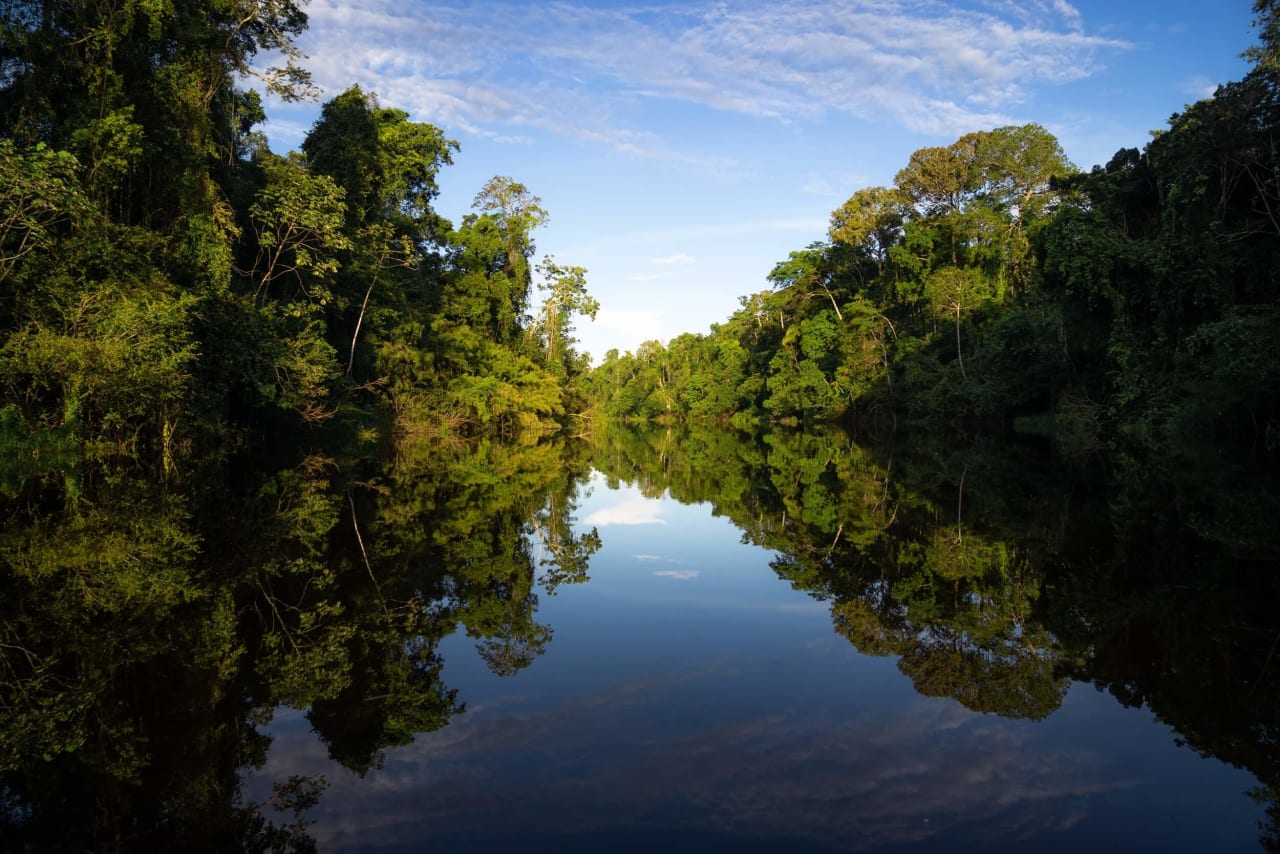
Terra firme — the upland forest that does not flood seasonally — is the habitat of the Tambopata night walk. It hosts different species than the seasonally flooded habitats of the northern Amazon. Terra firme has denser leaf litter (the substrate for most invertebrate activity), a more stable snake and lizard population, and a different amphibian community than igapó or várzea. Guests who later visit Pacaya-Samiria will experience the flooded-forest nocturnal environment — black caiman in open water, anacondas in root systems, a different acoustic landscape — and can compare the two directly.
Design Your Journey
Design your bespoke Peru journey
We talk. We listen. Then we design an itinerary that belongs only to you.
Start Planning