Unfolded· 9 min read·21 July 2026
The Expedition into the Last Great Reserve
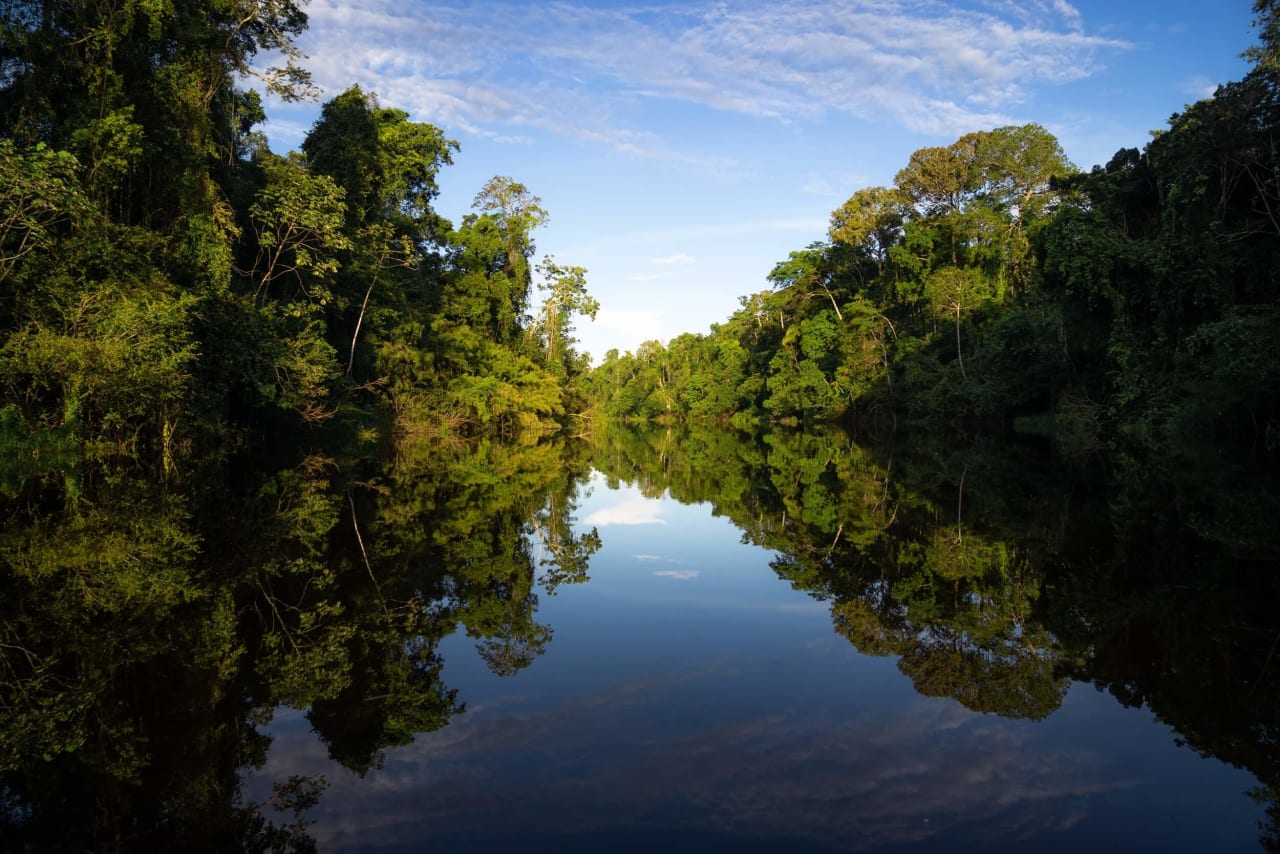
Manu National Park — 1.7 million hectares of primary tropical forest, cloud forest, and high Andean grassland descending from 4,200 metres to 150 metres above sea level in southern Peru. The journey in takes two days. The journey out takes two days. A minimum of five days inside the reserve is the threshold that self-selects the guests for whom this is the right experience.
By Kada Travel Editorial
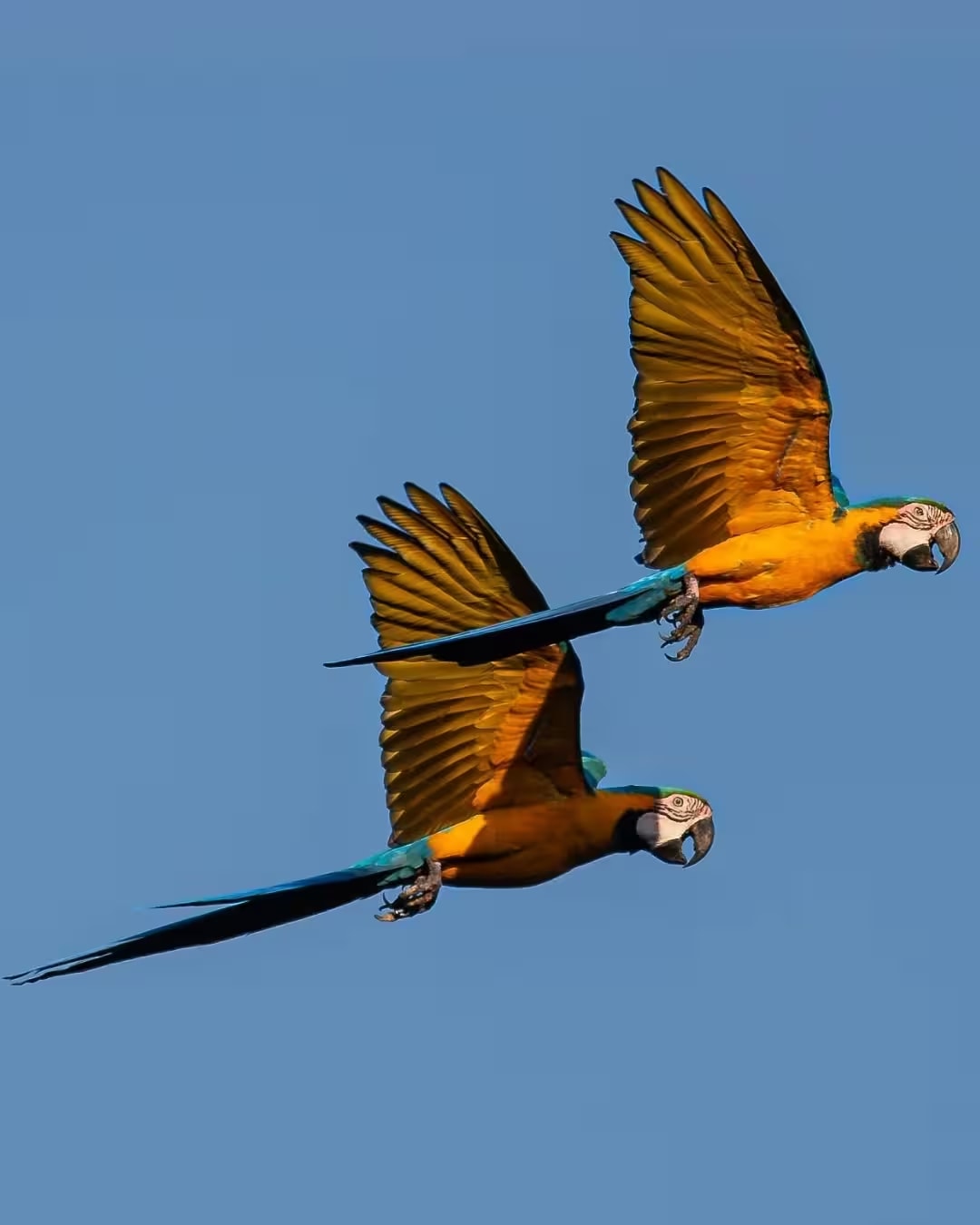
The number that field biologists use when they want to communicate what Manu National Park is: one thousand and twenty-five bird species documented within the park boundary. For context — the entire continental United States and Canada together host approximately nine hundred bird species. Manu, a park of 1.7 million hectares in the southern Peruvian Amazon, holds more species than the entire landmass of North America in a fraction of the area. It is not the most studied protected area in the Amazon. It is arguably the most biodiverse piece of land on Earth.
The reason for that concentration is the park's altitudinal range. Manu descends from the puna grasslands at 4,200 metres — above the cloud forest, above the tree line, in the cold zones of the Andes — through cloud forest, premontane forest, and tropical lowland forest to the floodplain at 150 metres. Each vegetation zone holds its own species community; the diversity accumulates vertically. The birds of the puna — condor, giant hummingbird, puna hawk — are not the birds of the cloud forest — cock-of-the-rock, quetzal, spectacled bear territory — and neither are the birds of the lowland floodplain, where the harpy eagle, the giant river otter, and the jabiru stork occupy entirely different ecological registers. To traverse Manu from the Andean highlands to the Manu River is to cross four distinct ecosystems in a single journey.
That journey takes two days each way. There is no road from Cusco to the reserve zone that takes less than eight hours — the descent through cloud forest via Paucartambo reaches the Atalaya river port after eight to ten hours of driving on a route that is sealed in sections and unpaved for the final descent. From Atalaya, the river journey into the reserve takes four to six hours by motorised canoe, passing through the buffer zone and into the core reserve. The total transit, one direction, is twelve to sixteen hours. The logistical threshold this creates is not incidental: Manu is not for guests who can visit in two days and return to Cusco in time for dinner. The journey in is part of the experience, and the experience requires time.
What the Reserve Zone Contains
Manu National Park has three zones of access. The zona núcleo — the core zone — is closed to all tourism and restricted to researchers with active SERNANP scientific permits. The zona reservada — the reserved zone — is accessible by licensed operators with concession permits; this is where the primary lodges are located. The zona de amortiguamiento — the buffer zone — is where the cloud forest lodges sit, reachable in the first day of the descent from Cusco.
The reserve zone is what Kada's Manu itinerary targets. Kada coordinates accommodation at lodge positions that differ in their proximity to specific habitats and their research affiliations: Manu Wildlife Center, positioned on a cocha — an oxbow lake — with giant river otter territory directly accessible from the dock; Manu Learning Centre, primarily a researcher and student facility open to guest groups who want a different orientation toward the visit — one defined by what the park is actively studying rather than what it contains; Cock of the Rock Lodge, at approximately 1,500 metres in the premontane zone, for the cloud forest section at the beginning or end of the itinerary.
The giant river otter (Pteronura brasiliensis) — lobo de río — is the signature mammal of the Manu reserve zone. The species was nearly extirpated by hunting in the twentieth century; Manu's cochas now hold some of the healthiest family groups in the world, documented continuously for decades. The cochas where they live — lakes cut off from the main river course by sediment deposition — are accessed by small boat. The otter family emerges at dawn, fishes communally, and is observable at close range when the approach is managed correctly. The lobo de río is not guaranteed — it is a wild, territorial animal whose daily movements are influenced by food availability and intra-group dynamics — but the probability of an encounter at the Manu Wildlife Center cocha is high enough that it appears in the primary, not the supplementary, target species list.
The jaguar is present in the reserve zone. Unlike in Tambopata, where jaguar sightings are rare and mainly incidental, the Manu floodplain produces documented river-beach sightings multiple times per season. Jaguars use exposed river beaches for thermoregulation in the early morning sun. A slow approach by canoe along the floodplain river, in the hour after dawn, is the method. Kada does not promise jaguar. The biologist who monitors the floodplain river routes positions guests in areas where recent sightings have been confirmed. It is genuinely possible here in a way that it is not possible in more trafficked Amazonian reserves. It is not reliable. What Kada's itinerary is designed to give is not the guarantee — nothing in the Manu reserve is guaranteed — but the conditions under which an encounter becomes a real probability rather than a fortunate accident: the right cocha, the right river beach, the right time, with a biologist whose knowledge of where the animals are right now is derived from having been there.
The Cloud Forest Entry
The Manu itinerary Kada designs begins with two nights in the cloud forest section of the descent route — in the zone between approximately 1,500 and 2,500 metres, where the Andean montane forest transitions toward the premontane Amazon. The cloud forest corridor in the Paucartambo area is among the most important cock-of-the-rock (Rupicola peruvianus) habitat in Peru. The male — brilliant orange-red with a lateral crest — performs at communal lek sites at dawn, competing for females in a display that the field literature describes as one of the most visually intense bird behaviours in the Andes. Lek sites in the Manu corridor have been known and monitored for decades; the dawn visit to an active lek is the cloud forest equivalent of the Collpa Chuncho — a natural spectacle at a predictable location, requiring only timing and a biologist who knows which sites are active that season.
The spectacled bear (Tremarctos ornatus) — oso de anteojos — is the cloud forest's primary mammal and the only bear species native to South America. Its range overlaps with the premontane zone that the Manu descent crosses. The spectacled bear is observed reliably only with camera traps and sustained patience; a direct sighting is genuine fortune. The biologist Kada works with in this section maintains camera traps on confirmed bear corridors. Guests who are present when the trap data is reviewed — regardless of what the camera captured — see how wildlife monitoring actually operates in a functioning long-term research programme.
What Kada Arranges
A Manu expedition requires a minimum of seven nights — two in the cloud forest zone, four in the reserve zone, one in transit accommodation. The logistics include: private vehicle Cusco to Atalaya (8-10 hours, with biological orientation stops along the descent), river transfer from Atalaya to the reserve zone (4-6 hours by covered motorised canoe, with meals on board), accommodation at two to three lodge positions within the reserve zone, a full-time biologist from Cusco to final departure, SERNANP permits coordinated by Kada for all reserve zone activities, and all meals and field programmes within the reserve.
The biologist who leads Kada's Manu expeditions has worked the reserve zone continuously for seven years with an active research affiliation at one of the park's scientific partner institutions — not as a licensed guide interpreting a fixed catalogue, but as a field researcher whose knowledge of this reserve's current biological state is updated from his own ongoing work inside it. Which cochas are active this month. Which river beaches have been generating jaguar sightings this season. Which fruiting trees are pulling tapir to specific trail sections. These are not programme notes from a document; they are the working intelligence of someone who was last inside the reserve weeks ago, not years. The expedition Kada arranges moves through the reserve according to that intelligence — a different quality of navigation than a programme built from historical averages.
Expert Perspective
"The guests who are ready for Manu are recognisable before they arrive. They're the ones who don't ask how long the boat journey is as a complaint — they ask it as a planning question because they want to know what the river light conditions are for spotting otters on the bank as they pass. They've read about what they're going to see. They understand that the jaguar may or may not appear and they've made their peace with that uncertainty before they get in the boat. They're prepared to be in the Amazon for a week and to have that week defined by what the forest decides to show them, not by what they decided they wanted. For the right guest, there's no better week in Peru. I know what I'm saying when I say that."
— Daniel Ramos, Co-Founder & CEO, KADA Travel
A Practical Note
Journey time: The Cusco-to-reserve-zone transit is twelve to sixteen hours each way. This is not approximation. Guests must be prepared for a full day of travel in each direction, including unpaved road sections in the cloud forest descent and a multi-hour river passage in a covered motorised canoe. The transit is ecologically significant — the altitudinal descent from Andean grassland through cloud forest to lowland floodplain is itself a structured ecological experience — but it requires physical tolerance and comfort with extended travel in non-urban conditions.
Health requirements: Yellow fever vaccination is required for entry into the reserve zone (SERNANP enforcement at checkpoints). Malaria prophylaxis is standard for stays in the reserve zone — guests should begin the appropriate medication according to their physician's protocol before departure from home. Acclimatisation in Cusco for a minimum of two nights before beginning the Manu descent is strongly recommended; the descent is rapid and the return to Cusco from near-sea-level conditions can trigger altitude sickness symptoms. Kada builds the acclimatisation period into all Manu itineraries.
Accommodation in the reserve zone: Reserve zone lodges are purpose-built for researchers and committed nature visitors. Manu Wildlife Center and Manu Learning Centre offer cabin accommodation with private bathrooms. Generator power is available for limited evening hours. No air conditioning. Food is prepared on site from provisions brought by the supply boat. Guests who require consistent hotel-standard amenities should not book Manu — the experience is defined by what the reserve provides, not by what the accommodation can replicate from urban hospitality standards.
Season: Dry season (April through October) offers lower river levels, exposed river beaches where mammals thermoregulate, and more stable trail conditions. Rainy season (November through March) raises the river significantly, floods some trail sections, and increases amphibian activity. Kada does not operate Manu expeditions in January and February — peak wet season conditions make logistics unreliable for the duration of stay the programme requires.
Written by Kada Travel Editorial
Frequently Asked
Both are primary Amazonian ecosystems in the department of Madre de Dios. Tambopata (274,690 hectares) is more accessible — thirty minutes by air from Cusco to Puerto Maldonado, plus one hour by river to the lodges — and its core experiences (Collpa Chuncho, canopy tower, night walk) are achievable in four to five days. Manu (1.7 million hectares) requires seven to ten days minimum, produces the altitudinal transect from cloud forest to floodplain as a structural part of the itinerary, hosts giant river otters in accessible cochas, and generates the river-beach jaguar sightings that Tambopata very rarely produces. For guests with limited time, Tambopata delivers in less time. For guests with time and the physical readiness for the logistics, Manu is categorically a different scale of experience.
The core zone of Manu National Park includes territories of indigenous communities in voluntary isolation — groups that have chosen not to contact the outside world. SERNANP enforces a strict exclusion zone around these territories, and all tourism operates outside of it. The reserve zone where the lodges are located is outside the contact zone. There are also indigenous communities in the buffer zone integrated into the park's economy — some lodges employ community members, and the descent route passes through Matsigenka community territory. The biologist provides context on the park's human geography as part of the expedition.
No. The zona núcleo is accessible only to researchers holding current SERNANP scientific permits with active institutional affiliations. All tourism — including the most connected operators — is confined to the zona reservada and the buffer zone. This boundary is appropriate and Kada does not attempt to circumvent it. The reserve zone contains enough biological complexity for a lifetime of visits.
Manu and Pacaya-Samiria address different zones of the Peruvian Amazon with different ecologies and different access structures. Manu is the southern, Andean-Amazon transition system — accessed by road and river from Cusco, characterised by the altitudinal range, the giant otter populations, and the jaguar sightings. Pacaya-Samiria is the northern, várzea-flooded system — accessed by air from Lima to Iquitos, characterised by seasonal flooding, the pink boto dolphin, and the flooded-forest ecology. They are not interchangeable. Guests who want the full range of Peruvian Amazonian ecology include both in their itinerary.
Design Your Journey
Design your bespoke Peru journey
We talk. We listen. Then we design an itinerary that belongs only to you.
Start Planning