Experiences· 8 min read·24 January 2025
Ancestral Ceremonies with Andean Shamans: A Respectful Guide
Despacho to Pachamama, offering to the apus, coca sahumerio — what is real, what is theatre and how to distinguish.
By Kada Travel Editorial
Andean shamanism is a living practice in Peruvian Quechua and Aymara communities, not a tourist recreation. The paqos (Quechua word for shaman) perform ceremonies that have 3,000 years of cultural continuity, survived Spanish colonisation, and are transmitted generationally in specific families. But there are also tourist versions —staged theatre for groups— that disqualify the original practice. This guide explains the difference, legitimate paqos, and the ethical guide to participate.
The five authentic ceremonies
Andean shamanism has five main ceremonies. Each has specific function and is practised at different moments of the year.
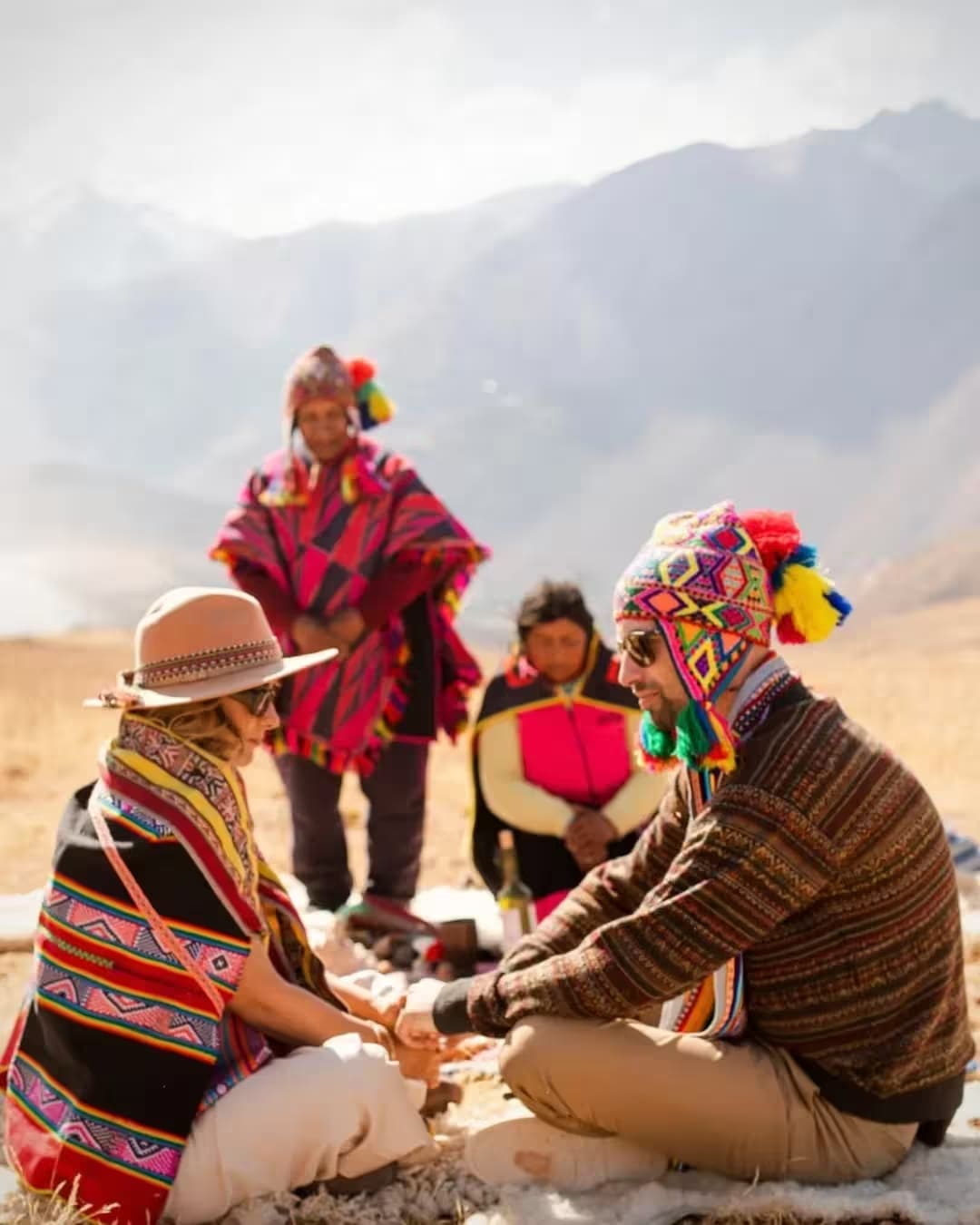
The despacho to Pachamama is the most common ceremony. An offering at outdoor ceremonial table, made at dawn, with symbolic ingredients: coca leaves (messengers to the spirits), quinoa seeds (ancestral food), alpaca wool (texture of mother earth), llama fat, sweets (chocolate or biscuits for young spirits), flower petals. The intention is gratitude or protection request. Lasts 1.5-2 hours.
The offering to the apus (mountain spirits) is made by climbing a hill or viewpoint. More rigorous than the despacho: the paqo names the apus (each mountain has its own spirit in Andean cosmovision) and the offering is burned or buried at specific location. Lasts 2-3 hours.
The coca sahumerio is purification ceremony. A mix of coca leaves, palo santo and myrrh is burned in a clay brazier. The paqo "cleanses" the participant's energy moving smoke with feather fan. Shorter (45 minutes) and more intimate.
The coca reading is divination ceremony. The paqo reads patterns in coca leaves spread on a ceremonial blanket, interpreting specific participant questions. Practice inherited from pre-Incaic oracles. Lasts 30-60 minutes.
The initiation to the Path of Munay (Munay-Ki) is the deepest and most reserved ceremony. We do not offer it to standard travellers —it is for people with serious interest in Andean spirituality, with prior month-or-more preparation.
The legitimate paqos we recommend
For our travellers, we work with three legitimate paqos. Don Mariano Quispe, from the Q'eros community (three hours from Cusco), is a third-generation paqo and one of the officiants Kada works with for private ceremonies in Cusco. Doña Bernardina Apaza, from Patabamba, specialist in feminine and couple ceremonies. Don Carlos Mamani, from Chinchero, specialist in sahumerio and coca reading.
The three paqos speak Quechua as first language and Spanish as second. For non-Spanish-speaking travellers, ceremonies are done with cultural interpreter —not literal translator but person understanding Andean context and translating meaning.

How to distinguish the authentic from theatre
Three signs identify the false tourist version. First: the paqo speaks only Spanish, no Quechua. The authentic ceremony uses Quechua to invoke spirits —it is the sacred language.
Second: the ceremony lasts less than one hour total. An authentic ceremony is not done in 30 minutes; rituals have specific times the paqo does not accelerate by tourist pressure.
Third: the ceremony is done indoors at hotel or restaurant, not outdoors. The despacho to Pachamama requires contact with earth; sahumerio can be done indoors but the offering to the apus is always outdoors.
How to participate respectfully
Five principles of respectful participation.
Dress appropriately: modest clothing, no bright colour, no jewellery ostentation. Some ceremonies (especially feminine ones with Doña Bernardina) require skirt or wide trousers for women.
Do not photograph during the ceremony. Photography interrupts the energy. Some ceremonies (especially coca reading) prohibit photography entirely. The paqo allows photos at start and end, not during.
Do not bring alcohol or substances. Authentic ceremonies do not use hallucinogenic plants (ayahuasca is Amazonian, not Andean). The paqo brings ingredients; the participant does not contribute.
Make reciprocal offering. It is protocol (not required) to bring a symbolic gift: food, a candle or a small object representing the participant. The paqo incorporates it into the ceremonial table.
Confidentiality. What is said or asked in the ceremony (especially in coca reading) is confidential between the paqo and the participant. It is not publicly shared.
Andean shamanism survives because Quechua and Aymara communities keep it alive. Participating as a visitor is privilege, not right. The difference from tourist theatre is the visitor's attitude, before the paqo's.
Kada Travel
How they are booked
For our travellers, ceremonies are arranged two to three weeks ahead. Cost: USD 280-450 per person for standard ceremonies (despacho to Pachamama, sahumerio, coca reading). USD 580-850 for offering to the apus (includes mountain transfer). USD 1,500-2,500 for Munay-Ki initiation (3-5 day process).
Payments are made directly to the paqo at the end of the ceremony (not before). The amount is reference; the paqo accepts what the participant wants to give as contribution to the community.
Written by Kada Travel Editorial
Frequently Asked
Yes, with legitimate paqo and cultural supervision. Authentic ceremonies do not use hallucinogenic plants. Ayahuasca is a different Amazonian practice and requires other protocols.
People with severe cardiac or respiratory issues should consult doctor. Ceremonies are usually outdoors at 3,500m+, which can be demanding.
Yes, ceremonies can be experienced with cultural respect without compromising beliefs. Participation is optional —one can observe without necessarily "believing".
USD 280-450 for standard ceremonies. The offering to the apus, USD 580-850 including transfer. The Munay-Ki initiation, USD 1,500-2,500 (multi-day process).
Through authorised operator with relationship with legitimate paqos (including Kada Travel). We do NOT recommend searching paqos on internet or in tourist plazas —most are theatre.
Children over 8 can participate in despacho to Pachamama. Sahumerio and coca reading are adults only. Munay-Ki initiation requires adult age.
Design Your Journey
Design your bespoke Peru journey
We talk. We listen. Then we design an itinerary that belongs only to you.
Start Planning