Destinations· 14 min read·11 January 2025
Cusco in Four Layers: The Neighbourhoods That Change What the Morning Is
It is not a capital you know in a day. It is a system of four neighbourhoods, four altitudes, four different ways of waking up — and the choice of where to sleep defines what Cusco will be for the guest.
By Jaime Ttito
The Belmond Monasterio concierge gives the same instruction to every international guest who arrives at the reception desk looking energised and ready to walk. The instruction is gentle but inflexible: go slowly to the room, coca tea on the nightstand, sleep until dinner, first walk tomorrow morning. He has watched hundreds of guests ignore it. He knows what happens to them. They eat poorly the next two days, and they spend the morning after arrival horizontal instead of at the Coricancha.
At 3,400 metres, Cusco does not negotiate. The question is whether to meet it on its terms or on yours.
But altitude is only the first layer. Cusco is not a city that reveals itself in order. It reveals itself in sediment — Inca foundation below, colonial stone above, contemporary life on top of both. The traveller who spends one night here as transit to Machu Picchu sees the top layer only. The traveller who stays four or five nights begins to read the other two.
What most itineraries miss is that Cusco is not one city but four distinct neighbourhoods, each with a different tempo, a different altitude, a different type of morning. The difference between sleeping in the Centro Histórico and sleeping in San Blas is not a hotel preference — it is a decision about what kind of day you want. Four neighbourhoods, four questions the traveller asks without knowing they are asking them. This guide answers each one.
The altitude as prior context
The Centro Histórico sits at 3,400 metres above sea level. San Blas, on the northern slope above the Plaza, sits at approximately 3,500. San Cristóbal, the upper district above Sacsayhuamán, reaches 3,700. The numbers matter because soroche — altitude sickness — is not proportional to effort but to change: the faster the ascent from sea level, the harder the body responds, regardless of fitness.
The protocol that Cusco's experienced guides recommend: no significant walking for the first twelve hours, no alcohol the first night, mate de coca available at every hotel and most restaurants without asking. The enriched-oxygen systems at the Belmond properties and the JW Marriott reduce altitude effects during sleep specifically — a documented intervention, not a marketing amenity. Guests who use them consistently report meaningfully better sleep on night one.
The practical implication: plan the first day in Cusco as arrival and orientation, not as a full excursion day. The second day is when Cusco opens fully.
Centro Histórico — archaeological density
The Centro Histórico is not the most comfortable neighbourhood in Cusco. It is the most dense. Every block contains something that has been standing for five hundred years or more — sometimes a thousand. The cathedral at the Plaza de Armas was built by the Spanish in 1559 on top of the Inca palace of Viracocha. The church of Santo Domingo was built in 1650 on the foundations of the Coricancha, the Inca Temple of the Sun. Calle Loreto, running south from the Plaza, is lined on both sides by original Inca walls: smooth, fitted, perfectly plumb after six centuries of earthquakes. The twelve-angled stone on Hatunrumiyoc street — a single block cut to join twelve neighbouring stones without mortar — is the most photographed object in Cusco for reasons that become obvious when you stand in front of it.
The density is also tourist density. The Centro between nine in the morning and six in the evening carries significant foot traffic. The same streets at five in the morning or at ten at night carry the city's actual tempo. The traveller who sleeps in the Centro and wakes before the buses arrive from the Sacred Valley encounters a different Cusco than the one on the postcards.
The two Belmond houses. The Belmond Hotel Monasterio and Belmond Palacio Nazarenas occupy the same district, one block apart, and serve meaningfully different guests. The Monasterio is a sixteenth-century Hieronymite convent: 126 rooms, two colonial courtyards, an operational chapel used for events, the Illariy restaurant, and the enriched-oxygen system that gives guests better sleep at altitude. It is the larger and more formal of the two — the right choice for travellers who want the full scale of the Cusco colonial experience, including the sense of occupying a building that has functioned continuously since 1592. The Palacio Nazarenas, by contrast, is a viceregal palace reconfigured into fifty-five suites, most with private garden or plunge pool, with the only heated outdoor pool in central Cusco. Same Belmond service DNA, different register: the Nazarenas runs at a quieter frequency. The Monasterio for a first visit; the Nazarenas for the return.
Inkaterra La Casona. Eleven rooms. No on-site restaurant. Inner courtyard with stone fountain. Library. A sixteenth-century colonial mansion two blocks from the Plaza, operating as the smallest and most expensive hotel in the Centro Histórico. The absence of a restaurant is deliberate — guests dine at neighbouring establishments coordinated by the concierge, which means the concierge functions as a genuine guide rather than a room-service logistics point. Kada recommends La Casona for returning travellers and for couples who have done the flagship Cusco experience and want something that operates closer to a private residence than a hotel.
JW Marriott El Convento. 152 rooms in the former sixteenth-century convent of San Agustín, restored with documented archaeological care — sections of original Inca and colonial structure preserved and visible throughout the common areas. The Marriott offers what the boutique properties cannot: consistent international service standards, a spa, the Pirqa restaurant with contemporary Peruvian cuisine, and the infrastructure for business travellers or larger groups. For guests for whom brand consistency and predictable service are primary considerations, the Marriott is the correct choice in the Centro. It is a very good hotel. It is not a boutique hotel, and it serves a meaningfully different guest than Inkaterra La Casona does.
San Blas — the neighbourhood that breathes slowly
San Blas is what Cusco looks like when the tourists have not yet arrived for the morning, because in San Blas they arrive later. The neighbourhood sits on the northern slope above the Plaza de Armas, ten minutes downhill on foot, twenty minutes back up. The elevation adds one more reason to walk slowly.
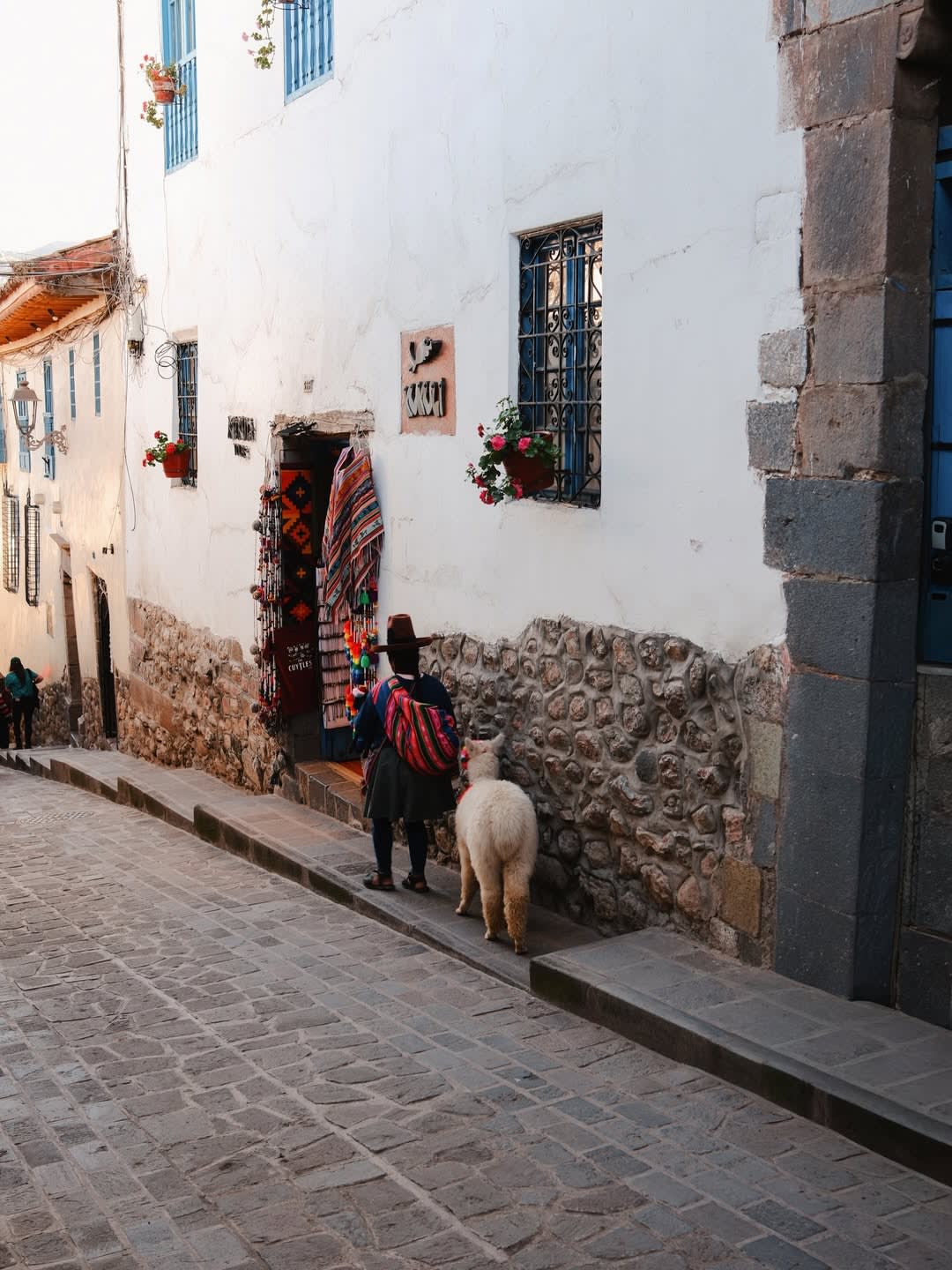
The streets are cobbled and narrow enough that cars pass with care. The houses are white-walled with wooden balconies. The workshops are genuine — not tourist-facing galleries but working ateliers where woodcarvers, weavers, silversmiths and ceramicists spend the full working day on commissioned pieces. The neighbourhood's church holds the most celebrated wooden pulpit in Peru: a single trunk of cedar, carved between 1672 and 1690 into a tower of biblical figures, floral patterns and a human skull at the base that art historians still argue over.
The rhythm of San Blas is slow by design. Restaurants open later. Cafés stay open past midnight. Galleries have no posted hours. This is a neighbourhood for the traveller who has already seen the Plaza de Armas and the Coricancha and is now interested in the Cusco that does not announce itself.
The accommodation in San Blas — Casa Cartagena, Antigua Casona San Blas, Casa San Blas — are boutique properties in the twelve-to-eighteen room range, operating closer to the private-house end of the spectrum. Casa Cartagena is the most polished: restored colonial mansion, spa, rooms with exposed stone walls, concierge service at a level comparable to the Centro properties. Antigua Casona San Blas and Casa San Blas are smaller and more informal, suited to travellers who are using Cusco primarily as a base for excursions and want a quiet place to return to.
The guest who belongs in San Blas is a returning traveller, or a first-time visitor with at least four nights — someone who has already planned the Coricancha and the Inca walls and wants the afternoon and evening to be genuinely unstructured. San Blas rewards time. The neighbourhood does not reveal itself in a single morning.
San Cristóbal — the view, the silence, the altitude
San Cristóbal is the neighbourhood above the city. Literally: it sits above Sacsayhuamán, the Inca fortress complex at the northern edge of Cusco, at approximately 3,700 metres. The view from San Cristóbal at dawn — the city below, the Andes behind, light arriving in sequence across the rooftops — is the best view in Cusco. There is no competition.
This is not a neighbourhood for daily urban life. San Cristóbal has no meaningful restaurant or café culture. Everything requires transport to reach. The altitude difference between San Cristóbal and the Centro — 300 metres — is enough to matter in the first 48 hours: guests who are sensitive to altitude often find the higher zone significantly harder during initial acclimatisation.
The accommodation options here are positioned precisely for the view and the isolation. The appeal is specific: waking up in San Cristóbal means the first thing visible from the window is not a colonial street but the entire city of Cusco laid out below. For photographers, for couples seeking visual isolation, for travellers who have done the standard Cusco and want the version that begins with perspective rather than architecture, San Cristóbal is the correct answer.
Kada recommends San Cristóbal for travellers with at least three nights — ideally as part of a split: one or two nights in San Cristóbal for the dawn view and the elevated quiet, then a transition to the Centro or San Blas for density and gastronomy. As a sole base for a four-night Cusco visit, it requires genuine preference for altitude and landscape over walking access to cultural sites.
Cusco Moderno — the honesty about when it does not matter
Avenida El Sol and the area around Plazoleta Limacpampa constitute the functional spine of modern Cusco: banks, government offices, mid-range hotels. The colonial aesthetic stops here. So does most of the reason to stay.
Kada rarely recommends the modern sector as a base. Two exceptions worth naming: a transit stop of one night before an early morning departure, where the hotel is genuinely only a bed; and a budget scenario where the accommodation cost is being redirected toward a private MIL lunch or a Sacsayhuamán ceremony. In both cases, Casa Andina Premium — functional, consistent, no surprises — is the useful reference.
For any visit longer than two nights, or for any guest for whom Cusco itself is the experience rather than a staging point, the modern sector does not add to the trip.
The three tables that matter
Cusco's best restaurant is not in Cusco. MIL Centro sits at the Moray archaeological site in the Sacred Valley, fifty kilometres from the Plaza de Armas, at 3,500 metres. The menu is built on altitude: each course sourced from a specific elevational tier of the Andean ecosystem, designed by Virgilio Martínez and the team behind Central. Lunch here takes five to six hours and requires a reservation made three months in advance. The drive from Cusco is one hour. The experience is worth both. Do not attempt MIL for dinner; the property closes at sunset.
In Cusco itself: Map Café, inside the Museo de Arte Precolombino, is the right answer for both the serious lunch and the romantic dinner. The setting — a colonial courtyard covered by a glass ceiling, the pre-Columbian collection visible through the walls — is genuinely excellent, and the contemporary Peruvian cuisine is consistently well-executed. Cicciolina, on Triunfo street two blocks from the Plaza, has been open since 1995 under the same direction: Mediterranean cuisine, house pasta, a European wine list, the restaurant where Cusco's local professionals eat on weekdays. Not a tourist experience but a neighbourhood one, and more reliable for that reason.
For a traditional Cusco lunch — cuy, rocoto relleno, chicha morada — Marcelo Batata in San Blas is the reference: informal, well-sourced, the kind of table that appears on no luxury itinerary but should.
What Kada coordinates in Cusco
The most significant experiences in Cusco are not found through a hotel concierge. They are found through prior coordination, local contacts and timing that cannot be improvised on arrival.
Kada coordinates three experiences in Cusco that are not available through standard booking channels.
The San Pedro market at five in the morning. The market opens at six. At five, it is vendors setting up — loading produce, arranging stalls, making the first coffee of the day. The city visible here is not the tourist city but the supply city: how Cusco feeds itself, what arrives from which valley at which altitude, why certain peppers only appear in March. A one-hour guided circuit at this hour, followed by a private breakfast, is the most efficient anthropology available in Cusco. No photograph captures what the smell of the market at five in the morning does.
A private dinner in an archaeological site. Access to the Coricancha or to restricted sectors of Sacsayhuamán after hours requires a permit from the Ministerio de Cultura. Kada holds the relationships that make this feasible for a table of two to eight guests. The format: private chefs, live Andean music, torch lighting, no ambient tourism. This is between USD 600 and 1,500 per person depending on the site, the chefs and the evening's configuration. It is the most exclusive dinner in Peru, and the most requested experience by guests returning to Cusco for a second time.
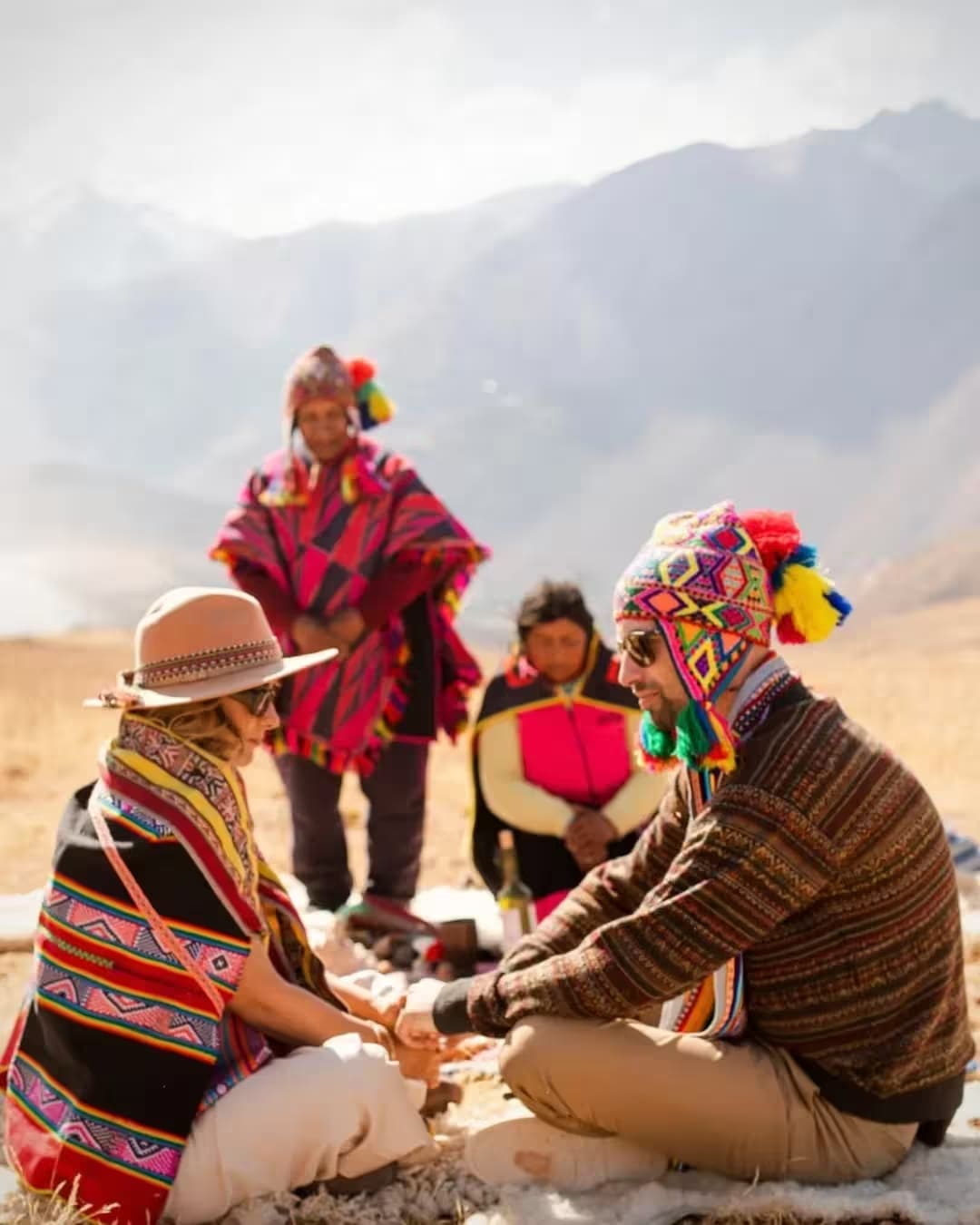
A ceremony with a Q'ero paqo. The Q'ero are the highland community considered the direct cultural heirs of the Incas — among the last Quechua communities to maintain the despacho ceremony, an offering to Pachamama conducted at dawn in the high Andes. Kada coordinates access through direct community relationships, not through intermediaries. The ceremony is three hours, at altitude, at first light. Available only to guests with genuine interest in the practice — not photographic, not performative. Kada's guides assess fit before recommending it.
For guests staying at Belmond or JW Marriott properties, Kada coordinates Virtuoso benefits where applicable: room upgrade at booking, daily breakfast, early check-in or late checkout, welcome amenity on arrival.
The complete system: how to distribute four to five nights
The most common Cusco itinerary mistake is treating the city as a single unit — three nights in one hotel, same neighbourhood, same radius of walks. Cusco rewards distribution. The guest who splits two nights between neighbourhoods sees more than the guest who passes four nights in one.
For a first visit to Peru with four nights in the Cusco region: two nights in the Centro Histórico — Monasterio or Inkaterra La Casona — for the archaeology and gastronomy, followed by two nights in the Sacred Valley. The Sacred Valley sits at lower altitude (approximately 2,800 metres), which gives the body two nights to acclimatise before Machu Picchu. Cusco is the opening chapter; the Valley is the middle; Machu Picchu is the single morning that the previous five days have been building toward.
For a returning traveller with five nights: one night Centro Histórico on arrival (altitude, orientation), two nights San Blas (the slower version of Cusco, private experiences, MIL lunch as a day excursion), two nights in the Sacred Valley. The addition of San Blas is what makes the second visit different from the first. The guest who has done the Coricancha and the Monasterio now does the artisan workshops, the dawn market, the neighbourhood that does not announce itself.
For a connoisseur itinerary — someone with six nights or more: one night San Cristóbal for the view, two San Blas, one Centro, two Sacred Valley. This version of Cusco is not available in any standard brochure. It requires a guide who knows the city in all its layers, and a traveller patient enough to let each neighbourhood arrive in its own time.
The distribution principle: Cusco is better understood as a sequence than as a location.
Expert Perspective
I grew up in a Q'ero community at 4,800 metres, an hour above the valley where visitors come to see Cusco. I have worked as a guide in the city for eleven years. In that time I have watched travellers ask the wrong question at the hotel reception desk: which hotel. The question that would serve them better is: which neighbourhood, for this day of the trip.
The Centro Histórico at six in the morning, before the buses arrive from the Sacred Valley — that is the city I know. San Blas on a Tuesday afternoon, when the woodcarvers are working and the schoolchildren are walking home — that is the city that does not photograph easily but stays with a person for years. San Cristóbal at dawn, when the city below is still dark and the first light reaches Sacsayhuamán — that is something else entirely.
The traveller who asks which neighbourhood is asking the right question. The answer changes depending on where they are in the trip, how many nights they have, and whether they have been here before. That is the only question I know how to answer honestly.
Jaime Ttito, Head of Guides & Cultural Interpreter, KADA Travel
A Practical Note
Altitude: Centro Histórico at 3,400 metres; San Blas at approximately 3,500; San Cristóbal at 3,700. Enriched-oxygen systems at the Belmond Monasterio, Belmond Palacio Nazarenas, and JW Marriott El Convento reduce soroche symptoms during sleep. Coca tea available at all hotels.
Seasons: April through October is the dry season and the recommended travel window. May and June are shoulder season — fewer tourists, reliable weather, all properties available. July and August are peak: all restaurants and the MIL reservation require advance booking.
Getting around: Centro Histórico and San Blas are walkable between each other and to the main archaeological sites. San Cristóbal requires a taxi for most movements. The Sacred Valley is one hour by road from the Centro.
Written by Jaime Ttito
Frequently Asked
The Centro Histórico. First-time visitors benefit from centralisation: the main archaeological sites, the strongest hotel infrastructure and the highest concentration of restaurants are all within walking distance. San Blas is the better choice for a second visit or a longer stay.
For guests travelling from sea level and arriving without altitude acclimatisation, yes. The system introduces approximately 35% more oxygen into the room air, reducing the sleep disruption soroche typically causes on nights one and two. Guests with mild cardiac conditions, asthma or respiratory sensitivities benefit most. For healthy adults, it shortens the adaptation period rather than eliminating it.
Yes, and Kada often recommends it. A practical split: two nights Centro Histórico on arrival (acclimatisation, Coricancha, dawn market), then two nights San Blas (slower rhythm, artisan district, Sacred Valley preparation). Moving hotels mid-stay in Cusco is a twenty-minute walk or five-minute taxi, and most properties accommodate a midday changeover without difficulty.
For a transit night before an early departure, Casa Andina Premium is functional and consistent. For any stay where Cusco itself is the destination, no — the modern sector lacks the architectural and atmospheric qualities that distinguish a Cusco experience from staying in any other South American city.
A minimum of three months. MIL operates at full capacity during the April–October season and closes periodically for research periods. Kada can assist with bookings as part of the itinerary design process; independent booking requires the same lead time.
Design Your Journey
Design your bespoke Peru journey
We talk. We listen. Then we design an itinerary that belongs only to you.
Start Planning