Unfolded· 8 min read·27 July 2026
A Walk Through the Forest's Pharmacy
The Amazon's medicinal plant knowledge with someone who trained inside it — a morning in the terra firme forest with a botanist who spent seven years studying with a traditional healer, learning which plants the community medicine uses, what the pharmacological research says about them, and where the two systems of knowledge agree and where they diverge. Not a ceremony. A walk and a conversation.
By Kada Travel Editorial
The Amazon basin holds, in current botanical estimates, between forty thousand and fifty thousand plant species — roughly one-eighth of all plant species on Earth. Of these, the traditional plant knowledge of the Amazon's indigenous and ribereño communities has identified several thousand as pharmacologically active, and of those, a subset has been studied with enough scientific rigour to characterise the specific compounds responsible for the observed effects. The gap between what the traditional knowledge knows and what the scientific literature has confirmed is large, and it runs in one direction: the traditional knowledge consistently precedes the scientific confirmation by decades or centuries.
The botanist who leads Kada's forest pharmacy walk is neither a curandero nor a field guide. He trained in botany at the Universidad Nacional de la Amazonía Peruana and spent seven years as what he describes as an "ahijado" — a student in an apprenticeship relationship with a traditional healer in a Shipibo community in the Ucayali region. The relationship was not a research visit and not a cultural tourism experience; it was a sustained, reciprocal engagement in which he contributed agricultural and practical labour to the community and the healer contributed knowledge of the plant world that the botanical literature had not fully documented. What he came away with was not the healer's ceremonial practice — that belongs to the healer and the community, and he does not present it — but a working literacy in the medicinal plant vocabulary of the forest, grounded in direct experience of both the botanical and the traditional knowledge systems.
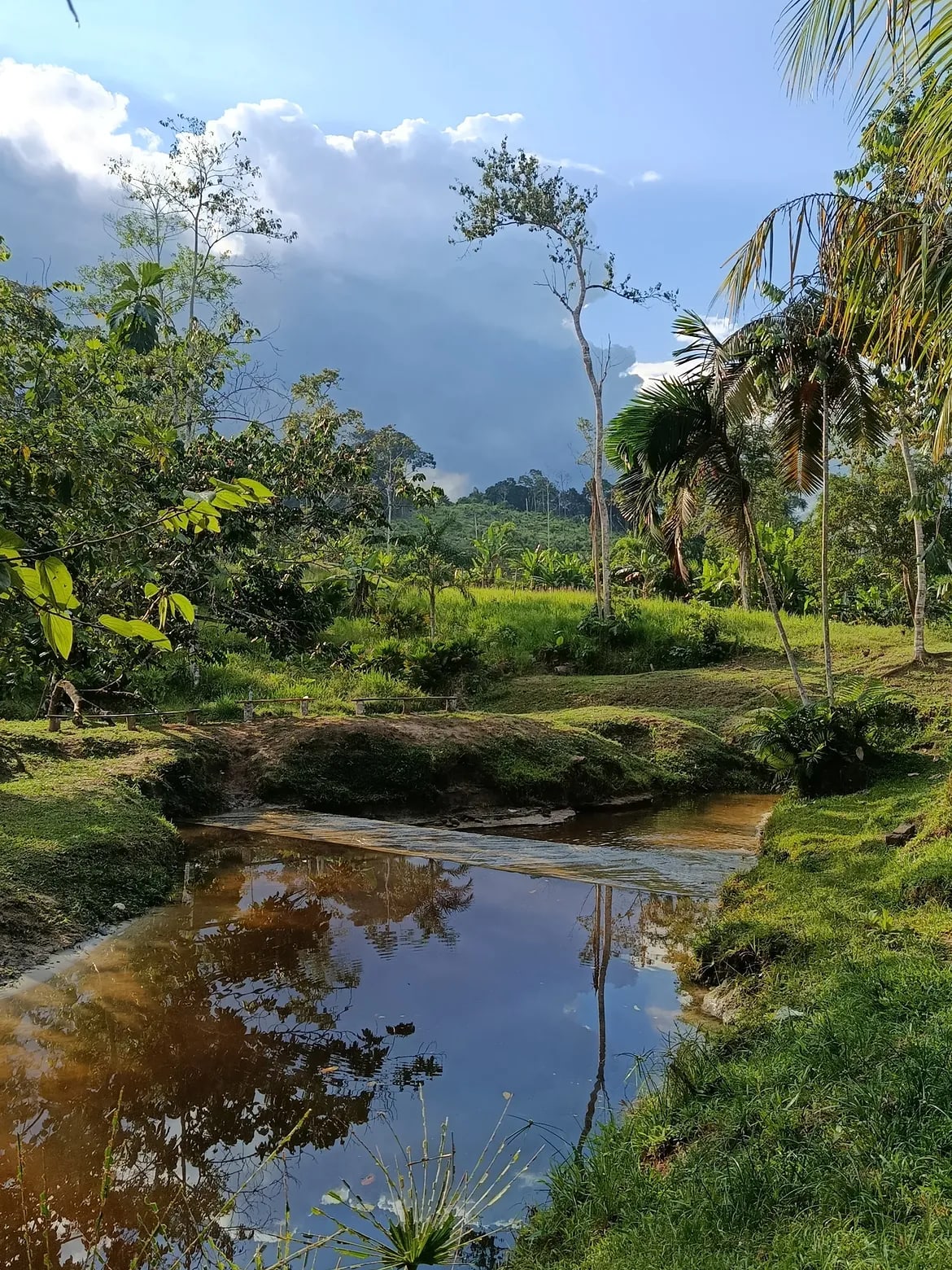
The walk he leads for Kada's guests is a morning programme in terra firme forest — the non-flooded, primary upland forest that makes up the majority of the Amazon's land area. It is a walk and a conversation. There is no ceremony involved. Nothing is ingested. The programme is oriented entirely toward the observation of plants in their habitat, the history of how each was identified and used, and the story of what happened when the pharmaceutical industry encountered that knowledge.
The Plants of the Walk
The pharmacological inventory of the Amazon terra firme forest is not visible from the outside. The trees and ground-level plants of the Amazonian understory do not announce their medicinal properties; they must be identified by a guide who knows the population. The botanist moves through the forest at a pace that allows a sustained encounter with each plant — bark texture, leaf morphology, sap colour, root structure — rather than a recitation of names. The following are among the species consistently encountered on the walk routes he uses in the Tambopata reserve zone and the secondary forest near Iquitos, depending on where the guest's itinerary is based.
Sangre de grado (Croton lechleri) — the dragon's blood tree — is one of the most studied of the Amazon's medicinal plants. The red latex produced when the bark is cut is used throughout the Amazon for wound healing, for gastrointestinal conditions including traveller's diarrhoea and inflammatory bowel disease, and for skin infections including fungal infections that the humid forest environment promotes. The wound-healing compound in the latex — taspine — was isolated, characterised, and eventually used as the basis for a pharmaceutical wound-gel product developed in the 1990s. The patent for that product was held by a US pharmaceutical company. The communities whose knowledge identified the plant's properties were not involved in the patent and received no compensation from its commercialisation. The botanist presents this sequence — knowledge, extraction, commercialisation, exclusion — not as an abstract ethical point but as a documented case with named parties and legal proceedings, because it is. It is also the standard model for how pharmaceutical companies have engaged with Amazonian botanical knowledge throughout the twentieth century.
Uña de gato (Uncaria tomentosa) — cat's claw — is a woody vine of the Amazon whose inner bark has been used in traditional Peruvian medicine for inflammatory conditions, immune support, and gastrointestinal complaints. The pharmacological literature on cat's claw is extensive: studies have documented anti-inflammatory compounds (oxindole alkaloids), antioxidant activity, and immunomodulatory effects. It is currently sold globally as a dietary supplement. The commercialisation of uña de gato has created pressure on wild populations in accessible forests — overharvesting for the export market has made it scarce in areas that were historically abundant. The botanist shows guests what a mature vine looks like in primary forest where it has not been harvested and what harvested-out secondary forest looks like, because the difference is visible and the trajectory is not abstract.
Copaíba (Copaifera spp.) — the copaíba tree — produces an oleoresin from its trunk that the traditional medicine of the Amazon has used for centuries as an anti-inflammatory, for skin conditions, and for respiratory complaints. The oleoresin is extracted without killing the tree — the trunk is tapped, the resin collected, the wound allowed to close. Copaíba oleoresin has attracted significant pharmaceutical interest; one of its primary compounds, beta-caryophyllene, acts on the endocannabinoid system and has documented anti-inflammatory effects in animal studies. Clinical trials in human subjects are ongoing. The botanical remains ahead of the pharmaceutical literature by approximately forty years, which is the typical lag in this field.
Ayahuasca (Banisteriopsis caapi + Psychotria viridis) is present in the forest communities the botanist moves through, and the walk does not avoid the plant. It appears in the understory — the Banisteriopsis caapi vine is a large, woody liana, recognisable by its bark — and the botanist addresses it directly as the most commercially discussed plant in the Amazon, the one that has generated the most external interest, and the one most frequently misrepresented in the outside world's engagement with Amazonian botanical knowledge. He identifies the plants. He explains the biochemistry of the DMT-harmine combination and why the two plants must be used together for oral activity. He explains the role of the ceremony in the traditional knowledge system — that the pharmacological components are inseparable from the ritual context in traditional practice, and that both are inseparable from the long training required of a genuine practitioner. He is precise about what he knows and what he does not: he is not a practitioner, he did not complete the years of training that would qualify someone in that tradition, and he does not present himself as a guide to the ceremonial dimension. The plants are identified and contextualised. Nothing is ingested. That is the scope of what this walk offers, and it is honest scope.
The Pharmacy Model and Its Limits
The botanist's framing of the walk — "the forest's pharmacy" — is one he uses with qualification. The pharmacy metaphor is useful for guests who want to understand why the Amazon's medicinal plant knowledge matters to the outside world; it is also misleading if taken literally. A pharmacy organises compounds by indication, standardises dosages, and separates the medicine from the person who prescribes it. The Amazonian plant knowledge system does not work that way. The same plant may be indicated for different conditions at different dosages, at different stages of the patient's life cycle, prepared in different ways depending on what condition is being addressed, administered in a context that includes social and ceremonial dimensions that the pharmacological model strips out. The compounds that the pharmaceutical industry extracts and patents are real. The system of knowledge from which they were identified was not a pharmacy.
What the walk produces — in the botanist's view, and in Kada's framing of the programme — is not a pharmacological tour. It is an encounter with a knowledge system about the natural world that is both different from the Western scientific tradition and in documented dialogue with it, from a position of significant structural disadvantage. Understanding that position — knowing that the knowledge came from here, that the commercialisation happened elsewhere, and that the communities that originated the knowledge have largely not benefited from its commodification — is useful preparation for every subsequent encounter with Amazon-sourced compounds in supplement shops, cosmetics, and pharmaceutical products worldwide.
What Kada Arranges
Morning programme, half day. Departure at 7:00 AM from the lodge — Inkaterra Reserva Amazónica, Refugio Amazonas, or Posada Amazonas in the Tambopata zone; the Heliconia Amazon River Lodge or Treehouse Lodge for Iquitos-based itineraries. The walk covers two to three kilometres of terra firme trail over two and a half hours, returning to the lodge for lunch. The pace is unhurried; the programme is oriented toward time with each plant rather than distance covered.
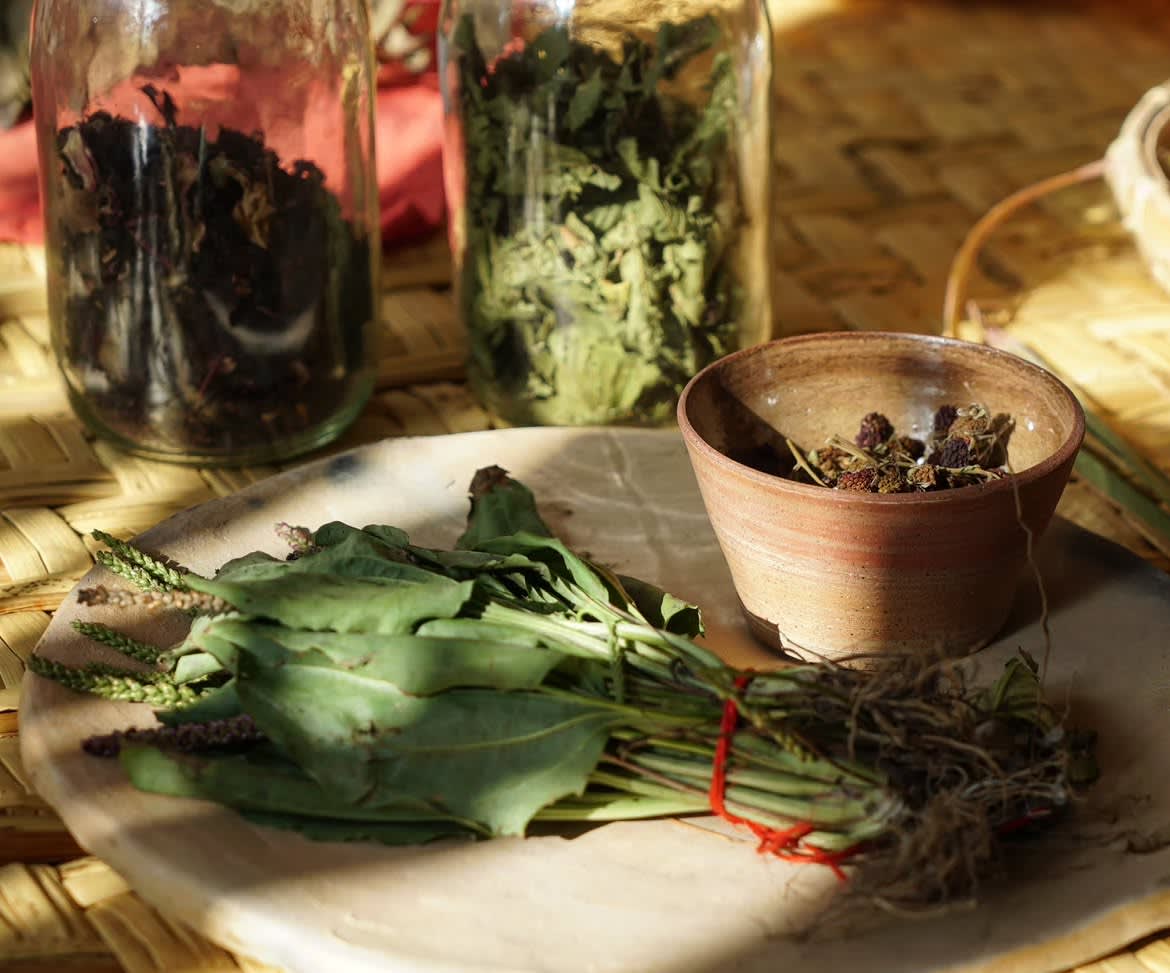
The botanist carries a reference portfolio of pressed specimens from the walk route, useful for identification in the dense understory where individual plants may be obscured. At the end of the walk, guests receive a printed identification guide for the primary species encountered — a practical reference that the botanist has developed over his years of documenting the plant communities in the walk zones.
Expert Perspective
"What my teacher told me when I started was that the forest's knowledge is not for sale and not for keeping. It moves — from plant to healer to patient, from one generation to the next, along the river communities. What I try to do in the walk is give guests a sense of where that movement goes, and where it stops: when the knowledge meets the international pharmaceutical industry, it stops moving in the direction it was moving and starts moving in a different direction entirely. Most guests haven't thought about where the active compound in their supplement came from. After the walk, they have. That's what I think the programme gives — not a list of plants and their properties, but a history of how knowledge about plants becomes something else when it crosses the boundary of the forest."
— Elizabeth Garcia, Senior Travel Designer, KADA Travel
A Practical Note
Scope: This programme is a botanical and ethnobotanical walk — an educational programme oriented toward plant identification, traditional knowledge, and the history of pharmacological research. It does not involve any ceremony, any ingestion of plant preparations, or any encounter with ceremonial practice. Guests interested in the ceremonial traditions of Amazonian communities should read the community visit programme (Art. 9 — What the Community Decides to Share); those traditions are on the community's terms and timeline, not as an extension of the botanical walk.
Physical conditions: The terra firme forest is an upland environment without significant gradient, but the understory trail involves uneven ground, root systems, and the normal conditions of a primary forest floor. Closed shoes are required — sandals are not appropriate. Lightweight long trousers and a long-sleeved shirt provide insect protection that reduces the need for heavy repellent application in a context where the botanist may be handling plant surfaces.
Insects: Mosquitoes and other biting insects are present throughout the morning programme. DEET-based repellent is recommended and should be applied before departure. The botanist will indicate when it is appropriate to refrain from applying repellent near plants being examined (some formulations affect the identification of surface resins), which is a brief exception rather than a general restriction.
Season: The walk is available year-round. The dry season (May through October in Tambopata, June through November in the northern Amazon) makes trail conditions easier and reduces mud on the forest floor. The wet season produces the most active plant growth and more diverse fungal and epiphyte populations — the botanical conditions of the wet season are not inferior, they are different, with different species in different stages of activity.

Written by Kada Travel Editorial
Frequently Asked
Botany is the scientific study of plants — taxonomy, physiology, ecology. Ethnobotany is the study of the relationship between human communities and plants — specifically, the knowledge, practices, and cultural systems through which communities understand and use the plants of their environment. An ethnobotanist works at the intersection of field botany and anthropology, documenting traditional knowledge systems in a scientific framework while navigating the ethical complexities of that documentation (consent, intellectual property, representation). The botanist who leads Kada's forest pharmacy walk trained in scientific botany and developed his ethnobotanical knowledge through the apprenticeship relationship with a traditional healer; he uses both frameworks in the walk, making explicit when he is speaking from the pharmacological literature and when he is speaking from the traditional knowledge he learned.
No. Ayahuasca ceremony is not offered, arranged, or facilitated through Kada. The plant is discussed in the botanical walk as a subject of botanical and pharmacological knowledge; it appears as part of the forest's plant inventory. The ceremonial tradition of which it is a part belongs to the communities and practitioners who hold that tradition. Kada's relationship with those communities is on the terms described in the community visit programme (Art. 9); it does not extend to ceremonial facilitation, and Kada does not work with the commercial retreat operators who offer ayahuasca experiences in the Iquitos or Madre de Dios regions.
The plants observed on the walk are not collected for guests. Some processed products derived from plants the walk discusses — sangre de grado resin, copaíba oil, camu camu pulp — are available in Iquitos's Belén market (Art. 8) from community producers, and the botanist advises on what is appropriately sourced if guests want to purchase these products after the walk. Importing plant materials across international borders is subject to the phytosanitary regulations of the destination country; the botanist advises on what is and is not permissible for common destination countries.
Legal protection of traditional knowledge is an active and incompletely resolved field. Peru's Law No. 27811 (2002) established legal protection for the collective knowledge of indigenous communities and created a national registry of traditional knowledge. In practice, the law's enforcement is limited by the capacity of the communities to monitor and pursue violations, and the international enforcement of intellectual property protections derived from traditional knowledge remains inconsistent. The most effective protection that communities have developed is controlled disclosure — deciding internally what knowledge is shared outside the community, with whom, under what conditions, and with what economic and legal agreements in place. Some communities have developed formal benefit-sharing agreements with the research institutions that study their plant knowledge. The gap between formal legal protection and practical protection remains large.
Design Your Journey
Design your bespoke Peru journey
We talk. We listen. Then we design an itinerary that belongs only to you.
Start Planning