Unfolded· 8 min read·26 July 2026
What the Community Decides to Share
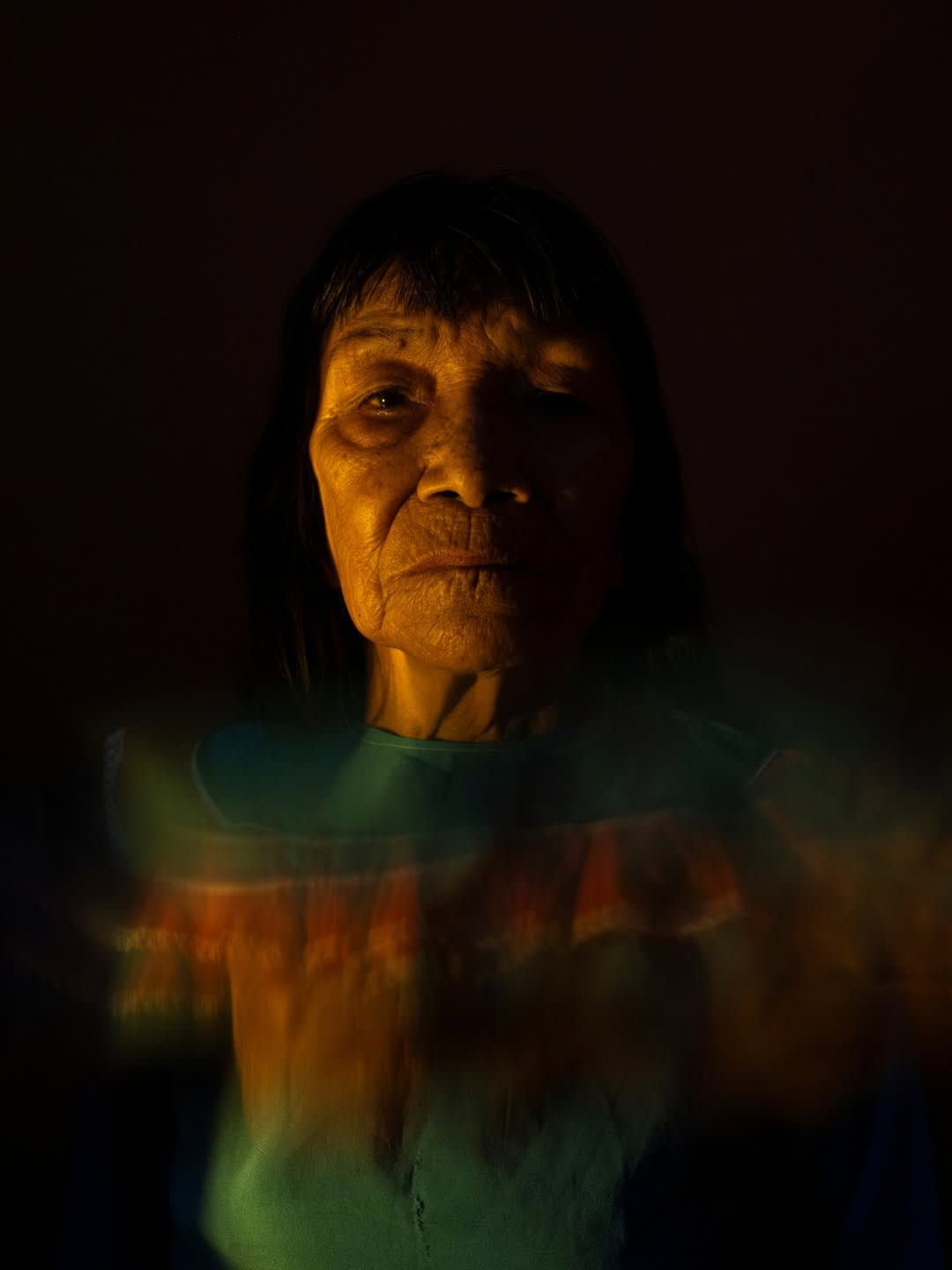
A visit to an Asháninka, Shipibo-Konibo, or Yine community in the Peruvian Amazon — on the community's terms, at the community's pace, with the protocols the community sets. This is not a performance and not a tour. It is a visit, with everything that implies about what is and is not available to a guest who has not arrived by invitation.
By Kada Travel Editorial
There are approximately fifty distinct indigenous peoples with territorial presence in the Peruvian Amazon. Their languages belong to fourteen different linguistic families — Arawak, Pano, Tupí-Guaraní, Jívaroan, among others — and their territories span environments from the seasonally flooded várzea of the northern Amazon to the cloud forest margins of the Andean foothills in the south. They are not a single culture, a single tradition, or a single position on contact with the outside world. The Asháninka, the Shipibo-Konibo, the Yine, the Matsigenka, the Awajún — each has its own governance structures, its own relationship with the Peruvian state, and its own community-specific position on what kinds of visits from outsiders are appropriate and what are not.
What Kada offers is not a generic "indigenous community experience." It is access to specific communities with whom Kada has established relationships over time — communities that have chosen to receive visitors, that have defined their own terms for how those visits function, and that retain complete control over what aspects of their life, knowledge, and practice they make available to a guest. The relationship is the prerequisite. Without a prior relationship, there is no programme. Without the community's ongoing consent, the visit does not happen.
The Communities Kada Works With
In the Madre de Dios region, Kada maintains ongoing relationships with Yine and Matsigenka communities along the Manu river system — communities that sit within or adjacent to the buffer zone of Manu National Park, where the integration of community presence and conservation has been the subject of continuous negotiation between the communities and SERNANP (Peru's protected areas authority) for decades. In the northern Amazon, Kada works with Shipibo-Konibo communities on the Ucayali and its tributaries near Iquitos — artisan communities whose textile and ceramic traditions have been the subject of significant academic documentation and whose engagement with the outside world through art commerce has shaped their own protocols for visitor interaction.
The specific community available for a given guest's visit depends on timing, community conditions, and the host community's calendar. Kada does not select a community based on what the guest wants to see. Kada establishes contact with the community coordinator, communicates who is coming and when, and confirms that the community's current conditions make a visit appropriate — that there is no ceremony underway that is not for outside eyes, no community event that changes the availability of the families who would host the visit, no recent event in community life that means this is not the right week for external guests. If the conditions are not right, the visit does not happen, and Kada reschedules. This is not an inconvenience to be managed; it is the correct relationship.
What Visits Involve
The structure of a visit is set by the community, not by Kada and not by the guest. What follows is a description of what has been offered in the relationships Kada has developed — it is not a guarantee of any specific activity, because the community makes these decisions on a visit-by-visit basis.
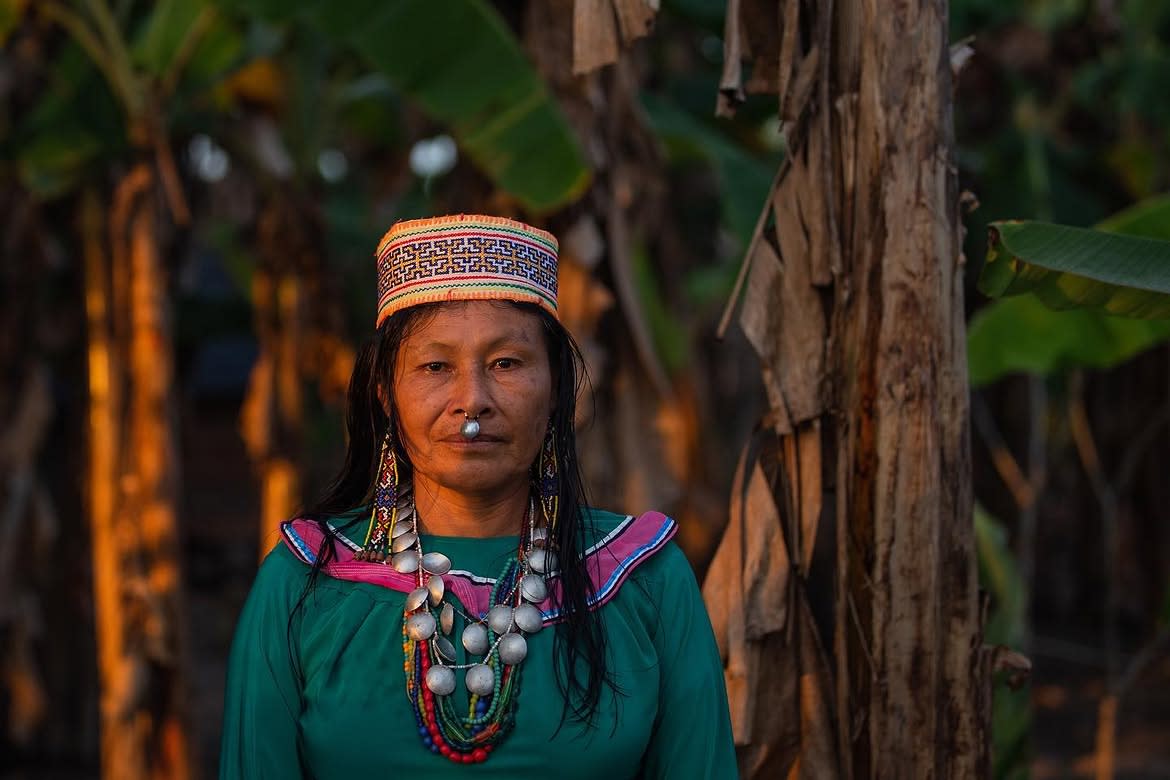
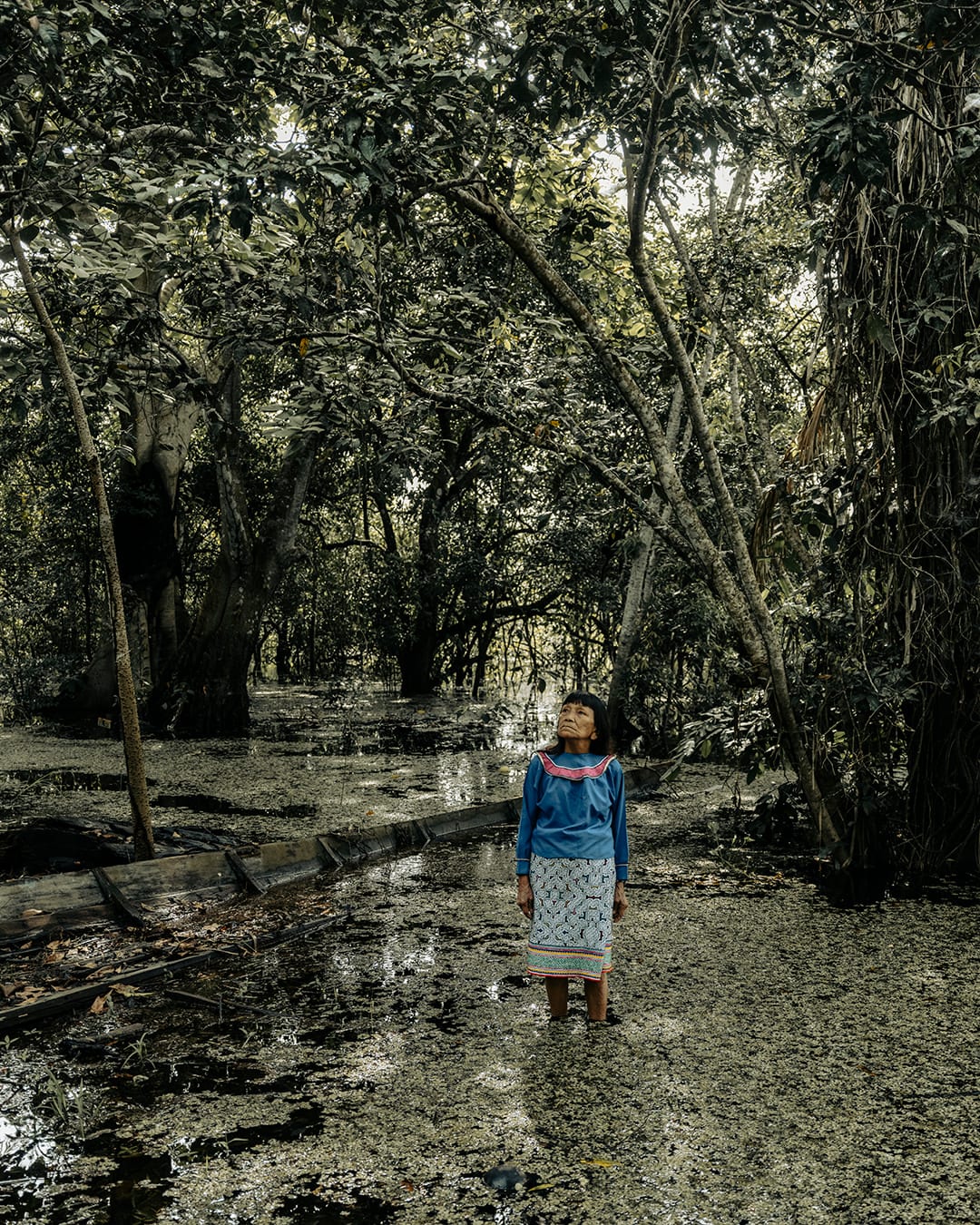
In Shipibo-Konibo communities, visits have involved: time with women artisans working on the kené — the geometric textile patterns that are the community's most documented artistic tradition, a visual language with deep roots in Shipibo cosmology; visits to vegetable gardens and the small farms where families cultivate the plants that supplement their diet and their medicinal practice; conversation through the interpreter that the community designates (Kada's field coordinator is Shipibo-speaking; the community chooses who speaks with guests); and, when the community decides this is appropriate, participation in a shared meal prepared from ingredients that the families have produced. In Yine communities in the Manu buffer zone, visits have involved accompanying a fishing family to the river, observing the preparation of manioc-based foods, and conversation about how the community's relationship with the park's management has changed over the two decades since the buffer zone designation brought a different kind of institutional presence into the community's daily life.
What is not on offer: anything that functions as a performance of indigeneity for the guest's benefit. The community is not the entertainment. Its members are not in costume for a visitor's photography. If children are present, they are present because the visit takes place in a family space where children live — not because they have been positioned for photogenic effect.
Photography
The question Kada addresses before every visit: who in the community consents to being photographed, and under what conditions?
The answer is managed by the community coordinator, who establishes the photography protocol for each visit. In general: the artisans' work — textiles, ceramics, the kené patterns — may be photographed. Communal spaces may be photographed. Individuals may be photographed with explicit, in-the-moment permission requested by the field coordinator, not assumed. Children are not photographed without the specific consent of a parent. Ceremonies, rituals, and anything that the community designates as not for external documentation are not photographed under any circumstances.
This is not a restriction Kada imposes on the community's behalf. It is the community's protocol, communicated to Kada in advance and reinforced by the field coordinator during the visit. Guests who find this framework difficult should consider whether this programme is right for them. Kada believes it is.
Economic Retribution
Payment for a community visit goes directly to the community, not through a tour operator margin. The economic structure of each relationship is established with the community coordinator: a per-visit fee agreed between Kada and the community at the start of the relationship, reviewed annually, and paid in full to the community's designated account or coordinator at the time of the visit. The community decides internally how that payment is distributed — whether to a community fund, to the individual families who hosted, or to a combination. Kada does not determine or monitor this internal allocation; it is not Kada's decision to make.
The artisan products available for purchase during visits are priced by the artisans themselves. Kada does not take a commission on artisan sales. If a guest purchases a textile or a ceramic from a Shipibo-Konibo artisan, the full amount paid goes to the artisan. The field coordinator facilitates the transaction and advises on appropriate price ranges to prevent either underpayment (which the artisan may not feel comfortable correcting in the moment) or token overpayment (which, in communities with specific gift-exchange protocols, can create social complications the outside visitor does not anticipate).
What Kada Arranges
The visit is coordinated through Kada's field coordinator in the relevant region — a bilingual community liaison with long-standing relationships in the specific communities Kada works with. The field coordinator manages: initial communication with the community about the visit date, confirmation of the visit conditions in the days before, transport logistics (by road or by river, depending on the community), interpretation throughout the visit, and post-visit follow-up with the community.
Duration: half a day (three to four hours on-site), with transport time variable by community location. Some communities are accessible within ninety minutes of Iquitos; communities in the Manu buffer zone require coordination with the multi-day Manu itinerary and are not day-trip accessible from Cusco. Kada designs the community visit as an integrated element of the regional programme rather than as a standalone experience, because the context of the visit — the river journey to reach it, the ecological setting, the history of the region — is part of what makes it legible.
Expert Perspective
"The guests who gain the most from a community visit are the ones who arrive already curious about the specific people they're going to meet, not about 'indigenous culture' in the abstract. When a guest has read something about Shipibo kené — the specific geometry of the patterns, what the academic literature says about their cosmological significance — and then sits with an artisan who has been making those patterns since she was seven years old and asks what that researcher got right and what they missed, the conversation goes somewhere. The artisan usually has a lot to say. She knows what the outside world thinks about her work. She has her own view of it. That conversation — between someone who arrived prepared and someone who has spent a lifetime with the subject — is what the visit can be when conditions are right."
— Elizabeth Garcia, Senior Travel Designer, KADA Travel
A Practical Note
This programme is not guaranteed. The community's consent is required at every stage, including the final confirmation before the visit day. If community conditions change, Kada reschedules. If the community is unavailable for the period of the guest's itinerary, Kada advises honestly rather than arranging an alternative that does not meet the same conditions of community control and direct retribution. The programme is offered with this uncertainty as an explicit feature, not a caveat.
Language: Most community members speak their indigenous language primarily and Spanish as a second language. Very few speak English. Kada's field coordinator provides interpretation. Guests who speak Spanish will have a materially richer direct interaction; guests who do not should not assume that language is the primary barrier to meaningful contact, because it is not.
Physical conditions: Community access is by river in most cases — dugout canoe, motorised boat, or the community's own transport. Communities are not designed for visitor comfort. Seating is often on the ground or on low benches. Shade and drinking water are available; air conditioning and private bathroom facilities are not. The visit is in the same conditions in which the community lives. This is the point.
Appropriate dress: Lightweight, non-revealing clothing is appropriate. Kada advises guests specifically before the visit. This is not a dress code imposed by Kada; it is cultural context communicated by the community coordinator.
Written by Kada Travel Editorial
Frequently Asked
The standard tour operator model: a community receives multiple groups per week from multiple operators; a fixed programme has been established (weaving demonstration, meal, photo opportunity) that runs regardless of what is actually happening in community life; the operator takes a margin on every visit; the community adapts its presentation to what the tourism market wants. The Kada model: a specific relationship with a specific community, confirmed visit by visit, protocol set by the community, payment direct and full, programme shaped by what the community decides to share on that day. The operational differences are significant. The experiential differences are more significant.
Yes. The communities Kada works with have been in sustained contact with the outside world for generations — through the rubber boom and its aftermath, through the missionary presence of the twentieth century, through the regional market economy that connects them to Iquitos or Puerto Maldonado, and through their own decisions about how to engage commercially with the outside world. These are not "uncontacted" communities, and Kada does not offer access to communities in voluntary isolation — those territories are legally closed to all external contact and Kada does not attempt to approach them. The communities Kada works with have exercised informed agency over their engagement with the outside world; the visit is one expression of that agency.
The community determines what is appropriate for outside presence. Some communities share aspects of their ceremonial life with guests under specific conditions. Many do not, or not on a standard visit. Kada does not make promises about ceremonial access, and does not request it in advance on the guest's behalf — if the community chooses to share something of that nature, it will be on their initiative, at their timing, under their terms. The assumption that ceremonial access is available or appropriate to request is one Kada actively works against in the framing it gives guests before the visit.
Kené is the visual art tradition of the Shipibo-Konibo people — a system of geometric patterns applied to textiles, ceramics, wood, and body painting, with deep roots in Shipibo cosmological knowledge. The patterns are not decorative in the Western sense; they encode knowledge about plants, spirits, the relationships between living beings, and the structure of the cosmos as the Shipibo-Konibo understand it. The tradition is transmitted by women, who learn from mothers and grandmothers beginning in childhood. In 2021, the Peruvian Ministry of Culture inscribed kené as Intangible Cultural Heritage of Peru. In 2023, UNESCO added it to its Representative List of the Intangible Cultural Heritage of Humanity. The artisans producing kené textiles in the communities Kada works with are the living holders of this tradition.
Design Your Journey
Design your bespoke Peru journey
We talk. We listen. Then we design an itinerary that belongs only to you.
Start Planning