Unfolded· 7 min read·20 July 2026
The View the Road Cannot Reach
Helicopter access in the Southern Andes — Vinicunca, Waqrapucara, Choquequirao, and the Sacred Valley overflight, with a DGAC-certified pilot operating at altitude, full insurance, and an honest account of where helicopter access changes everything and where it does not.
By Kada Travel Editorial
The first thing to establish about helicopter operations in the Cusco region is what they cannot do. Machu Picchu — the destination that most naturally comes to mind when the subject of helicopter access arises — is off limits by Peruvian civil aviation regulation. The Ministerio de Cultura prohibits helicopter overflight and landing within the archaeological reserve at low altitude; the regulation is enforced and the operator we work with does not accept Machu Picchu flight requests under any circumstances. Any operator who offers otherwise is operating outside legal parameters. We do not.
This is not a constraint we apologise for. Machu Picchu is accessible by train, by the Inca Trail, by the Salkantay, by the Lares — approaches that, each in their own register, match the gravity of what the site is. The helicopter's contribution at Machu Picchu would be the loss of the approach; at the Southern Andes destinations where Kada arranges helicopter access, the helicopter's contribution is precisely the removal of an approach that would otherwise be prohibitive.
Where Helicopter Access Changes Everything
Vinicunca — Rainbow Mountain
The path to Vinicunca, the chromatic mineral mountain at 5,200 metres in the Vilcanota range southeast of Cusco, runs through Cusipata and Checacupe to the trailhead at Phulawasi — a drive of three to four hours from the city — followed by a four to five kilometre walk at above 5,000 metres. The altitude effect at that elevation is cumulative and severe for guests who are not fully acclimatised; the standard approach, even for fit travelers who have spent a week in the Cusco region, requires significant physiological preparation.
The helicopter approach brings a group to a landing zone in the Vinicunca area significantly faster, eliminating the vehicle transit and reducing the on-foot exposure to the highest altitudes to the time at the mountain itself. The flight from Cusco over the Vilcanota range — crossing the cordillera at altitude, with the progression of the highland landscape visible below — is itself a Southern Andes experience of the first order. The mountain does not become more accessible in the sense of less demanding; the altitude is the same altitude. What the helicopter provides is selective: it removes the hours of ground transit and the cumulative fatigue of the approach without modifying the encounter at the mountain's mineral flanks.
Vinicunca's coloration — the result of specific mineral deposits in the exposed rock, including the red pirita and the turquoise chlorite that produce the mountain's characteristic banded spectrum — is most vivid in the dry season, when the snow does not conceal the exposed rock face. The helicopter programme is designed for dry season operation (May through October), with wet season availability subject to the meteorological assessment at flight time.
Waqrapucara
The Inca fortress of Waqrapucara — whose name translates from Quechua as "horn-shaped fortress," for the two rock towers that crown the site — sits above the Apurímac canyon between Cusco and Ayacucho, at approximately 4,350 metres, accessible from the road at Sangarará by a four to five hour walk in each direction. The site receives a fraction of the visitor numbers of the main Cusco circuit, which is partly a function of its access difficulty and partly a function of its being officially designated but not operationally developed as a tourist destination. The latter is an argument in its favour.
Waqrapucara is one of the least-visited significant Inca sites in the Cusco region: the stone construction of the ceremonial platform and the two rock spires is among the more dramatic in terms of setting, and the absence of the service infrastructure that surrounds Pisac, Ollantaytambo, and Chinchero gives the site a quality of quiet that the accessible sites no longer have. The helicopter approach — landing in the Apurímac canyon zone and reaching the site on foot from a significantly closer point than the road allows — converts a two-day expedition into a viable half-day visit and opens the site to guests who cannot commit to the multi-day ground access.
Choquequirao
Choquequirao — "the cradle of gold" in Quechua, a significant Inca ceremonial and administrative centre on the western slope of the Vilcabamba range — is the one major Inca site in the Cusco region where helicopter access provides an unambiguous transformation rather than a selective convenience. The standard approach from Cachora is a two-day walk each way, with a total altitude gain and loss of approximately 3,000 metres, crossing the Apurímac canyon at 1,500 metres before ascending to the site at 3,100 metres. By ground, Choquequirao requires a minimum of four days and significant physical preparation. By helicopter, it is a half-day visit.
The site itself — covering approximately 1,800 terraces across multiple sectors on the mountain ridge — is one of the most architecturally complete Inca complexes in a natural setting undisturbed by the development that surrounds Machu Picchu. The ceremonial centre, the residential sectors, and the agricultural terracing that extends down the ridge below are intact in a way that only genuine remoteness preserves. The absence of visitor infrastructure is absolute; the site has no cafeteria, no gift stalls, no fixed population of guides competing for tourist trade. The helicopter approach is the only way to give this site to guests without requiring the kind of expedition commitment that places it outside the range of most itineraries.
A ground guide from the Cachora community is included in the Choquequirao programme; the guide's knowledge of the site's specific sectors — the llama terrace reliefs, the water management system, the upper sector that the standard two-day approach rarely reaches — is detailed and locally held. Kada coordinates the helicopter approach with the ground guide's arrival; the visit runs three to four hours on site.
The Sacred Valley Overflight
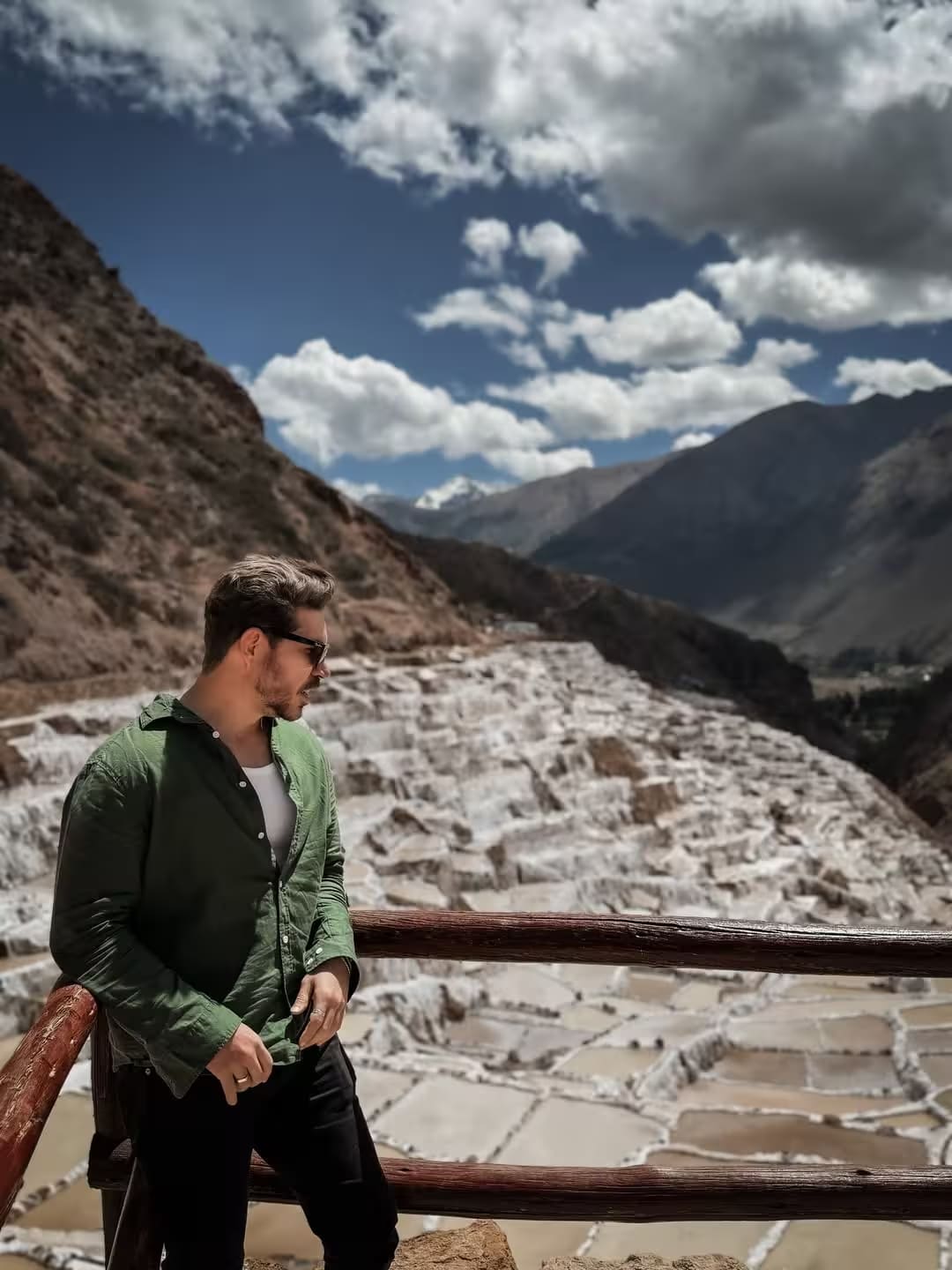
The overflight of the Sacred Valley — without landing — is a programme Kada designs for guests who want the aerial perspective on the valley's Inca and colonial history: the terrace systems of Pisac and Ollantaytambo from above, the geometry of the Inca agricultural system visible in its full extent, the river corridor between Pisac and the Urubamba gorge. The flight typically includes the Moray circular terraces and the Maras salt pans — the geological and agricultural infrastructure of the valley read from altitude.
The overflight is not an access programme; it does not land at any site. It is a visual argument that the ground perspective cannot make, where the relationships between the valley's Inca engineering projects — the irrigation systems, the terrace geometries, the relationship between the agricultural installations and the highland communities that serviced them — are legible in a way that no amount of ground-level visiting produces. For guests who have already spent several days in the valley, the overflight provides the capstone perspective; for guests arriving in the valley for the first time, it provides the aerial orientation that makes everything that follows more readable.
The Operational Architecture
All helicopter operations in the Cusco region require compliance with Dirección General de Aeronáutica Civil (DGAC) regulations for high-altitude commercial aviation. The parameters are specific: the pilot must hold DGAC certification for high-altitude operations above 4,500 metres, the aircraft must be type-certified for the altitude and temperature range of the Southern Andes, the operation must carry full aviation insurance valid in Peru for commercial passenger flights, and flight plans must be filed and approved for each operation.
The operator Kada works with in the Cusco region holds all applicable certifications and maintains current insurance documentation that we verify before each programme. The pilot's specific experience with the Southern Andes altitude environment — the thermal behaviour of the air above the cordillera, the meteorological patterns of the dry and wet seasons, the landing zones at each destination — is the operational knowledge that makes these programmes safe rather than merely legal. Certification establishes the minimum; competence is what Kada evaluates when selecting the operator.
Flight scheduling is weather-dependent. The dry season (May through October) provides the most consistent flight windows; the wet season introduces afternoon instability that constrains operations to morning departures. We schedule all Cusco helicopter programmes for morning departure, with the meteorological assessment made by the pilot on the morning of the flight. If conditions at altitude are not within the operational parameters the pilot uses, the flight is rescheduled; Kada's itinerary logistics are built to accommodate this.
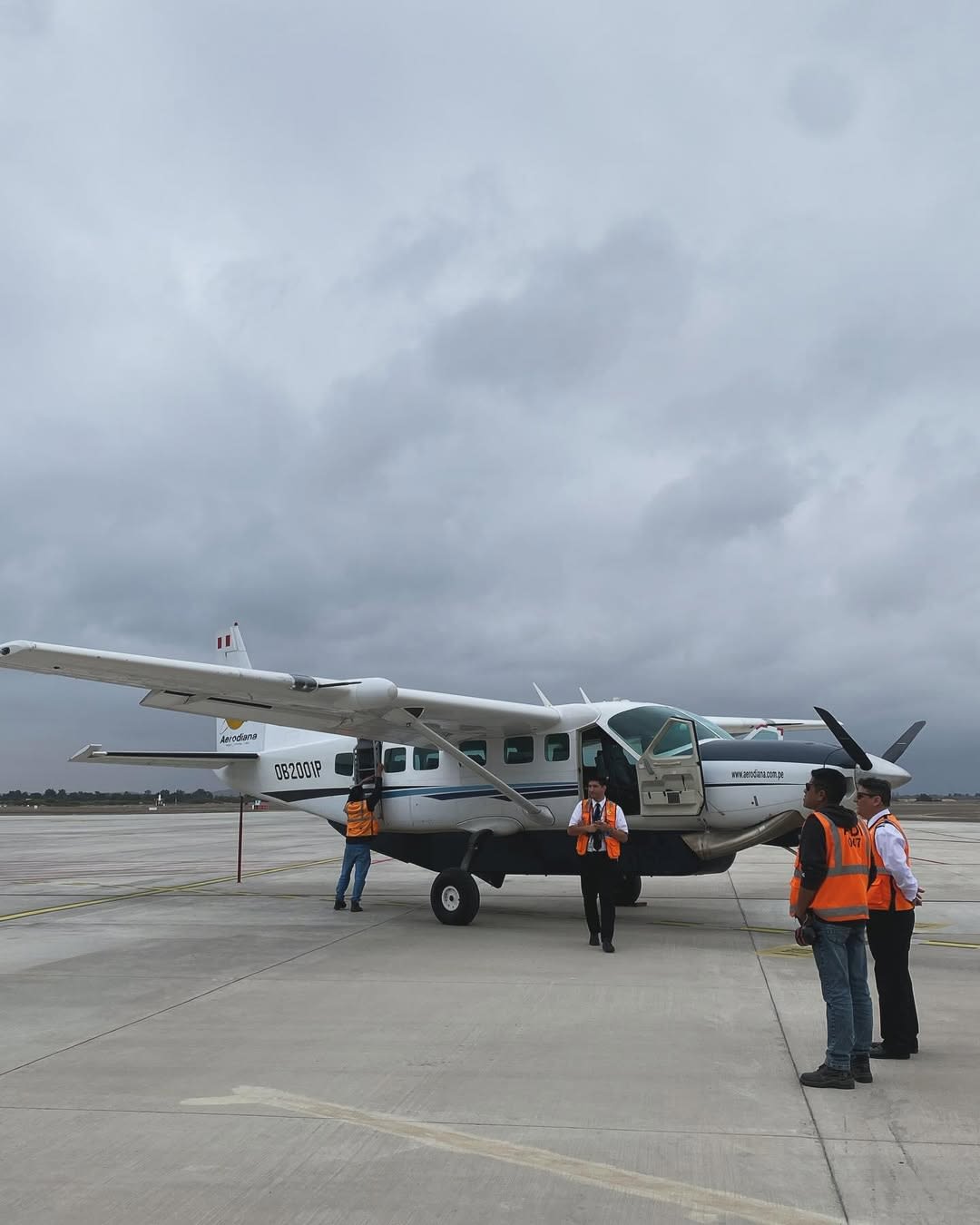
The standard aircraft for Cusco region operations is a four-to-five-seat helicopter equipped for high-altitude operation. Maximum group size per aircraft is four passengers. Larger groups require multiple aircraft or sequential flights; we discuss this at the planning stage.
What Kada Arranges
Programme design begins with the destination question: which of the four programmes is appropriate for this group's interests and the available time in the itinerary. The Vinicunca flight is typically a half-day to three-quarter-day programme from Cusco. The Waqrapucara visit runs three to four hours depending on the ground approach logistics. The Choquequirao programme is the most time-intensive — the site warrants three to four hours on the ground — and is the one Kada most consistently recommends to guests who ask about helicopter access in the region without a specific destination in mind. The Sacred Valley overflight is a forty-five minute to one-hour flight.
The four programmes can be combined for groups spending multiple days in the Cusco region who want both aerial access and standard ground itinerary days; the helicopter programme occupies a single morning and does not preclude other activities on the same day or on subsequent days.
Expert Perspective
"When someone asks me about helicopters in Cusco, my first question is always which destination — because the answer is completely different depending on where we're talking about. Vinicunca and Choquequirao are cases where the helicopter is the difference between doing it and not doing it, especially for guests who have a week in the region and cannot commit four days to the Choquequirao ground approach. Machu Picchu is a different conversation entirely: the regulations are clear, the site access by helicopter does not exist, and any operator who implies otherwise is a risk I will not expose our guests to. The four programmes we run are legal, documented, insured, and operationally sound. Beyond those, we stop. I would rather explain the limit of what we offer than send a guest into an arrangement we cannot stand behind."
— Gustavo Arenas, Operations Director, KADA Travel
A Practical Note
High-altitude helicopter operations carry weather dependencies that ground programmes do not. The pilot's go/no-go decision on the morning of the flight is based on current atmospheric conditions above the cordillera — conditions that a forecast cannot reliably predict more than twelve to eighteen hours in advance. Guests who need to catch international flights on the same day as a scheduled helicopter programme should be counselled that the rescheduling risk is real and that the programme should be placed at the beginning of the Cusco segment of the itinerary rather than the end, to preserve rescheduling options.
Motion sensitivity: helicopters at altitude in the Southern Andes involve updrafts and thermals that produce more turbulence than commercial fixed-wing flight. Guests with significant motion sensitivity should discuss this with Kada at the planning stage rather than at the boarding step.
Altitude at destination: Vinicunca involves time at above 5,000 metres. The helicopter eliminates the transit but not the altitude; supplemental oxygen is available on request and is recommended for guests who have been in the region fewer than four days. Choquequirao, at 3,100 metres, is below Cusco city elevation and creates no altitude concern after acclimatisation. Waqrapucara at 4,350 metres falls between the two; the same minimum three-day acclimatisation standard applies as for the highland trekking programmes.
Written by Kada Travel Editorial
Frequently Asked
Peruvian civil aviation regulation and the Ministerio de Cultura's management plan for the Machu Picchu Historical Sanctuary prohibit low-altitude helicopter overflight and landing within the archaeological reserve. The restriction is in force, is enforced by DGAC, and applies to all commercial operators without exception. The operator Kada works with does not accept Machu Picchu flight requests, and Kada does not design programmes that require regulatory non-compliance. The site has three excellent approaches — by train, by the Inca Trail, and by the Salkantay and Lares treks — all of which Kada arranges.
The pilot holds DGAC commercial aviation certification valid in Peru, with specific endorsement for high-altitude operations above 4,500 metres. The operator maintains full aviation liability insurance for commercial passenger operations in Peru. Kada verifies current documentation before each programme. Guests who want to review the certification documentation in advance of booking may request it; we provide it.
If the pilot's morning assessment determines that conditions are outside operational parameters, the flight is rescheduled to the next available window within the itinerary. Kada does not charge a cancellation or rescheduling fee for weather holds; the programme fee is applied to the rescheduled date. For guests whose itinerary does not have a rescheduling window, Kada discusses the logistics and options at the planning stage before the programme is confirmed.
No. Each programme is a standalone half-day to three-quarter-day commitment with separate flight planning, landing zones, and ground logistics. Combining them in a single day is not operationally feasible. Guests who want both can schedule them on consecutive days if the itinerary allows.
Design Your Journey
Design your bespoke Peru journey
We talk. We listen. Then we design an itinerary that belongs only to you.
Start Planning