Unfolded· 7 min read·19 July 2026
The Valley That Didn't Modernise
The Lares Trek — three days through the thermal spring highlands and Quechua pastoral villages that the main Sacred Valley circuit never reaches, with community visits designed by the communities themselves, arriving at Machu Picchu by train from Ollantaytambo.
By Kada Travel Editorial
The most visited corner of the Sacred Valley is also among the most curated. Pisac, Ollantaytambo, Chinchero, the train corridor to Aguas Calientes — this is the circuit that the tourism infrastructure of the region has organised itself around, and it is an extraordinary circuit: the archaeological sites are among the finest expressions of Inca engineering, the valley floor is one of the most beautiful river landscapes in South America, and the cultural encounters available to a thoughtful traveler are of real quality. Kada works extensively in this corridor and would not modify it if modifying it meant compromising what it provides.
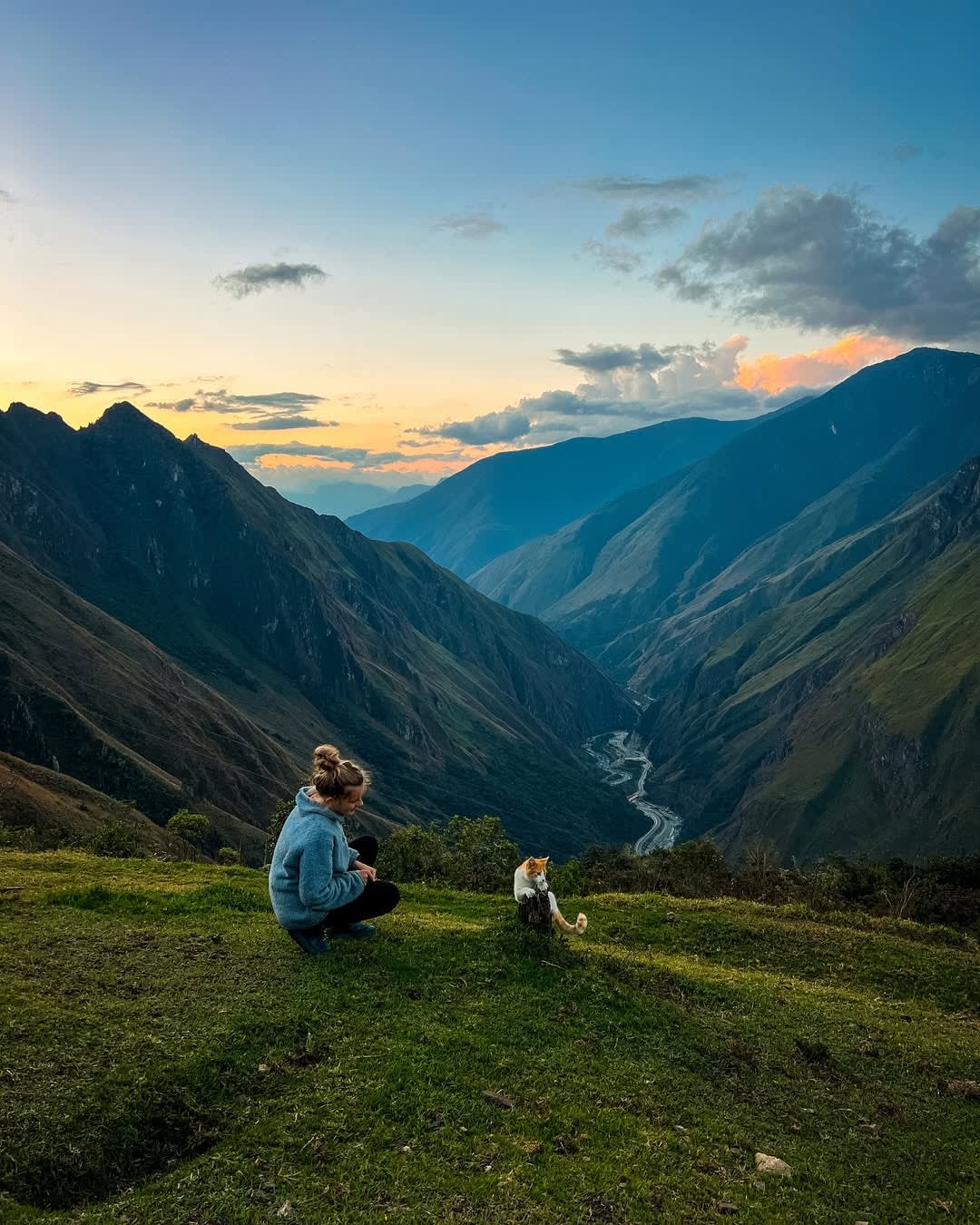
The Lares Valley is different terrain. It begins where the Sacred Valley's paved roads end — in the thermal spring highlands northwest of Calca, at altitudes between 3,800 and 4,400 metres, in a landscape of high pasture, glacial lakes, and small Quechua communities that are not organised around visitor access. The Lares Trek follows these communities for three days before descending to Ollantaytambo and boarding the train to Aguas Calientes. It is a walk through the Andean highlands that the main circuit does not offer — not because the main circuit is incomplete, but because what the Lares gives is of a fundamentally different nature.
The Landscape
The Lares Trek begins above the village of Lares — reached from Calca in approximately ninety minutes — at an altitude where the agricultural system has not been modified by market integration. The communities along the route grow the crops they eat, raise the animals their wool and meat come from, and weave on backstrap looms with fibre that comes from the alpaca in their fields and dye from the plants on the hillsides around them. The economic and ecological closed loop that the Inca organised in this highland zone is, in the Lares Valley, still functionally intact.
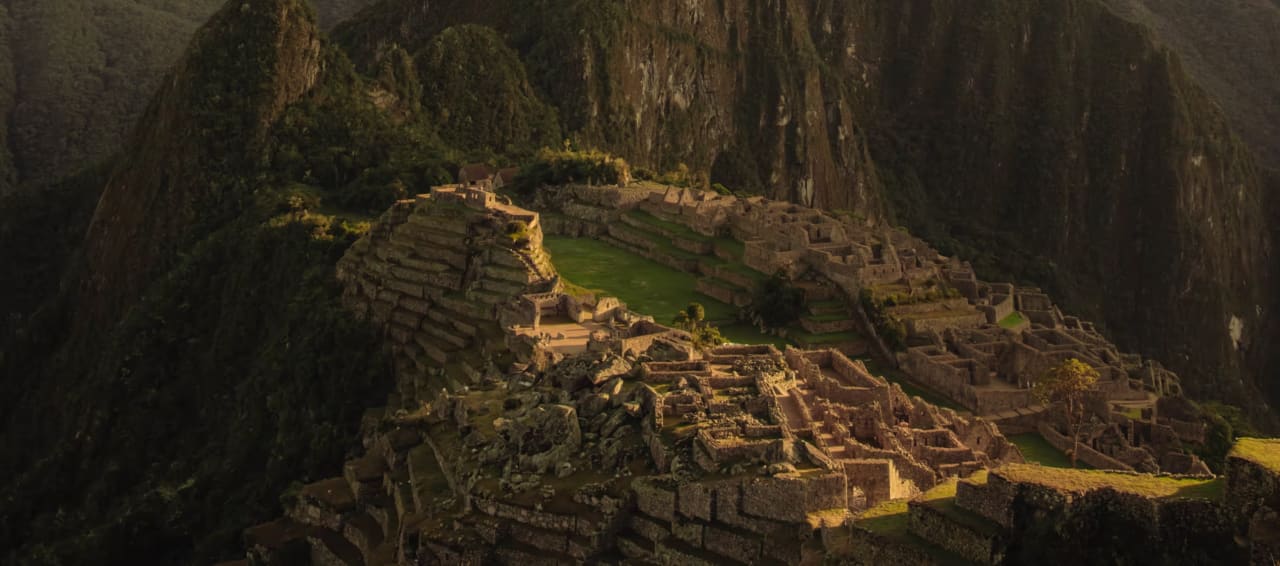
The first day's walk crosses puna grassland — open, windswept, the Lares thermal hot springs available at the first night's camp — between 3,800 and 4,200 metres. The second day climbs to the route's highest point at approximately 4,400 metres and descends into the upper Quechua communities: smaller, higher, and more remote than the villages the Sacred Valley circuit visits. The third day descends through the lower highland communities and arrives at Ollantaytambo, where the afternoon train connects to Aguas Calientes and the following morning's Machu Picchu entrance.
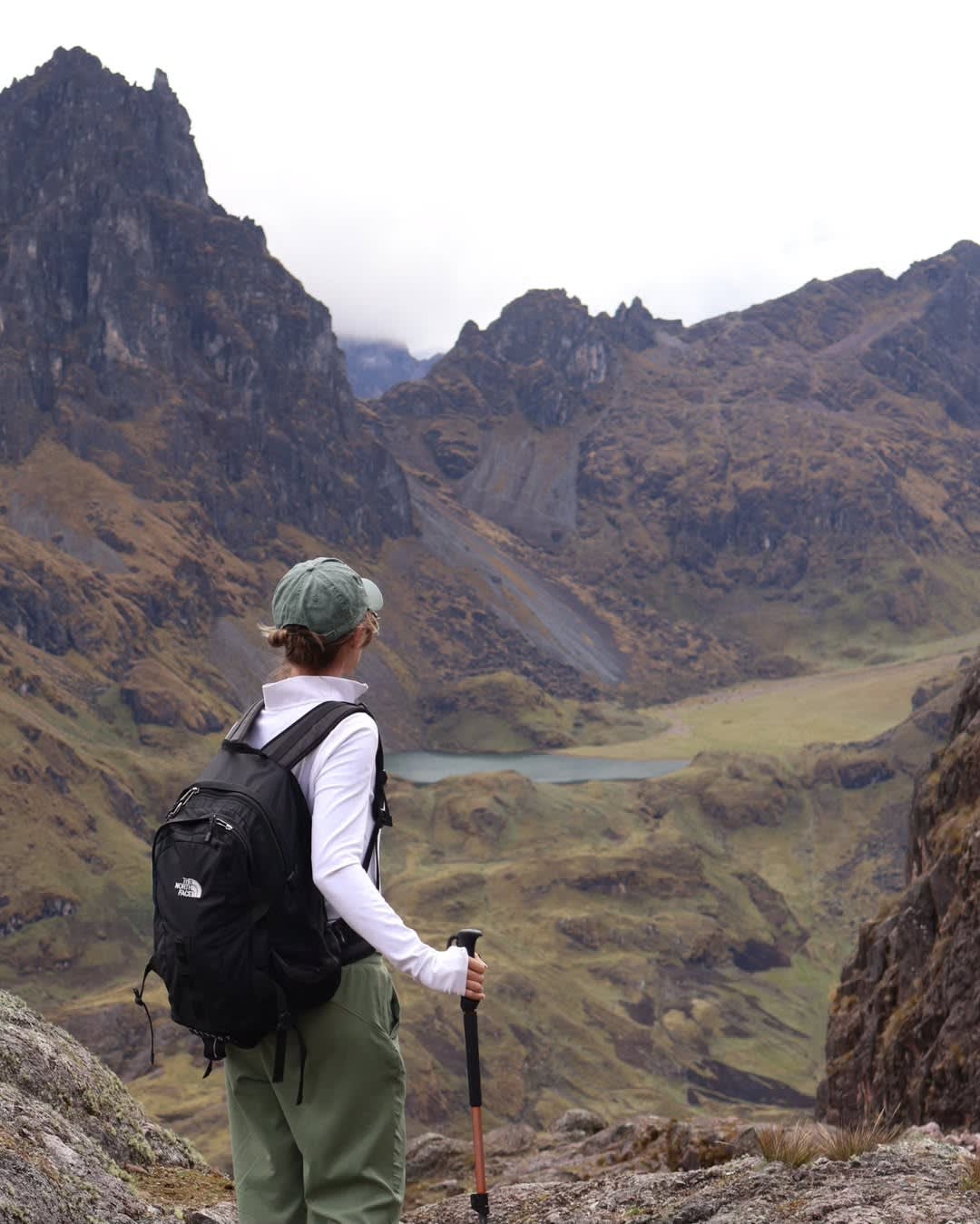
The Lares pass, at 4,400 metres, is demanding but shorter than the Salkantay. The altitude, not the distance, is the challenge: the crossing requires proper acclimatisation and a steady pace, and it is the day guests typically encounter the specific quality of Lares light — the highland puna on both sides of the pass, the glaciated peaks of the Lares range above, and the particular silence of a mountain crossing at this elevation where the wind and the footsteps are all there is.
The Communities
The Quechua communities the Lares route passes through represent something that has become increasingly rare in the Cusco region: a cultural life that has not been reshaped for visitor access. This is not a statement about the communities being "untouched" — they are connected to the regional economy, use mobile phones where signal reaches, and many of their children study in Calca or Cusco. It is a statement about the specific social architecture of cultural tourism having not yet reorganised these communities around visitor expectations the way it has in the more accessible areas.
The community visits on the Lares route are structured by the communities themselves, in coordination with Kada and the guide. The basis of the arrangement is the same principle that governs Kada's work at Caccaccollo: the community controls what it shares, under what conditions, and the economic benefit goes directly to the families involved. Kada does not commission a cultural programme designed by an operator and performed by community members; it pays for access to what the community is actually doing, and the guide translates and frames what the guests encounter.
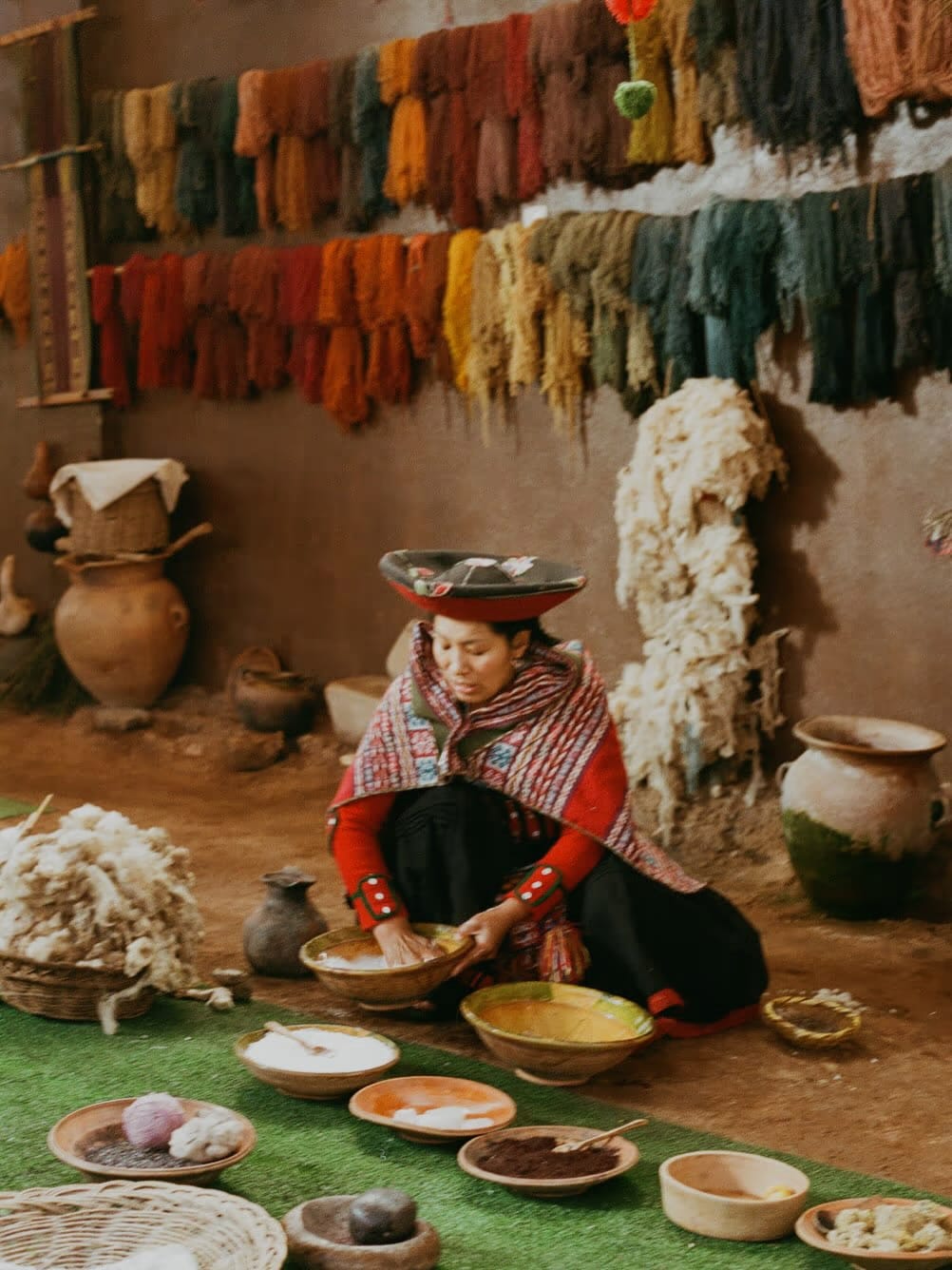
What this produces in practice: a weaving demonstration that takes place in the weaver's home alongside her other daily activities, not in a dedicated visitor space. A conversation about highland agriculture and the community's management of its seed stock, not a rehearsed presentation of Inca heritage. The sharing of chicha or api (a warm purple corn drink) because the family is making it that morning, not because it has been prepared for visitors. The encounters are shorter and less elaborate than the equivalent in a professionally designed cultural programme, and more real.
Weaving in Context
The weaving tradition in the Lares communities is the same technical lineage as the Chinchero cooperatives and the Awana Kancha demonstrations that Kada also includes in its Cusco itineraries. The Lares context shows the tradition at a different register: not the master practitioner demonstrating exceptional technical skill for a dedicated audience, but the practitioner for whom weaving is one of half a dozen daily activities, the loom set up in the doorway where the light is best, the current piece a commission or a household item rather than a exhibition piece.
The natural dye knowledge maintained in the Lares communities includes the same primary sources — cochinilla, qolle, ñucchu, altitude lichen varieties — as the cooperatives, applied at domestic rather than commercial scale. The combination of fibre quality (highland alpaca from the family's own flock), dye knowledge (plant-based, seasonally specific), and the backstrap loom technique transmitted through female lineage across generations produces textiles of a quality that visitors consistently underestimate on first encounter. What guests see in a Lares household is not artisanal production performing authenticity; it is a serious technical tradition maintained at the scale it always operated before commercial organisation found it.
The guide explains what is visible and answers questions. The weaver continues working. The conversation that develops — about the specific piece in progress, about where the wool came from, about what the pattern means in the family's visual vocabulary — is not guided by a script.
The Thermal Springs
The Lares hot springs — aguas termales fed by the hydrothermal activity of the highland geology — are a feature of the first night's camp that the Salkantay and Inca Trail programmes do not provide. After the first day's ascent through the puna, the thermal pools are the practical luxury the altitude earns: the water reaching 40 to 45 degrees Celsius, the sky above at 3,800 metres. The pools are not a spa; they are a geographic feature of the valley, used by the local community for the same reasons visitors use them. The evening at the Lares camp, between the thermal springs and the dinner the field kitchen provides, is consistently among the elements guests describe as the most unexpected quality of the route.
What Kada Arranges
The Lares Trek is a three-night programme: the departure from Cusco via Calca to the trek start, two nights of camping at altitude (the first at the thermal springs, the second at the high community below the pass), and arrival in Ollantaytambo on the third afternoon for the train to Aguas Calientes. The Machu Picchu entrance is arranged for the following morning's first entry, with the group returning to Cusco by train in the afternoon.
The same mountain infrastructure applies as for the Salkantay programme: a field chef for the camp meals, a mule team managed by an arriero from the Lares communities, and a high-altitude specialist guide with specific knowledge of the Lares route and the communities along it. The guide's relationships in these communities are the foundation of the access the programme provides; a guide who is not known in Lares is a guide who cannot negotiate the kind of community encounters that distinguish this route.
Group size maximum: six. The community visits the programme is built around function at this scale; larger groups change the character of the household encounters in ways that compromise what the visit produces.
Acclimatisation requirement: three full days at Sacred Valley altitude before the trek departure. The Lares pass at 4,400 metres is higher than the Salkantay approach camps and significantly above the Sacred Valley floor. The same altitude preparation logic applies: the body needs time at lower elevation before the high-altitude crossing.
Expert Perspective
"When I take guests through the Lares communities, they often ask me why these villages feel different from the cultural experiences in the main circuit — why the encounter feels less like an encounter and more like a visit. The answer is straightforward: we are not the first visitors those communities have organised a programme for, but we are also not at the centre of their economic planning. The families along the Lares have other things to do. We pay them for their time and their openness, and they provide both, but on the morning I bring a group through, the weaver in the doorway has been working since before dawn and will be working after we leave. What guests are seeing is a life, not a presentation of one. That is rarer than it sounds, in the Sacred Valley in 2026."
— Jaime Ttito, Head of Guides & Cultural Interpreter, KADA Travel
A Practical Note
The Lares Trek operates in all seasons, with the dry season (May through October) offering the most reliable weather for the high pass crossing. The wet season programme (November through April) is manageable but requires a contingency plan for the pass, where afternoon cloud and rain are standard from December through March. Kada runs wet season Lares dates for guests who cannot travel in the dry window; the guide's knowledge of the route's weather patterns and the community relationships are the same in either season.
The first night's camp at the thermal springs is at 3,800 metres — below the pass but above the valley floor. Guests who have not yet fully acclimatised should expect disturbed sleep at this altitude; the hot springs assist but do not eliminate the elevation effect. The second camp, at approximately 4,000 metres, is the altitude peak. By the third day's descent into Ollantaytambo, the body is below 2,800 metres and the altitude constraint is effectively lifted.
Footwear: waterproof trekking boots. The puna terrain, wet from morning dew or afternoon mist, is not navigable in trail shoes on the highland sections. This is specified at the booking stage with the same firmness as the Salkantay programme.
Written by Kada Travel Editorial
Frequently Asked
The Salkantay is a mountain route — the primary experience is the 4,600-metre pass of one of the Andes' significant peaks, and the four-day journey is defined by the altitude ecology and the mountain infrastructure required to cross it. The Lares is a cultural route — the primary experience is the Quechua highland communities along the path, and the two-night camp programme is structured around the community encounters. Both end at Machu Picchu by train from Ollantaytambo. The choice depends on whether the guest's primary interest is the mountain or the community; Kada discusses this distinction with each group at the planning stage.
Pre-arranged, in the sense that the guide knows the communities and has established relationships with the families who receive visitors, and the visit is confirmed in advance of the trek departure. Not pre-arranged in the sense of a scripted programme: the specific encounter on the day depends on what the family is doing, what the weaver is working on, and what the guide's reading of the morning suggests. Guests should arrive at the community visits without expectations of a specific format, and they will not be disappointed.
Not productively. The route's logic requires the altitude to be gained before the high pass crossing, which means beginning at the highland end above Lares. A reverse itinerary starting in Ollantaytambo would require the altitude gain on the third day rather than the first, which eliminates the acclimatisation benefit of the gradual ascent and places the most demanding section at the end of the programme rather than the middle. We do not design the Lares Trek in reverse.
Kada pays the community coordinator for the group's visit, with the payment distributed by the community's own process to the families who participated: the weaver who received the group, the family whose land the camp was on, the *arriero* from the valley who managed the mule team. The amount is set by the community in consultation with Kada, and it is paid directly without Kada retaining a commission on the community-side fee. Guests are also welcome to purchase directly from the weavers they meet; the guide advises on fair pricing.
Design Your Journey
Design your bespoke Peru journey
We talk. We listen. Then we design an itinerary that belongs only to you.
Start Planning