Unfolded· 7 min read·14 July 2026
The Barranco Circuit
A curated afternoon through Lima's contemporary art landscape — MAC, MATE, and the independent galleries of Barranco with an art historian who knows what is hanging this week.
By Kada Travel Editorial
Lima's contemporary art scene is not located in a single institution. It is distributed across a neighbourhood — across the MAC's rotating group shows, MATE's photographic archive, and Barranco's independent galleries, whose programmes change every four to eight weeks and whose collective argument about what Peruvian visual culture is doing shifts month by month. The art historian who walks this circuit with our guests is not reading wall labels. They are translating a conversation that is still in progress, and whose terms are not fully stable.
This is what distinguishes the Barranco circuit from a museum visit: you do not arrive at a conclusion. You arrive in the middle of an argument, and you leave with a more precise sense of what the argument is about.
MAC: The Institutional Frame
The Museo de Arte Contemporáneo — MAC Lima — opened in 2013 in Barranco, in a building that occupies the edge of a public park and opens to the street on two sides, which was a deliberate architectural decision: the museum that does not insulate itself from the neighbourhood it is in. The collection is small relative to MALI's 18,000 pieces; the MAC holds several hundred works and acquires selectively, with a focus on Peruvian and Latin American contemporary artists whose work is being shown internationally and whose relationship to Peru's cultural inheritance is active rather than decorative.
What the MAC does well — and what a private visit with a curator's framing makes explicit — is the selection logic behind the group shows. Each exhibition at the MAC is an argument about a specific problem in contemporary Peruvian and Latin American visual culture: what it means to work from a colonial inheritance without reproducing its hierarchies; how the pre-Columbian archive functions as material for artists who are not archaeologists; what the relationship is between the social movements of the last two decades and the visual strategies that emerged from them. The wall labels describe the work; the art historian describes the argument. Both are necessary. Only one requires prior arrangement.
The visit to the MAC typically runs forty-five minutes — long enough to understand the current exhibition's logic without attempting to survey the permanent collection, which is modest and better encountered in combination with the larger MALI collection.
MATE: The Archive of a Peruvian Eye
The Museo Mario Testino — MATE — is a different kind of institution from the MAC: not a collecting museum with a permanent collection, but an archive dedicated to the work of a single photographer. Mario Testino, who was born in Lima in 1954 and built an international career photographing fashion, portraiture, and culture for the major publications and fashion houses of the late twentieth and early twenty-first century, established the MATE in Barranco in 2012 as both a museum and a curatorial statement: that the work done in London, in New York, in the studios of fashion weeks across the world was the work of a Peruvian eye, and that it belonged in a house in Barranco as much as it belonged in any gallery in which it had been shown.
MATE's permanent programme rotates through Testino's archive — fashion photography, celebrity portraiture, personal documentary work — alongside temporary exhibitions by other photographers, particularly those whose work addresses Latin American and Peruvian subjects. The building is a restored colonial house with the particular proportion of Barranco's residential architecture: rooms at human scale, natural light from interior courtyards, the sense that the works are being encountered in a domestic context rather than a white-cube institutional one.
For our guests, MATE performs a specific function in the Barranco circuit: it establishes the international register of what a Peruvian visual sensibility can produce, alongside the specifically Lima-grounded sensibility of the MAC and the independent galleries. Testino's photographs are well-known; seeing them in the neighbourhood he came from, in a house proportioned like the ones he grew up near, adds a context no London gallery could supply.
The Independent Galleries
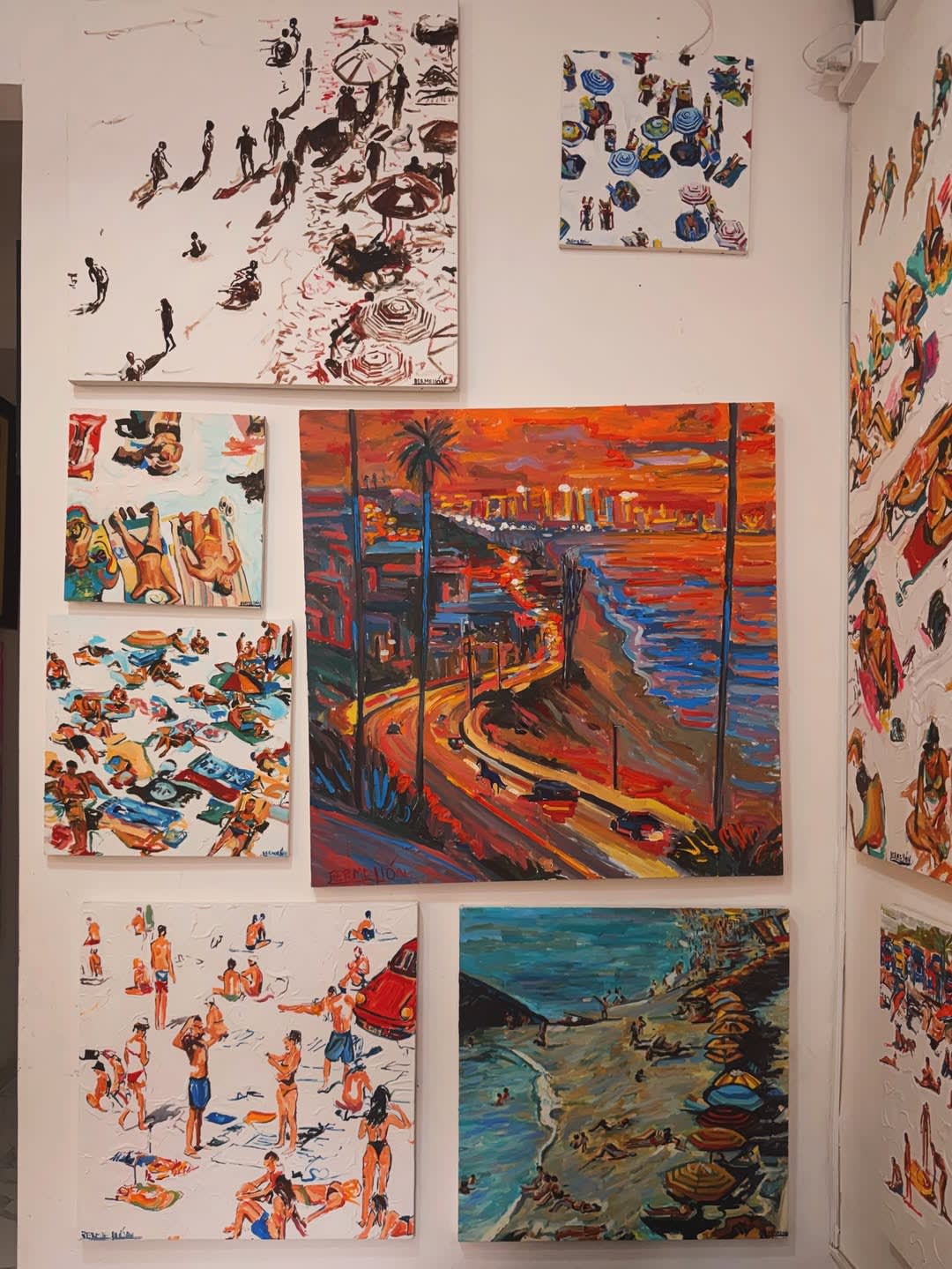
The most important part of the Barranco circuit is the one with the least institutional profile: the cluster of independent galleries in the neighbourhood's back streets and residential buildings, operating in spaces of forty to eighty square metres, showing new work every four to eight weeks to an audience of artists, collectors, students, and the small community of Lima residents who follow the programme seriously.
These galleries are where the argument is most live. The MAC and MATE show work that has already been selected, assessed, and presented as significant — the institutional filter has applied. The independent galleries show what is being argued about before the filter has decided. Some of the work is unresolved. Some of it is the most interesting thing in Lima at that moment. The art historian who walks our guests through the programme knows which is which, and their judgement — made on the basis of knowing the artists, knowing the curators, and knowing what was shown six months ago in the same rooms — is the intelligence that makes the circuit legible rather than random.
The specific galleries and the specific work our guests encounter depends on the week — which exhibitions have opened, which spaces are between shows, which rooms have something worth visiting. We confirm the circuit with the art historian in the four days before each visit, after she or he has made the rounds and assessed what the week holds. This is not a hardship; it is the condition under which contemporary art is most accurately encountered.
What Kada Arranges
The Barranco circuit runs approximately three and a half hours in the afternoon — the light in the independent galleries, which rely on natural illumination from colonial windows and skylights, is at its best between three and six. We begin at the MAC, move to MATE, then walk the independent galleries in an order determined by the current programme.
The art historian we work with as a permanent collaborator has a specific relationship to the Lima contemporary art scene — not as an observer but as a participant: they teach, they write, they know the artists, they know what the arguments are and which artists are making them most effectively at any given moment. This means the visit is a conversation with someone inside the scene rather than a guided summary of what the scene is.
For guests who have arranged the private studio visit in Barranco, we position the circuit on a different afternoon — the two experiences are related but distinct, and the studio visit's intimacy is best protected by not following it immediately with the institutional circuit, which operates at a different scale and with a different register of access.
Expert Insight
"What I want to happen in the independent galleries — and it almost always does — is the moment when a guest asks about a specific work and realizes that the question they're asking is the same one the artist is asking. Not 'what does this mean' but 'what is this trying to do.' Once that shift happens, you're no longer looking at art. You're looking at a problem someone is working on. And Barranco has more people working on more interesting problems right now than any other square kilometre in South American art."
— Isabela Santos, Senior Travel Designer, KADA Travel
A Practical Note
The Barranco circuit is a walking afternoon — approximately two kilometres on foot across the three venues, with additional walking between independent galleries. The terrain is flat and the distances short; no specific fitness level is required. We recommend comfortable shoes appropriate for gallery floors, which are often original wood or unfinished stone in the independent spaces.
The circuit is weather-independent in the sense that all three venue types are enclosed. Lima's afternoon light — particularly in the winter months (June-September) — produces the best illumination for the gallery spaces, as the marine layer typically clears by mid-afternoon and the low Pacific sun reaches into the colonial windows at the most useful angle. In the summer months (January-March), the light arrives flatter and the galleries use supplementary lighting more heavily; the circuit is equally worthwhile but differently lit.
For guests whose Lima stay also includes the studio visit in Barranco and the private jarana in a Barranco courtyard, the three Barranco experiences together constitute a coherent engagement with the neighbourhood's creative life across three registers — visual, musical, and the intersection of living practice and institutional context that the circuit provides.
Written by Kada Travel Editorial
Frequently Asked
Yes, and this is by design. The independent galleries rotate every four to eight weeks; the MAC changes its group exhibitions every two to three months; MATE's rotating programme within the Testino archive changes seasonally. A Barranco circuit in March and a Barranco circuit in August are substantially different afternoons. Repeat visitors find this an argument for returning.
No. The art historian who leads the circuit frames each stop in terms of the specific problem the work is engaging with — not in art-historical vocabulary that requires prior knowledge. The most generative questions in the independent galleries typically come from guests with backgrounds in architecture, literature, and music, who bring lateral vocabularies that the visual arts conversation rarely hears. Prior knowledge of contemporary art helps; it is not a prerequisite.
Yes. We brief the art historian in advance with our guests' specific areas of interest, and the route is weighted accordingly — more time at MATE for photography, specific gallery choices for politically engaged work. The circuit's flexibility is one of its advantages over a fixed institutional programme.
The circuit is the institutional and semi-institutional context; the studio visit is the living practice before the institutional frame has been applied. Together, they bracket the question of how art moves from the room where it is made to the rooms where it is shown. They are better on different days, and in the order studio first, circuit after — because the studio visit changes what you are looking for in the galleries.
Design Your Journey
Design your bespoke Peru journey
We talk. We listen. Then we design an itinerary that belongs only to you.
Start Planning