Destinations· 8 min read·25 January 2025
Cusco Markets: San Pedro and Private Experiences with Producers
The central market at five in the morning and the hamlets where lila potatoes are still grown — the Cusco that feeds the city.
By Kada Travel Editorial
San Pedro is Cusco's market. Built in 1925 with iron structure designed by Gustave Eiffel —the same of the Paris tower, the same who designed the Tacna station in southern Peru—, it occupies a full block between Calle Túpac Amaru and Avenida del Sol. Six hundred stalls inside. Two hundred more informal vendors in the surrounding streets. Human density is such that the average visitor enters, takes a fifteen-minute spin through the fruit-juice section, and leaves convinced they have seen the market. They have not.
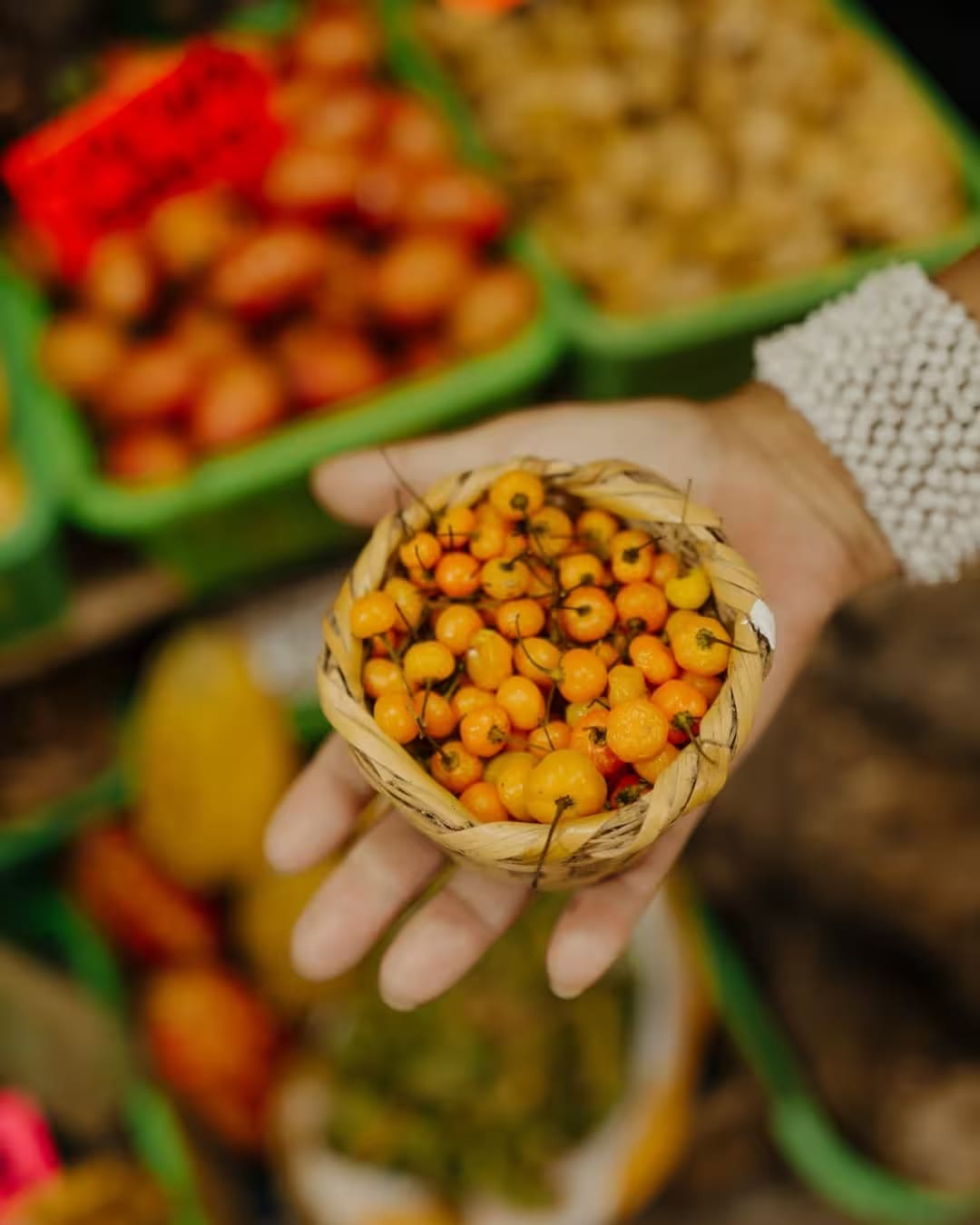
The real Cusco market reveals itself at five in the morning, before formal public opening. It is the hour when pickup trucks arrive with Sacred Valley produce, Quechua porters unload hundred-kilo loads on their backs, vendors arrange their displays in layers —potatoes at the base, medicinal herbs in the middle, ají in hanging baskets— and the first coffee of the day is sold in enamelled jars to the drivers. This guide proposes how to access that hour, and what to do with the knowledge.
San Pedro at dawn
The market officially opens at six thirty AM. Stalls go up from four thirty. For travellers wanting to see Cusco's true rhythm, we recommend arriving at five twenty: forty minutes in the corridors before the first public customer appears.
The tour is always done with local guide. We recommend chef Florencia Aragón, third-generation Cusqueña, who offers the "Market and Kitchen" experience combining two hours of market with lunch at her home-studio in San Blas. The chef buys ingredients with the visitor present —chooses the quinoa, tastes the cheese, haggles with vendors she has known for twenty years— and afterwards cooks a four-course menu with those ingredients: chiri uchu, chairo, lomo with quinoa, ulluco mazamorra. The most complete Cusco-cuisine lesson money can buy.
Those who prefer only the market can do the tour without the cooking. Seventy-five minutes with guide cover the four market sections: the potato section (over forty varieties on a single table, organised by colour and size from yellow potato to black), the medicinal-herb section (huacatay, lemon verbena, paico, muña, Cusco chamomile), the Andean-grain section (white, red and black quinoa, kiwicha, kañiwa, giant white Urubamba corn), and the meat section (alpaca, cuy, lamb, offal by day).
Pisac Market on Sundays
Pisac, an hour from Cusco in the Sacred Valley, has a market every day. But the Sunday market is the original: eight hundred years ago valley producers came down with their surplus on Sundays to barter with Cusco buyers. The barter system survives in a small market section, where Quechua peasants still trade quinoa for salt or wool for pots. The tradition is called "barata market" and begins at four AM.
We recommend the Sunday visit, arriving at nine. By then the barter market has closed but the official market is at its peak: textile crafts, Pucará ceramics, valley produce. Combinable with the eleven-AM Quechua mass at the Pisac church —officiated in Quechua by the local priest, with attendees in traditional polleras. The mass is living ceremony, not tourist spectacle.

Producer experiences
Beyond urban markets, three private experiences with rural producers stand out for travellers curious about the origin of Cusco cuisine.
The Chinchero weavers. In Chinchero, an hour from Cusco at 3,762 metres, four Quechua weaving associations preserve pre-colonial techniques: hand spinning with spindle, natural dye with cochineal, plants and minerals, backstrap loom. An afternoon with the weavers of the Centro de Textiles Tradicionales de Chinchero (CTTC) includes demonstration of the full process —from sheep to weave— and direct purchase from the producer. Quality textiles cost five times less than in Cusco's tourist shops.
The Quillabamba chocolate producers. Four hours by car from Cusco, descending from altiplano to high jungle, lies Quillabamba: the origin of Peru's finest cacao. Marañón Chocolate and The British Chocolate Company have visitable plantations: walking the cacao-tree rows, roasting cacao in wood ovens, tasting chocolate in its different stages (nibs, conched, tempered). Full-day excursion, not for every trip.
The Maras cheese-makers. Maras, in the Sacred Valley, preserves three artisanal cheese-makers producing cow- and sheep-milk cheeses with techniques combining Andean tradition with Swiss influence —the Peruvian Andes had minor Swiss migration in the 1940s. The Maras Sagrado dairy offers a six-cheese tasting with maturation-room visit. Combinable with lunch at La Casa de la Hacienda de Maras restaurant.
Cusco's market is not seen. It is smelled, touched, tasted. Quinoa is recognised by fingertip —if well washed, it releases dust—. Potatoes are chosen by weight, not size. That sensory reading is what the local guide teaches.
Kada Travel
What is worth buying
The market has good purchases and bad ones. The good: Peruvian chocolate (Caoba, Marañón, Kuoa are the most reliable brands), black quinoa (five times more expensive than white, more intense flavour), valley honey (with muña-root aroma), dried ají panca to take home.
The bad: industrial textiles sold as artisanal (the test: if fringes are perfectly cut, they are industrial), baby-alpaca bracelets that are actually synthetic wool, 950-silver jewellery that is actually silver-plated alpaca metal. We always recommend buying textiles directly from weavers (CTTC in Chinchero) and jewellery at authorised workshops (Ilaria, Casa de Plata).
How to fit it in the itinerary
For travellers with three days in Cusco, we recommend San Pedro Market at dawn on day three (after acclimatisation and historic centre), followed by lunch at the chef's home. The experience takes half a day and leaves the afternoon free for Saqsayhuamán or going up to the Valley.
For travellers ascending to the Sacred Valley, the Pisac Sunday market is the natural combination: early Cusco departure, market at nine, Quechua mass at eleven, lunch at Hawa de Pisac restaurant (contemporary cuisine with local produce), afternoon at the Pisac ruins. One of the most complete days we can design in the Valley.
Written by Kada Travel Editorial
Frequently Asked
Yes, during the day and with a guide. Pickpocket theft happens occasionally in the public market (after 9 AM); with a guide at 5 AM the risk is practically zero. Bring small amounts of cash, do not flash professional cameras.
One hour by private car from Cusco. Eight AM departure, arrival by nine. Tour buses arrive at ten thirty; the private traveller gets the first hour with fewer people.
USD 220 per person, including market tour, ingredients, four-course lunch and pairing with Peruvian drinks. Minimum two people, maximum six. Book two to three weeks ahead.
Wanchaq market in Cusco (more popular, less touristy, better for fruit), Chinchero market (textile and agricultural, Wednesdays and Sundays), Urubamba market (valley produce, Wednesdays and Saturdays). All three are visitable but less spectacular than San Pedro and Pisac.
Only if descending to high jungle is already planned. Four hours by car each way is a long drive for a cacao tour. Combinable with the road to Manu or to the Amazon. Otherwise, replaceable with a Sacred Valley cacao plantation visit (Pampaconga, one hour from Cusco).
Chocolate, quinoa, dried grains, commercially packaged jams: yes, in checked luggage. Fresh fruit, meat, dairy: prohibited on international flights. US and EU customs law prohibits entry of fresh animal and plant products.
Design Your Journey
Design your bespoke Peru journey
We talk. We listen. Then we design an itinerary that belongs only to you.
Start Planning